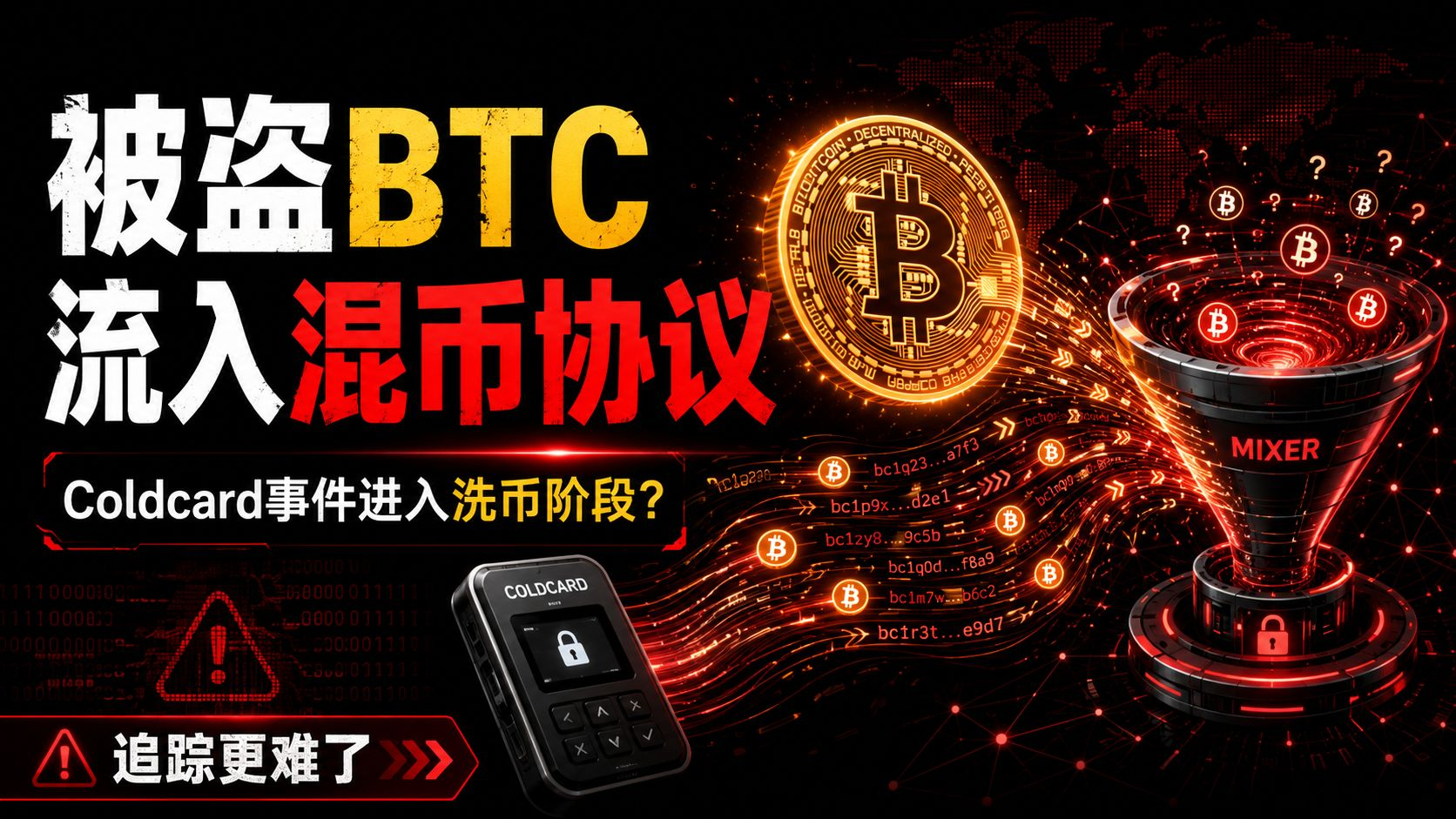
Coldcard: this has become even more troublesome now.
Stolen BTC has begun entering mixing protocols.
This means the attacker may have moved from:
“keep sweeping wallets”
to the next stage:
“wash the funds, then find a way to cash out.”
Many people think that once coins enter a mixer,
they disappear completely.
That’s not the case.
The BTC is still on-chain.
It’s just that after large sums are split, mixed, and recombined,
the difficulty of tracing them rises significantly.
So what I’m watching now isn’t:
whether they’ll steal another batch.
Instead, it’s:
will these stolen BTC ultimately end up flowing to exchanges, OTC desks, or other cash-out channels.
If large amounts of funds eventually reach a liquidity exit,
that’s the stage the market should really be alert to.
But regarding BTC’s price itself,
I won’t overstate this for now.
A few hundred or even a thousand BTC
isn’t systemic sell pressure for the whole market.
The real significant impact is on the other side:
cold wallet trust.
This incident has already put a problem in front of everyone:
Your BTC is, of course, on-chain.
But whose hands actually generated your private key?
Now add another question:
After the hacker takes it, can on-chain transparency truly still help you recover it?
Coldcard is increasingly looking less like a typical hacking incident.
It’s more like a stress test for the entire self-custody industry.
Next, I’m monitoring four things:
1. Whether more new wallets continue to be swept;
2. Whether the BTC after mixing flows to exchanges;
3. Whether the confirmed losses will keep expanding;
4. Whether Coinkite has any new technical disclosures.
In one sentence:
The vulnerability is what opens the door,
and the mixing protocol is what makes追钱 far harder.
$BTC #Coldcard #冷钱包 #bitcoin #coldcard被盗币转入混币协议
Stolen BTC has begun entering mixing protocols.
This means the attacker may have moved from:
“keep sweeping wallets”
to the next stage:
“wash the funds, then find a way to cash out.”
Many people think that once coins enter a mixer,
they disappear completely.
That’s not the case.
The BTC is still on-chain.
It’s just that after large sums are split, mixed, and recombined,
the difficulty of tracing them rises significantly.
So what I’m watching now isn’t:
whether they’ll steal another batch.
Instead, it’s:
will these stolen BTC ultimately end up flowing to exchanges, OTC desks, or other cash-out channels.
If large amounts of funds eventually reach a liquidity exit,
that’s the stage the market should really be alert to.
But regarding BTC’s price itself,
I won’t overstate this for now.
A few hundred or even a thousand BTC
isn’t systemic sell pressure for the whole market.
The real significant impact is on the other side:
cold wallet trust.
This incident has already put a problem in front of everyone:
Your BTC is, of course, on-chain.
But whose hands actually generated your private key?
Now add another question:
After the hacker takes it, can on-chain transparency truly still help you recover it?
Coldcard is increasingly looking less like a typical hacking incident.
It’s more like a stress test for the entire self-custody industry.
Next, I’m monitoring four things:
1. Whether more new wallets continue to be swept;
2. Whether the BTC after mixing flows to exchanges;
3. Whether the confirmed losses will keep expanding;
4. Whether Coinkite has any new technical disclosures.
In one sentence:
The vulnerability is what opens the door,
and the mixing protocol is what makes追钱 far harder.
$BTC #Coldcard #冷钱包 #bitcoin #coldcard被盗币转入混币协议