
When supply increases by 20%, demand rises by 200%"... Musk shatters pessimism in memory [Gapless Bird Market]
Elon Musk: "AI constraints still matter for memory"
Performance confirms the durability of investment in artificial intelligence
Spot DRAM prices rise again after a week
All of Wall Street and SK Hynix’s DU initiatives 'buy' at the same time
Goldman Sachs: "The memory boom is expected to last a long time"
Over the past month, memory semiconductor stock prices have fallen for various reasons. The sustainability of Hyperscalers’ investment in AI, the spread of open-source Chinese models, and concerns about a peak in the memory cycle have alternately weighed on the stock price. The same was true despite evidence suggesting the companies were emphasizing massive growth in backlog orders and investment intent, that low-cost models were driving demand for chips and computing, and that long-term contracts are changing the memory cycle. It did not succeed in markets where supply and demand were taking the wheel rather than fundamentals.
Among them, concerns about an oversupply situation weighed heavily on memory stockpiles. The logic was that if Samsung Electronics, SK Hynix, and Micron accelerate the expansion of production capacity and increase the production capacity of China’s advanced memory (CXMT), then current prevailing prices and standard margins would not last.
"When memory supply increases by 20%, demand increases by 200%»
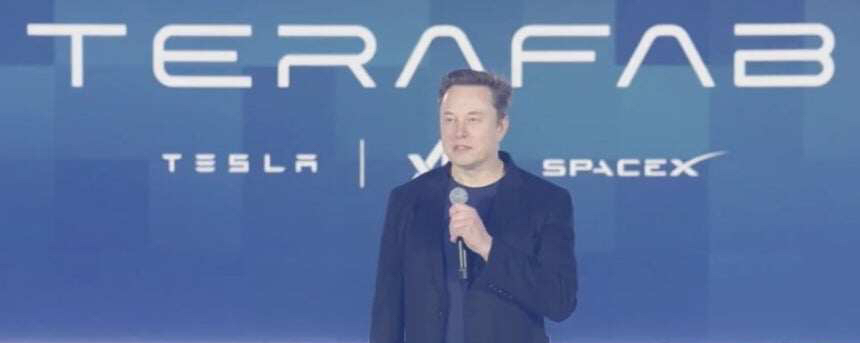
Elon Musk, CEO of Tesla and SpaceX, provided the exact opposite figure. On the 4th of the month (U.S. Eastern Time), Musk again emphasized the severity of the supply shortage during SpaceX’s second-quarter earnings call, saying: "The determining factor for AI is memory."
He said: "Memory output increases by about 20% every year. For a broadly mature, large-scale industry typical growth rates are extremely fast," he said. He first confirmed that memory companies are actively expanding their capacity. (This draws a clear line against recent claims that three major memory companies in the United States colluded to raise prices instead of increasing supply.)
However, Musk says: "(The problem) is that demand increases by 200% every year, perhaps more." He added: "If demand grows much faster than supply, according to the basic principles of economics, prices do not fall but rise." He emphasizes that the key is not in increasing supply, but whether demand or supply grows faster. Earlier this year, Musk announced that he would mobilize Tesla, SpaceX, and xAI to build a massive semiconductor factory called "TeraFab" capable of producing AI chips with annual capacity of 1 terawatt, mainly due to expectations that a supply shortage would worsen further.
This directly conflicts with the basic logic behind the recent memory inventory adjustments. No matter how many new semiconductor plants are built and production is increased, if demand for AI computing grows tenfold, it may be too early to apply the formula "expansion = oversupply" to stock prices. The industry already believes that the memory shortage will be difficult to resolve even by 2030. It is also known that the scale of capacity added by Chinese companies is insufficient to meet domestic demand for AI semiconductors.
Like mega-cap companies such as Google, Amazon, and Microsoft that had been reporting earnings earlier, SpaceX said it intends to increase capital expenditures (CAPEX) to meet the massive demand for AI. SpaceX spent about $18.4 billion over three months to add 0.4 gigawatts of computing capacity, bringing total capacity to 1.4 gigawatts. However, Musk said: "By the end of this year, there will be at least 2 gigawatts, and by the end of next year it will be close to 10 gigawatts." To achieve this, capital investment funds will be generated by AI infrastructure companies in semiconductors, energy, and optical networks.
Profitable AI, and greater capital growth
When investor sentiment was weak, massive capital expenditures from super-growth companies were also interpreted as a negative factor for AI infrastructure. There were doubts that investing in data centers, spending cash and taking on high debt would ultimately be unsustainable.
However, figures revealed in the second-quarter earnings report showed that AI demand and returns on investment justify an increase in official capital. The hyper-scaler revenue growth rate accelerated from 39% in the first quarter to 48% in the second quarter, and the accumulation of orders for Amazon Web Services, Google Cloud, and Microsoft Azure is rising faster than the rise in approved capital. This confirms that the structure is not about "building and monitoring" in preparation for uncertain future demand, but about increasing capacity to handle demand that is already firmly secured.
The return on investment in artificial intelligence is also "green." The cash return on the drivers City gathered, CROCI, remained at 28% even in the second quarter, when official capital rose, and the aggregate profit margin before interest, taxes, depreciation and amortization reached 43%. With improving profitability, Amazon said the server payback period was cut to less than three years, while SpaceX was confident it could recoup its new computing investment within one year.