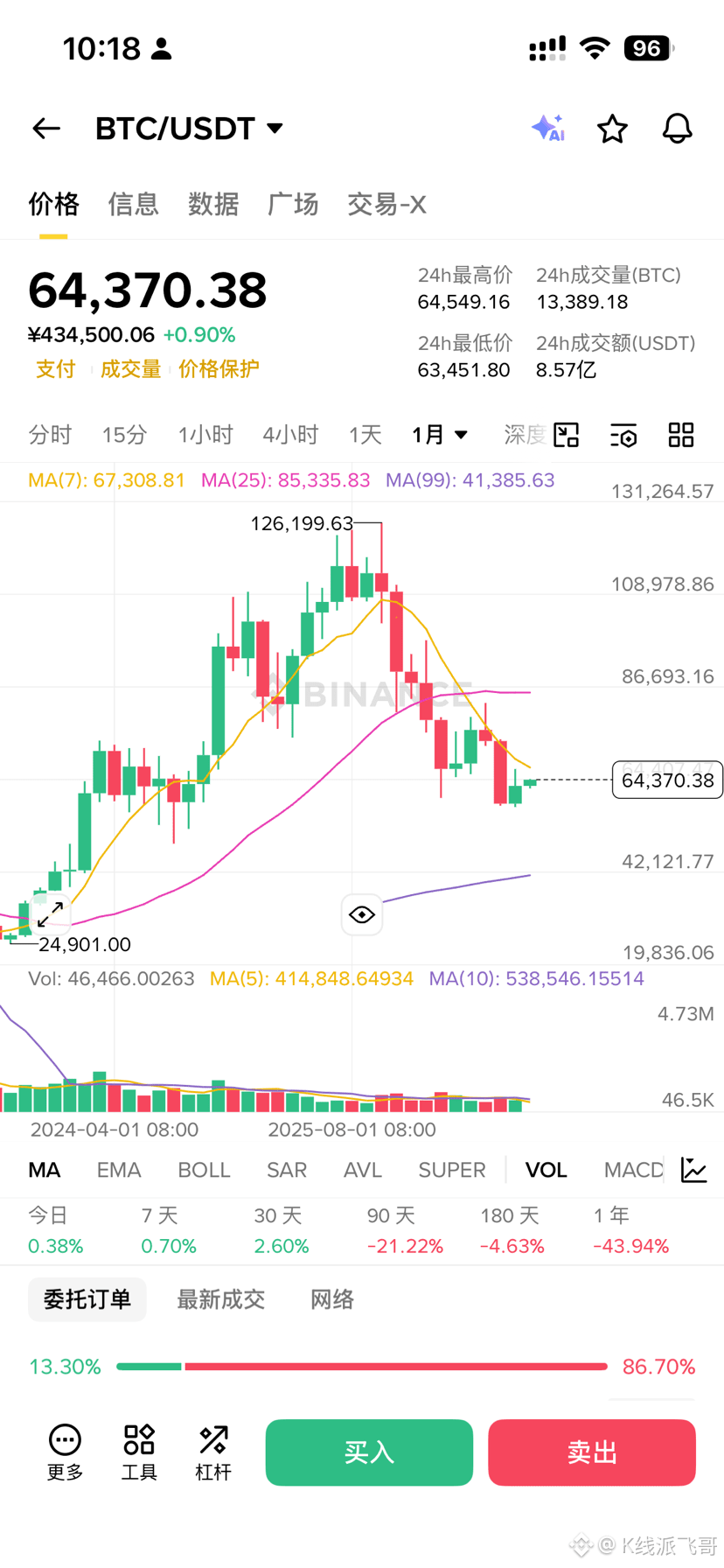
Some thoughts on investing in $BTC through regular contributions
Regarding my view on dollar-cost averaging, many people always think about waiting for a pullback—because I myself am a seasoned patient of “waiting for a pullback.”
In 2018, I felt that the US stocks had risen too much, so I decided to get in when they dropped -15%. As a result, in 2019 the S&P 500 rose by nearly 30%—and I just watched. Finally, in March 2020, the circuit breaker came. Four circuit breakers in ten days. Buffett said it took him 89 years to see a scene like that. I waited—and I waited for something much worse than -15%. Guess what? When it really arrived, everything on the screen was full of “this time is different” and “the US is over.” My hands were shaking, and in the end I could only buy half of the planned position. The other half later never got used at that price again.
After that, I came to understand one thing: people who wait for pullbacks are not really waiting for the price. They are waiting for a feeling of “comfort.” When has the market ever given you a comfortable good price? Was the price in March 2020 good? It came with lockdowns, unemployment, and doomsday talk everywhere. When a good price appears, it always comes with a sky full of bad news—and with your body’s instinctive unwillingness to buy. Whether you dare to buy once the price arrives is the core issue, and most people have never rehearsed that question.
Another point: that episode made me realize that position sizing matters more than judgment. My judgment in 2018 was actually correct—US stocks did crash later. But what does it matter if you were right and your position size didn’t follow? Being right without enough position is still pointless.
So instead of asking, “Will BTC go below 50,000?” change the rule from a price to an action. Don’t set $BTC to “go all-in and wipe at 45,000.” Set it to “when it drops 10%, add one more tranche.” After that, lie flat. If it breaks through some level, recognize the error and exit.
Now write it down clearly: what you will buy, how much you will buy, and which money you will use. After you buy, how long will you hold. Do you keep a portion of your position permanently inside the market, so you hold even when it rises?
Answer these questions right now, and write them down—specifically. Be specific: which coin, how many tranches, what price triggers the buy, and where you will admit you’re wrong after it drops and exit. Once written, place it somewhere you can access and flip to anytime. Because when that day truly comes, with bad news everywhere, your brain can’t be relied on.
I’ve tried it.
#比特币收复6.4万美元关口
Regarding my view on dollar-cost averaging, many people always think about waiting for a pullback—because I myself am a seasoned patient of “waiting for a pullback.”
In 2018, I felt that the US stocks had risen too much, so I decided to get in when they dropped -15%. As a result, in 2019 the S&P 500 rose by nearly 30%—and I just watched. Finally, in March 2020, the circuit breaker came. Four circuit breakers in ten days. Buffett said it took him 89 years to see a scene like that. I waited—and I waited for something much worse than -15%. Guess what? When it really arrived, everything on the screen was full of “this time is different” and “the US is over.” My hands were shaking, and in the end I could only buy half of the planned position. The other half later never got used at that price again.
After that, I came to understand one thing: people who wait for pullbacks are not really waiting for the price. They are waiting for a feeling of “comfort.” When has the market ever given you a comfortable good price? Was the price in March 2020 good? It came with lockdowns, unemployment, and doomsday talk everywhere. When a good price appears, it always comes with a sky full of bad news—and with your body’s instinctive unwillingness to buy. Whether you dare to buy once the price arrives is the core issue, and most people have never rehearsed that question.
Another point: that episode made me realize that position sizing matters more than judgment. My judgment in 2018 was actually correct—US stocks did crash later. But what does it matter if you were right and your position size didn’t follow? Being right without enough position is still pointless.
So instead of asking, “Will BTC go below 50,000?” change the rule from a price to an action. Don’t set $BTC to “go all-in and wipe at 45,000.” Set it to “when it drops 10%, add one more tranche.” After that, lie flat. If it breaks through some level, recognize the error and exit.
Now write it down clearly: what you will buy, how much you will buy, and which money you will use. After you buy, how long will you hold. Do you keep a portion of your position permanently inside the market, so you hold even when it rises?
Answer these questions right now, and write them down—specifically. Be specific: which coin, how many tranches, what price triggers the buy, and where you will admit you’re wrong after it drops and exit. Once written, place it somewhere you can access and flip to anytime. Because when that day truly comes, with bad news everywhere, your brain can’t be relied on.
I’ve tried it.
#比特币收复6.4万美元关口