


The market may be overlooking a dangerous warning sign
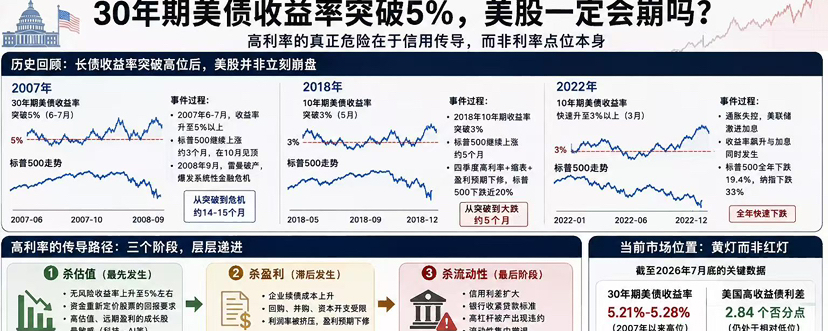
The 30-year U.S. Treasury yield jumps above 5.27%, hitting the highest level since 2007
Many people are watching the stock market, watching AI, watching hopes for rate cuts—but the “keystone” that truly determines the fate of global assets is violently shaking
The surge in Treasury yields, on the surface, looks like a rates issue. But what’s really hidden behind it is the market’s concern about a more terrifying problem:
An inflation ghost may be returning
Of course, we still can’t say for sure that a financial crisis will definitely happen
But history tells us that the truly dangerous moment is never the day the crisis erupts—it’s the day the market starts ignoring risk
And now, some dangerous signals are appearing at the same time:
U.S. Treasury yields keep climbing;
Inflation expectations are heating up again and again;
Oil prices are strengthening again;
A split has emerged within the Federal Reserve over policy direction
After the July 29 Federal Reserve meeting, the 30-year Treasury yield briefly surged above 5.27%
What does this number mean?
This means the market is repricing the future
Many people see June’s PCE month-on-month decline and conclude that inflation is over
But markets never trade yesterday’s data—they trade tomorrow’s risks
PCE is already-published results
And U.S. Treasury yields are the market’s forecast of how well it will do on the next test
What the market is really afraid of now is:
If oil prices rise again, will inflation flare back to life?
If the U.S. economy continues to stay strong, will the Fed be forced to keep rates high—or even pivot back to a hawkish stance?
If the situation between Iran and the U.S. deteriorates further, energy prices could become the next hidden bomb
Oil prices aren’t an ordinary commodity
It’s like a lit fuse buried in the economic system
Once ignited, it can quickly spread to transportation costs, corporate profits, and consumer prices—ultimately pushing up inflation expectations again
What’s more troublesome is that the U.S. economy currently shows no clear signs of stalling
Domestic demand remains strong within the second quarter, which shows that high interest rates haven’t completely crushed the economy
The more resilient the economy is, the fewer reasons the Fed has to cut rates
And when the 30-year U.S. Treasury yield breaks through a multi-year range, it looks more like it’s issuing a warning to the market:
The era that relied on low interest rates to drive valuation expansion is now being put on trial again
Looking back at history, every time U.S. Treasury yields rise rapidly, it delivers a huge shock to risk assets
In 2022, the Fed’s aggressive rate hikes sent U.S. Treasury yields soaring, and the tech sector of U.S. equities faced a major valuation reset
Before the 2008 financial crisis, the market also underestimated the destructive power created by the overlap of debt, interest rates, and financial-system risk
Right now, the market is like a large ship sailing at high speed
AI is the engine
Corporate earnings are the fuel
And U.S. Treasury yields are the increasingly rough waves
The faster the ship goes, the bigger the storm—the hidden risks can’t be ignored
I believe the three biggest sources of risk for U.S. stocks in the second half of the year are:
First, whether the 30-year U.S. Treasury yield breaks above 5.3% and once again lifts the global asset-valuation anchor
Second, will oil prices surge again due to geopolitical conflict, triggering a second round of inflation shock?
Third, whether the AI investment frenzy can truly translate into profits—if the pace of capital投入 exceeds the pace of earnings realization, highly valued assets could face a fresh repricing
My take:
It isn’t time yet to announce that “a financial crisis is here”
But the market is entering a highly sensitive and dangerous window
From August to year-end, U.S. stocks may no longer be in the kind of mindless uptrend of the past
The next real contest will take place in
Valuation
Liquidity
Economic reality
Among the three
When prices rise, all assets can join the celebration
But when the tide goes out, you’ll only then know who truly has assets—and who’s just a bubble
The market’s test may be only just beginning