
玖玖说Web3
623 Posts
 LIVE
LIVE玖玖说Web3
6年在圈子的经验,公众号:比特雷达。取每日CF资讯
9 Following
1.8K+ Followers
257 Liked
Posts
All
Live
🚨 U.S. Treasury Secretary personally steps in to pressure lawmakers to vote! Will the CLARITY Act clear the 60-vote threshold on September 15?
Group: 点击进入玖玖的粉丝群
👀 One-sentence summary of the event: U.S. Treasury Secretary Bessent publicly urged the Senate to advance the CLARITY Act, warning that if it still doesn’t pass, the U.S. will lose its global leadership position in the crypto industry.
📊 Putting the numbers in perspective: The procedural vote in the Senate on September 15 requires 60 votes to pass. Republicans currently hold 53 seats, meaning at least 7 Democratic lawmakers would need to switch sides to support it. Vote-count negotiations are still in flux.
🔥 What’s behind the numbers: Bessent has been pushing since July, and this time he has raised the bill to the level of national security and international competitiveness. He was blunt: CLARITY would draw a clear regulatory line between the SEC and the CFTC for digital assets, and provide the government with tools to crack down on illegal use. Hesitation, he argues, is a sign of weakness toward the opponent. Wyoming Senator Lummis also chimed in—if the bill is delayed again, digital finance leadership will have to cede to China.
💡 What’s truly worth watching isn’t just the bill itself, but the shift in the U.S. Treasury’s stance—from regulatory crackdowns to treating crypto legislation as a national strategy. The role and positioning of digital assets in the U.S. has already changed script.
⚠️ Cold water on the hype: The 60-vote threshold is a tough bone to chew. Republican Senator Tillis has publicly questioned whether the numbers can be gathered, while Democrats still insist on including an ethics provision to limit officials’ crypto holdings. The trading and bargaining on both sides has just begun—September 15 may only be the first round of a long game. Don’t set expectations too high.
👀 Do you think the CLARITY Act can secure the 60 votes this time? Let’s discuss in the comments below👇
Click the avatar to watch the livestream + join the Jiujiu chat group to get daily strategies🚀
#CLARITY法案 #Ripple游说推进CLARITY法案投票 #比特币 #加密市场
Group: 点击进入玖玖的粉丝群
👀 One-sentence summary of the event: U.S. Treasury Secretary Bessent publicly urged the Senate to advance the CLARITY Act, warning that if it still doesn’t pass, the U.S. will lose its global leadership position in the crypto industry.
📊 Putting the numbers in perspective: The procedural vote in the Senate on September 15 requires 60 votes to pass. Republicans currently hold 53 seats, meaning at least 7 Democratic lawmakers would need to switch sides to support it. Vote-count negotiations are still in flux.
🔥 What’s behind the numbers: Bessent has been pushing since July, and this time he has raised the bill to the level of national security and international competitiveness. He was blunt: CLARITY would draw a clear regulatory line between the SEC and the CFTC for digital assets, and provide the government with tools to crack down on illegal use. Hesitation, he argues, is a sign of weakness toward the opponent. Wyoming Senator Lummis also chimed in—if the bill is delayed again, digital finance leadership will have to cede to China.
💡 What’s truly worth watching isn’t just the bill itself, but the shift in the U.S. Treasury’s stance—from regulatory crackdowns to treating crypto legislation as a national strategy. The role and positioning of digital assets in the U.S. has already changed script.
⚠️ Cold water on the hype: The 60-vote threshold is a tough bone to chew. Republican Senator Tillis has publicly questioned whether the numbers can be gathered, while Democrats still insist on including an ethics provision to limit officials’ crypto holdings. The trading and bargaining on both sides has just begun—September 15 may only be the first round of a long game. Don’t set expectations too high.
👀 Do you think the CLARITY Act can secure the 60 votes this time? Let’s discuss in the comments below👇
Click the avatar to watch the livestream + join the Jiujiu chat group to get daily strategies🚀
#CLARITY法案 #Ripple游说推进CLARITY法案投票 #比特币 #加密市场
🚨 A burger joint accepts Bitcoin, and in-store sales jump 19%! Crushing McDonald's and Taco Bell—can crypto payments really save brick-and-mortar business?
Group: 点击进入玖玖的粉丝群
👀 One-sentence event: U.S. burger chain Steak 'n Shake announced that its franchise locations saw a 19% increase in same-store sales this quarter. The company attributes this growth to integrating Bitcoin’s Lightning Network for payments starting in May 2025.
📊 Making the numbers concrete: By comparison, traditional credit card processing fees are typically around 2.5%–3.5%. With the Lightning Network, Steak 'n Shake reportedly saved about half on payment costs. And this year, the company also put $10 million worth of Bitcoin into strategic reserves—not just “holding for fun,” but putting real money on the line.
🔥 Behind the numbers: Executive Boes, speaking at the Bitcoin 2026 conference, said same-store sales rose 11% in 2025 Q2 and accelerated to 15% in Q3—outpacing McDonald’s, Taco Bell, and Domino’s. The processing-fee savings turn into profit margins and room for promotions—this is the business logic physical stores are willing to accept.
💡 What’s truly worth watching isn’t the gimmick of “buying burgers with Bitcoin,” but rather that once the Lightning Network pushes micro-payment costs close to zero, merchants finally have a collection option that’s more cost-effective than those offered by card processors. The payment revolution starts from the merchant’s cost ledger.
⚠️ Cold water: One store’s sample can’t represent the whole industry. Bitcoin’s price is volatile, so the real value merchants receive isn’t stable. Also, Lightning Network usage habits and liquidity haven’t reached broad adoption yet—don’t mistake a case story for a general trend in physical retail.
👀 If the restaurant downstairs supports Bitcoin payments, would you use it to pay, or would you rather keep your coins and wait for appreciation? Let’s talk in the comments below 👇
Click the avatar to watch the live stream + join the Jiujiu chat group to get daily strategies 🚀
#比特币 #BTC #crypto market
Group: 点击进入玖玖的粉丝群
👀 One-sentence event: U.S. burger chain Steak 'n Shake announced that its franchise locations saw a 19% increase in same-store sales this quarter. The company attributes this growth to integrating Bitcoin’s Lightning Network for payments starting in May 2025.
📊 Making the numbers concrete: By comparison, traditional credit card processing fees are typically around 2.5%–3.5%. With the Lightning Network, Steak 'n Shake reportedly saved about half on payment costs. And this year, the company also put $10 million worth of Bitcoin into strategic reserves—not just “holding for fun,” but putting real money on the line.
🔥 Behind the numbers: Executive Boes, speaking at the Bitcoin 2026 conference, said same-store sales rose 11% in 2025 Q2 and accelerated to 15% in Q3—outpacing McDonald’s, Taco Bell, and Domino’s. The processing-fee savings turn into profit margins and room for promotions—this is the business logic physical stores are willing to accept.
💡 What’s truly worth watching isn’t the gimmick of “buying burgers with Bitcoin,” but rather that once the Lightning Network pushes micro-payment costs close to zero, merchants finally have a collection option that’s more cost-effective than those offered by card processors. The payment revolution starts from the merchant’s cost ledger.
⚠️ Cold water: One store’s sample can’t represent the whole industry. Bitcoin’s price is volatile, so the real value merchants receive isn’t stable. Also, Lightning Network usage habits and liquidity haven’t reached broad adoption yet—don’t mistake a case story for a general trend in physical retail.
👀 If the restaurant downstairs supports Bitcoin payments, would you use it to pay, or would you rather keep your coins and wait for appreciation? Let’s talk in the comments below 👇
Click the avatar to watch the live stream + join the Jiujiu chat group to get daily strategies 🚀
#比特币 #BTC #crypto market

Verified
🚨 The MetaMask with over 100 million downloads is going independent! Consensys splits into two by the end of the year—will the wallet and institutional business part ways?
Group: 点击进入玖玖的粉丝群
👀 One-sentence update: On Wednesday, Ethereum software giant Consensys officially announced it will split into two independent companies by the end of 2026—MetaMask will focus on consumer business, while the new Consensys will focus on protocols and institutional infrastructure such as Linea, Besu, and Teku.
📊 Putting the numbers in context: MetaMask has accumulated over 100 million downloads, reaches about 190 countries, and has handled transaction volumes in the trillions of dollars; after the split, Joe Lubin will serve as Chairman and CEO of MetaMask, while Mike Kriak will lead the new Consensys, focusing on institutional on-chain financial services such as tokenization and stablecoins.
🔥 What’s behind the numbers: The split has been in the works—In June, MetaMask launched Money Account, where the mUSD balance can earn up to 4% annualized; in February, it connected 200 tokenized US stocks and ETFs via Ondo, and the Mastercard co-branded card has already been rolled out across 49 US states. The wallet has long wanted to do more than just be a wallet.
💡 What’s really worth watching isn’t the “split” itself, but MetaMask’s transformation into a “crypto version of an all-purpose bank”: payments, savings, investing, and tokenized assets—everything is on the table. The battle for retail entry points is officially entering the second half.
⚠️ A dose of cold water: The split won’t be completed until year-end, and there are execution variables in between; MetaMask’s compliance threshold for shifting from a wallet to a financial platform is far higher than for building tools—especially when it comes to US regulation. Don’t treat the roadmap as performance that has already been delivered.
👀 Would you put your everyday savings and investments into a single crypto wallet? Or only dare to keep spare change there? Let’s chat in the comments below 👇
Click the avatar to watch the live stream + join the Jiujiu chat group to get daily strategies 🚀
#MetaMask #ETH #crypto market
Group: 点击进入玖玖的粉丝群
👀 One-sentence update: On Wednesday, Ethereum software giant Consensys officially announced it will split into two independent companies by the end of 2026—MetaMask will focus on consumer business, while the new Consensys will focus on protocols and institutional infrastructure such as Linea, Besu, and Teku.
📊 Putting the numbers in context: MetaMask has accumulated over 100 million downloads, reaches about 190 countries, and has handled transaction volumes in the trillions of dollars; after the split, Joe Lubin will serve as Chairman and CEO of MetaMask, while Mike Kriak will lead the new Consensys, focusing on institutional on-chain financial services such as tokenization and stablecoins.
🔥 What’s behind the numbers: The split has been in the works—In June, MetaMask launched Money Account, where the mUSD balance can earn up to 4% annualized; in February, it connected 200 tokenized US stocks and ETFs via Ondo, and the Mastercard co-branded card has already been rolled out across 49 US states. The wallet has long wanted to do more than just be a wallet.
💡 What’s really worth watching isn’t the “split” itself, but MetaMask’s transformation into a “crypto version of an all-purpose bank”: payments, savings, investing, and tokenized assets—everything is on the table. The battle for retail entry points is officially entering the second half.
⚠️ A dose of cold water: The split won’t be completed until year-end, and there are execution variables in between; MetaMask’s compliance threshold for shifting from a wallet to a financial platform is far higher than for building tools—especially when it comes to US regulation. Don’t treat the roadmap as performance that has already been delivered.
👀 Would you put your everyday savings and investments into a single crypto wallet? Or only dare to keep spare change there? Let’s chat in the comments below 👇
Click the avatar to watch the live stream + join the Jiujiu chat group to get daily strategies 🚀
#MetaMask #ETH #crypto market

Verified
🚨 The U.S.’s fifth-largest bank successfully processes its first cross-border stablecoin payment! USBDC lands on Stellar—will banks take over the payments race?
Group: 点击进入玖玖的粉丝群
👀 One-sentence update: On Wednesday, U.S. Bank announced that it completed a real cross-border remittance on the Stellar blockchain using its own stablecoin, USBDC, with funds flowing between its North American and European entities.
📊 Making it concrete: The test was more than just a transfer—it fully validated USBDC’s issuance, redemption, freezing, and clawback functionality, and integrated it into the bank’s existing risk controls, compliance, and operations systems. The U.S.’s fifth-largest commercial bank had already started testing as early as November 2025 together with PwC and the Stellar Development Foundation.
🔥 What’s behind the numbers: Bank-affiliated stablecoins are moving from PPT slides into real transactions. Previously, 21 Wall Street giants (including Bank of America, Citigroup, Goldman Sachs, Deutsche Bank, and UBS) just announced a joint venture to issue stablecoins. Fidelity’s FIDD has also already gone live with roughly $50 million in circulation—this time, traditional banks are entering the game as a group.
💡 What’s truly worth watching isn’t this USBDC transfer, but how fast banks are folding stablecoins into the core line of internal treasury management: cross-border treasury, liquidity management, and tokenizing collateral are all next up.
⚠️ A bucket of cold water: A pilot isn’t the same as commercial use. USBDC is currently limited to testing between internal bank entities. Regulatory requirements for reserves and compliance for bank-issued stablecoins remain the biggest variable—don’t equate a single successful test with overturning the existing cross-border system.
👀 Do you think bank-backed stablecoins will outpace current issuers, or are they just compliance toys for big banks? Let’s discuss in the comments below👇
Click the profile icon to watch the livestream + join the Jiujiu chat group to get daily strategies 🚀
#美国银行集团完成USBDC稳定币试点 #稳定币 #cryptocurrency market
Group: 点击进入玖玖的粉丝群
👀 One-sentence update: On Wednesday, U.S. Bank announced that it completed a real cross-border remittance on the Stellar blockchain using its own stablecoin, USBDC, with funds flowing between its North American and European entities.
📊 Making it concrete: The test was more than just a transfer—it fully validated USBDC’s issuance, redemption, freezing, and clawback functionality, and integrated it into the bank’s existing risk controls, compliance, and operations systems. The U.S.’s fifth-largest commercial bank had already started testing as early as November 2025 together with PwC and the Stellar Development Foundation.
🔥 What’s behind the numbers: Bank-affiliated stablecoins are moving from PPT slides into real transactions. Previously, 21 Wall Street giants (including Bank of America, Citigroup, Goldman Sachs, Deutsche Bank, and UBS) just announced a joint venture to issue stablecoins. Fidelity’s FIDD has also already gone live with roughly $50 million in circulation—this time, traditional banks are entering the game as a group.
💡 What’s truly worth watching isn’t this USBDC transfer, but how fast banks are folding stablecoins into the core line of internal treasury management: cross-border treasury, liquidity management, and tokenizing collateral are all next up.
⚠️ A bucket of cold water: A pilot isn’t the same as commercial use. USBDC is currently limited to testing between internal bank entities. Regulatory requirements for reserves and compliance for bank-issued stablecoins remain the biggest variable—don’t equate a single successful test with overturning the existing cross-border system.
👀 Do you think bank-backed stablecoins will outpace current issuers, or are they just compliance toys for big banks? Let’s discuss in the comments below👇
Click the profile icon to watch the livestream + join the Jiujiu chat group to get daily strategies 🚀
#美国银行集团完成USBDC稳定币试点 #稳定币 #cryptocurrency market

🚨 Can pledging $1 million in Bitcoin get a $700,000 loan? The discount line JPMorgan revealed exposes banks’ true attitude toward BTC
Group: 点击进入玖玖的粉丝群
👀 One-sentence update: Standard Chartered Bank has launched institutional-grade spot BTC/ETH trading in the Dubai International Financial Centre, becoming the first globally systemically important bank to offer this kind of service; however, payments veteran Kaszycki says trading volume doesn’t count—when Bitcoin can enter a bank’s loan ledger, that’s when it’s truly being adopted.
📊 Making the numbers concrete: August’s report shows JPMorgan applies a 30%-50% haircut to Bitcoin collateral—pledging $1 million in BTC could translate to roughly $500,000 to $700,000 in borrowing capacity. With Bitcoin currently standing above $79,000, the collateral value and the banks’ risk exposure move up in sync. Standard Chartered has already rolled out a similar product in the UK in July 2025, and in September 2024 it obtained regulatory-licensed custody in the UAE.
🔥 Behind the numbers: he proposes the “three tests of true adoption”: the bank’s custody balances must rise; buying BTC should be possible using the bank’s credit line rather than paying upfront; and Bitcoin must be accepted by the bank as collateral with a publicly disclosed haircut rate. If it can be priced, custodied, and liquidated, then it’s real market entry—everything else is marketing.
💡 What really matters isn’t which exchange has higher trading volume, but whether Bitcoin can enter banks’ balance sheets. Once BTC can be pledged for loans, it shifts from “a speculative asset that just waits for price appreciation” to “a financing-capable asset”—this is the second institutional funding channel after ETFs.
⚠️ Cold shower: BTC-pledged loans are a double-edged sword—if prices plunge, margin calls can be triggered and even forced liquidations may follow. At present, pilot banks are still few, and the separation of custody and settlement remains unresolved. Don’t treat a few cases as a sign of broad-based loosening.
👀 Do you think once banks start accepting Bitcoin as loan collateral, the “digital gold” narrative for BTC will get stronger? Let’s discuss in the comments 👇
Click the avatar to watch the livestream + join the Jiujiu chat group for daily strategies 🚀
#比特币突破79000美元 #机构资金 #加密市场
Group: 点击进入玖玖的粉丝群
👀 One-sentence update: Standard Chartered Bank has launched institutional-grade spot BTC/ETH trading in the Dubai International Financial Centre, becoming the first globally systemically important bank to offer this kind of service; however, payments veteran Kaszycki says trading volume doesn’t count—when Bitcoin can enter a bank’s loan ledger, that’s when it’s truly being adopted.
📊 Making the numbers concrete: August’s report shows JPMorgan applies a 30%-50% haircut to Bitcoin collateral—pledging $1 million in BTC could translate to roughly $500,000 to $700,000 in borrowing capacity. With Bitcoin currently standing above $79,000, the collateral value and the banks’ risk exposure move up in sync. Standard Chartered has already rolled out a similar product in the UK in July 2025, and in September 2024 it obtained regulatory-licensed custody in the UAE.
🔥 Behind the numbers: he proposes the “three tests of true adoption”: the bank’s custody balances must rise; buying BTC should be possible using the bank’s credit line rather than paying upfront; and Bitcoin must be accepted by the bank as collateral with a publicly disclosed haircut rate. If it can be priced, custodied, and liquidated, then it’s real market entry—everything else is marketing.
💡 What really matters isn’t which exchange has higher trading volume, but whether Bitcoin can enter banks’ balance sheets. Once BTC can be pledged for loans, it shifts from “a speculative asset that just waits for price appreciation” to “a financing-capable asset”—this is the second institutional funding channel after ETFs.
⚠️ Cold shower: BTC-pledged loans are a double-edged sword—if prices plunge, margin calls can be triggered and even forced liquidations may follow. At present, pilot banks are still few, and the separation of custody and settlement remains unresolved. Don’t treat a few cases as a sign of broad-based loosening.
👀 Do you think once banks start accepting Bitcoin as loan collateral, the “digital gold” narrative for BTC will get stronger? Let’s discuss in the comments 👇
Click the avatar to watch the livestream + join the Jiujiu chat group for daily strategies 🚀
#比特币突破79000美元 #机构资金 #加密市场

🚨 Over 190 companies were “tokenized” without approval? AMC slams Robinhood, then even involves the SEC—are stock tokens innovation or a gray area?
Group: 点击进入玖玖的粉丝群
👀 The event in one sentence: Robinhood has launched a token product that tracks the AMC stock price. AMC CEO Adam Aron is furious: the company was unaware, not authorized—he calls it “outrageous,” demands a takedown, and says he will report it to the SEC. Robinhood CEO Tenev responded on CNBC on September 9: public companies have no right to veto other parties’ issuance of financial products.
📊 Making the numbers concrete: more than 190 companies have been “tokenized.” Tenev says there is a 1:1 real-stock backing behind each token, designed under a debt-security structure—holders can receive dividends, but they have no voting rights. Securitize’s CEO also gave an example: at one point, an AMC token traded about 60 times higher than the actual shares.
🔥 What’s really behind the noise: it’s about whether companies should “give the go-ahead.” What’s truly frightening is the pricing—on thin liquidity, token prices can break away from the underlying shares and fly on their own. This isn’t just two companies bickering; it’s a shared vulnerability across the tokenized securities track.
💡 What’s worth focusing on isn’t who’s right, but the regulatory vacuum: no voting rights, companies can’t stop third-party products, and prices may deviate sharply from the underlying shares. Until those three issues are addressed, the larger the scale, the more concentrated the risk.
⚠️ Cold water from the sidelines: once the SEC determines that these involve unregistered securities, the entire stock-token market may need to be repriced. When you see “XX stock token,” first tell which it is: is it the real stock, or a tracking contract?
👀 Do you think public companies should have the right to ban others from issuing tokens of their own stock? Chat in the comments below👇
Click the avatar to watch the live stream + join the 玖玖 chat group to get daily strategies🚀
#Robinhood #美股 #crypto market
Group: 点击进入玖玖的粉丝群
👀 The event in one sentence: Robinhood has launched a token product that tracks the AMC stock price. AMC CEO Adam Aron is furious: the company was unaware, not authorized—he calls it “outrageous,” demands a takedown, and says he will report it to the SEC. Robinhood CEO Tenev responded on CNBC on September 9: public companies have no right to veto other parties’ issuance of financial products.
📊 Making the numbers concrete: more than 190 companies have been “tokenized.” Tenev says there is a 1:1 real-stock backing behind each token, designed under a debt-security structure—holders can receive dividends, but they have no voting rights. Securitize’s CEO also gave an example: at one point, an AMC token traded about 60 times higher than the actual shares.
🔥 What’s really behind the noise: it’s about whether companies should “give the go-ahead.” What’s truly frightening is the pricing—on thin liquidity, token prices can break away from the underlying shares and fly on their own. This isn’t just two companies bickering; it’s a shared vulnerability across the tokenized securities track.
💡 What’s worth focusing on isn’t who’s right, but the regulatory vacuum: no voting rights, companies can’t stop third-party products, and prices may deviate sharply from the underlying shares. Until those three issues are addressed, the larger the scale, the more concentrated the risk.
⚠️ Cold water from the sidelines: once the SEC determines that these involve unregistered securities, the entire stock-token market may need to be repriced. When you see “XX stock token,” first tell which it is: is it the real stock, or a tracking contract?
👀 Do you think public companies should have the right to ban others from issuing tokens of their own stock? Chat in the comments below👇
Click the avatar to watch the live stream + join the 玖玖 chat group to get daily strategies🚀
#Robinhood #美股 #crypto market
🚨 Collect 0.2% based on transaction volume—January 1, 2027 is set to roll out. The U.S.’s first state-level crypto transaction tax—why have two major industry groups sued it?
Group: 点击进入玖玖的粉丝群
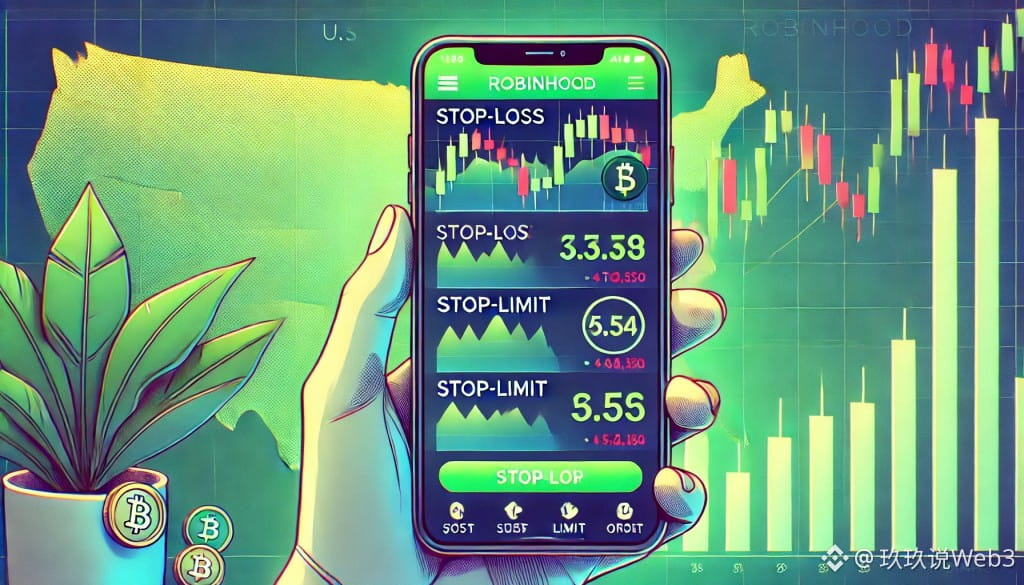
👀 Event in one sentence: In June, Illinois inserted a “digital asset privilege tax” into the FY2027 budget, charging a 0.2% levy on crypto transactions based on the transaction amount; on September 9, two major industry groups, the Crypto Council for Innovation and the Blockchain Association, filed for a preliminary injunction with the Sangamon County Circuit Court to halt it before it takes effect.
📊 Getting specific: The tax base isn’t profit but flow—pay $2 for every $1,000 transaction, so the more frequently you trade, the more you pay; the effective date is set for January 1, 2027. The industry argues the tax violates the U.S. Constitution, the Illinois state constitution, and the federal Internet Tax Freedom Act, and it also crosses the line on due process.
🔥 What’s behind the numbers: On the surface it’s a “small tax” of 0.2%, but the real issue is setting a precedent—if it’s upheld, it would become the first state tax in the U.S. specifically taxing crypto transactions based on transaction volume, and other states may simply copy it. The knock-on effects could be far bigger than the tax itself.
💡 What’s truly worth watching isn’t the 0.2% itself, but the regulatory mismatch: “federal legislation is slower, while states are moving first.” The CLARITY Act is scheduled to push through the Senate on September 15; if it’s delayed, all 50 states may write their own tax laws, and compliance costs could end up far higher than the tax.
⚠️ Cold water: Applying for an injunction doesn’t mean winning the case. The court might also refuse to grant an emergency halt; even worse, according to industry claims, companies may have to spend money now to build systems to comply. If the tax is ultimately overturned, that wasted money may not be recoverable.
👀 Do you think “states move first on taxes” will push more crypto companies to relocate to crypto-friendly states? Let’s discuss in the comments below👇
Click the avatar to watch the live stream + join the Jiuji chat group for daily strategies 🚀
#CLARITY法案 #加密市场 #Bitcoin
Group: 点击进入玖玖的粉丝群
👀 Event in one sentence: In June, Illinois inserted a “digital asset privilege tax” into the FY2027 budget, charging a 0.2% levy on crypto transactions based on the transaction amount; on September 9, two major industry groups, the Crypto Council for Innovation and the Blockchain Association, filed for a preliminary injunction with the Sangamon County Circuit Court to halt it before it takes effect.
📊 Getting specific: The tax base isn’t profit but flow—pay $2 for every $1,000 transaction, so the more frequently you trade, the more you pay; the effective date is set for January 1, 2027. The industry argues the tax violates the U.S. Constitution, the Illinois state constitution, and the federal Internet Tax Freedom Act, and it also crosses the line on due process.
🔥 What’s behind the numbers: On the surface it’s a “small tax” of 0.2%, but the real issue is setting a precedent—if it’s upheld, it would become the first state tax in the U.S. specifically taxing crypto transactions based on transaction volume, and other states may simply copy it. The knock-on effects could be far bigger than the tax itself.
💡 What’s truly worth watching isn’t the 0.2% itself, but the regulatory mismatch: “federal legislation is slower, while states are moving first.” The CLARITY Act is scheduled to push through the Senate on September 15; if it’s delayed, all 50 states may write their own tax laws, and compliance costs could end up far higher than the tax.
⚠️ Cold water: Applying for an injunction doesn’t mean winning the case. The court might also refuse to grant an emergency halt; even worse, according to industry claims, companies may have to spend money now to build systems to comply. If the tax is ultimately overturned, that wasted money may not be recoverable.
👀 Do you think “states move first on taxes” will push more crypto companies to relocate to crypto-friendly states? Let’s discuss in the comments below👇
Click the avatar to watch the live stream + join the Jiuji chat group for daily strategies 🚀
#CLARITY法案 #加密市场 #Bitcoin

🚨 Germany issues Bitcoin a "stock identity card"? The old rule still applies: hold for 1 year for tax exemption—though it’s about to shift to the "old-and-new rules separated" approach
Group: 点击进入玖玖的粉丝群
👀 One-sentence update: CoinDesk reported on Sept 9 that a new draft in Germany would treat Bitcoin as stocks for taxation, targeting the current advantage of "selling after holding for a full year to be exempt"—but existing holdings would keep the old treatment; this change is aimed only at incremental purchases.
📊 Make it concrete: The current rule can be summarized in one sentence: German individual investors who hold Bitcoin for more than 12 months can sell and have their gains exempt from tax. That’s also why insiders regard Germany as a "crypto-holder friendly" jurisdiction. The draft’s direction is: newly bought Bitcoin would be taxed like stock capital gains. The old holdings before the draft becomes law would continue under the old rules—typical "newcomers use the new methods, veterans use the old methods".
🔥 What’s behind the numbers: Don’t just focus on the three words "collect taxes." The prerequisite for stock-style taxation is that Bitcoin is officially recognized as a mature asset category subject to tax. Ten years ago, regulators were纠结 about whether Bitcoin counts as an asset; now Germany is纠结 about which tax code to apply to it. The level of the debate has effectively been upgraded.
💡 What’s truly worth watching isn’t how much tax Germany can collect, but the fact that major European economies are starting to lock Bitcoin into place using "stock treatment." Once the tax framework is settled, the next steps are institutional compliance frameworks, custody standards, and asset-management products. Taxation is always one of the hardest pieces of the puzzle on the path toward asset maturity. Germany stepping down on this move is essentially a test run for the whole EU region.
⚠️ Cold splash of water: The draft is still far from becoming reality. Germany’s legislative process is notoriously slow, and it’s common for provisions to come out completely rewritten after passing through Parliament. Also, don’t scare yourself about incremental holdings: capital gains tax is "generated only when you have profits." Panic rebalancing at this point could, instead, wash out low-cost coins.
👀 If the Bitcoin you hold has already been held for more than a year, would you adjust your plan to catch the "old rules" window? Let’s discuss in the comments below 👇
Click your avatar to watch the livestream + join the 玖玖 chat group to get daily strategies 🚀
#比特币 #BTC #德国 #加密市场
Group: 点击进入玖玖的粉丝群
👀 One-sentence update: CoinDesk reported on Sept 9 that a new draft in Germany would treat Bitcoin as stocks for taxation, targeting the current advantage of "selling after holding for a full year to be exempt"—but existing holdings would keep the old treatment; this change is aimed only at incremental purchases.
📊 Make it concrete: The current rule can be summarized in one sentence: German individual investors who hold Bitcoin for more than 12 months can sell and have their gains exempt from tax. That’s also why insiders regard Germany as a "crypto-holder friendly" jurisdiction. The draft’s direction is: newly bought Bitcoin would be taxed like stock capital gains. The old holdings before the draft becomes law would continue under the old rules—typical "newcomers use the new methods, veterans use the old methods".
🔥 What’s behind the numbers: Don’t just focus on the three words "collect taxes." The prerequisite for stock-style taxation is that Bitcoin is officially recognized as a mature asset category subject to tax. Ten years ago, regulators were纠结 about whether Bitcoin counts as an asset; now Germany is纠结 about which tax code to apply to it. The level of the debate has effectively been upgraded.
💡 What’s truly worth watching isn’t how much tax Germany can collect, but the fact that major European economies are starting to lock Bitcoin into place using "stock treatment." Once the tax framework is settled, the next steps are institutional compliance frameworks, custody standards, and asset-management products. Taxation is always one of the hardest pieces of the puzzle on the path toward asset maturity. Germany stepping down on this move is essentially a test run for the whole EU region.
⚠️ Cold splash of water: The draft is still far from becoming reality. Germany’s legislative process is notoriously slow, and it’s common for provisions to come out completely rewritten after passing through Parliament. Also, don’t scare yourself about incremental holdings: capital gains tax is "generated only when you have profits." Panic rebalancing at this point could, instead, wash out low-cost coins.
👀 If the Bitcoin you hold has already been held for more than a year, would you adjust your plan to catch the "old rules" window? Let’s discuss in the comments below 👇
Click your avatar to watch the livestream + join the 玖玖 chat group to get daily strategies 🚀
#比特币 #BTC #德国 #加密市场
🚨 Crude oil breaks back above $100, Goldman warns it could still rise to $120—what does this mean for BTC: a bearish move or a safe-haven positive?
Group: 点击进入玖玖的粉丝群
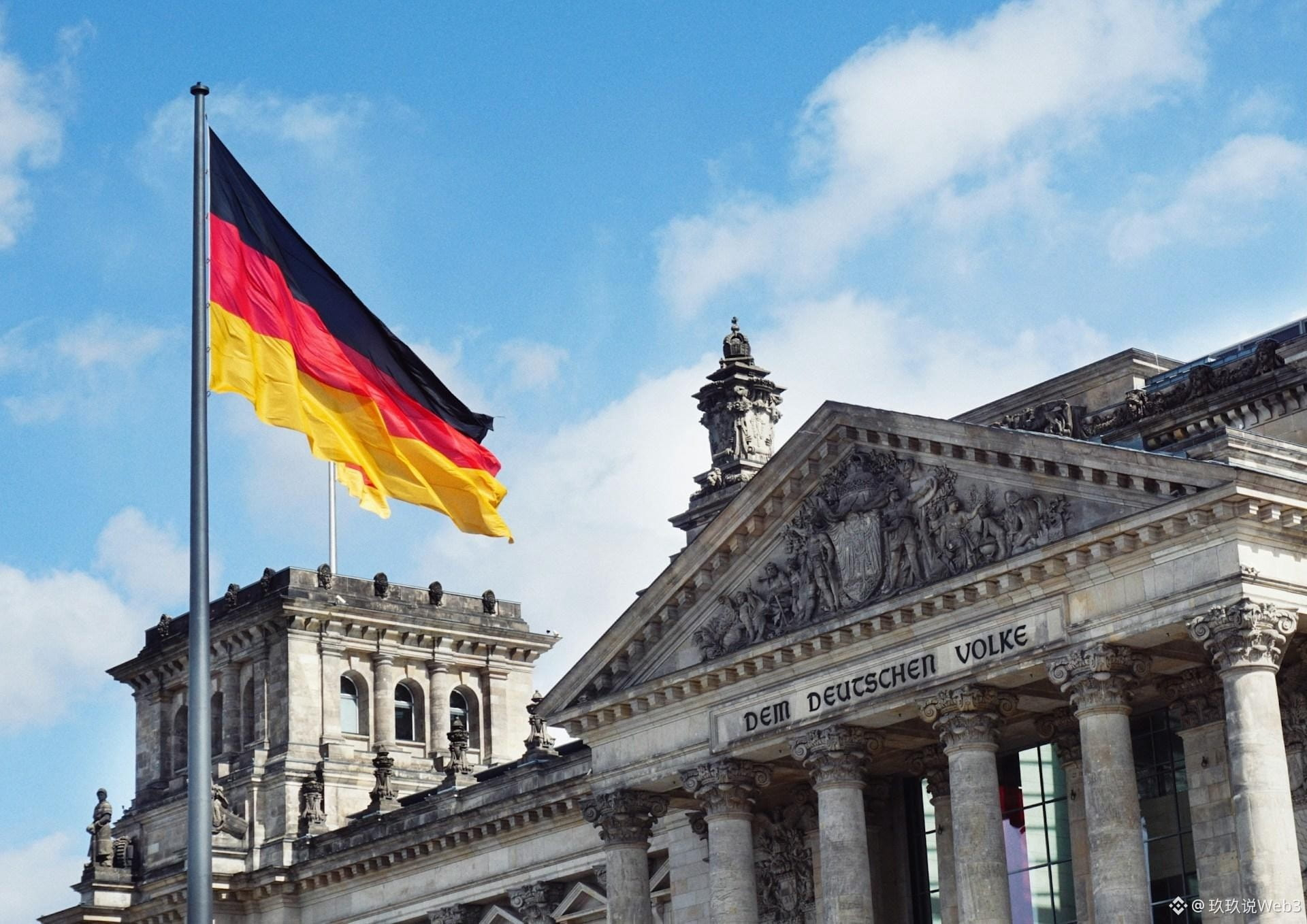
👀 Event in one sentence: With geopolitical tensions escalating, Brent crude has returned to trade above the $100 level for the first time since July. Goldman warns that if sea transport remains disrupted, Brent could probe as high as $120.
📊 Putting the numbers in perspective: As one of the world’s most critical oil chokepoints, the Strait of Hormuz currently has tanker traffic volume at only about half of what it was before the conflict. Goldman raised its December Brent forecast by $5 as of Monday and noted that if supply gaps in the Gulf persist into next year, there is a risk that oil prices could trade above $120—high oil prices likely won’t be just a short-lived spike.
🔥 What’s behind the numbers: Oil prices are the “master switch” for inflation—when energy rises, CPI expectations across countries increase as well, directly shrinking central banks’ room to cut rates. Market expectations for a Fed rate hike in September have already clearly warmed up, and that is the core logic behind suppressing risk assets.
💡 What’s really worth watching isn’t oil prices themselves, but the liquidity signal they transmit: the higher rate expectations are, the more attractive risk-free returns become—so capital is more inclined to move out of high-volatility assets. BTC likely won’t be able to stay immune in the short term.
⚠️ A bucket of cold water: Don’t treat the “safe-haven narrative” as a universal shield—historically, in the early stages of geopolitical shocks, BTC often falls together with U.S. stocks, and safe-haven buying tends to lag. The real opportunity may come only after rate-expectation signals turn.
👀 Do you think this move with oil breaking above $100 will drag BTC down or will it carve out an independent trend? Let’s discuss in the comments below👇
Click the avatar to watch the live stream + join the Jiujiu chat group to get daily strategies 🚀
#原油涨至7月来最高 #原油 #比特币 #FederalReserve
Group: 点击进入玖玖的粉丝群
👀 Event in one sentence: With geopolitical tensions escalating, Brent crude has returned to trade above the $100 level for the first time since July. Goldman warns that if sea transport remains disrupted, Brent could probe as high as $120.
📊 Putting the numbers in perspective: As one of the world’s most critical oil chokepoints, the Strait of Hormuz currently has tanker traffic volume at only about half of what it was before the conflict. Goldman raised its December Brent forecast by $5 as of Monday and noted that if supply gaps in the Gulf persist into next year, there is a risk that oil prices could trade above $120—high oil prices likely won’t be just a short-lived spike.
🔥 What’s behind the numbers: Oil prices are the “master switch” for inflation—when energy rises, CPI expectations across countries increase as well, directly shrinking central banks’ room to cut rates. Market expectations for a Fed rate hike in September have already clearly warmed up, and that is the core logic behind suppressing risk assets.
💡 What’s really worth watching isn’t oil prices themselves, but the liquidity signal they transmit: the higher rate expectations are, the more attractive risk-free returns become—so capital is more inclined to move out of high-volatility assets. BTC likely won’t be able to stay immune in the short term.
⚠️ A bucket of cold water: Don’t treat the “safe-haven narrative” as a universal shield—historically, in the early stages of geopolitical shocks, BTC often falls together with U.S. stocks, and safe-haven buying tends to lag. The real opportunity may come only after rate-expectation signals turn.
👀 Do you think this move with oil breaking above $100 will drag BTC down or will it carve out an independent trend? Let’s discuss in the comments below👇
Click the avatar to watch the live stream + join the Jiujiu chat group to get daily strategies 🚀
#原油涨至7月来最高 #原油 #比特币 #FederalReserve
Verified
🚨 85% of ETH is staked, earning $330 million a year— is this company turning ETH into a chicken that lays golden eggs?
Group: 点击进入玖玖的粉丝群
👀 One-sentence event: U.S. Ethereum vault management company BitMine has again bought 28,086 ETH, bringing its total reserves to 5.929 million ETH and a market value of about $14.78 billion; more importantly, it has staked 85% of its holdings.
📊 Put the numbers in context: BitMine currently stakes 5.067 million ETH through its own MAVAN validation network. Based on current yields, its annualized staking income is roughly $330 million. The company is 97% of the way to its goal of “holding 5% of the total Ethereum supply,” with only 170,000 ETH remaining.
🔥 What’s behind the numbers: This isn’t just a regular “hoard coins” play—it’s using real value to validate a logic: ETH doesn’t only wait for price appreciation; it can also generate cash flow continuously, like rental income. Traditional treasury firms typically buy and hold, while BitMine turns idle assets directly into income-generating ones.
💡 What’s truly worth watching isn’t how much it buys, but that “institutions are starting to price ETH’s ability to generate yield”: when staking returns can cover the cost of holding, an institution’s confidence holding ETH becomes fundamentally different from simply holding a bond.
⚠️ A bucket of cold water: staking yields will fluctuate with the total amount of ETH staked and network fees. The $330 million figure is calculated based on current annualized estimates. Also, large holdings are a double-edged sword—if the market weakens, there can be timing differences when unstaking and withdrawing already-staked ETH. Don’t treat institutional actions as a short-term market signal.
👀 Do you think “staking and earning yield” will make institutions more willing to hoard ETH? Drop your thoughts in the comments below 👇
Click the profile picture to watch the live stream + join the Jiujiu chat group for daily strategies 🚀
#ETH #机构资金 #加密市场
Group: 点击进入玖玖的粉丝群
👀 One-sentence event: U.S. Ethereum vault management company BitMine has again bought 28,086 ETH, bringing its total reserves to 5.929 million ETH and a market value of about $14.78 billion; more importantly, it has staked 85% of its holdings.
📊 Put the numbers in context: BitMine currently stakes 5.067 million ETH through its own MAVAN validation network. Based on current yields, its annualized staking income is roughly $330 million. The company is 97% of the way to its goal of “holding 5% of the total Ethereum supply,” with only 170,000 ETH remaining.
🔥 What’s behind the numbers: This isn’t just a regular “hoard coins” play—it’s using real value to validate a logic: ETH doesn’t only wait for price appreciation; it can also generate cash flow continuously, like rental income. Traditional treasury firms typically buy and hold, while BitMine turns idle assets directly into income-generating ones.
💡 What’s truly worth watching isn’t how much it buys, but that “institutions are starting to price ETH’s ability to generate yield”: when staking returns can cover the cost of holding, an institution’s confidence holding ETH becomes fundamentally different from simply holding a bond.
⚠️ A bucket of cold water: staking yields will fluctuate with the total amount of ETH staked and network fees. The $330 million figure is calculated based on current annualized estimates. Also, large holdings are a double-edged sword—if the market weakens, there can be timing differences when unstaking and withdrawing already-staked ETH. Don’t treat institutional actions as a short-term market signal.
👀 Do you think “staking and earning yield” will make institutions more willing to hoard ETH? Drop your thoughts in the comments below 👇
Click the profile picture to watch the live stream + join the Jiujiu chat group for daily strategies 🚀
#ETH #机构资金 #加密市场

🚨 Dropping from 82% to 15% by probability! In the Senate vote on September 15, could this be a turning point for U.S. crypto regulation?
Group: 点击进入玖玖的粉丝群
👀 One-sentence event: The U.S. “CLARITY Act” is entering a key showdown— the Senate is scheduled to hold a procedural vote on September 15. There are only 6 days left, but even the Republicans inside the party that wrote the bill are showing signs of wavering.
📊 Making the numbers concrete: On platforms like Polymarket, the probability that this bill will become law this year has fallen to just 15% (as of September 8). Back in February, the figure was as high as 82%. The House passed it previously with 294 votes to 134, and both the Senate Agriculture and Banking committees have also cleared it; the bottleneck is entirely the full Senate vote.
🔥 What’s behind the numbers: The core of the bill can be summed up in one line— spot digital commodity products fall under the exclusive regulation of the CFTC, while securities fall under the SEC, ending years of tug-of-war over responsibilities between the two agencies. Crypto giants like Ripple are already lobbying intensively, and industry advocacy groups have launched grassroots mobilization, because everyone knows: if this doesn’t pass, the window for the rest of the year is basically closed.
💡 What’s really worth watching isn’t the 15% figure itself, but the “certainty premium”: once it passes, ETF approvals, token classification, and exchange compliance will all have clear legal footing—only then will institutions dare to enter at scale.
⚠️ A bucket of cold water: Probability pricing is never 100%, but 15% means real resistance exists— internal division within the Republican Party plus tight scheduling on the legislative agenda could again stall the bill. Don’t put all your positioning on a single event.
👀 Do you think the bill can successfully clear the hurdle on September 15? Let’s discuss in the comments below 👇
Click the avatar to watch the livestream + join the Jiujiu chat group to get daily strategies 🚀
#Ripple游说推进CLARITY法案投票 #CLARITY法案 #加密市场
Group: 点击进入玖玖的粉丝群
👀 One-sentence event: The U.S. “CLARITY Act” is entering a key showdown— the Senate is scheduled to hold a procedural vote on September 15. There are only 6 days left, but even the Republicans inside the party that wrote the bill are showing signs of wavering.
📊 Making the numbers concrete: On platforms like Polymarket, the probability that this bill will become law this year has fallen to just 15% (as of September 8). Back in February, the figure was as high as 82%. The House passed it previously with 294 votes to 134, and both the Senate Agriculture and Banking committees have also cleared it; the bottleneck is entirely the full Senate vote.
🔥 What’s behind the numbers: The core of the bill can be summed up in one line— spot digital commodity products fall under the exclusive regulation of the CFTC, while securities fall under the SEC, ending years of tug-of-war over responsibilities between the two agencies. Crypto giants like Ripple are already lobbying intensively, and industry advocacy groups have launched grassroots mobilization, because everyone knows: if this doesn’t pass, the window for the rest of the year is basically closed.
💡 What’s really worth watching isn’t the 15% figure itself, but the “certainty premium”: once it passes, ETF approvals, token classification, and exchange compliance will all have clear legal footing—only then will institutions dare to enter at scale.
⚠️ A bucket of cold water: Probability pricing is never 100%, but 15% means real resistance exists— internal division within the Republican Party plus tight scheduling on the legislative agenda could again stall the bill. Don’t put all your positioning on a single event.
👀 Do you think the bill can successfully clear the hurdle on September 15? Let’s discuss in the comments below 👇
Click the avatar to watch the livestream + join the Jiujiu chat group to get daily strategies 🚀
#Ripple游说推进CLARITY法案投票 #CLARITY法案 #加密市场

Verified
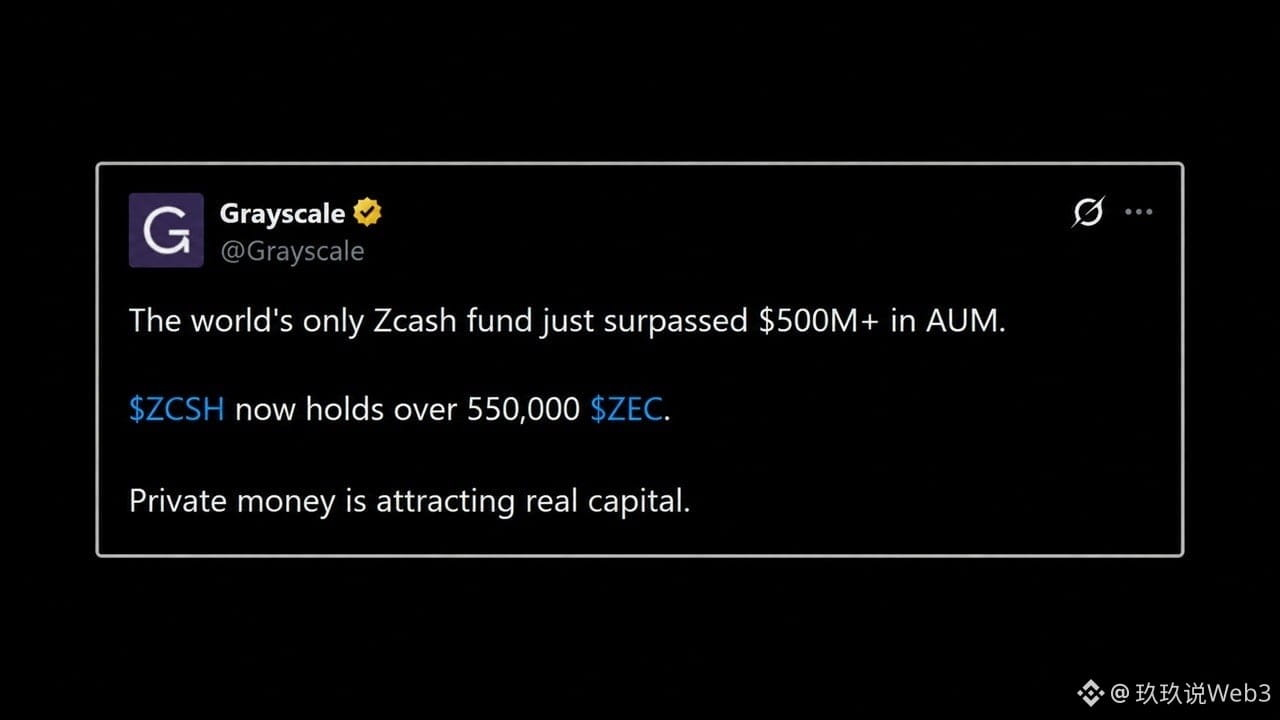
🚨 Grayscale Zcash ETF surpasses $500M in two weeks, but $100M came from "insiders" — is this milestone still tasty?
Group: 点击进入玖玖的粉丝群
👀 One-sentence event: Grayscale’s spot Zcash ETF (ZCSH) began trading on the NYSE Arca on August 25. On September 8, assets under management (AUM) exceeded $500M, with holdings of over 550,000 ZEC. However, SEC filings from the same period show that DCG International, a DCG subsidiary of Grayscale, used an authorized participant to swap 85,705 ZEC for roughly $100M in fund shares.
📊 Putting numbers into perspective: After excluding this related-party allocation, the actual external third-party capital in those two weeks was only about $70M+ — meaning the related-party money is even larger than the total funds coming from the open market combined. In the same week, ZEC climbed above $1,200, briefly neared $1,249 intraday, setting the highest level since Q4 2016. The 12-month gain is over 2,200%, and its market cap is around $20B.
🔥 What’s behind the numbers: Grayscale itself is unusually direct: private capital is attracting real capital. With on-chain monitoring strengthening in the AI era, privacy assets are being wrapped for the first time by mainstream asset management as "a compliant anti-surveillance tool" — and that’s the real shift in the ZEC narrative.
💡 What’s truly worth watching isn’t the headline total of $500M, but rather "how much is left after excluding the insiders": roughly $70M in external demand is the measuring stick for genuine institutional interest in the privacy track.
⚠️ Cold shower: Related-party subscription/redemption is standard industry practice and not a violation, but the quality of AUM is worth questioning. ZEC’s short-term surge has been massive; once ETF buying slows, volatility at these highs could be extremely sharp. Chasing the price should be done cautiously.
👀 Do you think this privacy-coin wave is "institutional real money," or Grayscale family "left hand pays right hand"? Let’s discuss in the comments below 👇
Click the avatar to watch the livestream + join the Jiujiu chat group to get daily strategies 🚀
#灰度ZcashETF资产突破5亿美元 #ZEC #ETF
Group: 点击进入玖玖的粉丝群
👀 One-sentence event: Grayscale’s spot Zcash ETF (ZCSH) began trading on the NYSE Arca on August 25. On September 8, assets under management (AUM) exceeded $500M, with holdings of over 550,000 ZEC. However, SEC filings from the same period show that DCG International, a DCG subsidiary of Grayscale, used an authorized participant to swap 85,705 ZEC for roughly $100M in fund shares.
📊 Putting numbers into perspective: After excluding this related-party allocation, the actual external third-party capital in those two weeks was only about $70M+ — meaning the related-party money is even larger than the total funds coming from the open market combined. In the same week, ZEC climbed above $1,200, briefly neared $1,249 intraday, setting the highest level since Q4 2016. The 12-month gain is over 2,200%, and its market cap is around $20B.
🔥 What’s behind the numbers: Grayscale itself is unusually direct: private capital is attracting real capital. With on-chain monitoring strengthening in the AI era, privacy assets are being wrapped for the first time by mainstream asset management as "a compliant anti-surveillance tool" — and that’s the real shift in the ZEC narrative.
💡 What’s truly worth watching isn’t the headline total of $500M, but rather "how much is left after excluding the insiders": roughly $70M in external demand is the measuring stick for genuine institutional interest in the privacy track.
⚠️ Cold shower: Related-party subscription/redemption is standard industry practice and not a violation, but the quality of AUM is worth questioning. ZEC’s short-term surge has been massive; once ETF buying slows, volatility at these highs could be extremely sharp. Chasing the price should be done cautiously.
👀 Do you think this privacy-coin wave is "institutional real money," or Grayscale family "left hand pays right hand"? Let’s discuss in the comments below 👇
Click the avatar to watch the livestream + join the Jiujiu chat group to get daily strategies 🚀
#灰度ZcashETF资产突破5亿美元 #ZEC #ETF
🚨 JPMorgan and Bank of America Take XRP ETF as Collateral — $11.39M “New Wall Street Move” — Is the signal bigger than you think?
Group: 点击进入玖玖的粉丝群
👀 One-sentence event: In an SEC filing dated September 8, a Schwab unit’s money fund holdings reportedly include 8 records of XRP ETF collateral, totaling about $11.39 million. The counterparties are JPMorgan Securities (about $7.2 million) and Bank of America Securities (about $4.19 million), involving products from four issuers: Bitwise, Canary, Franklin, and Grayscale.
📊 Put the numbers in context: On the same day, five XRP spot ETFs saw net inflows of nearly $2 million despite the broader downturn—making them the only category with positive inflows among major U.S. crypto ETFs. Cumulative net inflows have reached $1.69 billion, and in the past 30 days alone they added another $173 million. Meanwhile, BTC spot ETFs overall saw net outflows of about $46.65 million.
🔥 What’s behind the numbers: Note—this isn’t Schwab “buying” an XRP ETF. It’s collateral received in a repo (repurchase) transaction. The money fund releases cash, while investment banks use ETF shares as security. Historically, this kind of arrangement only applied to U.S. Treasuries and blue-chip stocks. Getting into this pool means the XRP ETF has been treated by Wall Street as “eligible collateral.”
💡 What’s truly worth watching isn’t those roughly $2 million inflows, but changes in the collateral list: the ultimate test for an ETF isn’t who’s buying—it’s whether it can flow through traditional finance liquidity channels. On this step, XRP is ahead of most crypto assets.
⚠️ Cold shower: Being treated as collateral ≠ investment demand. The filing is explicit—these shares aren’t part of Schwab’s investment holdings. And XRP’s price has also been volatile recently, so don’t directly translate “institutional acceptance” into “immediate major pump.”
👀 Do you think the next ETF to be pulled into Wall Street’s collateral pool will be SOL or ETH? Drop your thoughts in the comments below 👇
Click the profile picture to watch the livestream + join the Jiujiu chat group to get daily strategies 🚀
#xrp #Ripple #ETF #机构资金
Group: 点击进入玖玖的粉丝群
👀 One-sentence event: In an SEC filing dated September 8, a Schwab unit’s money fund holdings reportedly include 8 records of XRP ETF collateral, totaling about $11.39 million. The counterparties are JPMorgan Securities (about $7.2 million) and Bank of America Securities (about $4.19 million), involving products from four issuers: Bitwise, Canary, Franklin, and Grayscale.
📊 Put the numbers in context: On the same day, five XRP spot ETFs saw net inflows of nearly $2 million despite the broader downturn—making them the only category with positive inflows among major U.S. crypto ETFs. Cumulative net inflows have reached $1.69 billion, and in the past 30 days alone they added another $173 million. Meanwhile, BTC spot ETFs overall saw net outflows of about $46.65 million.
🔥 What’s behind the numbers: Note—this isn’t Schwab “buying” an XRP ETF. It’s collateral received in a repo (repurchase) transaction. The money fund releases cash, while investment banks use ETF shares as security. Historically, this kind of arrangement only applied to U.S. Treasuries and blue-chip stocks. Getting into this pool means the XRP ETF has been treated by Wall Street as “eligible collateral.”
💡 What’s truly worth watching isn’t those roughly $2 million inflows, but changes in the collateral list: the ultimate test for an ETF isn’t who’s buying—it’s whether it can flow through traditional finance liquidity channels. On this step, XRP is ahead of most crypto assets.
⚠️ Cold shower: Being treated as collateral ≠ investment demand. The filing is explicit—these shares aren’t part of Schwab’s investment holdings. And XRP’s price has also been volatile recently, so don’t directly translate “institutional acceptance” into “immediate major pump.”
👀 Do you think the next ETF to be pulled into Wall Street’s collateral pool will be SOL or ETH? Drop your thoughts in the comments below 👇
Click the profile picture to watch the livestream + join the Jiujiu chat group to get daily strategies 🚀
#xrp #Ripple #ETF #机构资金

Verified
🚨 HYPE just hit a new all-time high of $88. Open interest surged to $14.3 billion—only one step away from the historical peak. Can it break through this time?
Group: 点击进入玖玖的粉丝群
👀 One-sentence update: Hyperliquid ecosystem token HYPE just touched a new $88 all-time high. Market cap is nearing $20 billion, and this month’s gain is already over 50%.
📊 Making the numbers concrete: Open interest (OI) across the entire ecosystem jumped to $14.3 billion—just one step away from the $14.7 billion peak in October 2025. As recently as September 6, 9.92 million HYPE (about $82 million) were unlocked, yet the market still absorbed it smoothly: prices didn’t drop—they rose.
🔥 What’s behind the numbers: Solid backing from real buy-and-burn activity—over the past 24 hours, the protocol repurchased and burned 15,350 HYPE (about $1.32 million, average price $86.17). Since listing, a total of 48.45 million HYPE have been burned, accounting for 4.84% of the maximum supply. The long/short positioning ratio also tells the story: longs hold roughly $74 million, while shorts are only $15 million.
💡 What’s truly worth watching isn’t a new price high—it’s how fast OI is recovering: in the last 30 days, it increased by $3.57 billion, suggesting leveraged capital is flowing back into the derivatives mainline in a systematic way—not just sporadic, point-in-time speculation.
⚠️ A bucket of cold water: The closer OI gets to the peak, the more you need to be careful. After the last time OI hit $14.7 billion, it plunged 56% in a single day to $6.5 billion. Unlocking supply is only “temporarily” absorbed—once price breaks below $82 (the high-density liquidity zone), profit-taking and leverage could knock into each other.
👀 Do you think HYPE can break the previous high and keep going, or will it stall around $90? Drop your thoughts in the comments 👇
Click the avatar to watch the live stream + join the 玖玖 chat group to get daily strategies 🚀
#hype #Hyperliquid #加密市场
Group: 点击进入玖玖的粉丝群
👀 One-sentence update: Hyperliquid ecosystem token HYPE just touched a new $88 all-time high. Market cap is nearing $20 billion, and this month’s gain is already over 50%.
📊 Making the numbers concrete: Open interest (OI) across the entire ecosystem jumped to $14.3 billion—just one step away from the $14.7 billion peak in October 2025. As recently as September 6, 9.92 million HYPE (about $82 million) were unlocked, yet the market still absorbed it smoothly: prices didn’t drop—they rose.
🔥 What’s behind the numbers: Solid backing from real buy-and-burn activity—over the past 24 hours, the protocol repurchased and burned 15,350 HYPE (about $1.32 million, average price $86.17). Since listing, a total of 48.45 million HYPE have been burned, accounting for 4.84% of the maximum supply. The long/short positioning ratio also tells the story: longs hold roughly $74 million, while shorts are only $15 million.
💡 What’s truly worth watching isn’t a new price high—it’s how fast OI is recovering: in the last 30 days, it increased by $3.57 billion, suggesting leveraged capital is flowing back into the derivatives mainline in a systematic way—not just sporadic, point-in-time speculation.
⚠️ A bucket of cold water: The closer OI gets to the peak, the more you need to be careful. After the last time OI hit $14.7 billion, it plunged 56% in a single day to $6.5 billion. Unlocking supply is only “temporarily” absorbed—once price breaks below $82 (the high-density liquidity zone), profit-taking and leverage could knock into each other.
👀 Do you think HYPE can break the previous high and keep going, or will it stall around $90? Drop your thoughts in the comments 👇
Click the avatar to watch the live stream + join the 玖玖 chat group to get daily strategies 🚀
#hype #Hyperliquid #加密市场

🚨 Only $1 billion more—US spot Bitcoin ETFs’ 2026 “turnaround” is about to become “official” — are institutions planning to buy back everything they lost at the start of the year?
Group: 点击进入玖玖的粉丝群
👀 Event in one sentence: As of data through September 8, US spot BTC ETF net flows are just about $1 billion away from “turning positive” for the year, hitting the closest point to zero since 2026; previously accumulated net outflows have already been nearly fully replenished.
📊 Putting numbers to it: The net inflow in August alone was 52.1k BTC, setting a new historical monthly record; on September 3, net inflow added $731 million, with BlackRock’s IBIT accounting for $454 million of that by itself. Right now, BTC is around $78,600; the first resistance above is at $82,500.
🔥 What’s behind the numbers: Remember, in late August Bitcoin even dipped below $77,000—institutions were retreating then. But a month later, BlackRock and Fidelity (among others) bought back their positions with real money—ETF flows are always the most honest “vote.”
💡 What’s truly worth watching isn’t the “$1 billion gap,” but the replenishment pace: based on the inflow speed since August, the “turn positive” for the year will very likely land in mid-September—right coinciding with the Senate voting window for the CLARITY Act, which feels very timely.
⚠️ Cold splash of water: ETF “turning positive” ≠ an immediate surge—institutions will still sell high and buy low. The market’s expectations for a September Fed rate hike are still around 57%. If the outcome lands above expectations, flows could reverse at any time—don’t treat “replenishment” as a reason to blindly “rush in.”
👀 Do you think BTC ETF turns positive this year first, or does the price first hold above $82,000? Let’s discuss in the comments below 👇
Click the avatar to watch the livestream + join the Jiujiu chat group for daily strategy 🚀
#比特币ETF年内仍缺10亿美元 #美联储9月加息概率升至57% #ETF #Bitcoin
Group: 点击进入玖玖的粉丝群
👀 Event in one sentence: As of data through September 8, US spot BTC ETF net flows are just about $1 billion away from “turning positive” for the year, hitting the closest point to zero since 2026; previously accumulated net outflows have already been nearly fully replenished.
📊 Putting numbers to it: The net inflow in August alone was 52.1k BTC, setting a new historical monthly record; on September 3, net inflow added $731 million, with BlackRock’s IBIT accounting for $454 million of that by itself. Right now, BTC is around $78,600; the first resistance above is at $82,500.
🔥 What’s behind the numbers: Remember, in late August Bitcoin even dipped below $77,000—institutions were retreating then. But a month later, BlackRock and Fidelity (among others) bought back their positions with real money—ETF flows are always the most honest “vote.”
💡 What’s truly worth watching isn’t the “$1 billion gap,” but the replenishment pace: based on the inflow speed since August, the “turn positive” for the year will very likely land in mid-September—right coinciding with the Senate voting window for the CLARITY Act, which feels very timely.
⚠️ Cold splash of water: ETF “turning positive” ≠ an immediate surge—institutions will still sell high and buy low. The market’s expectations for a September Fed rate hike are still around 57%. If the outcome lands above expectations, flows could reverse at any time—don’t treat “replenishment” as a reason to blindly “rush in.”
👀 Do you think BTC ETF turns positive this year first, or does the price first hold above $82,000? Let’s discuss in the comments below 👇
Click the avatar to watch the livestream + join the Jiujiu chat group for daily strategy 🚀
#比特币ETF年内仍缺10亿美元 #美联储9月加息概率升至57% #ETF #Bitcoin

🚨 XRP falls from $1.70 to $1.41, yet analysts say: this is the same pattern before the massive 2024 surge—once it plays out, look for $3.4?
Group: 点击进入玖玖的粉丝群
👀 One-sentence update: XRP is down nearly 4% over the past week, pulling back from a recent high near $1.70. Analyst SeffafNet compared two-year charts and said it’s “almost exactly the same as before XRP kicked off in 2024.” If the pattern confirms, the first target would be $3.40.
📊 Making the numbers concrete: XRP is trading around $1.41, up 1.71% over the past 24 hours. Key support sits at $1.35 to $1.38. Ali Martinez noted that roughly 3.2 billion XRP were previously transacted in this zone; Santiment data shows more than 4.8 billion have accumulated as buying/absorption between $1.31 and $1.38. Overhead resistance is at $1.60, $1.68, and $1.86. A breakout above $1.86 could open the door to $2.19. More aggressive Elliott Wave-style targets even see $4.11 and possibly $7.07.
🔥 What’s behind the numbers: the real value here is the cost/position structure. Billions of tokens have been “parked” between $1.35 and $1.38, effectively drawing a cost line with real money. As long as this line holds, pullbacks are more likely to look like a shakeout than a trend reversal.
💡 What matters isn’t the slogan of $3.4 or $7—it’s whether the money in the spot XRP ETF is still there. In the week of August 24, net inflows to the ETF were about $73.2 million. Institutions are still willing to keep buying near $1.4—that’s the fuel behind the pattern.
⚠️ A splash of cold water: analysts drawing lines doesn’t guarantee the market. The 2024 pattern looked perfect in hindsight, and at the time, just as many people were saying “this time is different.” If $1.35–$1.38 breaks, technical traders will flip instantly bearish—don’t stake your whole position on a single pattern.
👀 Do you think XRP is “repeating 2024,” or is it trapping buyers from the highs? Let’s discuss in the comments below 👇
Click the profile picture to watch the live stream + join the Jiujiu chat group to get daily strategies 🚀
#xrp #Ripple #RippleCoin
Group: 点击进入玖玖的粉丝群
👀 One-sentence update: XRP is down nearly 4% over the past week, pulling back from a recent high near $1.70. Analyst SeffafNet compared two-year charts and said it’s “almost exactly the same as before XRP kicked off in 2024.” If the pattern confirms, the first target would be $3.40.
📊 Making the numbers concrete: XRP is trading around $1.41, up 1.71% over the past 24 hours. Key support sits at $1.35 to $1.38. Ali Martinez noted that roughly 3.2 billion XRP were previously transacted in this zone; Santiment data shows more than 4.8 billion have accumulated as buying/absorption between $1.31 and $1.38. Overhead resistance is at $1.60, $1.68, and $1.86. A breakout above $1.86 could open the door to $2.19. More aggressive Elliott Wave-style targets even see $4.11 and possibly $7.07.
🔥 What’s behind the numbers: the real value here is the cost/position structure. Billions of tokens have been “parked” between $1.35 and $1.38, effectively drawing a cost line with real money. As long as this line holds, pullbacks are more likely to look like a shakeout than a trend reversal.
💡 What matters isn’t the slogan of $3.4 or $7—it’s whether the money in the spot XRP ETF is still there. In the week of August 24, net inflows to the ETF were about $73.2 million. Institutions are still willing to keep buying near $1.4—that’s the fuel behind the pattern.
⚠️ A splash of cold water: analysts drawing lines doesn’t guarantee the market. The 2024 pattern looked perfect in hindsight, and at the time, just as many people were saying “this time is different.” If $1.35–$1.38 breaks, technical traders will flip instantly bearish—don’t stake your whole position on a single pattern.
👀 Do you think XRP is “repeating 2024,” or is it trapping buyers from the highs? Let’s discuss in the comments below 👇
Click the profile picture to watch the live stream + join the Jiujiu chat group to get daily strategies 🚀
#xrp #Ripple #RippleCoin
🚨 BNB rose 8.3% over the past week to reach $745, and discussions about “hitting $1,000 within the year” are heating up again—will it truly go up and bring the market cap close to $166 billion?
Group: 点击进入玖玖的粉丝群
👀 One-sentence update: BNB is currently around $745.4, up 8.3% in the past week. Analysts have reiterated the $1,000 target by end of 2026: based on a circulating supply of about 139 million tokens, if reached, the market cap would be about $166 billion, compared with the current ~$99.2 billion.
📊 Making the numbers concrete: Key support sits at $740 to $760. The first checkpoint is $800. After that, September could look toward $850 and $900. Further up, $1,200 would require ongoing momentum in ecosystem demand. On the fundamentals front, BNB Chain’s tokenized stocks and on-chain shares of equity assets have already surpassed $100 million. The next-generation network architecture targets 100,000 TPS and 50 ms pre-confirmations on “亚 50 毫秒” (50 ms) targets, with the testnet planned to go live later this year.
🔥 What’s behind the numbers: This BNB push isn’t driven purely by liquidity/fund flows—it's fueled by real on-chain usage. Tokenized stocks, RWA assets, DEX trading, and AI token-issuance infrastructure are all consuming block space. The logic for buying BNB is shifting from “trading a platform token” to “buying fuel for the chain.”
💡 What’s truly worth watching isn’t whether $1,000 can be reached, but whether BNB Chain can genuinely build this “tokenization + RWA” narrative. The technical path is clear: first hold $740–$760, then break through $800. $1,000 is a confirmation on a bull-market level—not a baseline expectation.
⚠️ A splash of cold water: Even the target-price analysis admits $1,000 is still an optimistic scenario. No matter how nice the technical targets look, it doesn’t automatically mean users and capital will migrate. If $800 can’t be broken repeatedly and the $740–$760 support fails, you’ll need to watch for a pullback. Take forecasts as just that—manage your position size.
👀 Do you think BNB should first surge toward $800, or pull back to test support first? Let’s discuss in the comments below👇
Click the avatar to watch the livestream + join the Jiuji chat group to get daily strategies 🚀
#RWA #币安广场 #BNB
Group: 点击进入玖玖的粉丝群
👀 One-sentence update: BNB is currently around $745.4, up 8.3% in the past week. Analysts have reiterated the $1,000 target by end of 2026: based on a circulating supply of about 139 million tokens, if reached, the market cap would be about $166 billion, compared with the current ~$99.2 billion.
📊 Making the numbers concrete: Key support sits at $740 to $760. The first checkpoint is $800. After that, September could look toward $850 and $900. Further up, $1,200 would require ongoing momentum in ecosystem demand. On the fundamentals front, BNB Chain’s tokenized stocks and on-chain shares of equity assets have already surpassed $100 million. The next-generation network architecture targets 100,000 TPS and 50 ms pre-confirmations on “亚 50 毫秒” (50 ms) targets, with the testnet planned to go live later this year.
🔥 What’s behind the numbers: This BNB push isn’t driven purely by liquidity/fund flows—it's fueled by real on-chain usage. Tokenized stocks, RWA assets, DEX trading, and AI token-issuance infrastructure are all consuming block space. The logic for buying BNB is shifting from “trading a platform token” to “buying fuel for the chain.”
💡 What’s truly worth watching isn’t whether $1,000 can be reached, but whether BNB Chain can genuinely build this “tokenization + RWA” narrative. The technical path is clear: first hold $740–$760, then break through $800. $1,000 is a confirmation on a bull-market level—not a baseline expectation.
⚠️ A splash of cold water: Even the target-price analysis admits $1,000 is still an optimistic scenario. No matter how nice the technical targets look, it doesn’t automatically mean users and capital will migrate. If $800 can’t be broken repeatedly and the $740–$760 support fails, you’ll need to watch for a pullback. Take forecasts as just that—manage your position size.
👀 Do you think BNB should first surge toward $800, or pull back to test support first? Let’s discuss in the comments below👇
Click the avatar to watch the livestream + join the Jiuji chat group to get daily strategies 🚀
#RWA #币安广场 #BNB

🚨 A Wall Street giant managing $82.9 billion in assets makes a bold call: BTC could hit $150,000 by mid-2025 first, and as high as $500,000 by the end of 2029?
Group: 点击进入玖玖的粉丝群
👀 Event in one sentence: In a recent report, Bernstein analyst Gautam Chhugani predicts that BTC will surpass its all-time high of $150,000 by mid-2027, and could move toward a $300,000–$500,000 range before the end of 2029.
📊 Putting numbers in context: Bernstein manages roughly $8.29 billion in assets. Currently, BTC is trading in the $78,000–$79,000 area, with a July low of $57,800 and an August high of $81,000. If you benchmark at $150,000, that implies another nearly doubling. The analyst cites three key catalysts: fiat-currency depreciation trades, rising global demand, and a warming regulatory environment.
🔥 What’s behind the numbers: “depreciation trades” refers to a scenario where uncontrolled U.S. government debt leads the Treasury to conduct large-scale buybacks of U.S. Treasuries, boosting the money supply and pushing capital toward hard assets like gold and Bitcoin. Add the proposed CLARITY Act—if it gets implemented—and the barriers for institutions and retail investors to buy and sell Bitcoin would drop significantly.
💡 What’s really worth watching isn’t the $150,000 or $500,000 price target, but the logic that “Bitcoin = a macro asset that hedges fiat currency depreciation.” This is the first time that mainstream Wall Street asset management has written it into reports as a core narrative—sitting at the same table as gold bars.
⚠️ A bucket of cold water: price targets don’t equal the path. Here’s a hard comparison: for the year to date, Bitcoin ETF inflows are still short by about $1 billion overall before turning fully positive. There’s still a gap between executives’ calls and actual “real money” flows. Also, ahead of the mid-September FOMC meeting, rate-hike expectations are heating up—strengthening the U.S. dollar could also weigh on risk assets.
👀 Do you think $150,000 is hype, or is it conservative? Let’s discuss in the comments below 👇
Click the profile picture to watch the livestream + join the Jiujiu chat group to get daily strategies 🚀
#CLARITY法案 #比特币ETF年内仍缺10亿美元 #BTC #Bitcoin
Group: 点击进入玖玖的粉丝群
👀 Event in one sentence: In a recent report, Bernstein analyst Gautam Chhugani predicts that BTC will surpass its all-time high of $150,000 by mid-2027, and could move toward a $300,000–$500,000 range before the end of 2029.
📊 Putting numbers in context: Bernstein manages roughly $8.29 billion in assets. Currently, BTC is trading in the $78,000–$79,000 area, with a July low of $57,800 and an August high of $81,000. If you benchmark at $150,000, that implies another nearly doubling. The analyst cites three key catalysts: fiat-currency depreciation trades, rising global demand, and a warming regulatory environment.
🔥 What’s behind the numbers: “depreciation trades” refers to a scenario where uncontrolled U.S. government debt leads the Treasury to conduct large-scale buybacks of U.S. Treasuries, boosting the money supply and pushing capital toward hard assets like gold and Bitcoin. Add the proposed CLARITY Act—if it gets implemented—and the barriers for institutions and retail investors to buy and sell Bitcoin would drop significantly.
💡 What’s really worth watching isn’t the $150,000 or $500,000 price target, but the logic that “Bitcoin = a macro asset that hedges fiat currency depreciation.” This is the first time that mainstream Wall Street asset management has written it into reports as a core narrative—sitting at the same table as gold bars.
⚠️ A bucket of cold water: price targets don’t equal the path. Here’s a hard comparison: for the year to date, Bitcoin ETF inflows are still short by about $1 billion overall before turning fully positive. There’s still a gap between executives’ calls and actual “real money” flows. Also, ahead of the mid-September FOMC meeting, rate-hike expectations are heating up—strengthening the U.S. dollar could also weigh on risk assets.
👀 Do you think $150,000 is hype, or is it conservative? Let’s discuss in the comments below 👇
Click the profile picture to watch the livestream + join the Jiujiu chat group to get daily strategies 🚀
#CLARITY法案 #比特币ETF年内仍缺10亿美元 #BTC #Bitcoin

🚨 The contract wasn’t hacked, yet the market froze $13 billion? One fake news report was enough.
Group: 点击进入玖玖的粉丝群
👀 Event in one sentence: A fake-message attack was carried out on the Kelp DAO cross-chain bridge, minting 116,500 uncollateralized rsETH out of thin air (about 18% of circulating supply). Total loss is estimated at $292 million, and the attack is pointed to the North Korean Lazarus hacking group.
📊 Putting the numbers in context: The stolen rsETH was used as collateral in lending markets like Aave. Multiple protocols urgently froze the rsETH market. Within two days, over $13 billion in total value locked exited DeFi. Aave’s core contracts were never touched, yet users were still affected.
🔥 What’s behind the numbers: The attacker wasn’t targeting the lending code, but the weakest link in the “trust chain”—the bridge and message verification. Halborn, a security firm, said the attackers took out honest nodes, replaced them with nodes they controlled, and then inserted a forged cross-chain packet to make it work.
💡 What’s truly worth watching isn’t that DeFi is failing—it’s that “de-trust” still depends on something: oracles, bridges, wrapped assets, governance. If any link fails, even a secure contract won’t matter. On Bitcoin, Ethereum needs to be wrapped first, adding yet another attack surface.
⚠️ A bucket of cold water: Don’t rush to praise CeFi security—Celsius and BlockFi are warnings not far off. CeFi just swaps risk from code to humans; it doesn’t eliminate risk. Risk management has never been about picking sides—it’s about seeing clearly who (or what) you’re putting your trust in.
👀 Will you place large assets in DeFi lending, or choose a centralized platform? Let’s discuss in the comments below 👇
Click the avatar to watch the livestream + join the Jiu Jiu chat group to get daily strategies 🚀
#DeFi #ETH #crypto market
Group: 点击进入玖玖的粉丝群
👀 Event in one sentence: A fake-message attack was carried out on the Kelp DAO cross-chain bridge, minting 116,500 uncollateralized rsETH out of thin air (about 18% of circulating supply). Total loss is estimated at $292 million, and the attack is pointed to the North Korean Lazarus hacking group.
📊 Putting the numbers in context: The stolen rsETH was used as collateral in lending markets like Aave. Multiple protocols urgently froze the rsETH market. Within two days, over $13 billion in total value locked exited DeFi. Aave’s core contracts were never touched, yet users were still affected.
🔥 What’s behind the numbers: The attacker wasn’t targeting the lending code, but the weakest link in the “trust chain”—the bridge and message verification. Halborn, a security firm, said the attackers took out honest nodes, replaced them with nodes they controlled, and then inserted a forged cross-chain packet to make it work.
💡 What’s truly worth watching isn’t that DeFi is failing—it’s that “de-trust” still depends on something: oracles, bridges, wrapped assets, governance. If any link fails, even a secure contract won’t matter. On Bitcoin, Ethereum needs to be wrapped first, adding yet another attack surface.
⚠️ A bucket of cold water: Don’t rush to praise CeFi security—Celsius and BlockFi are warnings not far off. CeFi just swaps risk from code to humans; it doesn’t eliminate risk. Risk management has never been about picking sides—it’s about seeing clearly who (or what) you’re putting your trust in.
👀 Will you place large assets in DeFi lending, or choose a centralized platform? Let’s discuss in the comments below 👇
Click the avatar to watch the livestream + join the Jiu Jiu chat group to get daily strategies 🚀
#DeFi #ETH #crypto market

Log in to explore more content