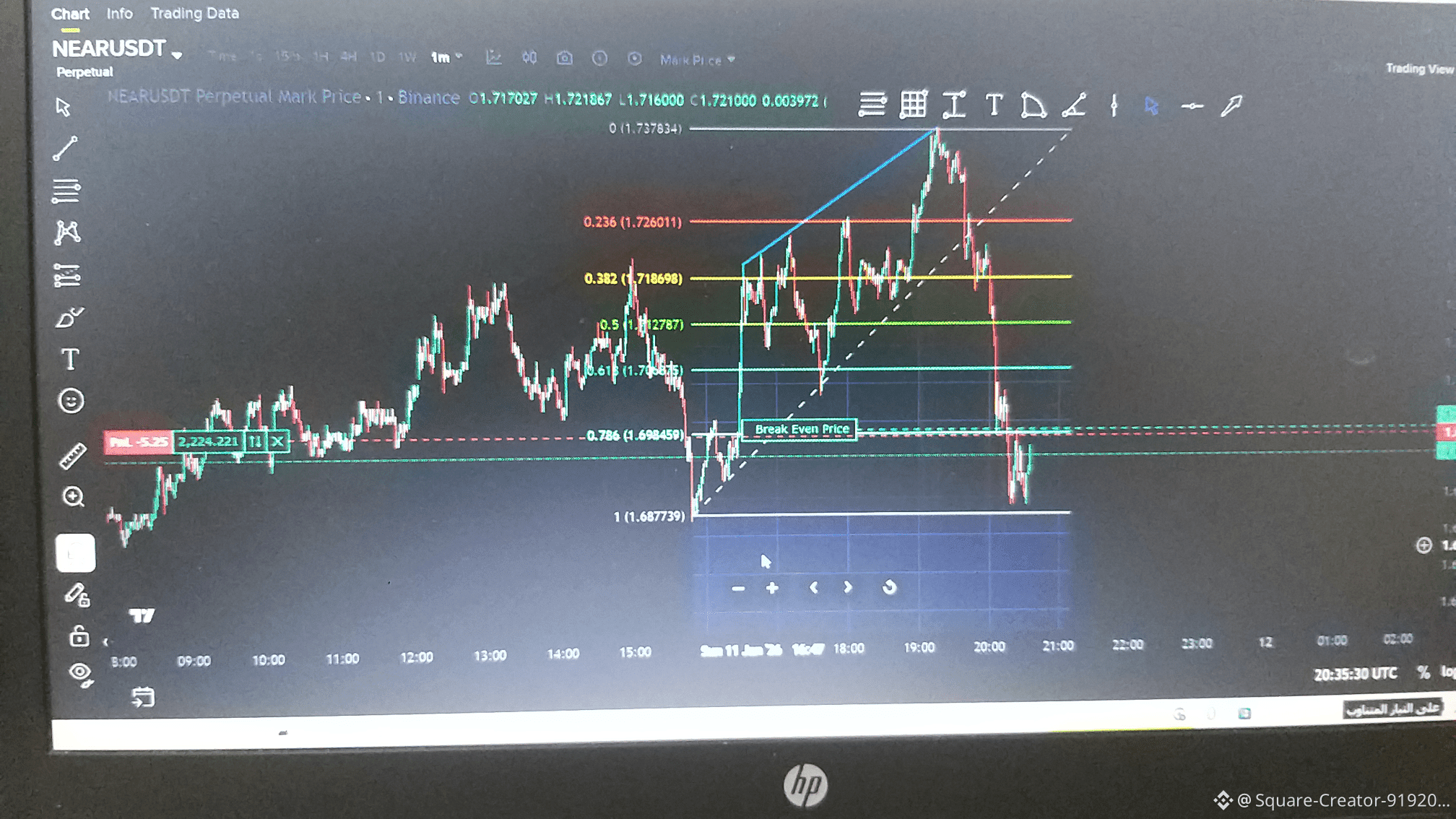
Why do traders cling to losses of 40% and more?
———————————————————
A calm reading of entry error… and stubbornness in staying.
In almost every downward path, we hear the same phrase repeated:
«There are traders who cling to losses of 40% and more».
Here, several essential questions arise that must be honestly reflected upon:
When did this trader buy, so as to lose this much? Did the loss come suddenly?
Or was it the result of a series of mistakes starting from the entry and ending in stubbornness?
🔹First: The market does not deceive you… you are the one chasing the price.
———————————————————
From basic market principles:
Every upward move begins from a bottom, ends at a peak, then enters a correction.
The problem isn't the correction… the problem is the timing of entry.
Most traders who cling to large losses:
• Bought close to the peak.
• Or entered after a long rise driven by:
• Greed.
• Fear of missing out.
• Or hype and noise.
📌 Chasing prices doesn't create profit… it creates attachment.
🔹Second: Wrong entry is the root of loss.
———————————————————
A correct entry should not happen:
• After a strong rise.
• Nor during widespread excitement.
• Nor because "the stock is flying".
Instead, it should happen:
• At a suitable price level.
• With risk calculated.
• And with a clear exit plan.
Those who enter without a plan will remain without a decision at the first dip....
———————————————————
A calm reading of entry error… and stubbornness in staying.
In almost every downward path, we hear the same phrase repeated:
«There are traders who cling to losses of 40% and more».
Here, several essential questions arise that must be honestly reflected upon:
When did this trader buy, so as to lose this much? Did the loss come suddenly?
Or was it the result of a series of mistakes starting from the entry and ending in stubbornness?
🔹First: The market does not deceive you… you are the one chasing the price.
———————————————————
From basic market principles:
Every upward move begins from a bottom, ends at a peak, then enters a correction.
The problem isn't the correction… the problem is the timing of entry.
Most traders who cling to large losses:
• Bought close to the peak.
• Or entered after a long rise driven by:
• Greed.
• Fear of missing out.
• Or hype and noise.
📌 Chasing prices doesn't create profit… it creates attachment.
🔹Second: Wrong entry is the root of loss.
———————————————————
A correct entry should not happen:
• After a strong rise.
• Nor during widespread excitement.
• Nor because "the stock is flying".
Instead, it should happen:
• At a suitable price level.
• With risk calculated.
• And with a clear exit plan.
Those who enter without a plan will remain without a decision at the first dip....