

Let's start with a disclaimer: if you're trading futures hoping to get rich overnight, sorry, this article may not be for you. Who is this article for? Traders with some trading experience, those who haven't used futures before, those who view futures as dangerous, and those with limited funds but many projects to manage.
What is the real 'efficiency' value of full-position high leverage?
It's about using the minimum margin required to control the largest possible notional position (Notional Value), thereby leaving the majority of your account funds available for other purposes.
First, it's essential to understand that futures trading doesn't mean you must fully allocate your funds when opening a position with a certain leverage, either long or short.
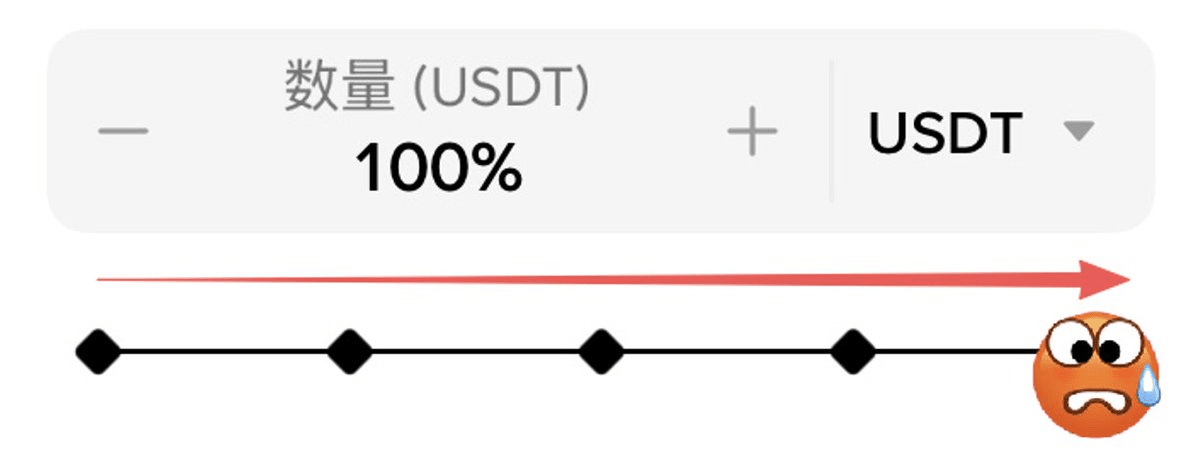 Secondly, it is important to understand that the liquidation of contract accounts is not necessarily related to the leverage ratio, but is related to the order amount when you open a position and the margin ratio of the contract account.
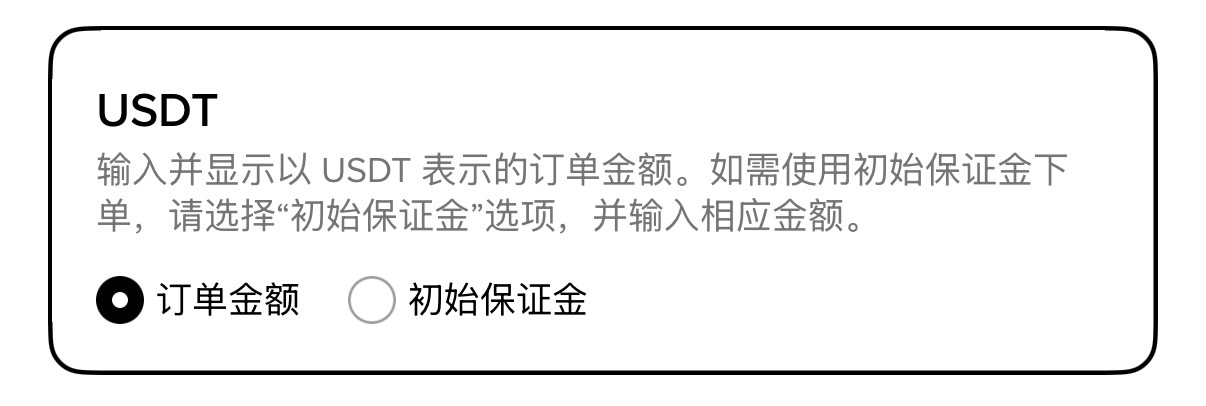 Thirdly, it is important to understand that when going long, the order amount opened is less than the account margin, so there is no liquidation price for the position.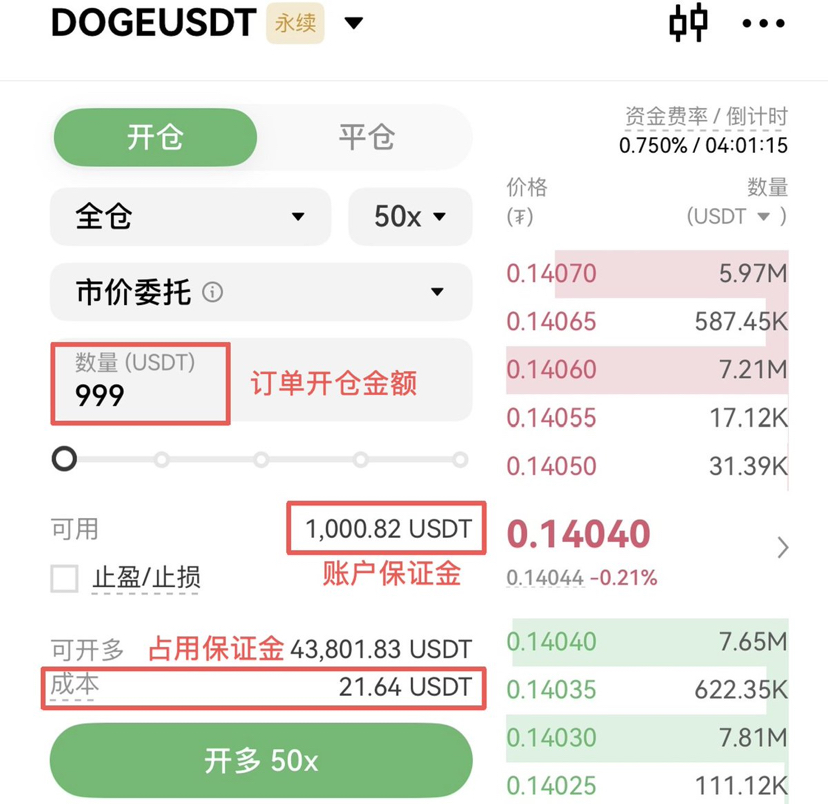
For example, if the account has 1000 U, with the maximum leverage of 50X, but we only open an order amount of 999 U, occupying about 20 U of margin, then our position will not have a liquidation price.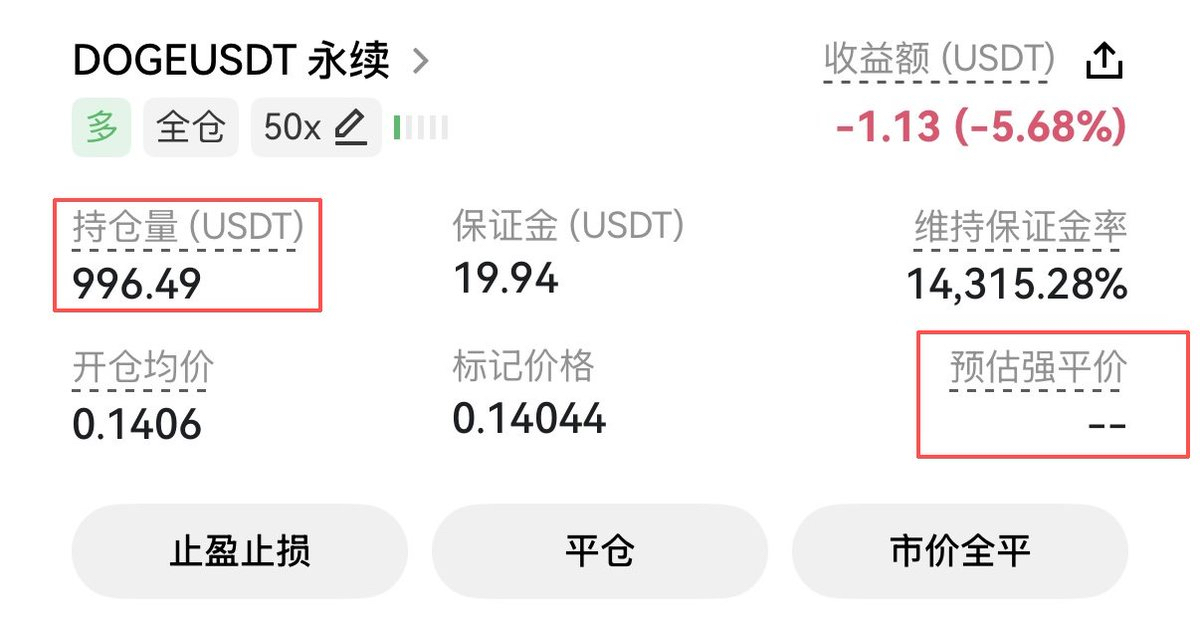 At this moment, someone might say, what's the difference between this and doing spot trading? You still have to pay the funding fee.
The answer is, when it's spot trading, as for the funding fee, after holding the position for a year, it's about 5 - 10 points, really not much, and can be ignored compared to its advantages.
Where is the advantage? Continuing the above example, if we only have 1000 U and want to buy Dogecoin in spot, what should we do if the TGE event from Binance appears today? Because we are trading contracts, we bought 1000 U of Dogecoin with 50 times leverage, occupying only 20 U of margin. At this time, we can transfer out 500 U from the contract account to participate in the event, and after the event ends, transfer it back to the contract account. Isn't the efficiency of the funds in our hands improved?
To take it a step further, if I bought Dogecoin for $0.1 and now the price is $0.14, our account has already made dozens of points in profit. If there is an event that requires a short-term call for funds, we can even transfer out 950 U from the contract account, and repaying it does not carry much risk.
To be more specific, if I bought Dogecoin for $0.1, and now the price is $0.2, our account has already doubled in profit. Can we set a stop-loss at the cost price and then open contracts for other currencies worth 1000 U? This way, there is also no risk of liquidation?
If you didn't understand, I suggest opening a simulated account to try it out yourself. Even if you, like me, don't understand K lines, knowing how to use contracts is something you need to learn.