
The internal people the boss should be most wary of are finance and HR! Finance makes the company stagnate! For example, Intel. HR often doesn’t do HR! For example, this time they messed up the Xiaohongshu IPO.
Deep reflection by Intel’s former CEO: For ten years, he didn’t buy a single lithography machine, yet spent $100 billion to repurchase shares! For 15 years, he let the finance people steer the ship, missing out on iPhone chips and the mobile era!
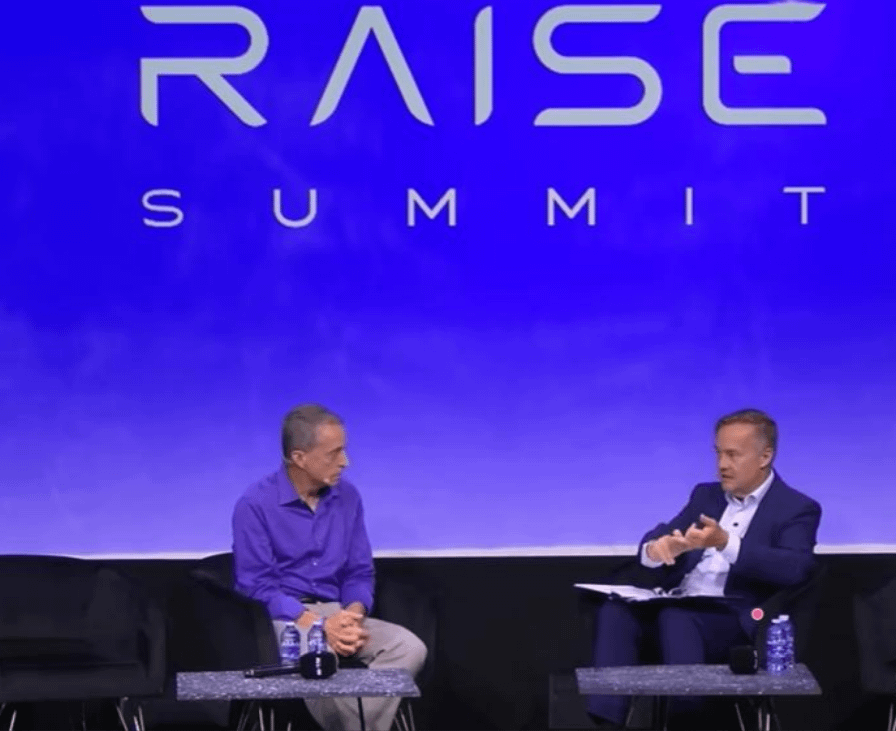
In July 2026, Intel’s former CEO Pat Gelsinger appeared on the All-In Podcast, where he engaged in an honest, in-depth conversation with the host Jason for nearly an hour.
From the chip king of the PC era to being far outpaced by Nvidia and TSMC, what exactly did Intel do wrong over the past decade? Former CEO Pat Gelsinger, drawing on 34 years of firsthand experience, bluntly points out the root cause of Intel’s “derailment”: putting financiers in charge, replacing factory investment with hundreds of billions in buybacks, and missing the waves of iPhone and AI chips. This reflection exposes not just one giant’s technological misjudgments, but also a deeper issue that Silicon Valley itself has been avoiding: when capital returns hijack technical decisions, how high is the cost?
The following is compiled from the July 2026 All-In Podcast interview transcript. It preserves the original meaning, but due to language conversion and length adjustments, there may be slight differences in wording from the original dialogue. Some content has been omitted and reorganized for clarity; this note is provided for reference.
What Intel once did right: technical DNA and long-term thinking
Gelsinger recalled that the Intel he joined as a young man was led by a group of “professional technical experts” — Andy Grove, Gordon Moore, and Bob Noyce. These people were not only business leaders, but engineers’ engineers. When he first entered the executive team, “15 of the 20 people had PhDs.”
This technical DNA gave Intel the confidence to make long-term, capital-intensive investments. Building a chip fab and buying EUV lithography machines are decisions that may take ten years to pay off on the financial statements, but technical leaders can see their strategic value. It was precisely this foresight that enabled Intel to establish the dominance of “Intel Inside” in the PC era.
At the same time, Intel believed in the philosophy of “continuous improvement.” Comparing Nvidia’s success, Gelsinger pointed out that Huang Renxun did not get rich overnight; rather, “every generation of product got a little better,” gradually evolving from graphics cards into a general-purpose computing platform. Intel itself had once dominated the market precisely by following this “Moore’s Law-like” rhythm.
What Intel did wrong: five strategic mistakes
When the host asked, “What did they do wrong?”, Gelsinger bluntly gave a list:
Mistake 1: Letting “financial people” rather than “technical people” take the helm
Gelsinger said bluntly that the starting point of Intel’s “derailment” was when the company began being run by “business people” rather than “technical people.” When he returned in 2021, he was “the first CEO with a technical background in 15 years.” The previous CEOs — Otellini, Krzanich, and Swan — either came from the business side or had a finance background.
“When you’re making core technology decisions worth tens of billions of dollars, you can’t do it with a spreadsheet. Unless the technology trend itself makes the investment rational, it’s doomed to be a bad bet.”
He gave examples such as great tech-company leaders like Microsoft’s Nadella and Google’s Pichai, who, even if not founders, are still “leaders with deep technical literacy.” Under non-technical leadership, Intel’s decisions became about “doing the math” rather than “seeing the future.”
Mistake 2: Spending $100 billion on stock buybacks instead of investing in manufacturing capability
Gelsinger revealed that in the five or six years before his return, Intel returned about $100 billion to shareholders through dividends and share buybacks.
And when he took over in 2021, he found himself facing a chip company that had not built a new fab in a full decade — it had not even bought a single EUV lithography machine.
“If that money had stayed on the balance sheet, we could have done a lot — for example, built chips for the iPhone (Intel once turned Apple down), or gotten into the foundry business earlier.”
He sharply pointed out that pouring massive amounts of money into short-term shareholder returns while abandoning investment in future manufacturing is the pain of Intel’s “financial short-sightedness.”
CUDA ecosystem mistake 3: Underestimating Nvidia’s GPU and
During Intel CPU’s most glorious years, everyone in the company “looked down on Huang Renxun’s graphics cards,” thinking they were just “toys for gamers.” But Nvidia kept building the CUDA software stack and the SIMT programming model, turning GPUs into a general-purpose computing platform. By the time Japan’s HPC teams began using graphics cards for high-performance computing, the turning point had already arrived.
Gelsinger revealed that Intel actually had a similar project internally — Larrabee — which tried to use the x86 architecture for the same kind of general-purpose computing. But “the week after I left Intel for the first time, that project was cut.”
“If they had stuck with it back then, the world would be very different.”
Mistake 4: Missing the iPhone chip and the mobile era
In 2006, Intel turned down a request to develop a chip for the first-generation iPhone, saying the price and volume didn’t make sense. Apple then turned to ARM, launching the mobile computing era, while Intel was left far behind.
Even more poignant is the fact that Steve Jobs, while still working with Intel on Mac chips, had already secretly ported macOS to x86 for “four versions.” While Intel was still proud of winning the Mac business, Jobs was already preparing to “get off Intel.” Gelsinger recalled: “Steve said, ‘I’ve already ported four versions to x86, and I think we can do it.’” The seed of Apple’s in-house chips was planted then, eventually giving rise to the M-series chips and completely abandoning Intel.
On November 10, 2020, Apple officially unveiled its first in-house M1 chip built specifically for Mac. It used the then-most-advanced 5-nanometer process and packed 16 billion transistors. In terms of performance, the M1’s CPU was up to 3.5 times faster than the previous generation, its graphics performance was up to 6 times faster, and battery life jumped from about 10 hours to 18 hours. More importantly, at the same performance level, the M1’s power consumption was only one quarter of Intel’s chips.
The arrival of the M1 marked the official end of Apple and Intel’s 15-year partnership. Reuters commented at the time: “Apple’s new chip, called ‘M1,’ marks the Mac’s nearly 15-year departure from dependence on Intel technology.
Mistake 5: Ignoring the foundry model and being disrupted by TSMC
Intel long adhered to the “IDM” (Integrated Device Manufacturing) model, making chips only for itself and never considering opening its fabs to third parties. TSMC, by contrast, was positioned from the start as a “pure foundry”: no matter whose design it is, I’ll manufacture it. By the time Gelsinger returned in 2021, TSMC’s wafer output was already five times Intel’s.
“The industry has changed — what people want now is massive wafer volumes, diverse designs, and standardized EDA tools. Intel is still working in isolation.”
After returning as CEO in 2021, Gelsinger launched the “IDM 2.0” strategy, whose core idea was to make Intel a foundry as well and open its manufacturing capacity to external customers. He also actively promoted the CHIPS Act, seeking U.S. government funding to build new fabs in the United States.
He disclosed that the U.S. share of global advanced-node production has risen from 12% in 2021 to 18% now. “It’s still far from 50%, but the direction is right.” Intel’s own foundry business has also begun to take off, and TSMC’s U.S. factories have already started production.
Regarding the current AI infrastructure boom, Gelsinger believes the bubble will not inflate excessively because there is a natural “ceiling” — energy supply. Global energy growth is only 4–5%, and in the U.S. it has been just 1% over the past decade. Without electricity, you can’t build data centers or buy GPUs.
But he firmly believes that AI’s long-term value is “almost infinite.” Every additional intelligent token can optimize supply chains, finance, and logistics, and even help solve labor shortages. He proposed a goal: “Reduce the cost and energy consumption of AI by 10,000 times,” to realize Jevons paradox (cheaper, more efficient resources creating even more demand).
“The next two or three decades will be the golden age for technical people. We’ll solve chemistry, language, new materials, cancer, and lift billions out of poverty. There has never been a better time than now.”
Gelsinger also predicted that quantum computing would produce “meaningful results” before 2030. So far, four or five quantum modalities — ion traps, photons, spins, and others — have proven effective, and error-correction technology has also broken through; what remains is just the problem of “engineering scale.” He himself invested in a quantum company (SI Quantum) and believes that the convergence of quantum, AI, and classical computing will usher in another revolution.
Gelsinger’s review reveals a core proposition: tech companies must be led by people who understand technology. When “financial logic” replaces “technical logic,” and short-term shareholder returns overpower long-term manufacturing capability building, a once-great company will be quietly left behind by the times. $BNB