
🔥Poolin files for bankruptcy protection, $163.7M in customer funds still trapped
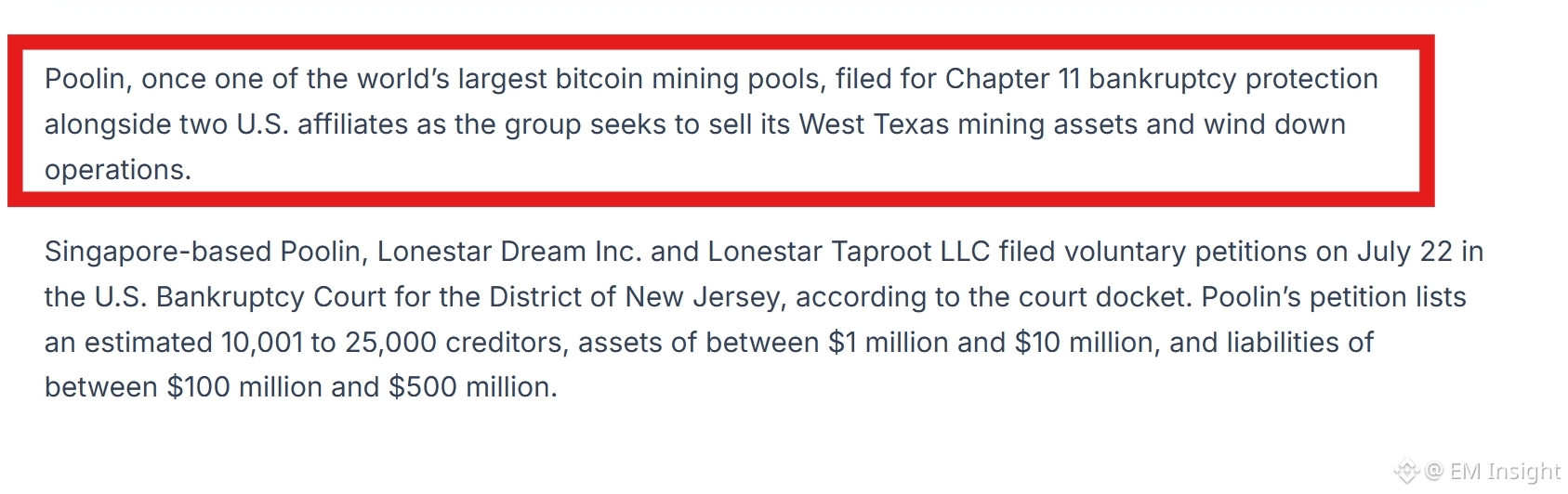
Poolin — once one of the world’s largest Bitcoin mining pools — and two related companies in the U.S. have filed for Chapter 11 bankruptcy protection in New Jersey. The company has halted its mining and hosting operations in Texas since July 10.
The filing shows Poolin has approximately 10,001–25,000 creditors, while total financial liabilities prior to bankruptcy amount to $173.1M. Notably, about $163.7M consists of unsecured notes payable issued to Poolin Wallet users after the platform froze withdrawals in 2022. Roughly 11,700 customers still hold these IOUs.
Poolin is expected to sell two Bitcoin mining facilities in West Texas with a minimum bid of $52M: $15M for the Pyote site and $37M for the right to use electricity along with equipment at Tarbush. This figure amounts to only about 30% of total debt obligations, not including bankruptcy costs and payment priorities.
Poolin once dominated Bitcoin’s hashrate, but China’s 2021 crypto-mining ban, the market crash in 2022, and a custody wallet model that used customer assets as collateral all broke the liquidity structure. A mining empire ends with an asset auction — and users become unsecured creditors in a long line waiting for whatever remains to be distributed.
Poolin — once one of the world’s largest Bitcoin mining pools — and two related companies in the U.S. have filed for Chapter 11 bankruptcy protection in New Jersey. The company has halted its mining and hosting operations in Texas since July 10.
The filing shows Poolin has approximately 10,001–25,000 creditors, while total financial liabilities prior to bankruptcy amount to $173.1M. Notably, about $163.7M consists of unsecured notes payable issued to Poolin Wallet users after the platform froze withdrawals in 2022. Roughly 11,700 customers still hold these IOUs.
Poolin is expected to sell two Bitcoin mining facilities in West Texas with a minimum bid of $52M: $15M for the Pyote site and $37M for the right to use electricity along with equipment at Tarbush. This figure amounts to only about 30% of total debt obligations, not including bankruptcy costs and payment priorities.
Poolin once dominated Bitcoin’s hashrate, but China’s 2021 crypto-mining ban, the market crash in 2022, and a custody wallet model that used customer assets as collateral all broke the liquidity structure. A mining empire ends with an asset auction — and users become unsecured creditors in a long line waiting for whatever remains to be distributed.