

Key points
A nationwide economic poll shows: 49% of U.S. voters believe it is not appropriate for the federal government to hold equity in domestic companies, and the number of people who oppose this far exceeds the 19% who support it.
The U.S. government has reached equity participation agreements with dozens of companies, holding a 10% stake in the chip giant Intel, with the corresponding market value now reaching hundreds of billions of dollars.
The Trump administration has defended this equity-holding policy, but Republican lawmakers in the Senate have called on the government to act with caution.
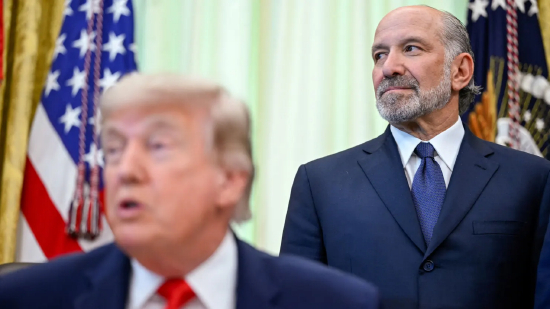
The latest nationwide economic survey results across the U.S. show that nearly half of Americans do not approve of the federal government’s practice of taking equity stakes in domestic companies.
Data from the nonpartisan think tank Council on Foreign Relations shows that the Trump administration has already finalized 30 equity-participation deals, with a total scale of nearly $27 billion. More similar projects are also planned for implementation later. Separately, it was reported that the U.S. government is in talks with leading AI startup OpenAI, planning to obtain corresponding equity when the company goes public.
The latest poll shows: only 19% of voters support the federal government holding equity in domestic companies, while 49% take a stance against it. Another 32% of voters are undecided. This means that as the government advances its shareholding plan, there remains substantial room in public opinion for lobbying and guidance.
Polling: the voting willingness of Democratic Socialist supporters exceeds that of voters in the “Make America Great Again” camp
The nationwide poll research period for this survey was July 8 to 12. Questionnaires were administered to 1,000 registered voters across the U.S. The sampling error was ±3.1 percentage points. The survey was jointly executed by the Hart Research Associates and the public opinion strategy firm. The results were released to the public last Friday.
Some government shareholding actions are part of a strategic, opportunistic layout, while others serve the administration’s top-level macroeconomic strategy. The largest single equity deal was implemented last August: the U.S. government acquired a 10% stake in Intel. During the Biden administration, legislation was enacted to provide Intel with $8.9 billion in industrial subsidies; after the Trump administration took office, it required the subsidies to be exchanged for equity, claiming that this would allow all taxpayers to share the upside benefits from the company’s growth.
This Intel equity, initially corresponding to $8.9 billion in subsidies, saw a rise of 372% during the period. As of last Thursday’s close on the U.S. stock market, the equity’s market value has increased to $42 billion.
Last week, Commerce Secretary Lutnick held discussions with Republican senators at a policy luncheon regarding the Intel shareholding issue.
North Dakota Republican Senator John? Hoeven said afterward: “We must be cautious about this. I understand the intent to have taxpayers benefit from it, but operations in this area must be handled conservatively.”
Ohio Republican Senator Jon? Hueston also expressed concern about the trend of the government continuing to take equity stakes: “From the perspectives of national security and taxpayers’ interests, some equity-staking behavior may have reasonable grounds, but such holdings should never exist permanently.”
Huston is currently leading the drafting of a bill: it would allow the U.S. government to inject capital and take equity stakes in companies for national security purposes, but the maximum duration of the equity stake may not exceed 8 years.
Another part of the government’s equity layout is a defense resource assurance plan coordinated and advanced at the federal level. The purpose is to ensure the security of channels through which the U.S. obtains urgently needed defense resources and core technologies. The U.S. Department of Defense has already provided funding to support a domestic rare-earth mining company, MP Materials. In recent years, China has continuously consolidated the rare-earth mining industry chain, firmly controlling the lifeline of rare-earth supply for core components of defense equipment such as advanced fighter jets and drones—creating a supply bottleneck advantage.
Many people oppose government involvement in the operation of private companies: while official endorsement may boost a company’s attractiveness in the capital markets in the short term, in the long run the company’s market competitiveness will be weakened by deep administrative interference—U.S. Steel is a typical case. For years, the U.S. has protected its domestic steel industry over the long term through policies such as tariffs. In 2025, U.S. Steel was privately acquired and taken over by a Japanese company. The U.S. holds a golden share, which gives it a veto over some major business decisions.
The U.S. relies on its fiscal strength to support companies involved in national security, and this approach has also attracted private capital to follow suit—some investors even have financial ties to the Trump family. In a report released in May by the nonprofit investigative outlet ProPublica, it was stated that the White House pressured the Department of Defense to issue a $620 million loan to a defense contractor startup, Vulcan Elements. One of the company’s investors has business dealings with Donald Trump Jr.
The White House officially dismissed the report as “an escalating fake news story.” Trump Jr.’s spokesperson responded that the individual was not involved in the loan transaction and had never coordinated with federal government officials regarding personal investments.
Polling data clearly shows a partisan divide: 66% of Democratic voters oppose the government taking equity stakes in businesses, while among Republican voters the opposition figure is only 34%.
Even among the most loyal “Make America Great Again (MAGA)” supporter group for Trump, skepticism remains prominent: 31% of supporters approve of government shareholding, 31% oppose it, and the remaining 38% have no clear stance.
Compared with nationwide economic survey data from the same period in October 2025, public attitudes have loosened: at that time, 56% of voters opposed the government holding equity in private companies, with only a 13% approval rating; 31% were undecided.