
SpaceX bears' positions are 29% of float—what happens next?
- IPO issue price: $135
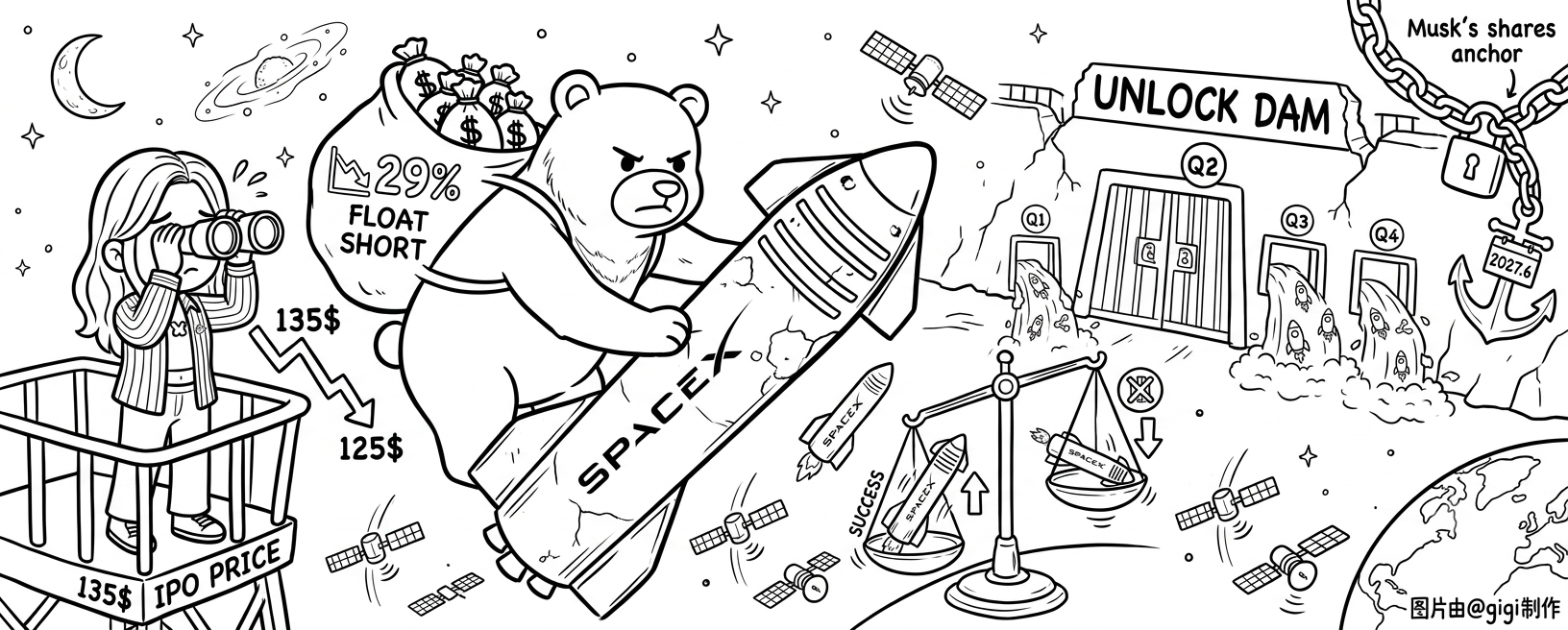
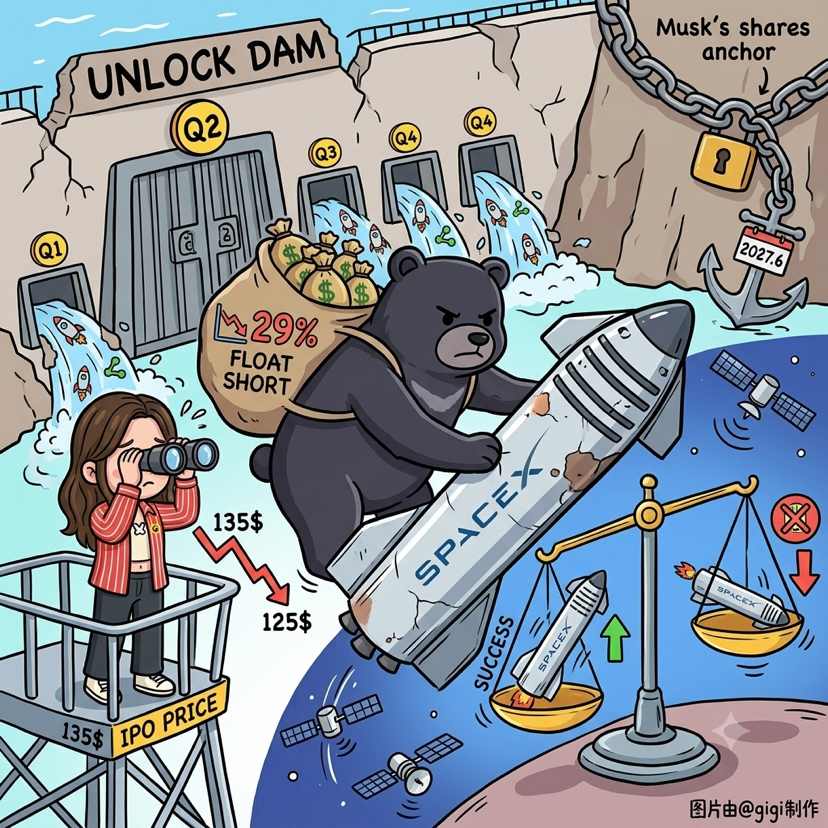
- Bear position: about 185 million shares, 29% of the float; bear interest is about $25 billion
- In three weeks, the bears jumped from 5% to 29%
- Since July, the cumulative decline is about 20%; it briefly fell below the IPO price
- The 13th Starship test was canceled; the stock fell another 4% that day.
🤔 What are the bears betting on: the core is the pressure from unlocks/restrictions expiring
When SpaceX went public, the float was only about 5% of total shares—an extremely small float can be pushed higher by sentiment. The IPO pricing also includes a large amount of expectations for future cash flows. Now, institutional bears are betting that:
- Q2 earnings release unlocking window: at that time, about 11% of shares will be eligible for sale—this is the first real test of selling pressure
- Subsequent batches will be unlocked gradually: roughly 4% releases every period, continuing to suppress the share price
- Musk’s 42% stake locked until June 2027: there’s a stabilizer effect, but other early investors and employee shares won’t wait forever
A 29% short interest ratio in any single stock is an extreme number. This isn’t retail traders gambling—it’s institutions systematically shorting a newly listed company with an overvalued price
🤔Starship test: the most important catalyst
The core of SpaceX’s commercial narrative is reusable rockets, and every delay of Starship discounts the story. Here are a few key next milestones:
- Can the 13th test be rescheduled and succeed? If successful → narrative repair; short-term short covering could trigger a rebound
- Test delayed again or an accident occurs: shorts increase their position, and the stock price tests support around the $120 area
- Starlink commercialized data: if the Q2 earnings report simultaneously discloses Starlink user and revenue figures that beat expectations, it could partially offset the unlock pressure
🤔Trend outlook
• Scenario: short-term rebound
Trigger condition: Starship test success + market sentiment improving
Price direction: return to the $140-$150 range
• Scenario: choppy base-building
Trigger condition: test delayed + waiting before the unlock window
Price direction: range-bound in the $125-$140 range
• Scenario: accelerated downside
Trigger condition: unlock window overlaps with test failure or macro tightening
Price direction: fall below $120, testing around $110
The biggest risk isn’t technical—it’s that the unlock window coincides with macro risk appetite shrinking. Right now, the semiconductor sector is in a technical bear market, and the Fed’s hawkish signals haven’t been digested. The overall environment is not friendly to high-valuation growth stocks, and SpaceX won’t be an exception
In the medium term, if Starship completes commercial validation and Starlink data keeps growing, positions below $135 may be seen as a historic buying opportunity. But until the unlock pressure is fully released, the share price will likely move weaker than fundamentals
DYOR, not investment advice