

Sometimes the market views a project from the wrong angle.
I also initially thought Newton Protocol was just creating yet another marketplace for AI developers. Then I reread the whitepaper and recent updates, and the picture was completely different.
The idea of a Model Registry is not just to list agents.
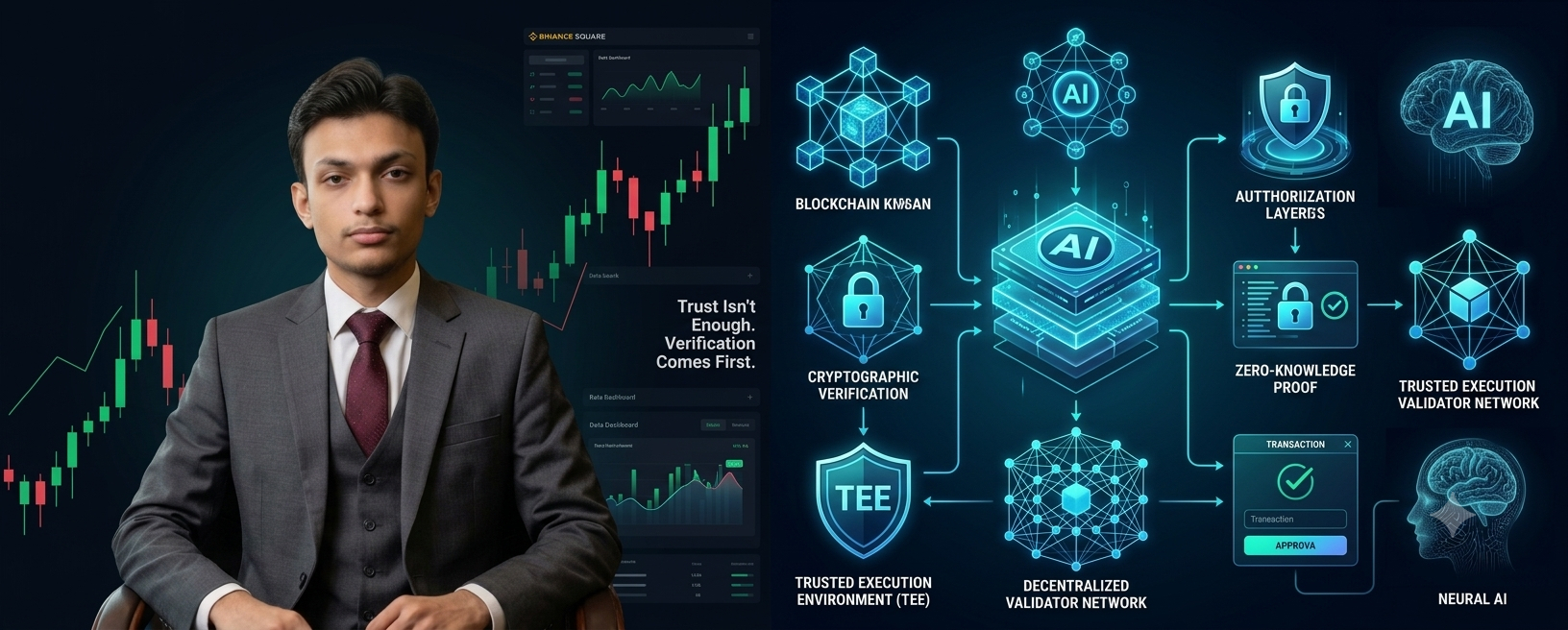
The real thing is that every AI agent operates within an authorization framework. Registration, policy enforcement, and execution proofs together create an environment where AI not only does the work, but also verifies every action it takes.
Here, I found something else interesting too.
In crypto, we often treat multisig wallets as security. But in many incidents, even when the signatures were complete, a mistake still happened. The problem wasn’t the hackers. The problem was human attention.
Newton wants to change this trust model.
Here the focus isn’t on "how many signers there are," but on "whether the predefined conditions were met." Spend limits, whitelisted destinations, transaction rules, and programmable policies are checked before execution. If a rule fails, the transaction stops.
This is the whitepaper’s core idea: Authorization Before Execution.
This approach also has a tradeoff.
Developers don’t get complete freedom. There are some boundaries. But if AI agents need to handle institutions, RWAs, and real capital, then predictable automation becomes more important than unrestricted automation.
For me, this isn’t a restriction—it’s the foundation of trust.
Now the real challenge is adoption. The registry having more high-quality agents, real execution volume, and active policy usage will prove just how valuable the ecosystem is becoming.
I think the next AI cycle won’t be only about the smartest agents.
The winner will be the infrastructure that makes AI accountable.
And this is exactly why this isn’t just an AI project for me, but an on-chain trust layer where the rules are decided first, and execution comes afterward.
