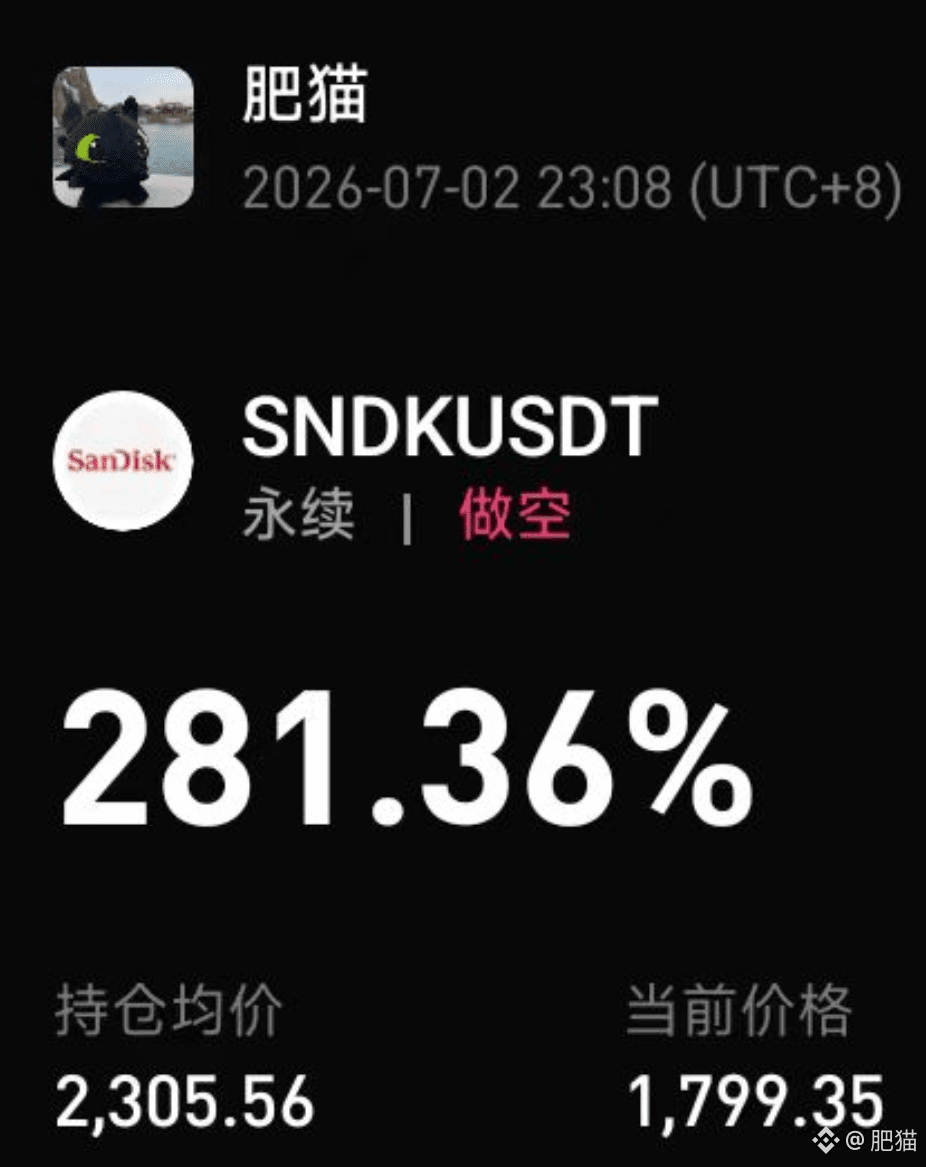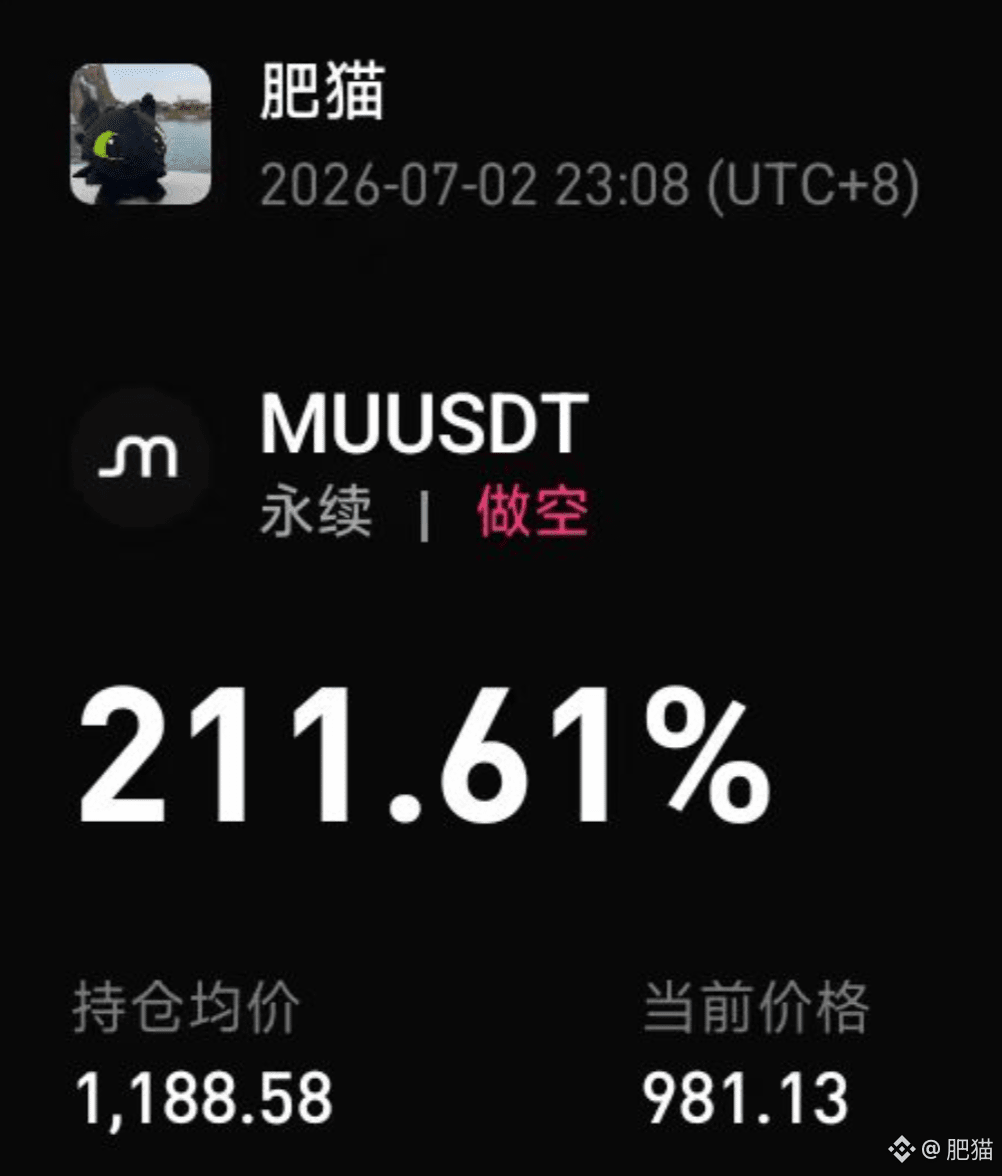

I rode a roller coaster once, and even during the brief rebound in the middle I got trapped for a short time.
Didn’t expect it to turn out like this...
Level upon level on leverage—severe premium. In the end, when the relationship between price and volume shifts and the buy side can’t support the profit-taking side, this is what it becomes. Nothing too surprising.
The essence of price fluctuations is volume-price behavior.
The higher the price, the lower the confidence of the buy side, and the fewer the buyers. During rebounds, every time it’s the same group rushing in. After repeated runs, the buy side is gradually worn out. Then the profit-taking side starts piling up heavily. Once the ratio between buy and sell sides widens, the market begins to pull back. And when the leveraged positions piled up on margin are liquidated in a concentrated wave, that’s when the so-called “stampede” happens.
I’m not against you going into Micron and SanDisk, but stocks aren’t cryptocurrencies. Their trends have that kind of strong extensibility: when it goes up, it really goes up; when it falls, it really falls. If you’ve traded in the A-shares market, you don’t need me to say more. It’s best to enter after one daily candle closes bullish, or at the 4-hour timeframe—enter on the right side after the close is above the nearest resistance level.
The problems with people moving from the crypto circle into the stock circle are that they like to chase after breakout trades; the outcome often isn’t good because crypto has too many fake breakouts...
And the biggest problem with moving from crypto into the stock circle is that the trading style is too left-sided—too fond of catching the bottom. Getting buried halfway up the slope isn’t unusual either...
This evening the Nasdaq even got dragged down with storage... But what’s interesting is that we actually managed to move against the prevailing trend.
Didn’t expect it to turn out like this...
Level upon level on leverage—severe premium. In the end, when the relationship between price and volume shifts and the buy side can’t support the profit-taking side, this is what it becomes. Nothing too surprising.
The essence of price fluctuations is volume-price behavior.
The higher the price, the lower the confidence of the buy side, and the fewer the buyers. During rebounds, every time it’s the same group rushing in. After repeated runs, the buy side is gradually worn out. Then the profit-taking side starts piling up heavily. Once the ratio between buy and sell sides widens, the market begins to pull back. And when the leveraged positions piled up on margin are liquidated in a concentrated wave, that’s when the so-called “stampede” happens.
I’m not against you going into Micron and SanDisk, but stocks aren’t cryptocurrencies. Their trends have that kind of strong extensibility: when it goes up, it really goes up; when it falls, it really falls. If you’ve traded in the A-shares market, you don’t need me to say more. It’s best to enter after one daily candle closes bullish, or at the 4-hour timeframe—enter on the right side after the close is above the nearest resistance level.
The problems with people moving from the crypto circle into the stock circle are that they like to chase after breakout trades; the outcome often isn’t good because crypto has too many fake breakouts...
And the biggest problem with moving from crypto into the stock circle is that the trading style is too left-sided—too fond of catching the bottom. Getting buried halfway up the slope isn’t unusual either...
This evening the Nasdaq even got dragged down with storage... But what’s interesting is that we actually managed to move against the prevailing trend.