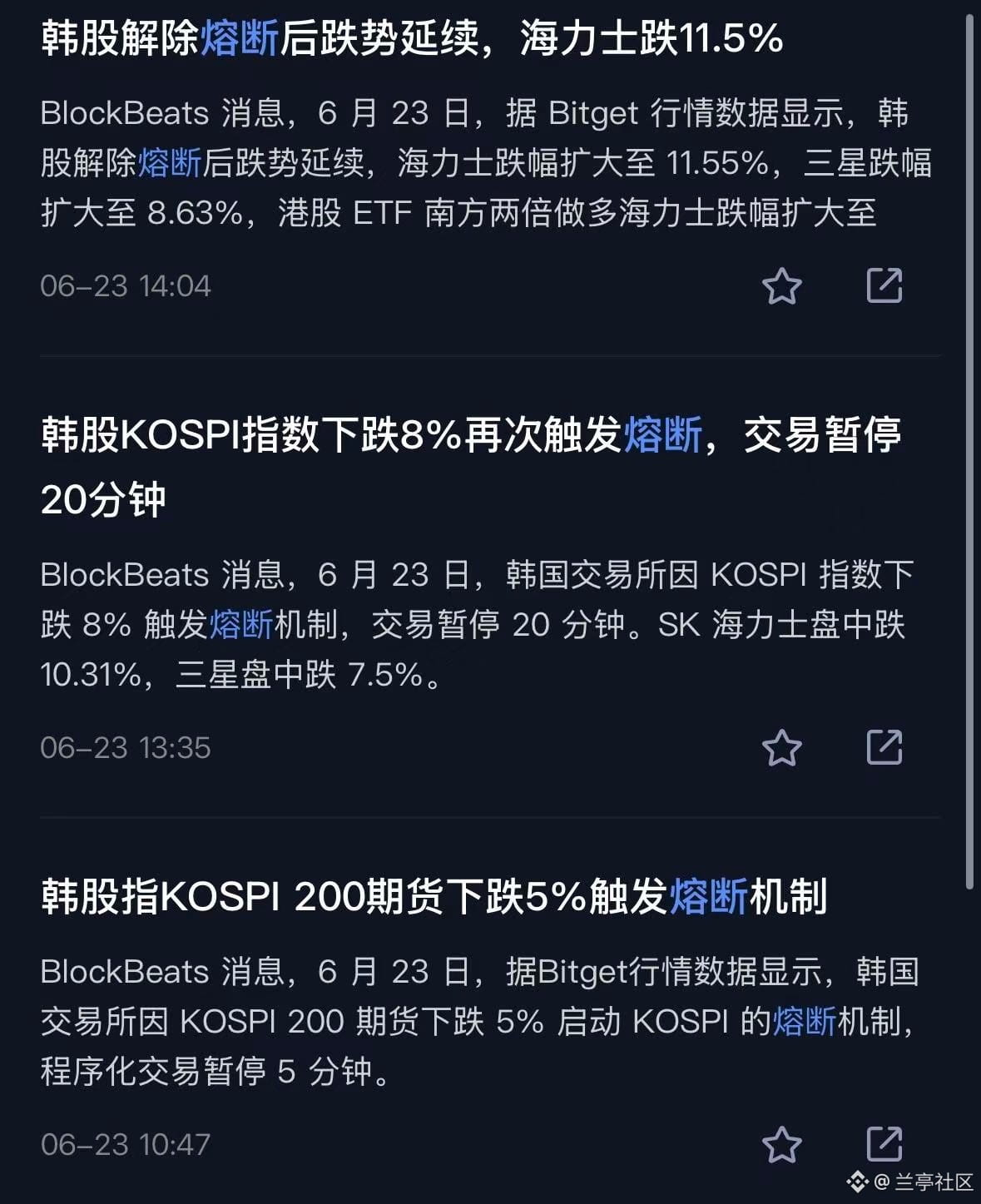

Korean stocks face a meltdown: Four core reasons
1. External trigger: US tech stocks plummet
Overnight, US stocks in AI and memory chips saw a collective pullback, leading to profit-taking across the global tech sector. Foreign investors heavily offloaded Korean stocks, with over 20 trillion KRW (around 1.3 billion USD) flowing out in a single day.
2. Internal driver: Retail investor leverage spirals into liquidation
This year, South Korea allowed 2x leverage on individual stocks and launched semiconductor leverage ETFs, exceeding 9 billion USD in scale, with retail investors heavily betting on Samsung and SK Hynix;
The drop in stock prices triggered forced liquidations, further driving down the index in a downward spiral of liquidation → sell-off → further decline.
3. Extremely singular industrial structure
The index is heavily tied to semiconductor storage, with conglomerates holding excessive weight, causing a broad bear market whenever the sector dips; combined with regulatory criticism of semiconductor leverage ETFs, panic selling has intensified.
4. Fragile market funding structure
High foreign ownership and local pension funds turning into net sellers mean that the earlier rally was entirely driven by liquidity/leverage, lacking fundamental support. Once negative news hits, buying interest evaporates instantly.
Market features: Korean stock circuit breakers become the norm in 2026
In 2026, KOSPI circuit breakers have been triggered 4 times:
• 3.4, 3.9: Geopolitical conflict panic circuit breakers
• 6.8: Semiconductor pullback circuit breaker
• 6.23: This near 10% drop circuit breaker
The Sidecar program has been paused over 27 times throughout the year, with volatility hitting a 20-year high, and the high-leverage retail market showing extremely weak risk resilience.
Next market actions
1. Korean financial regulators indicate tightening oversight on semiconductor leverage ETFs, limiting high-risk retail leverage products;
2. On the same day, retail investors attempted to bottom-fish with 8.52 trillion KRW, but it failed to reverse the significant index drop;
3. The Korean won has weakened to a 17-year low, with a dual hit on stocks and currency amplifying market panic.
#熔断 $SKHYNIX
1. External trigger: US tech stocks plummet
Overnight, US stocks in AI and memory chips saw a collective pullback, leading to profit-taking across the global tech sector. Foreign investors heavily offloaded Korean stocks, with over 20 trillion KRW (around 1.3 billion USD) flowing out in a single day.
2. Internal driver: Retail investor leverage spirals into liquidation
This year, South Korea allowed 2x leverage on individual stocks and launched semiconductor leverage ETFs, exceeding 9 billion USD in scale, with retail investors heavily betting on Samsung and SK Hynix;
The drop in stock prices triggered forced liquidations, further driving down the index in a downward spiral of liquidation → sell-off → further decline.
3. Extremely singular industrial structure
The index is heavily tied to semiconductor storage, with conglomerates holding excessive weight, causing a broad bear market whenever the sector dips; combined with regulatory criticism of semiconductor leverage ETFs, panic selling has intensified.
4. Fragile market funding structure
High foreign ownership and local pension funds turning into net sellers mean that the earlier rally was entirely driven by liquidity/leverage, lacking fundamental support. Once negative news hits, buying interest evaporates instantly.
Market features: Korean stock circuit breakers become the norm in 2026
In 2026, KOSPI circuit breakers have been triggered 4 times:
• 3.4, 3.9: Geopolitical conflict panic circuit breakers
• 6.8: Semiconductor pullback circuit breaker
• 6.23: This near 10% drop circuit breaker
The Sidecar program has been paused over 27 times throughout the year, with volatility hitting a 20-year high, and the high-leverage retail market showing extremely weak risk resilience.
Next market actions
1. Korean financial regulators indicate tightening oversight on semiconductor leverage ETFs, limiting high-risk retail leverage products;
2. On the same day, retail investors attempted to bottom-fish with 8.52 trillion KRW, but it failed to reverse the significant index drop;
3. The Korean won has weakened to a 17-year low, with a dual hit on stocks and currency amplifying market panic.
#熔断 $SKHYNIX