


Today we are going to talk about the AAVE V4 update. AAVE is a well-known web3 lending platform and currently the largest lending platform with a TVL of 30 billion USD. The DeFi sector deals with finance, and within finance, 'borrowing and lending' are the most fundamental and substantial demands. As a web3 bank, AAVE currently has an FDV of only 2.7 billion, while listed banks in web2 casually exceed 100 billion. Therefore, I predict that AAVE has great prospects for the future. An innovative thing often fears continuous iteration and upgrades, and perhaps during these iterations, it will completely subvert traditional concepts!
So let's take a look at what updates have been made in the current V4 to strengthen your understanding, as one cannot earn money outside of their knowledge!

Aave V4 Major Updates (Highlights)
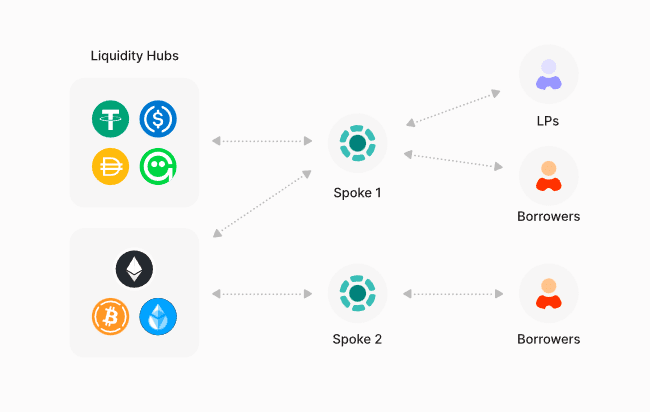
1. Modular Architecture — 'Hub & Spoke'
- Introducing 'Liquidity Hubs' + multiple 'Spokes' structure.
- All liquidity is first concentrated in Hubs, then called by Spokes as needed, resulting in higher capital utilization and reduced fragmentation; Spokes can have different risk configurations, and each Spoke can set its own borrowing rates/risk control parameters.
Large Hubs act like large reservoirs responsible for storing water, while Spokes draw water as needed, as there are different types in the lending market, such as high-frequency trading user markets, stable asset markets, risky asset markets, institutional dedicated markets, Meme token markets, cross-chain sub-markets, etc., and the popularity varies by market; for example, Market A is booming with strong borrowing demand, but Market B is quiet with idle funds.
Hub → High-speed Rail Terminal
'In the V3 era, each market was like a small station, with money dispersed.'
'V4 concentrates all funds in a central hub (Hub), just like directing all national passenger flow to Beijing South Station.'
Spokes → High-speed Rail Lines
'Different destinations (different risk markets) are like different routes, departing as needed.
2. Risk Premiums
V4 no longer has a unified lending rate but introduces a risk premium mechanism: borrowing rates are related to the quality of collateral.
High-risk assets will have higher premiums, while lower-risk assets have more reasonable borrowing costs.
3. Dynamic Risk Configuration
Parameters such as collateral factor and liquidation bonus can be adjusted in real-time.
Risk management is more flexible, responds faster, and can control protocol risks more accurately.
4. Liquidation Engine Upgrade
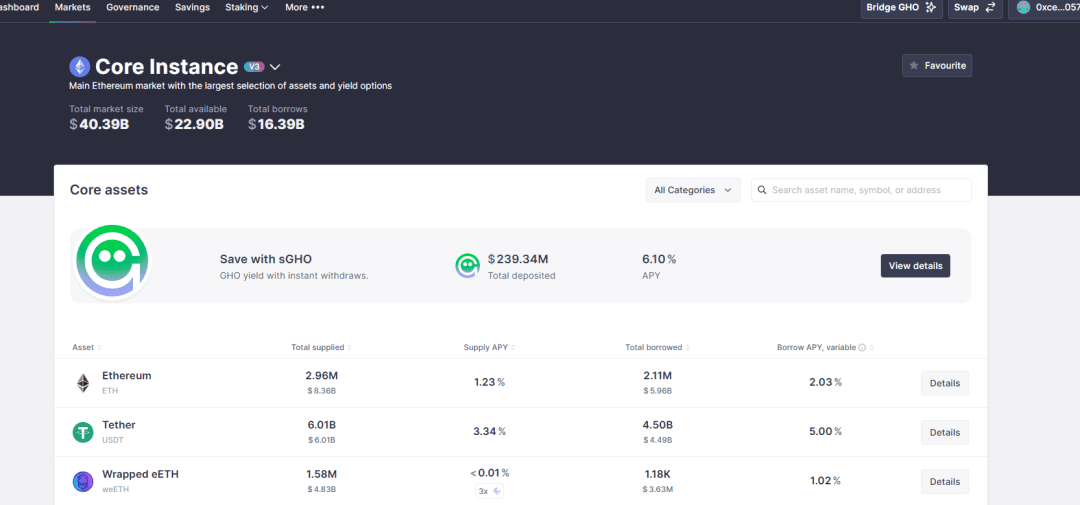
Introducing a 'health-targeted' liquidation model: liquidation is not just a one-time massive sell-off but partial liquidation (batch liquidation), restoring the borrower's position to a healthy level. This benefits borrowers while allowing the protocol/lender to reclaim some funds.
The advantage is that for the protocol, it reduces bad debt risks and allows for finer granularity in liquidation, preventing large-scale chain reactions. For borrowers, they won't be liquidated in one fell swoop; the volume of liquidation is smaller, losses are more controllable and fair, and they won't be excessively taken advantage of by liquidators. For liquidators, incentives still exist (liquidation rewards), multiple small liquidations → more opportunities, lower risk (positions won't suddenly become unliquidatable due to a major drop).
5. Position Manager
Users can choose 'Position Manager' to automatically handle their borrow/repay/take/store operations.
Particularly useful for advanced users and service providers, enabling more complex operations to be automated.
6. Multicall (Batch Call)
Supports bundling multiple operations into a single transaction (batch), saving gas and improving operational efficiency.
Very helpful for complex operations involving a series of actions (e.g., deposit first, then set as collateral, then borrow).
7. Interface (UI) Upgrade — Aave Pro
A new interface 'Aave Pro' is launched, targeting DeFi native/advanced users.
The interface will display information from multiple Spokes (including risk parameters, liquidity pool details, etc.), allowing users to manage their positions more intuitively.
8. Non-upgradable (Core Contract Immutable)
Core contracts are defaulted to be non-upgradable (immutable), enhancing security.
However, new functionalities can be expanded through Spokes, so the protocol remains flexible.
9. Reinvestment Module
Idle liquidity can be reinvested into external strategies through an optional module.
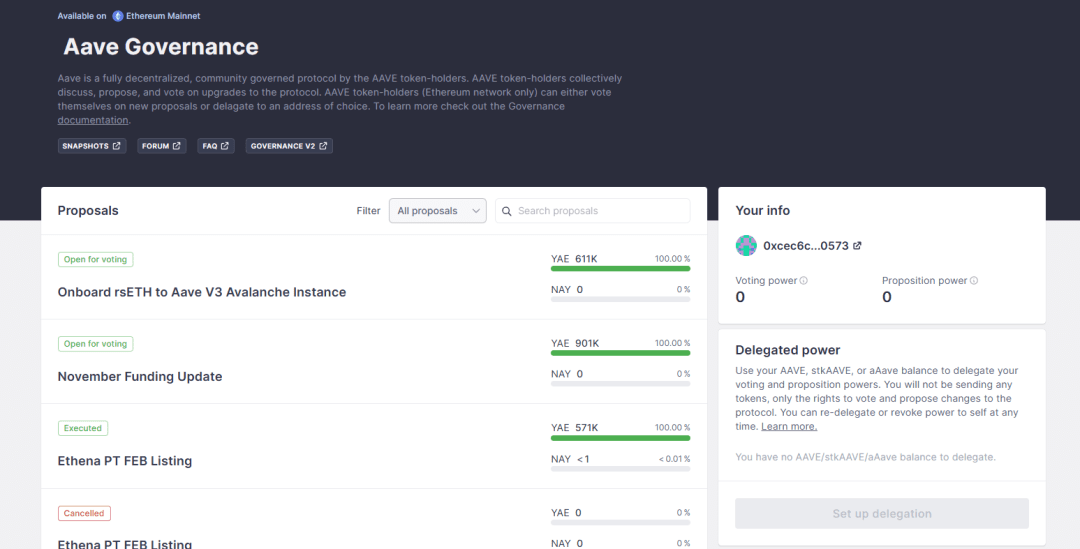
Whether to enable and how to enable is decided by governance (i.e., Aave DAO can decide the strategy).
10. Accounting Method Change — ERC4626
V4 changes the user balance accounting style from the rebasing style of aToken to the ERC4626 style of shares.
Benefits include: cleaner integration (better compatibility with other DeFi protocols), simpler tax handling, etc.
11. Security & Audit
Formal verification, independent audits, and multiple layers of manual review have been conducted. The new code has been tested by service providers before release and is ready for public testnet launch.
12. Launch Rhythm / Timing
The goal is to release in Q4 of 2025.
The roadmap has been made public: including security audits, code release, testnet launch, etc.
13. Permission Expansion & Licensing
It may support 'Permissionless Architecture' in the future: anyone can deploy a new Hub/Spoke.
This means protocol expansion is more flexible, allowing developers/institutions to more easily build their own sub-markets based on Aave.
Impact & Significance
Capital efficiency is improved: centralized liquidity + modular markets reduce resource waste.
Risk pricing is more precise: through risk premiums, the protocol can handle high-risk assets more reasonably.
Improved user experience: new UI + automatic manager + batch operations make it easier for both advanced and regular users.
Enhanced protocol security: core contracts are non-upgradable + strict audits + formal verification.
Greater scalability: modularity means new types of markets (Spokes) can be added more flexibly in the future; it also leaves space for developers.