


Text | Kaori
Editor | Sleepy
"Even if Meta lays off 90% of its people, apps like Instagram and Facebook will keep running smoothly."
Eva is a senior engineer at Meta, not on the layoff list, performing well, and actively embracing AI tools.
But he said, "No one is safe; it’s pretty risky, it's just a matter of when."
This is a story about how performance is evaluated, how promotions happen, how management operates, and even how effort itself is defined. Those involved, from Zuckerberg at the top to the fresh junior engineers just starting out, can't really say when this storm will end.
Layoffs are real, but the reasons are fake.
Meta has laid off about 25,000 people since 2022.
In November 2022, they laid off 11,000 people, and another 10,000 in 2023. Zuckerberg called it the year of efficiency. In January 2025, he announced an internal memo to cut 5% of the lowest performers, around 3,600 people. In March 2026, another 700 were laid off. According to Reuters, about 8,000 more will be laid off in late May, representing 10% of the nearly 79,000 global employees, with a second round expected in the second half of the year.
Layoffs are indeed happening, but it doesn't necessarily mean that AI has taken these people's jobs.
Eva believes that most of those laid off at this stage would have left regardless of AI. 'A few years ago, the entire CS industry was hiring far beyond actual demand; the industry was booming, capital was overheated, and stock prices were rising. Many companies hired a bunch of people. After Musk bought Twitter and laid off most employees, the app still worked fine; there was no AI back then.'
In 2026, Meta's capital expenditure guidance is $115 billion to $135 billion, nearly double that of 2025, all directed towards data centers, GPUs, and AI infrastructure. The money saved from layoffs is flowing into computational power.
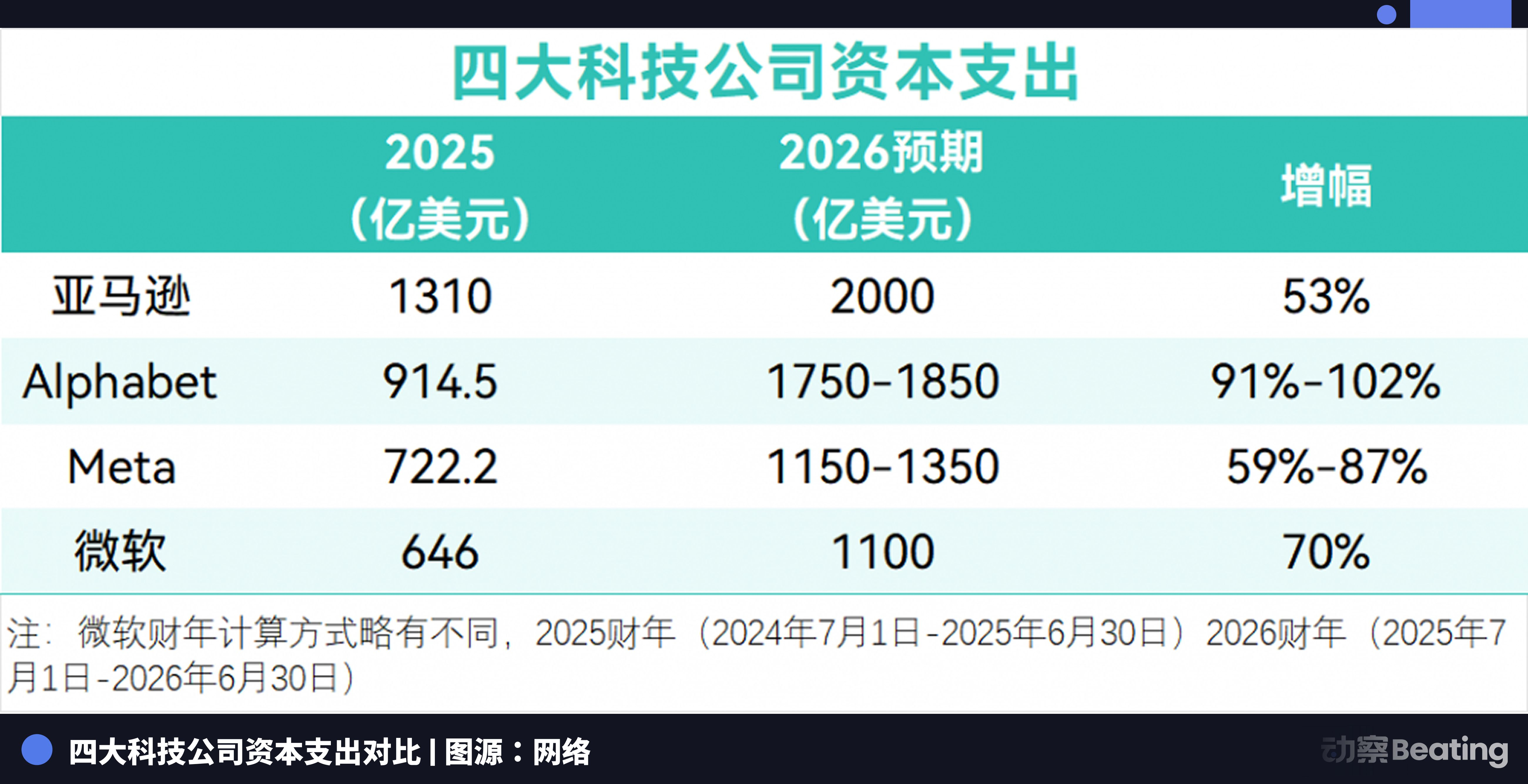
At this stage, AI plays a role like a decent hand; the company can claim that efficiency has improved and that they no longer need so many people.
Small companies are nimble, but once they grow into big companies, decision-making slows down. They find they can't compete with emerging unicorns and startups, so they start slimming down, flattening, and focusing on core products. AI has just accelerated this already ongoing cycle.
When the degree of AI usage factors into performance evaluations.
However, the involvement of AI has changed some rules regarding layoffs.
Meta's original performance evaluation method was quite unique among big tech companies in Silicon Valley. Managers don't score directly; instead, they compile your self-assessment, peer evaluations, and their observations into a performance rating document.
Then they enter a Calibration Meeting phase, where about a dozen people at the same level are put together. Each manager takes turns stating the performance of their subordinates, explaining why a person deserves a certain level, and everyone discusses collectively to finally assign ranks to everyone.
This process is cumbersome and time-consuming, but its value lies in introducing multiple perspectives and horizontal comparisons among peers, making it hard for individual manager preferences to dictate outcomes. Eva believes this is relatively fair.
In early 2026, the Calibration Meeting was canceled. Eva explained, 'The company reverted to performance evaluations every six months, reasoning that with AI, managers can use AI to assist in writing self-assessments, eliminating the need for so many collaborative processes, so the workflow can be faster.'
Meanwhile, Meta launched an AI performance tracking system called Checkpoint, which automatically aggregates employee work data from internal systems like Google Workspace, generating contribution summaries for managers. For software engineers, Checkpoint tracks over 200 data dimensions, including the proportion of AI-generated code, as well as monitoring error rates, bug associations, and other metrics.
Meta's Chief People Officer, Janelle Gale, clearly stated in an internal memo at the end of 2025 that AI collaboration ability will be a core criterion for performance evaluations in 2026.
In addition, every time Meta engineers write a piece of code, the system automatically annotates a percentage showing how much of that code was completed with AI assistance; this data has already become part of performance assessment metrics.
Each group sets a minimum threshold based on their situation, such as 50% or 90% of code needing to be AI-generated. You have to meet that threshold, and even after that, performance evaluations still look at how much actual value your work brings. 'The company's idea is for you to use it first and see how well it works,' Eva said.
Writing the AI usage rate into performance evaluations acts as a sort of mandatory promotion mechanism; it doesn’t reward those who use it a lot, but will punish those who don’t.
This line of thinking isn't unique to Meta.
NVIDIA CEO Jensen Huang publicly stated at the GTC conference in March 2026 that every engineer in the company will need an annual Token budget, with an additional half allocated for AI spending beyond their base salary. He even mentioned that if an engineer earning $500,000 a year spends less than $250,000 on AI, he would be 'deeply concerned.'
Jensen Huang is selling Tokens; merchants always promote their own products, but Meta has also reached the extreme of this quantitative frenzy at one point.
An employee spontaneously built a leaderboard called 'Claudeonomics' on the internal network, named after Anthropic's Claude model, tracking AI Token consumption among 85,000 employees. In 30 days, the entire company consumed over 60 trillion Tokens.
The leaderboard has badge levels ranging from bronze to emerald, with the top 250 earning titles like Token Legend and Cache Wizard. The top employee consumed 281 billion Tokens in 30 days, with some employees running AI agents for hours without executing any actual tasks, purely to consume Tokens. Measuring productivity by Token consumption is like evaluating truck drivers by fuel consumption; the engine might be running, but that doesn’t mean deliveries are being made.
Eva hasn't felt the pressure of the leaderboard in her team, 'Anyway, we don't have a direct relationship with this leaderboard. We just do what we need to do; it's just for fun to take a look at it.' The manager hasn’t made it a big deal either, but even after the leaderboard website goes offline, the underlying logic remains. The proportion of AI-generated code is still being tracked, and the minimum thresholds still exist.
As everyone is being pushed to use AI, and everyone's output numbers are rising, the performance standards themselves will also rise. 'If 60% of people are doing better, then that standard will definitely increase. As for how much of that improvement is due to AI and how much is from burning the midnight oil, it’s hard to say.'
The winds of involution have blown into Silicon Valley.
Eva's leadership also feels pressure, 'Other leaders are frantically pushing their subordinates; if they don’t succeed, their positions aren’t secure either.'
According to the Wall Street Journal, Meta has established a new AI engineering department with a manager-to-engineer ratio of 1:50, where one manager oversees 50 people, double the traditional Silicon Valley limit of 25:1.
Gallup's data shows that the average number of people managed by U.S. managers has risen from 10.9 in 2024 to 12.1 in 2025, but Meta's 50:1 is still more than four times the industry average.
Eva has felt this change firsthand. In a normal big company, a manager oversees a dozen people, helping them with career planning, having one-on-one discussions, and understanding their needs.
1:50 means that a team of five managers now only needs one, and the other four have lost their positions.
As for how this new department will operate, no one knows, although outside voices suggest that this change will end in tragedy.
‘Our other departments are still maintaining the original management pace for now, managers will still have one-on-one chats about career planning with you, but everyone expects this state won’t last long. Some teams have already started cutting out lower-level managers, leaving only one layer of management to oversee everyone.’
Management itself is also facing questions about whether their jobs are still meaningful. 'Everyone is in the same state, facing the question of whether their position still has a reason to exist. Leaders are no different; their days haven't improved either.'
AI is indeed helping managers increase efficiency by automatically summarizing what their subordinates have recently written in code, posted, and attended meetings, generating regular reports. What used to require leaders to search through everything can now be summarized by AI, and leaders just need to review it.
But the flip side of increased efficiency is that management becomes cheaper, and cheap things are never lacking in alternatives.
The pressure of involution trickles down, ultimately hitting hardest at the bottom-level junior positions.
Eva, as a senior engineer, used to hand off small bugs to junior engineers when planning projects. Now, if it’s not a big deal, he just opens an AI window and fixes it in minutes. 'No need to communicate with junior engineers; I can handle it myself in no time.'
Big projects still need humans, but the trivial tasks that used to take up junior engineers' workloads are now being easily handled by the AI at the fingertips of senior engineers.
Eva speaks quickly: ‘If you can early on be capable of acting as an engineering manager, product manager, engineer, and designer—all tasks can be handled by one person—you can even build a feature or a team yourself, then your chances of being laid off might be slightly smaller than others.’
Regarding how many people will ultimately remain, Eva laughs and says, 'At this moment, even if Meta only keeps half of its employees, it can still run. If AI continues to develop at the advertised speed, in the end, there might only be 10% of programmers left to review what AI has done and align product decisions; the remaining 90% would be unemployed. Even so, Meta could still continue to operate.'
No one is safe, including Zuckerberg.
No one feels safe.
Senior leaders feel pressure because other senior leaders are pushing hard; managers feel pressure because the management ratio might shift from 1:15 to 1:50; senior engineers feel pressure because the standards are rising; junior engineers feel pressure because their work is being easily digested by senior engineers' AI.
Even Zuckerberg himself is feeling anxious.

The uncertainty of the AI era is real. Every new feature released by Claude Code could put a company out of business. Figma’s stock price fluctuated significantly after news of Claude Design, and the entire SaaS industry is being dismantled one by one.
Social networks seem to have barriers, but those barriers are never as thick as imagined. Eva feels that the transition from QQ to WeChat took only a year or two.
Zuckerberg is worried about the company's prospects while aggressively laying off employees. From Eva's perspective, this is a management strategy. 'What he wants to keep are the most driven and smartest people. What’s the best way? He found that offering money isn’t the best way; layoffs are more effective.'
Creating insecurity drives output more than issuing bonuses.
But this strategy comes at a cost. Top engineers won't tolerate this kind of pressure; they'll jump ship to places that respect their employees more. Layoffs can push out the slackers, but they might also drive away the most selective talent.
Eva’s reason for staying is quite practical; although Silicon Valley has become somewhat more competitive, it’s still not as intense as in China.
However, behind these individual choices, the overall trend in the industry has become unavoidable. 'AI will replace most jobs; the internet industry will never return to that glorious state where you could earn a lot without being very busy.'
If you can't beat them, join them.
AI has reshaped the work style of existing employees and also changed the entry standards for newcomers.
Traditionally, Meta's engineering interviews are divided into three parts: Coding, Behavioral Questions, and System Design. Coding involves an algorithm question, like sorting a series of data, assessing which algorithm you choose and considerations of performance and cost. Behavioral questions are more subjective, asking how you handle feedback and conflict. System Design is generally reserved for senior-level architecture design questions.
In October 2025, Meta introduced an AI coding segment in interviews. What used to be two rounds of pure coding has now turned into one round of traditional coding and one round of AI coding. Candidates receive a complex multi-file project in the CoderPad environment, with an AI chat window on the right side that allows them to switch between multiple AI models during the interview, including the GPT series, Claude series, Gemini, and Llama. Within 60 minutes, they need to understand a codebase they've never seen before, break down the issues, and use AI to implement features or fix bugs.
What’s being tested is not whether you can write code or prompts, but your judgment in collaborating with AI. The results produced by AI can be right, wrong, or a mix of both; how you interact with AI to achieve satisfactory results, and whether you can assess whether the AI-generated code is optimal. The interviewer watches every prompt and interaction in real-time.
Eva believes this is very close to a real work environment, seeing if candidates can utilize the latest tools to solve complex problems in a short time.
The new entry standards mean that future entrants into this industry are required to have the ability to collaborate with AI from day one. A candidate who went through this round of interviews summarized that AI didn’t make the interview easier; instead, it raised the bar, as interviewers expect you to solve more complex problems in the same amount of time with AI assistance.
Faced with this situation, Eva’s strategy is to join in rather than fight back.
‘If this is the trend, you can't change it; resisting the use of AI is futile.’
Eva's daily work style has completely changed, opening multiple AI windows to parallel process different tasks. 'You just have one brain, and you can only do one thing at a time. But the advantage of AI is that you can run ten of them and have them do different things for you.'
From trying it out to getting hands-on, it takes about a month.
He has covered almost every aspect of his work with AI, from writing documents and brainstorming while planning projects to comparing options, writing SQL to calculate potential impacts, coding, and even using it to write various summaries and social media posts to boost exposure after completing features.
‘If you can be among the first to use AI best, maybe you'll be among the last to be laid off. But how fast will layoffs occur, and whether it’s really possible to avoid being laid off—no one knows; we can only take it as it comes.’
Beyond this self-comfort, the value of AI is starkly different for people at different levels.
For experienced senior engineers who can identify problems and grasp direction, AI is a real lever; what once took two weeks of analysis can now start immediately. But for those early in their careers, AI removes precisely the part of the thinking and trial-and-error process they need the most.
Efficiency has increased, but learning opportunities have disappeared.
Eva is reluctant to categorize herself as optimistic or pessimistic, 'You can't change this big trend, just like the laid-off workers in the Northeast back then had to accept it. Some opened restaurants, some ventured south to start businesses. Who knows? Life is too long; it's pointless to think about it.'
The only certainty at this point in the game is that no one is a winner.