

It seems that the recent alpha has been surprisingly excellent, and the launch price of the Binance-led cz as an advisor on $GENIUS is also exceptionally bright. How can tokens survive in this gamble?
Here, let's take @Pixels as an example.
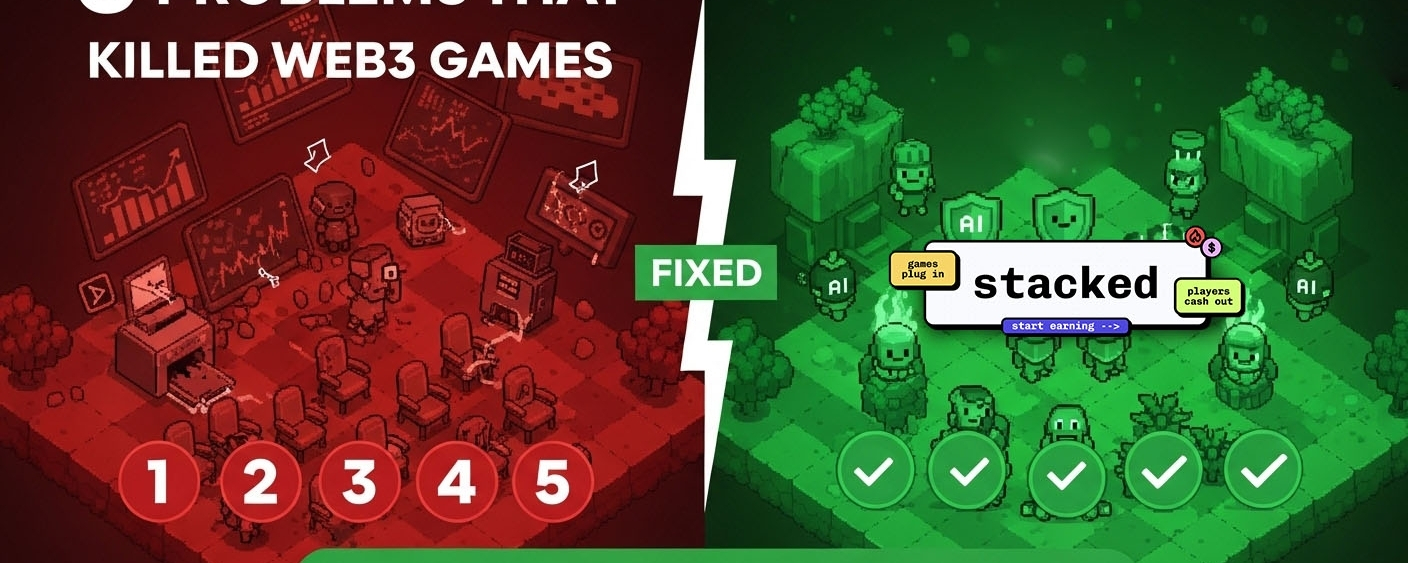
While Web3 games are still being repeatedly questioned about their sustainability, Pixels has delivered a rare answer using the Stacked platform, bringing in over $25 million in real revenue. This is not a valuation or a story; on the contrary, this is actual income. This indicates that AI-driven rewards and operational infrastructure can pull games from relying on airdrop lifelines into a phase of making money through data.
The success of Pixels has three truly replicable aspects
From a single game token to cross-ecosystem rewards
Shifting from manual, ad-hoc operations to AI-driven management
Shifting from short-term user acquisition to long-term profitability
Everyone is familiar with how traditional Web3 games fail: issuing tokens for speculation and then crashing, excessive rewards causing inflation, players can't be retained just by farming rewards, and teams lack refined tools. Stacked, however, is taking a different path. It has created a shared reward layer that allows $PIXEL to become a universal currency across multiple games in the Pixels ecosystem. With each new game integration, the demand for PIXEL increases, creating a positive cycle where more games lead to more users staking and consuming. Early data has already proven that the monthly revenue of integrated games has significantly increased, and the practical applications of PIXEL have expanded from internal farm circulation to the entire ecosystem, with selling pressure noticeably reduced.
More critically, the introduction of the AI layer allows studios to ask the system like a game economist. AI uses four years of real operation data from Pixels to analyze on-chain behaviors, player paths, and budget flows in real-time, then directly informs teams how to adjust tasks and change matching rules while also initiating anti-cheat measures. From insights to execution, operational efficiency has multiplied several times. For an event targeting inactive players, the conversion rate has improved by 178%, and the reward input-output ratio has reached 131%, directly driving the total ecosystem revenue to exceed 25 million dollars.
This model is replicable. Pixels first validated it within its own million daily active users game, then opened Stacked as a B2B platform. Small and medium studios can access top-tier AI operational capabilities without building their own data teams, which not only lowers the industry threshold but also transforms Web3 games from competing for talent to growing stronger together. Players receive rewards that are more to their taste and experiences that can be withdrawn at any time, while developers can focus on content rather than constantly calculating economics, $PIXEL also has the opportunity to become a true industry-level reward carrier.
To elaborate, Stacked has finally made Web3 games no longer a speculative tool on the chain but a sustainable system that integrates on-chain economy and real-time operations. As more external studios connect to Stacked, Pixels is likely to grow from a small pixel farm into a game infrastructure platform that redefines what it means to be a profitable game.#pixel