

Author: Kaiko
Compiled by: Peng SUN, Foresight News
On March 11, within a few hours of the collapse of Silicon Valley Bank, Circle, the issuer of the stablecoin USDC, announced that $3.3 billion in reserves were stored in Silicon Valley Bank, causing market panic and massive chaos in both the centralized and decentralized markets. On the morning of the 13th, Circle CEO Jeremy Allaire announced that USDC reserves were 100% safe, and the Federal Reserve and other institutions also stated that depositors could withdraw all cash in Silicon Valley Bank, and the market panic gradually dissipated.
It was like riding a roller coaster again. The crypto market fell into extreme panic overnight, and returned to normal overnight. So, what happened to USDC? What caused USDC to depeg, what were the collateral effects, what was the liquidity situation of the crypto market during the crisis, and how did the market recover? This article reviews the USDC crisis and uses data to tell you what happened at the time.
1. USDC depegging caused massive market chaos
1. The huge impact of CEX
USDC is mainly used in the DeFi ecosystem, so its liquidity on CEX is relatively low. As of last week, USDC accounted for less than 0.5% of the total trading volume on CEX. However, CEX played a huge role in the market chaos that triggered last weekend.
This is because in the unknown, traders will only think about one thing: where to liquidate their USDC holdings.
Today, there are only eight active USDC-USD pairs on CEX, which effectively serve as the live exchange rate for USDC to USD. These pairs were the only withdrawal channels last weekend when Circle and Coinbase suspended USDC to USD conversions.
The problem is that these USD pairs are relatively illiquid: in the first week of March, daily volume averaged just $20-40 million. Last Saturday, volume on these pairs hit an all-time high of $600 million, led by Kraken, which offers the most liquid USDC-USD pair.
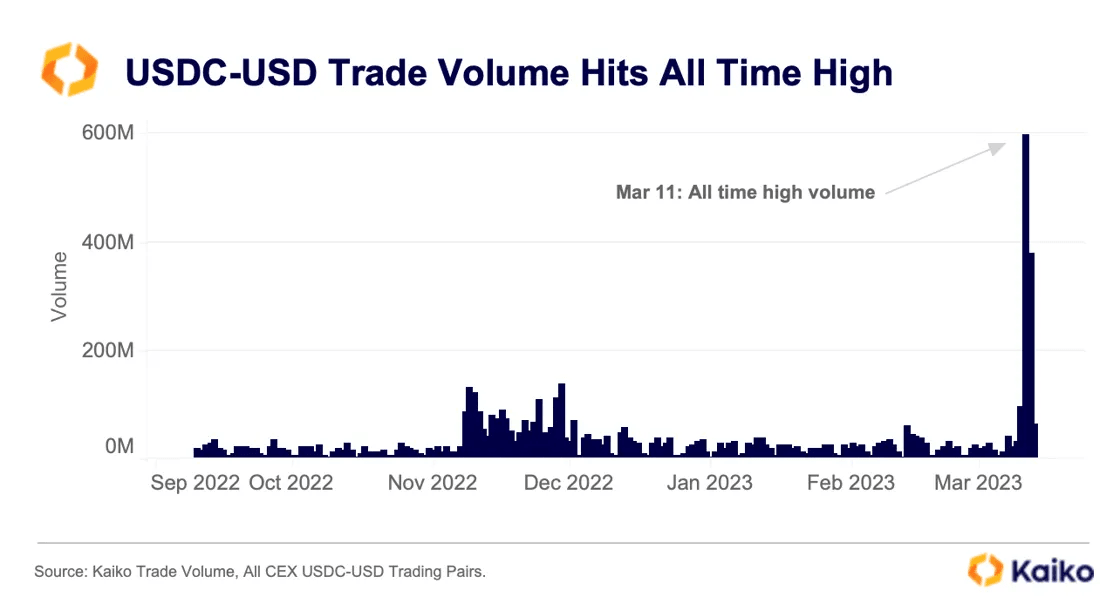
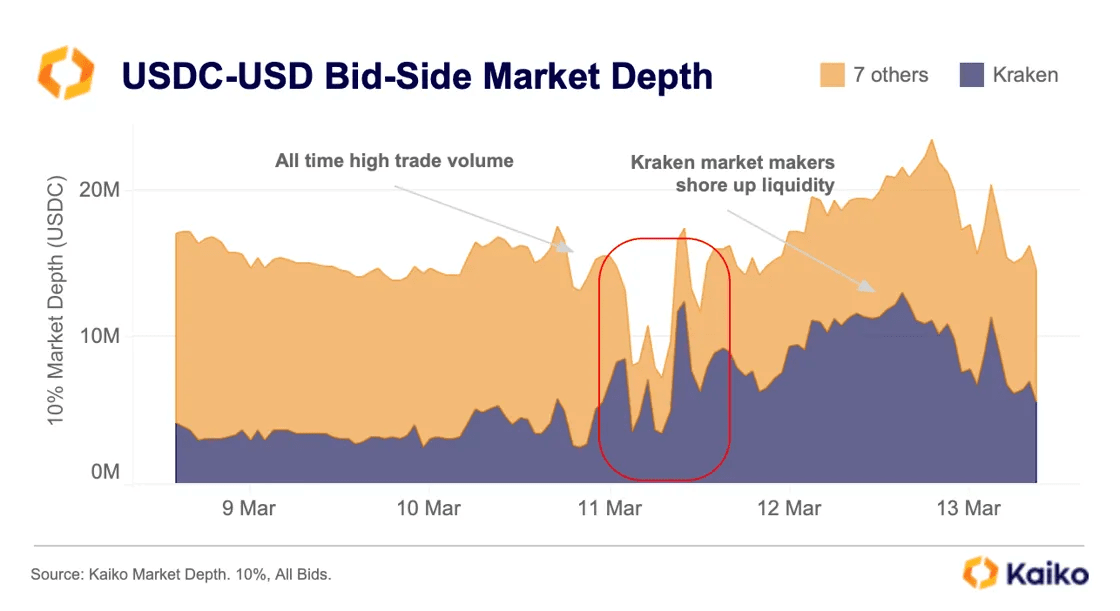
As expected, the order book could not support a large number of sell orders, causing the USDC exchange rate to plummet. Before USDC depegged, there were less than 20 million bids on the USDC-USD order book, which could not support hundreds of millions of sell orders.
While the USDC-USD pair is seeing unprecedented volume, most crypto market activity isn’t actually conducted in USD. Most traders use offshore exchanges that don’t offer direct USD conversions for USDC, but do offer USDC-USDT pairs. The problem here is that Binance, the world’s largest exchange, removed all USDC trading pairs back in September last year.
By noon on Saturday, Binance finally relisted the USDC-USDT pair, but by then USDC was already trading at a significant discount on CEXs with poor liquidity. Shortly thereafter, USDC-USDT trading volume hit a record high of $9.9 billion as traders alternated between selling and buying USDC at the depegging price.
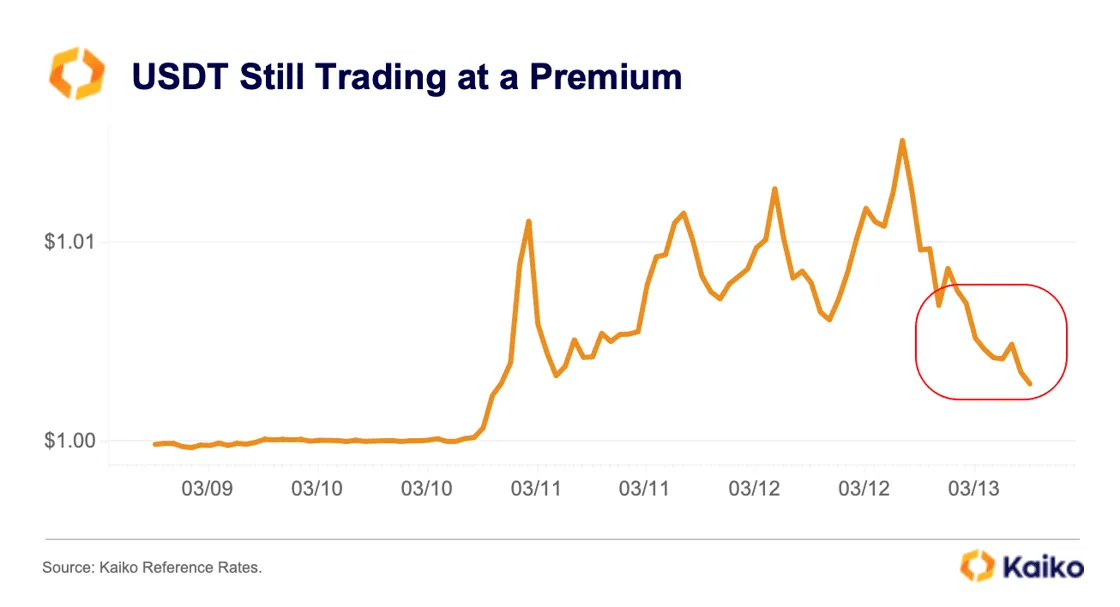
Overall, there are more sellers than buyers, causing Tether to trade at a high premium against both the USD and USDC.
Derivatives exchanges are also trying to take advantage of the volatility as Binance relists a large number of USDC trading pairs. Until this weekend, traders could only trade on Bybit, which has lower trading activity. Last weekend, open interest surged to an all-time high of $256 million. Funding rates remain volatile, fluctuating between -0.13% and 1.08% as traders go short and long at the same time, but have returned to normal levels as of the morning of the 13th.
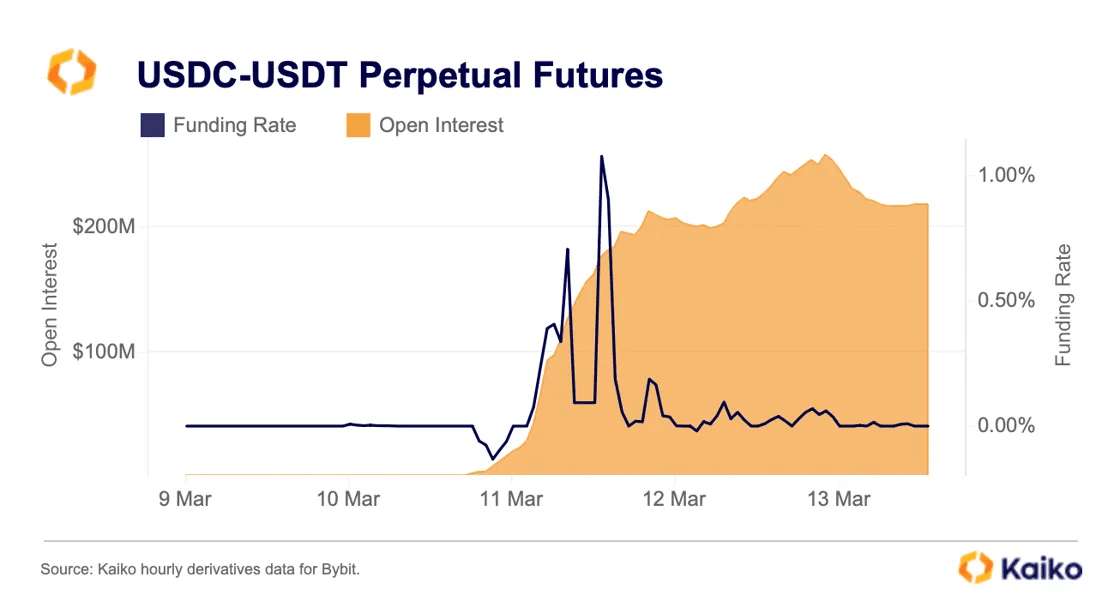
Several other derivatives exchanges launched USDC perpetual contracts over the weekend, with leverage ranging from 10x on Bitmex, 20x on OKX, to 30x on Binance.
So, if these exchanges don’t often use USDC, why does trading activity on CEXs have such a huge impact on broader market turmoil? The most direct reason is that DeFi price feeds for stablecoins don’t provide true USD exchange rates, because you can’t trade fiat on a DEX. This is why many protocols use decentralized price oracles to determine liquidation levels, and the data often comes directly from CEXs.
The reason is also because websites like CoinGecko, Coinmarketcap, etc. calculate their price feeds in a way that they rely heavily on centralized markets. It is worth noting that despite being one of the most liquid markets, Curve is not listed on the USDC market page on CoinGecko or CMC.
Overall, the depegging event was exacerbated by the illiquid centralized spot market, the emergence of multiple USDC derivative contracts, and the rapidly spreading screenshots of the coin price and exchange rate website. Like a bank run, the narrative became reality and engulfed the DeFi ecosystem.
2. DeFi has taken the main hit from USDC’s depegging
DeFi is actually built on USDC. The stablecoin provides crucial stability to lending protocols and accounts for a large portion of the reserves of decentralized stablecoins such as DAI. Many DeFi protocols are built under the assumption that USDC will never depeg.
Last weekend, Uniswap and Curve saw record volumes as traders swapped USDC for stablecoins like ETH or USDT. Since March 10, USDC-USDT volumes on Curve and Uniswap V3 have been nearly identical at $5.91 billion and $5.96 billion, respectively. The USDC-USDT exchange rate reached a low of 0.6188:1 on Uniswap V3 and 0.6911:1 on Curve.
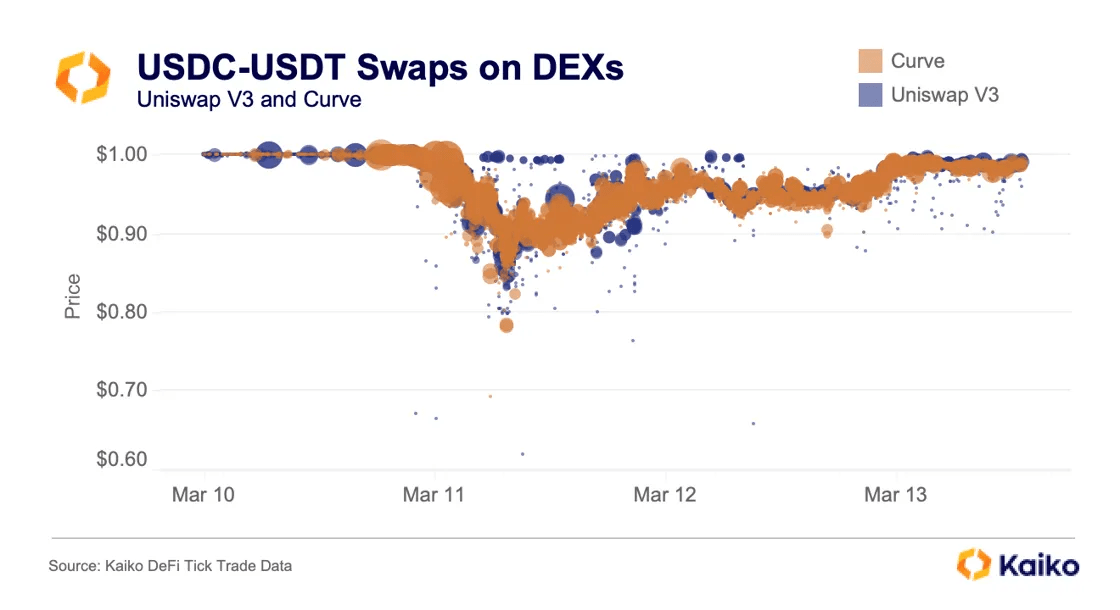
The USDC exchange craze caused Curve 3pool to be seriously unbalanced, with USDT's share in the pool reaching a low of around 2%. On March 13, the total value of 3pool was less than $400 million, of which nearly 95% was USDC and DAI, once again reflecting the market's strong demand for USDT.
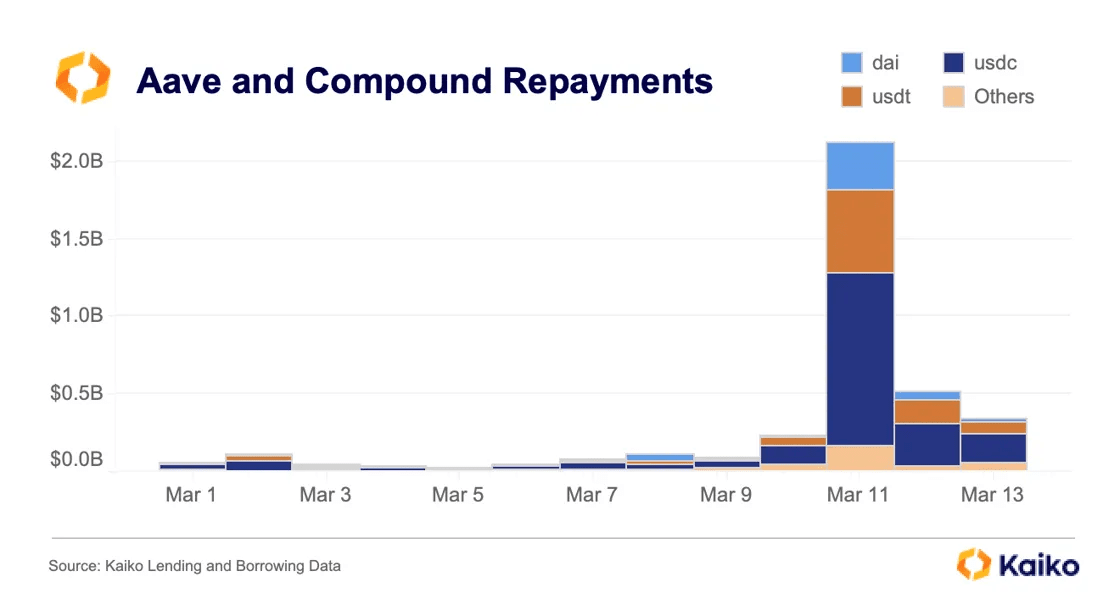
Lending pools were also affected. On March 11, Aave and Compound received over $2 billion in repayments, mostly in USDC, as borrowers were able to repay their loans at a low rate due to their depegging.
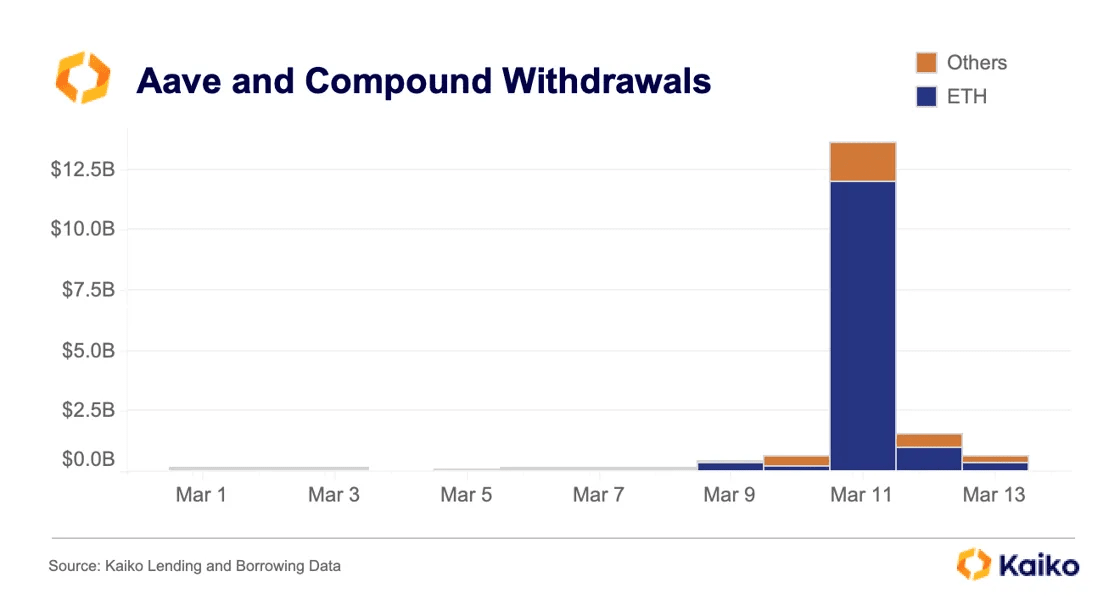
$400M was withdrawn from Compound and $13.1B was withdrawn from Aave, of which $11.9B was ETH. Note that this does not mean that TVL dropped by $13.1B; there was $13.6B in deposits on Aave that day because bots were particularly active on the protocol.
Overall, the DeFi market experienced two days of huge price dislocation, which generated countless arbitrage opportunities across the ecosystem and highlighted the importance of USDC.
2. Market Liquidity
Now, let's broaden our horizons and see how much impact the collapse of these banks has had on the market.
The disruption to U.S. dollar payment rails means U.S. market makers have been withdrawing liquidity from exchanges as they determine how they can safely resume providing liquidity in crypto markets.
As a result, US exchanges have been hit the hardest in terms of liquidity, with Gemini market depth falling 74% in March, Coinbase falling 50%, and Binance.US falling 29%. On the other hand, Binance’s liquidity has only fallen 13% so far this month, thanks to its greater global market exposure.
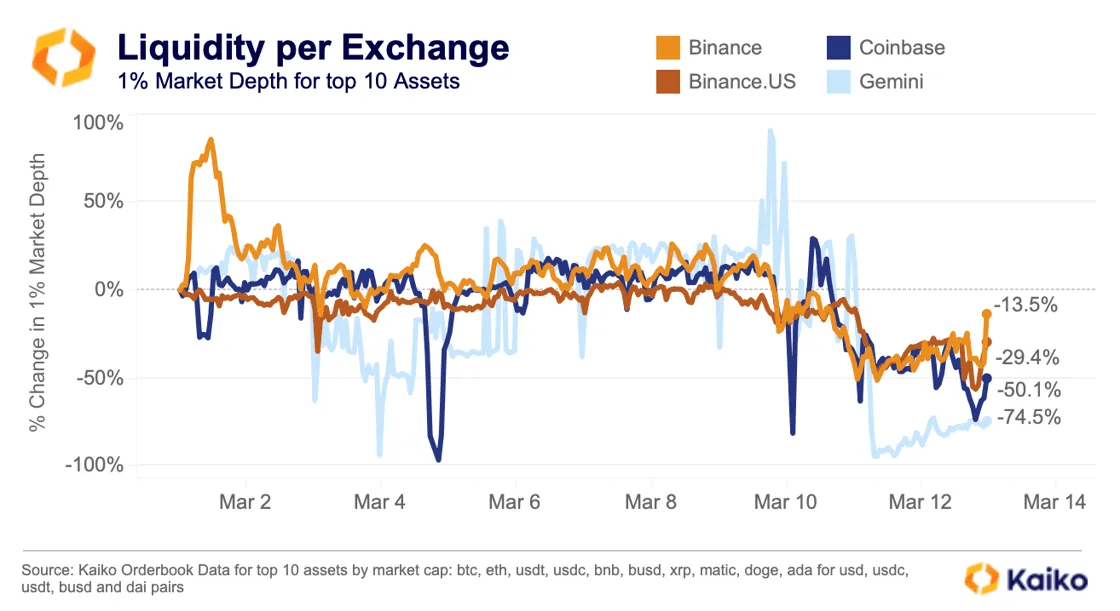
When liquidity drops across the board, we can see wild price swings, and the lack of liquidity certainly played a role in the reaction to the bailout news. Among the top 10 crypto assets by market cap, liquidity in crypto markets dropped 52% so far in March before the news that Silicon Valley Bank depositors would be compensated, exacerbating the price volatility that followed.
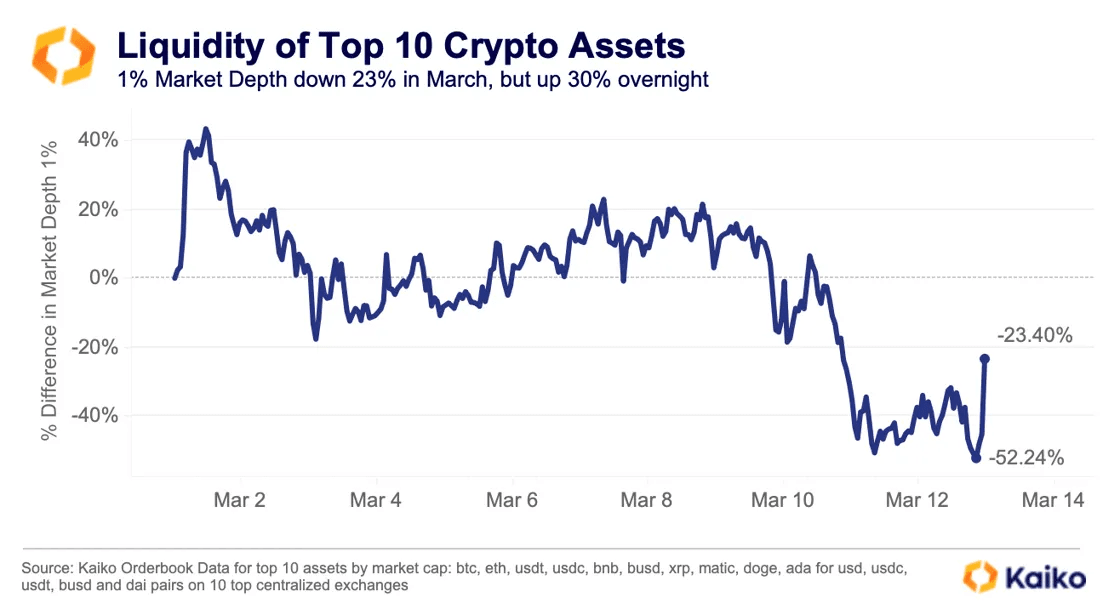
However, market depth increased by over $125 million, or 30%, overnight as price effects facilitated the recovery of USD liquidity on exchanges.
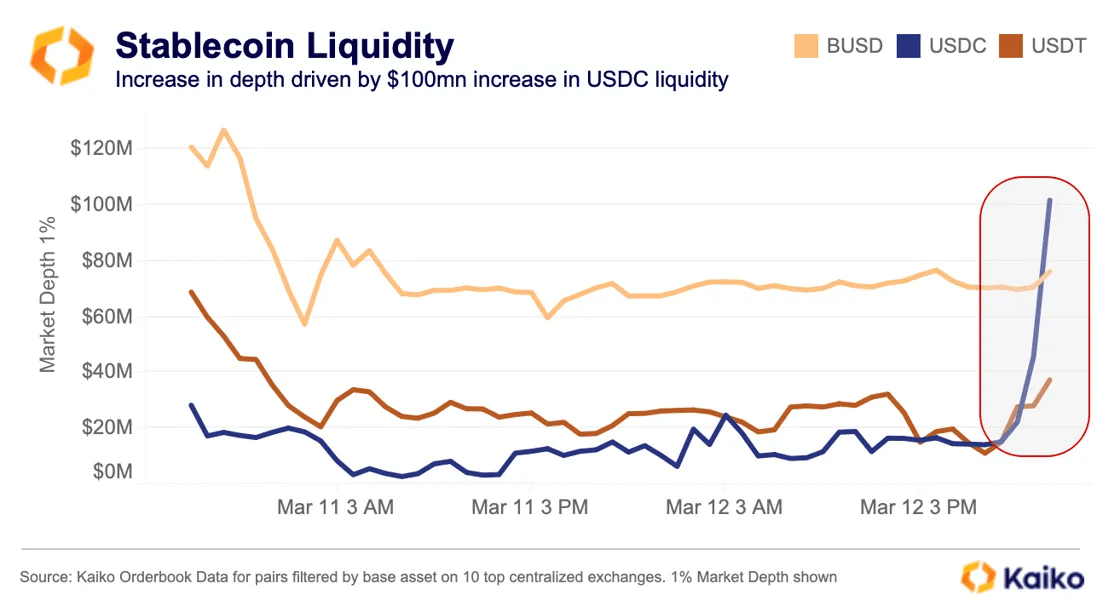
While price impacts exchange USD liquidity data, a closer look at pair-level liquidity shows that a large portion of the growth actually comes from the restoration of USDC liquidity. It is clear that with Circle set to gain access to its $3.3 billion in Silicon Valley Bank on Monday morning, USDC will be closer to the peg and market makers will be happy to start providing liquidity for USDC pairs again.
With USDC as the underlying asset, over $100 million of additional liquidity was provided overnight, of which over $60 million belonged to the relisted USDC-USDT trading pair on Binance, while the USDC-USD trading pair on Kraken also saw an injection of $20 million in liquidity.
3. Bullish Reversal: Binance Industry Recovery Fund
Meanwhile, Binance announced that it will convert the remaining assets of its $1 billion industry recovery fund from BUSD to BTC, ETH, and BNB. The announcement came after the volatility of stablecoins, in which BUSD was implicated because its $250 million reserves were stored in the closed Signature Bank. Although US government officials said that all depositors will be compensated, Binance clearly believes that BTC, ETH, and BNB are safer short-term options from a volatility and liquidity perspective.
Despite the market rally following the news that Silicon Valley Bank depositors will be compensated, BTC, ETH, and BNB may see more positive inflows as Binance does not appear to have yet to convert BUSD to the aforementioned assets. Our trading data shows that over the past 24 hours, sell orders on exchanges for the BUSD pair still outnumber buy orders, with no excess buy orders.
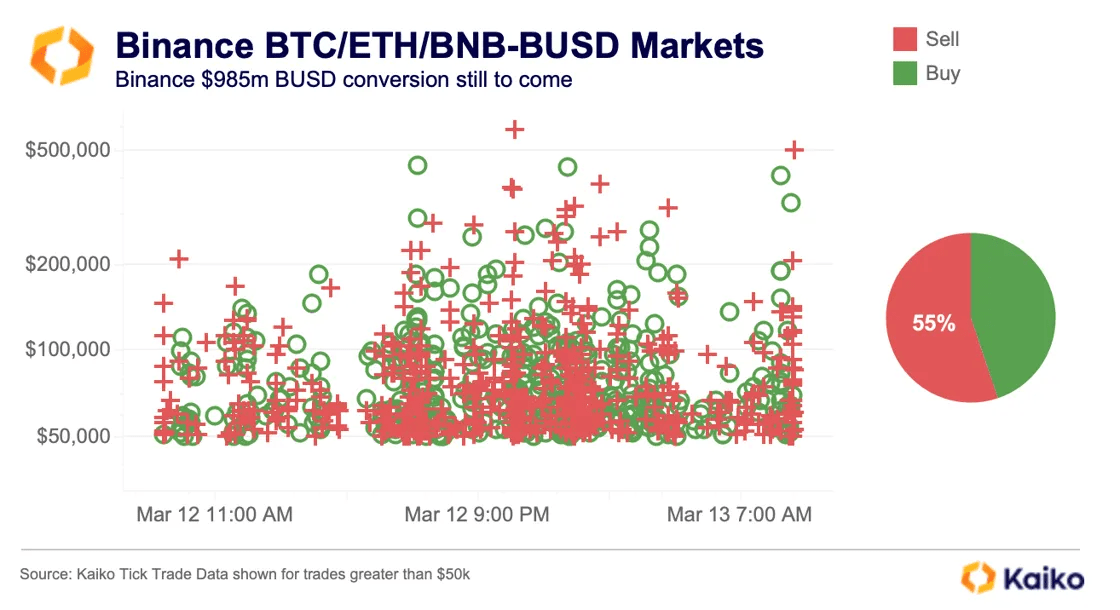
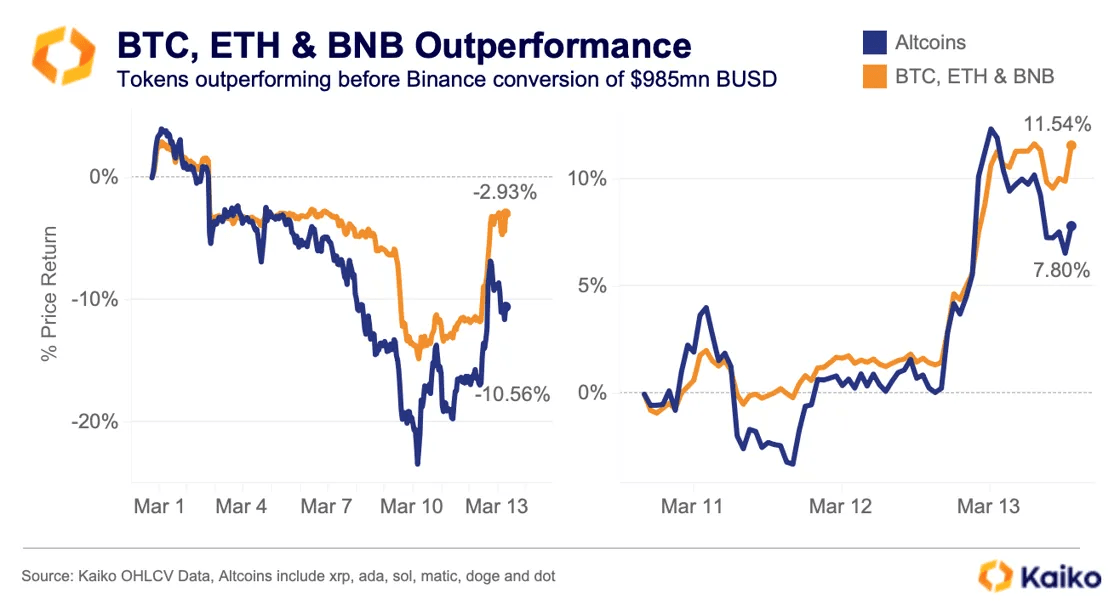
Considering that this swap has not yet been completed, BTC, ETH, and BNB will likely outperform the market in the short term. So far this month, the three cryptocurrencies have outperformed a basket of altcoins by 7.5%, and despite the recent market volatility, they are only down 2.9%. Since the market bottomed on March 11, the three cryptocurrencies have risen 11.5%, while altcoins have returned 7.8%.
IV. Consequences
While the full consequences of the collapse of Silvergate and Signature are yet to be known, here are a few potential consequences that come to mind:
First, the impact on market liquidity will be widespread. With the closure of Silvergate and Signature, crypto market infrastructure has already regressed as the crypto industry becomes more disconnected from the traditional banking system.
Real-time payment networks such as the Silvergate Exchange Network (SEN), SigNet, and others are essential for managing liquidity overnight and over the weekend - facilitating OTC trading, arbitrage between exchanges, and stablecoin redemptions outside of normal opening hours. With these solutions gone and no replacements in place for the time being, fiat onboarding is likely to deteriorate, making price volatility more likely.
Although the Fed has improved market liquidity through the newly established Bank Term Funding Program (BTFP), monetary policy uncertainty has risen, which may further fuel risk aversion among institutional traders. According to US interest rate futures, market expectations for the Fed's terminal rate fell from nearly 6% last week to around 5% on Monday morning. According to the CME FedWatch tool, expectations for a 50bps rate hike at the Fed meeting next week fell from 40% to zero in a few days.
Overall, the crypto industry has once again weathered a major market crisis, and as of Monday morning, the market is in a relatively stable state.