@MidnightNetwork This wave of popularity is indeed significant; on March 11, 2026, it was directly pushed to the forefront by Binance: the HODLer Airdrop snapshot will take place from February 16-18, with spot trading (USDT/USDC/BNB/TRY) starting the next day at 15:30 UTC, with a total of 24 billion, an airdrop of 240 million accounting for 1%, and about 16.6 billion circulating (69.19%). However, I am more concerned that it does not just want to rely on privacy narratives to mislead, but treats nodes and infrastructure as the main line — for it to truly land, the engineering must first pass.
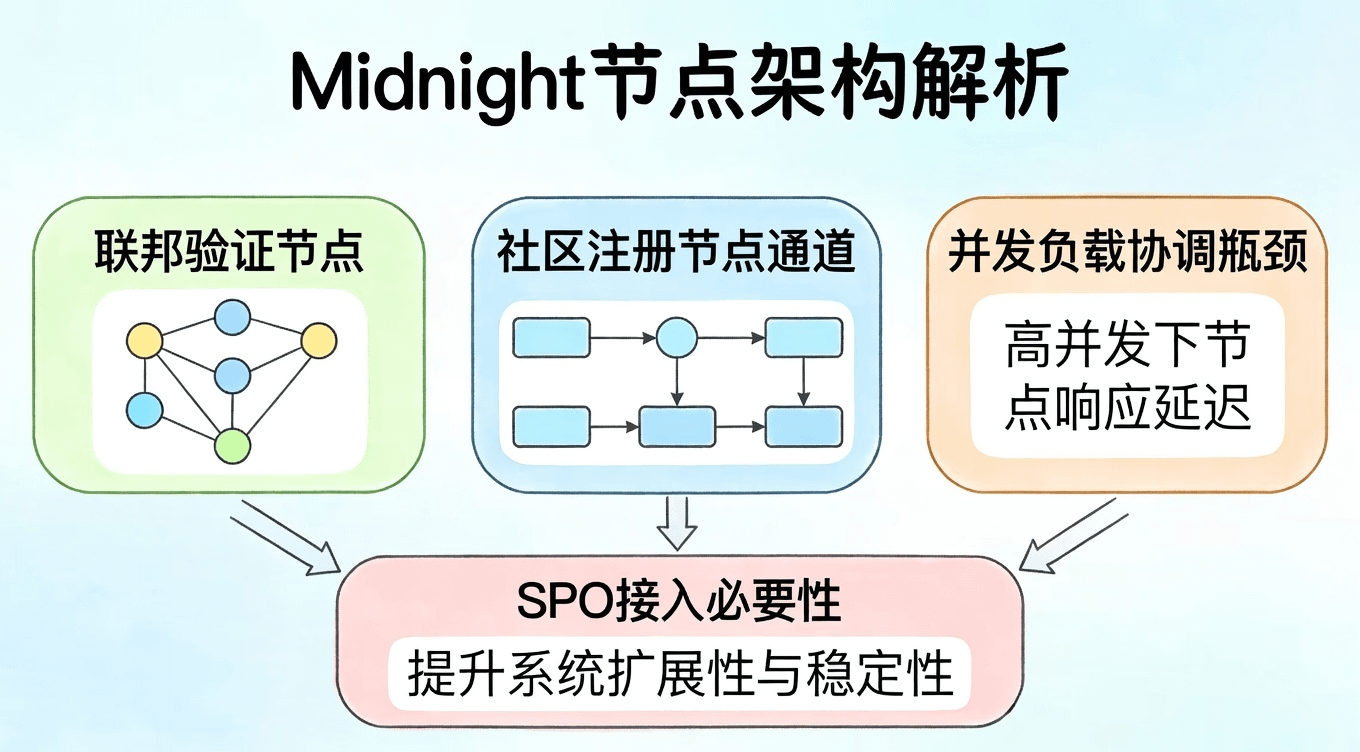
After reviewing the node documentation, Midnight is not just a single program that runs and is done; it is more of an engineered assembly: P2P discovery, state gossip, consensus logic, maintenance rules and states of the Midnight Ledger as independent components, and it also needs to interface with another system as a Cardano Partnerchain. Block time is 6 seconds, with sessions of 1200 slots, and the stability pressure is entirely on continuous online presence and rapid recovery.
Full nodes default to trimming to the last 256 blocks of history, saving space and hassle; Archive nodes pull full historical data, great for deep indexing, but the storage costs are obvious. I know a Cardano SPO who helped test the Midnight node on the testnet last year. He said it runs as smooth as the Cardano mainnet under low load, but when simulating high concurrency, db-sync and federated coordination clearly struggle: 'As soon as the port opens and the database kicks in, the ops workload doubles instantly.'
"No matter how clear the documentation is, it can't change the fact that long dependencies and heavy deployment are realities." He bluntly stated: Midnight upgrades you from 'just running nodes' to 'understanding cross-system operations.' The upside is it's controllable and auditable, but the downside is that small teams will face a steep learning curve. The RPC path is straightforward: you need to configure Cardano-db-sync + PostgreSQL, default on port 5432, exposing 9944 RPC and 30333 P2P. The boot node design is loose—any active peer can help guide a new node onto the network, but there's no escaping the basics like Docker environment, database, and network accessibility. The documentation lays out the commands in detail, but you still need to handle public security, access control, and log monitoring on your own. Compared to Aztec/Namada's native privacy approach, Midnight bets on programmable privacy + compliance narratives, with nodes being more engineered; in contrast to Oasis/Secret, it puts trusted operators (Google Cloud, Blockdaemon, etc.) front and center, prioritizing stability before the mainnet launch, but this also leans towards a more 'consortium-like' early phase.
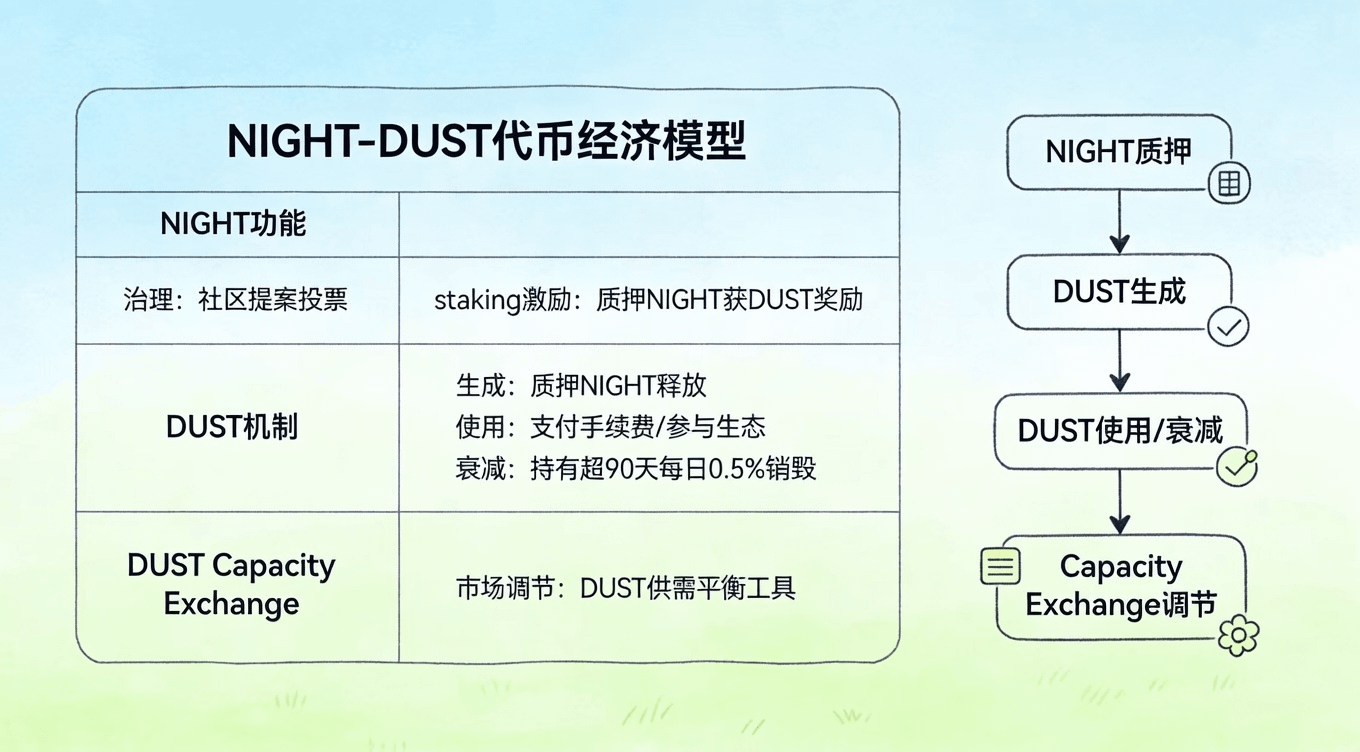
The unlocking rhythm of the token side's Glacier Drop (90 days per tranche, ending in December 2026) + Binance activity windows are also using exposure to absorb selling pressure while forcing node infrastructure to keep pace—the mainnet window in March means that node reliability directly determines whether applications can run. Midnight's advantage is spreading the costs and having a pragmatic route; the downside is long dependencies, high entry barriers, and it’s not friendly to retail investors/small teams. Hype will come and go, but I'm more interested to see if, after the mainnet launch, nodes can evolve from engineers' self-indulgence into scalable infrastructure.
If they pull it off, only then can the privacy chain be considered out of the conceptual zone.$NIGHT #night