

Kevin Walsh, the Fed's vice chair, has two core proposals: first, to firmly reduce the balance sheet; second, to alleviate long-term debt pressure by promoting productivity related to AI through monetary policy. However, both paths are challenging.
The current state of the U.S. dollar money market is: there is a great need for money. Whether looking at the domestic short-term repurchase rates in the U.S. or the international demand for the dollar, it shows that the real economy and financial markets are thirsty for dollar liquidity, and this is not just due to the U.S.-Iran conflict.
In the past three months, the Fed has reversed its balance sheet reduction process, adding $60 billion in total assets, mainly through the purchase of short-term bonds to alleviate the liquidity shortage of small and medium-sized banks (to prevent another Silicon Valley Bank crisis). From past long-term experience, reducing the balance sheet is much more difficult than expanding it: before 2020, the Fed took four years to reduce the balance sheet by $2.2 trillion, but just a few months after the pandemic, it expanded the balance sheet by $3 trillion.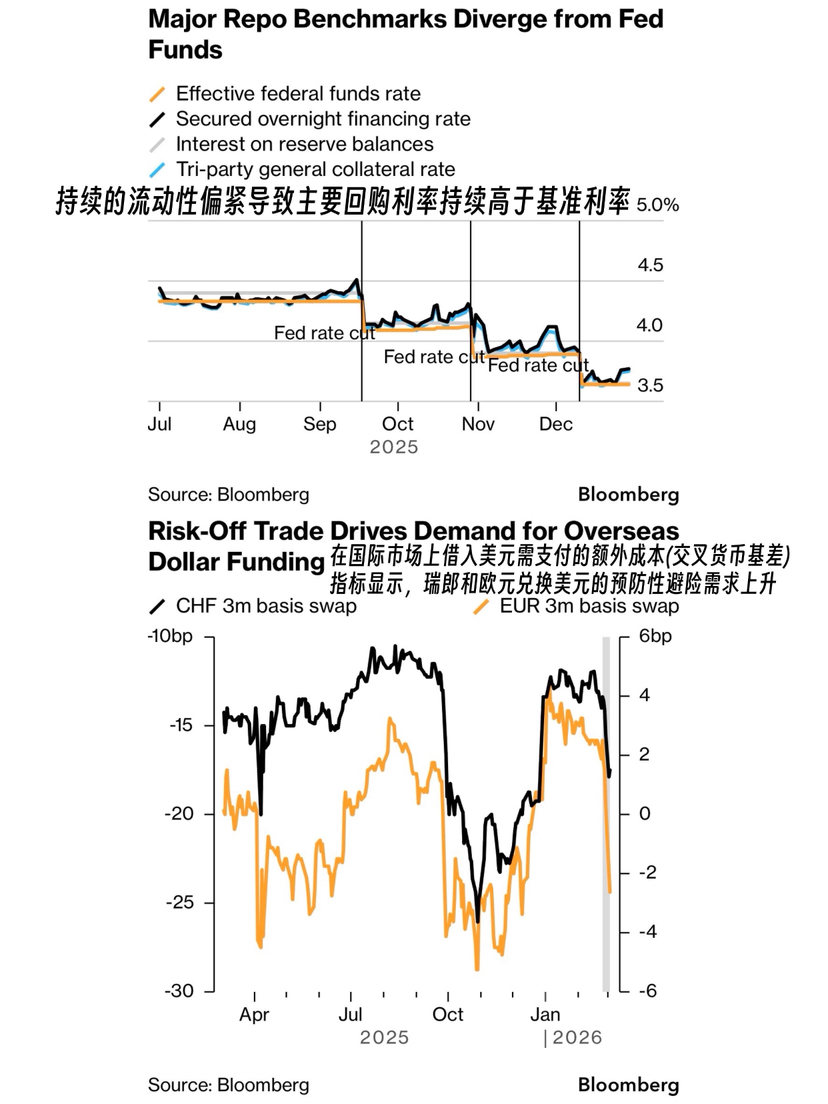
From the U.S. Treasury yield curve, the spread between the 2-year and 10-year Treasury yields indicates a bullish flattening market. This means that investors are still concerned about the risk of a recession in the U.S. economy and are flocking to buy long-term Treasury bonds for safety, while continued balance sheet reduction will exacerbate recession risks.
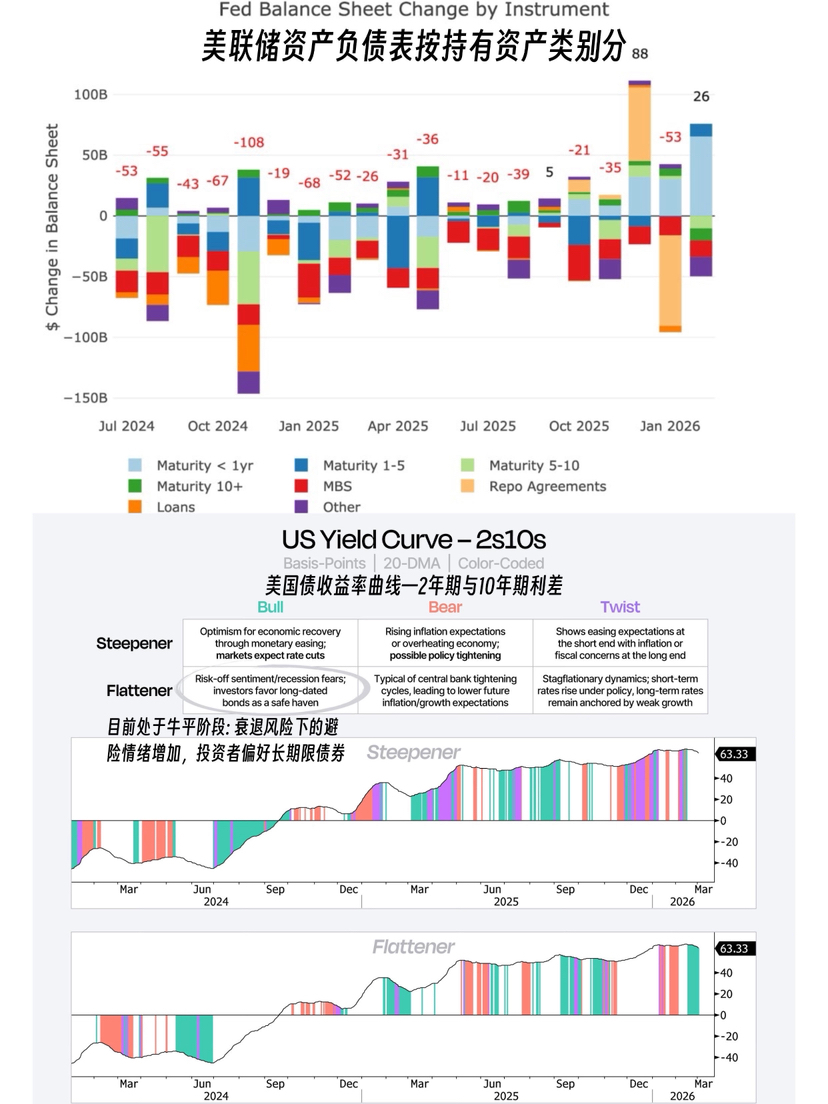
On the other hand, the CAPEX spending of AI giants in the U.S. on infrastructure such as data centers has already attracted significant market attention. To meet the far-exceeding expectations of fixed asset investments, AI companies are turning to debt financing through the issuance of ABS, corporate bonds, and other means, or obtaining high-interest loans from the private credit market, with their credit risks starting to spill over into the entire fixed income market.
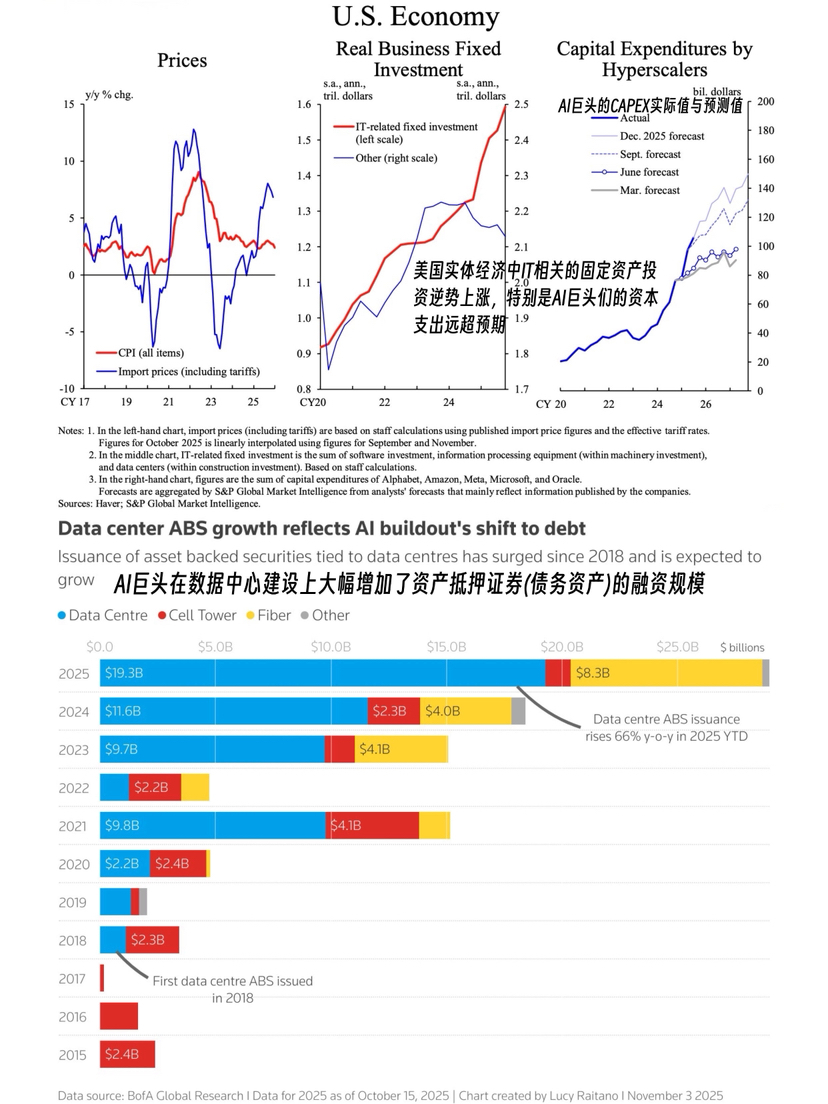
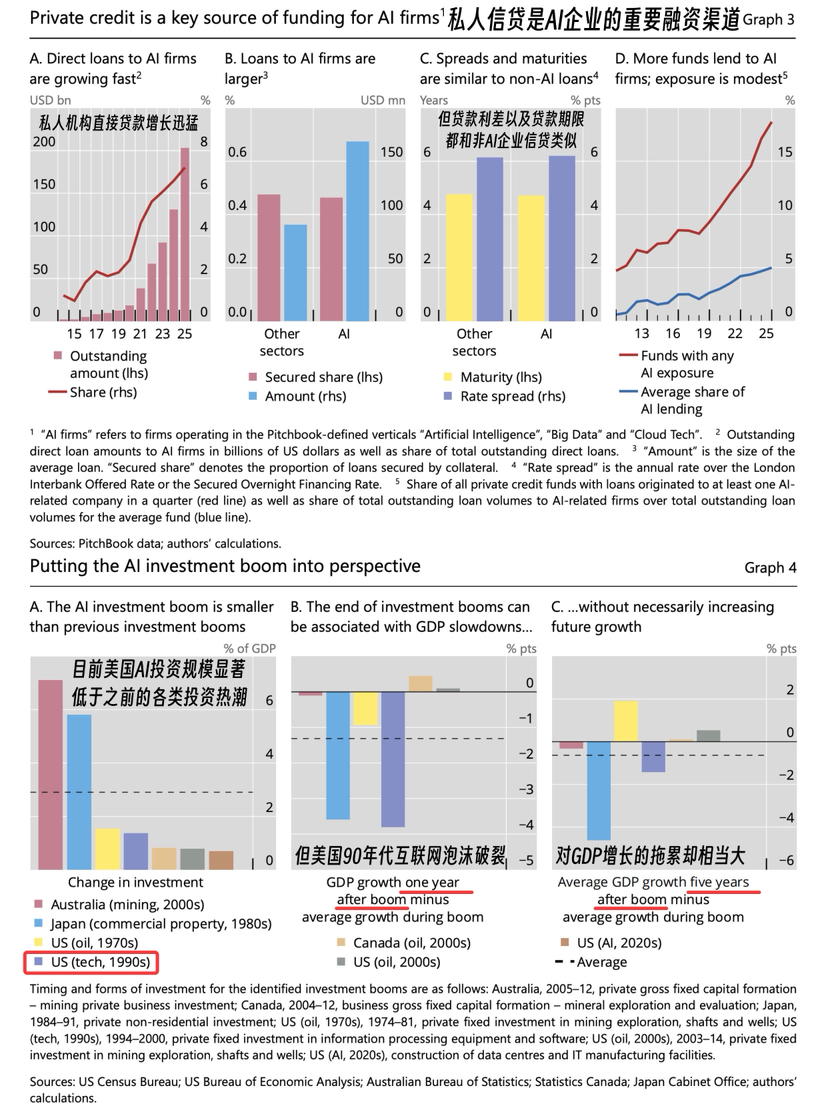
In the short term, the rapid growth of AI-related infrastructure construction has indeed boosted the growth rate of U.S. GDP, but if long-term productivity improvements fail to materialize, coupled with the Federal Reserve not intervening in the purchase of long-term bonds (balance sheet reduction), the cost of borrowing for the government may rise significantly. In the narrative of driving economic growth through investment, we are the version of real estate, while the U.S. is the version of AI; the negative impact of a bubble burst on the real economy will be enormous and irreversible.