

The traditional scenario that market participants unofficially referred to as the 'Ramadan rally' looks less convincing in 2026. Nevertheless, the volatility structure that traders have observed in recent years is still apparent.
Ramadan by itself does not affect digital assets. Bitcoin is traded under the influence of global liquidity, macroeconomic agendas, market positioning, and investor expectations. However, statistics from 2019 to 2025 show a recurring price pattern.
How the dynamics of Bitcoin changed during the Ramadan period
In the last seven years, in six cases, $BTC demonstrated a similar model. At the beginning of the month, a sharp movement was formed. Then the market transitioned into a phase of unstable consolidation. Closer to the end of the period, a correction or fading of the impulse often arose.
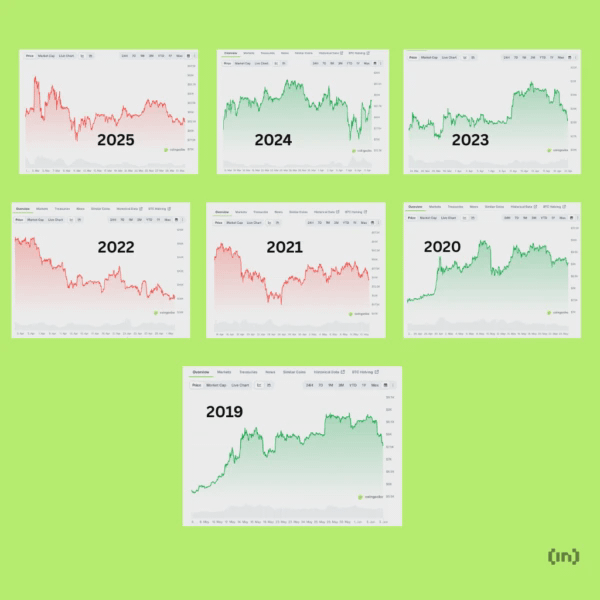
An exception was the year 2020. At that time, a large-scale macroeconomic reversal dominated, which supported a more sustainable upward trend.
It is important to note that this is not about guaranteed growth. On the contrary, the structure rather describes the timing and nature of the movement. Even if the asset finished the period above the starting values, an internal monthly drop often occurred after an intermediate peak.
Therefore, it is more accurate to speak not of a seasonal rally, but of a recurring volatility distribution model.
What distinguishes the year 2026
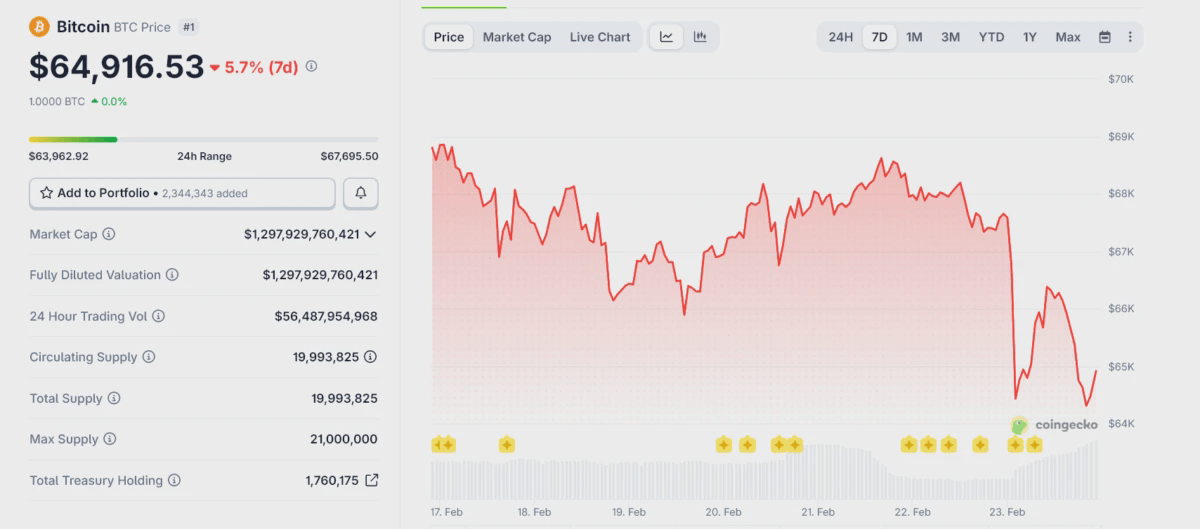
The first week of the current Ramadan changed the usual sequence. Bitcoin did not open with a confident rise. Initially, the market demonstrated mixed dynamics. Then a sharp decline followed. Only after that did an attempt to recover begin.
Thus, the form of movement remains familiar — a swift impulse, emotional reaction, unstable stabilization. However, the start turned out to be weaker compared to the years when the month began with a pronounced rise.
This may indicate a more cautious sentiment among investors in the first quarter.
On-chain metrics signal a fragile balance
Blockchain data forms a mixed picture.
In particular, the Purchasing Power Index on Binance has dropped to a level that has been observed during a clearly expressed market fatigue.
Such an unexpected signal can be considered positive — if selling pressure decreases, short-term recovery is not out of the question.
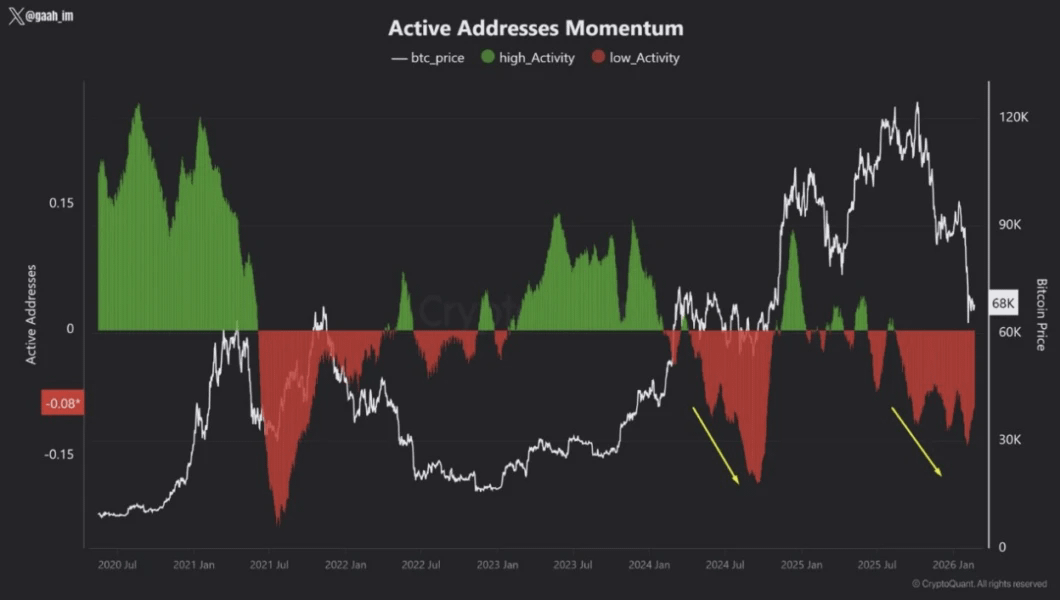
Moreover, network activity has remained low for six months. This is a serious structural signal: interest in Bitcoin and the number of market participants remain weak, which means any attempts at growth may quickly falter.
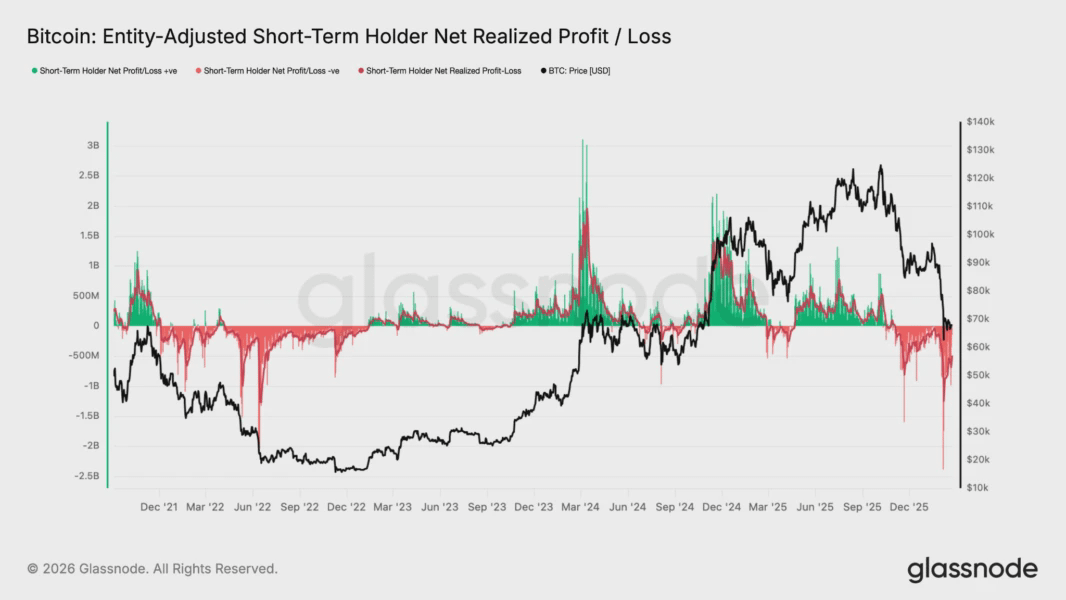
Another point: negative realized losses are still recorded for short-term holders, even after large sell-offs have ceased.
In simpler terms, panic selling has decreased, but many who recently bought Bitcoin are still exiting their positions at a loss. This usually indicates attempts to find a bottom rather than the onset of sustainable growth.
Overall, Bitcoin may attempt to recover some positions or transition to unstable recovery in the coming weeks — especially if a signal of buyer activity on Binance materializes.
But judging by the current weak on-chain dynamics and losses of short-term holders, growth remains in question — there is a lot of resistance along the way and little reliability.
In short, the old idea of a 'Ramadan rally' in 2026 looks much weaker, although the overall picture with turbulent fluctuations and uncertainty has not gone anywhere.