
七月哈哈
1.6k Posts

七月哈哈
 Square Verified+
X: @ChenJuly777 | 欲望不要大于能力
2.1K+ Following
43.7K+ Followers
31.5K+ Liked
Posts
All
Quotes
Videos
Why would Trump ban Chacha melon seeds—was it because there’s no cola flavor? Or is he afraid Americans will snack on melon seeds and get overheated?
On August 3, the U.S. added Chinese companies such as Chacha and Simin to its sanctions list. Netizens are making jokes, wondering if the U.S. is worried that U.S. troops might crack their teeth on melon seeds.
But this round of sanctions isn’t really targeting just a few bags of melon seeds.
Chacha’s dependence on the U.S. market is almost negligible. In 2025, overseas revenue accounted for less than 9% of total revenue, and the U.S. share isn’t even disclosed separately in its financial reports. What truly supports the company is the domestic market.
Look at the industry chain, too. Chacha has built a large number of sunflower bases in Xinjiang, Inner Mongolia, and Gansu. It doesn’t just source raw materials—it also provides seeds, technology, and contract farming arrangements, partnering with more than 20,000 planting households. This is an entire industry chain, not something as simple as just buying and selling melon seeds.
So, the damage from the U.S. sanctions this time is actually limited. It won’t affect American consumers, nor will it put Chacha in serious trouble. It’s more like the U.S. is sending a political signal.
What’s truly worth paying attention to is something else.
More and more Chinese consumer brands are no longer following the old model of “made in China, exported worldwide.” Instead, they’re building supply chains globally. For example, Chacha has set up a plant in Thailand, while Simin has already acquired factories in the United States and produces and sells locally.
Once these global supply chains mature, the effectiveness of many of the U.S.’s traditional sanctions will keep weakening.
This time, what the U.S. is trying to block isn’t melon seeds—it’s the new supply-chain system that Chinese companies are forming.
Even more interestingly, when the sanctions took effect, Chacha actually released a forecast of its earnings: in the first half of the year, net profit was expected to increase by more than 170% year over year, and the chairman has continued to buy additional shares.
So I think the biggest significance of this is not whether someone can or can’t sell melon seeds, but that the global supply chain is being reshuffled.
In the future, companies won’t just compete on products. The one who can build supply chains worldwide will have stronger resilience to risks.
The market will never stop just because of a sanctions notice. The melon seeds that should be sold will keep being sold, and the factories that should be opened will keep opening. What really determines how far a company can go is still its own industrial chain and global layout capabilities.
Eat Chacha while keeping an eye on the market.
$AAPLB $NVDAB $DOGE
On August 3, the U.S. added Chinese companies such as Chacha and Simin to its sanctions list. Netizens are making jokes, wondering if the U.S. is worried that U.S. troops might crack their teeth on melon seeds.
But this round of sanctions isn’t really targeting just a few bags of melon seeds.
Chacha’s dependence on the U.S. market is almost negligible. In 2025, overseas revenue accounted for less than 9% of total revenue, and the U.S. share isn’t even disclosed separately in its financial reports. What truly supports the company is the domestic market.
Look at the industry chain, too. Chacha has built a large number of sunflower bases in Xinjiang, Inner Mongolia, and Gansu. It doesn’t just source raw materials—it also provides seeds, technology, and contract farming arrangements, partnering with more than 20,000 planting households. This is an entire industry chain, not something as simple as just buying and selling melon seeds.
So, the damage from the U.S. sanctions this time is actually limited. It won’t affect American consumers, nor will it put Chacha in serious trouble. It’s more like the U.S. is sending a political signal.
What’s truly worth paying attention to is something else.
More and more Chinese consumer brands are no longer following the old model of “made in China, exported worldwide.” Instead, they’re building supply chains globally. For example, Chacha has set up a plant in Thailand, while Simin has already acquired factories in the United States and produces and sells locally.
Once these global supply chains mature, the effectiveness of many of the U.S.’s traditional sanctions will keep weakening.
This time, what the U.S. is trying to block isn’t melon seeds—it’s the new supply-chain system that Chinese companies are forming.
Even more interestingly, when the sanctions took effect, Chacha actually released a forecast of its earnings: in the first half of the year, net profit was expected to increase by more than 170% year over year, and the chairman has continued to buy additional shares.
So I think the biggest significance of this is not whether someone can or can’t sell melon seeds, but that the global supply chain is being reshuffled.
In the future, companies won’t just compete on products. The one who can build supply chains worldwide will have stronger resilience to risks.
The market will never stop just because of a sanctions notice. The melon seeds that should be sold will keep being sold, and the factories that should be opened will keep opening. What really determines how far a company can go is still its own industrial chain and global layout capabilities.
Eat Chacha while keeping an eye on the market.
$AAPLB $NVDAB $DOGE

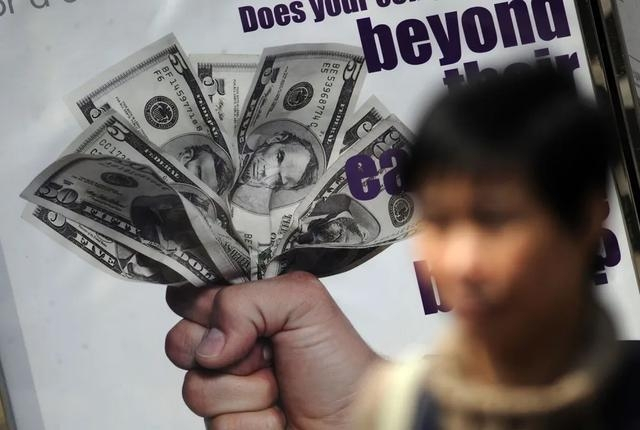
BitMine has put another 150,000-plus ETH into staking. Now, it has staked a total of over 5.06 million ETH, accounting for more than 87% of its holdings, worth nearly $9.4 billion.
This isn’t just a matter of earning simple staking yield—it’s real money betting that Ethereum will have a big run over the next few years.
To be honest, if all they wanted was to trade in and out for a swing, who would dare lock almost 90% of their position? If the market suddenly turns, you can’t really get out quickly enough. So the fact that they can do this in such a big way essentially means they believe institutional capital will keep flowing in, and that Ethereum still has even more room to grow.
Recently, you can actually see some signals. The inflows into ETH ETFs have started to perform noticeably better than BTC, and more and more traditional capital seems to be paying attention to Ethereum. It feels like market sentiment is gradually shifting.
I think what’s worth paying attention to now isn’t just how much BitMine bought—it's whether more institutions will follow. If more and more companies start treating ETH as a long-term reserve asset, Ethereum’s valuation logic may truly change.
The market never takes off because of a single piece of news, but every major trend is often built up gradually from these seemingly insignificant signals. As for whether this is a super cycle—no one dares to draw a conclusion yet. But institutions have already started placing their bets. The rest is for time to prove it.
$ETH $BTC
This isn’t just a matter of earning simple staking yield—it’s real money betting that Ethereum will have a big run over the next few years.
To be honest, if all they wanted was to trade in and out for a swing, who would dare lock almost 90% of their position? If the market suddenly turns, you can’t really get out quickly enough. So the fact that they can do this in such a big way essentially means they believe institutional capital will keep flowing in, and that Ethereum still has even more room to grow.
Recently, you can actually see some signals. The inflows into ETH ETFs have started to perform noticeably better than BTC, and more and more traditional capital seems to be paying attention to Ethereum. It feels like market sentiment is gradually shifting.
I think what’s worth paying attention to now isn’t just how much BitMine bought—it's whether more institutions will follow. If more and more companies start treating ETH as a long-term reserve asset, Ethereum’s valuation logic may truly change.
The market never takes off because of a single piece of news, but every major trend is often built up gradually from these seemingly insignificant signals. As for whether this is a super cycle—no one dares to draw a conclusion yet. But institutions have already started placing their bets. The rest is for time to prove it.
$ETH $BTC
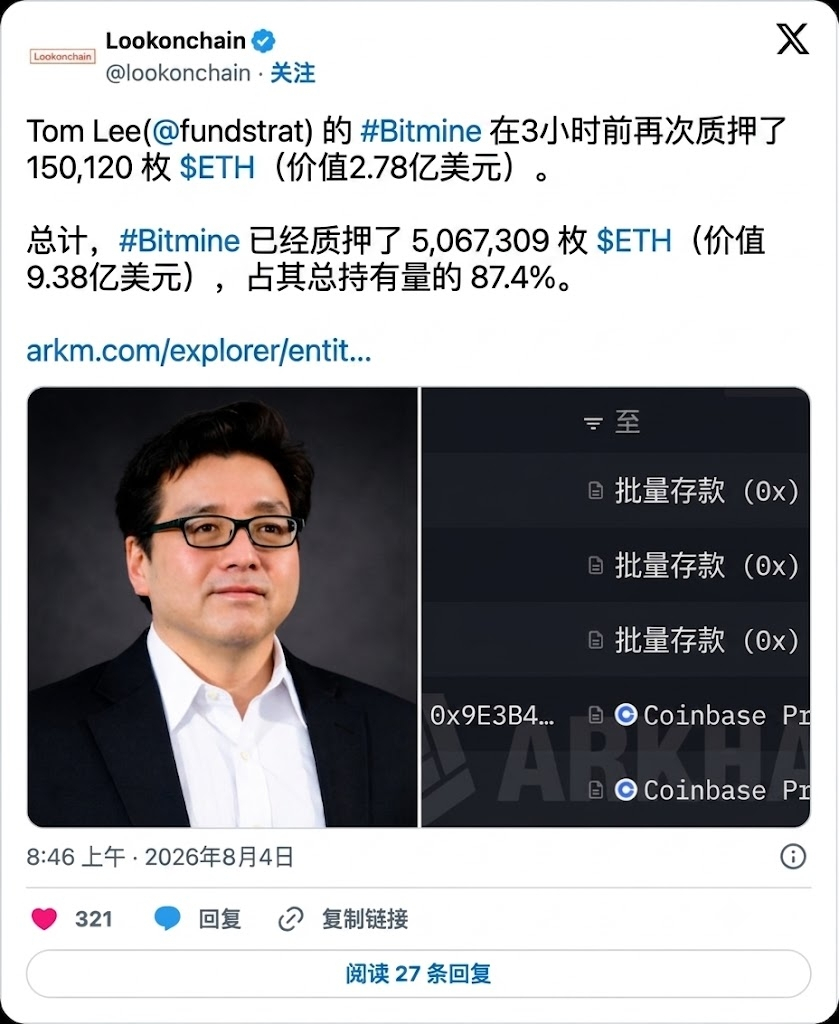
Bitcoin is going up and down around the $64,000 mark
Ethereum is even worse off—it’s still grinding back and forth around $1,800.
The market isn’t short of money; it’s just that everyone feels like they’re waiting, and nobody dares to make a move easily.
Right now, the biggest variables are still two: one is the geopolitical situation in the Middle East, and the other is whether the institutions holding Bitcoin are still selling.
On the Trump side, it’s a back-and-forth—talk of negotiations one moment, then tough talk the next. The news cycle keeps flipping, and market sentiment follows suit, surging up and down.
On the other side, Bitcoin treasury companies like MicroStrategy are also trimming holdings and cashing out. That still puts some pressure on the market, to a certain extent.
However, it’s not all bad news. Based on the data, in the past 24 hours, more than $200 million was liquidated. And importantly, shorts were wiped out more than longs, which suggests some people were taking contrarian short positions—and getting educated for it.
More crucially, as Bitcoin’s price has inched up, open interest has also been rising. That indicates new capital is slowly entering the market, not just old players swapping positions with each other.
The stock market on this side is quite strong—Dow, S&P, and Nasdaq have all hit fresh highs.
Under the old logic, when risk assets rise together, the crypto market should perform too.
But the reality is that Bitcoin is still lagging a bit behind the pace, and funds are clearly more cautious.
In plain terms, what the market lacks most right now isn’t a story—it’s truly incremental capital that’s bold enough to rush in.
On-chain data shows that overall sell pressure has already dropped to a historically accumulation-phase level. From historical experience, this kind of area often appears near the end of a bear market. Over the long run, the risk-reward ratio should become more and more comfortable. But that doesn’t mean the bottom has been confirmed.
So calling that a bull market is back at this point, I think it’s still a bit early.
As for Ethereum, some analysts believe that as long as it can hold above $1,800, there’s a chance to break through $2,000—and even see $2,300. I think this move isn’t impossible, but the prerequisite is that market sentiment needs to cooperate. If Bitcoin keeps ranging, and Ethereum tries to run independently into a bull phase, that’s actually not easy.
Making money is nerve-wracking—so hard.
The problem is not only is it nerve-wracking, it still doesn’t make money. That’s even harder~!
$BTC $ETH
Ethereum is even worse off—it’s still grinding back and forth around $1,800.
The market isn’t short of money; it’s just that everyone feels like they’re waiting, and nobody dares to make a move easily.
Right now, the biggest variables are still two: one is the geopolitical situation in the Middle East, and the other is whether the institutions holding Bitcoin are still selling.
On the Trump side, it’s a back-and-forth—talk of negotiations one moment, then tough talk the next. The news cycle keeps flipping, and market sentiment follows suit, surging up and down.
On the other side, Bitcoin treasury companies like MicroStrategy are also trimming holdings and cashing out. That still puts some pressure on the market, to a certain extent.
However, it’s not all bad news. Based on the data, in the past 24 hours, more than $200 million was liquidated. And importantly, shorts were wiped out more than longs, which suggests some people were taking contrarian short positions—and getting educated for it.
More crucially, as Bitcoin’s price has inched up, open interest has also been rising. That indicates new capital is slowly entering the market, not just old players swapping positions with each other.
The stock market on this side is quite strong—Dow, S&P, and Nasdaq have all hit fresh highs.
Under the old logic, when risk assets rise together, the crypto market should perform too.
But the reality is that Bitcoin is still lagging a bit behind the pace, and funds are clearly more cautious.
In plain terms, what the market lacks most right now isn’t a story—it’s truly incremental capital that’s bold enough to rush in.
On-chain data shows that overall sell pressure has already dropped to a historically accumulation-phase level. From historical experience, this kind of area often appears near the end of a bear market. Over the long run, the risk-reward ratio should become more and more comfortable. But that doesn’t mean the bottom has been confirmed.
So calling that a bull market is back at this point, I think it’s still a bit early.
As for Ethereum, some analysts believe that as long as it can hold above $1,800, there’s a chance to break through $2,000—and even see $2,300. I think this move isn’t impossible, but the prerequisite is that market sentiment needs to cooperate. If Bitcoin keeps ranging, and Ethereum tries to run independently into a bull phase, that’s actually not easy.
Making money is nerve-wracking—so hard.
The problem is not only is it nerve-wracking, it still doesn’t make money. That’s even harder~!
$BTC $ETH
Honestly, the market isn’t quite the same as it was a few years ago.
Back then, once you opened a group, it was all questions like: "When will it surge like crazy?" and "Can it still multiply a few times?"
Now I’m seeing more and more people discussing something else.
So much BTC just lying in wallets—doesn’t that feel a bit of a waste?
After all, BTC is no longer some small asset.
With such a huge global scale, if its only purpose is to be held and wait for appreciation, it feels like something is missing.
I’ve had a picture in my mind for a while.
Many people treat BTC like gold bars in a safe—lock it up, put it away, and don’t touch it.
It’s safe, sure, but it never participates in creating new value.
Recently I came across the views of Charles d'Haussy, CEO of the dYdX Foundation, who said that BTC is very suitable as collateral because market depth, liquidity, and consensus are strong enough.
I think the key isn’t really that statement by itself.
It’s that more and more industries are starting to assume by default that BTC can take on more financial functions.
Of course, the biggest contradiction in all of this has never changed.
Everyone wants to improve the capital efficiency of BTC, but nobody wants to sacrifice its most important safety.
That’s also why Babylon’s Trustless Bitcoin Vaults made me take a closer look.
At least it attempts to answer one question: is there a way to keep BTC’s underlying properties unchanged, while still enabling it to be used in more real-world applications.
My own view is pretty simple.
BTC’s real growth shouldn’t depend only on round after round of bull markets.
The real incremental change is that more and more scenarios start actively needing BTC.
When it shifts from being hoarded for the long term to being used for the long term—that, I think, is the most exciting change for the whole ecosystem.
#Baby $BABY @BabylonLabs_io
Back then, once you opened a group, it was all questions like: "When will it surge like crazy?" and "Can it still multiply a few times?"
Now I’m seeing more and more people discussing something else.
So much BTC just lying in wallets—doesn’t that feel a bit of a waste?
After all, BTC is no longer some small asset.
With such a huge global scale, if its only purpose is to be held and wait for appreciation, it feels like something is missing.
I’ve had a picture in my mind for a while.
Many people treat BTC like gold bars in a safe—lock it up, put it away, and don’t touch it.
It’s safe, sure, but it never participates in creating new value.
Recently I came across the views of Charles d'Haussy, CEO of the dYdX Foundation, who said that BTC is very suitable as collateral because market depth, liquidity, and consensus are strong enough.
I think the key isn’t really that statement by itself.
It’s that more and more industries are starting to assume by default that BTC can take on more financial functions.
Of course, the biggest contradiction in all of this has never changed.
Everyone wants to improve the capital efficiency of BTC, but nobody wants to sacrifice its most important safety.
That’s also why Babylon’s Trustless Bitcoin Vaults made me take a closer look.
At least it attempts to answer one question: is there a way to keep BTC’s underlying properties unchanged, while still enabling it to be used in more real-world applications.
My own view is pretty simple.
BTC’s real growth shouldn’t depend only on round after round of bull markets.
The real incremental change is that more and more scenarios start actively needing BTC.
When it shifts from being hoarded for the long term to being used for the long term—that, I think, is the most exciting change for the whole ecosystem.
#Baby $BABY @BabylonLabs_io
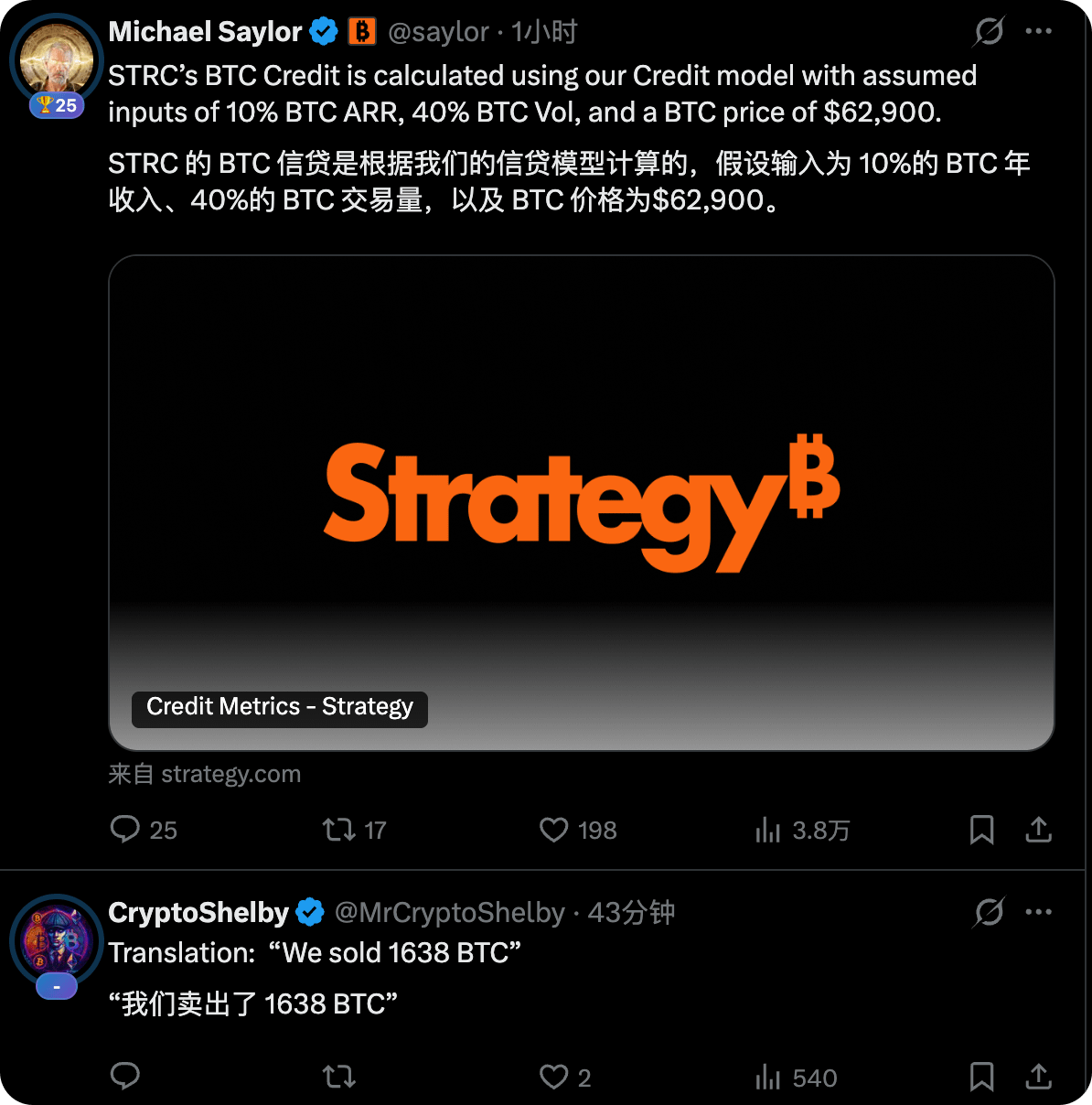
I just saw a tweet from MicroStrategy, and the comments section is already blowing up.
Someone even translated it into one sentence: “We sold 1,638 BTC.”
While it’s more like a joke, it also reflects that people in the market are a bit on edge.
Whenever Strategy posts anything about credit, financing, or models, the first reaction from everyone is: “Did they sell coins again?” “Are they under pressure with their funding chain?” The emotion spreads even faster than the news itself.
From the perspective of small retail investors like us, this market really is quite confusing right now. On one side, more and more institutions are treating BTC as part of their balance sheets. All kinds of financing, bond issuance, and credit instruments are getting more and more sophisticated. It looks like Bitcoin is slowly being integrated into the traditional financial system—this is a long-term positive. It suggests it’s not just a speculative asset, but that it’s genuinely starting to have financial attributes.
But there are also worries. The macro environment still isn’t very calm. Global liquidity hasn’t moved into a particularly loose phase, and market sentiment often swings back and forth due to policy, geopolitical events, or economic data. BTC is a high-volatility asset, and once a credit model is built on assumptions about a certain price and volatility, if the market deviates from those assumptions, the risk gets magnified quickly.
So I think this tweet is essentially telling the market: “Our credit model has a basis.”
But what the market hears is a different message: “Are you planning to move BTC?” That’s the most real state of the market right now—everyone is already a bit on edge, being tossed around by all kinds of bad news and good news.
That said, over the years, Strategy has been steadily accumulating BTC all the way, so it has deeply bound itself to Bitcoin.
Their biggest advantage is that the consensus is strong and the execution is strong, and the community’s influence is big enough—every time they speak, it affects market sentiment.
But conversely, this level of binding is also a risk. Once the cost of financing rises, the credit environment tightens, or BTC experiences a major swing, the market will amplify its concerns about them.
Don’t chase or panic-sell because of a single tweet. And don’t lie awake worrying just because someone in the comments said “we sold 1,638 BTC.” In the short term, the market always looks at sentiment; in the long term, it’s still about capital and trends.
$BTC
Someone even translated it into one sentence: “We sold 1,638 BTC.”
While it’s more like a joke, it also reflects that people in the market are a bit on edge.
Whenever Strategy posts anything about credit, financing, or models, the first reaction from everyone is: “Did they sell coins again?” “Are they under pressure with their funding chain?” The emotion spreads even faster than the news itself.
From the perspective of small retail investors like us, this market really is quite confusing right now. On one side, more and more institutions are treating BTC as part of their balance sheets. All kinds of financing, bond issuance, and credit instruments are getting more and more sophisticated. It looks like Bitcoin is slowly being integrated into the traditional financial system—this is a long-term positive. It suggests it’s not just a speculative asset, but that it’s genuinely starting to have financial attributes.
But there are also worries. The macro environment still isn’t very calm. Global liquidity hasn’t moved into a particularly loose phase, and market sentiment often swings back and forth due to policy, geopolitical events, or economic data. BTC is a high-volatility asset, and once a credit model is built on assumptions about a certain price and volatility, if the market deviates from those assumptions, the risk gets magnified quickly.
So I think this tweet is essentially telling the market: “Our credit model has a basis.”
But what the market hears is a different message: “Are you planning to move BTC?” That’s the most real state of the market right now—everyone is already a bit on edge, being tossed around by all kinds of bad news and good news.
That said, over the years, Strategy has been steadily accumulating BTC all the way, so it has deeply bound itself to Bitcoin.
Their biggest advantage is that the consensus is strong and the execution is strong, and the community’s influence is big enough—every time they speak, it affects market sentiment.
But conversely, this level of binding is also a risk. Once the cost of financing rises, the credit environment tightens, or BTC experiences a major swing, the market will amplify its concerns about them.
Don’t chase or panic-sell because of a single tweet. And don’t lie awake worrying just because someone in the comments said “we sold 1,638 BTC.” In the short term, the market always looks at sentiment; in the long term, it’s still about capital and trends.
$BTC
August 3 (Reuters) — American Bitcoin, supported by two of U.S. President Donald Trump’s sons, announced on Monday, reporting a swing to a loss in the second quarter due to a decline in the price of bitcoin.
As geopolitical tensions intensified, risk-averse sentiment grew in the market, prompting investors to reduce allocations to risk assets and putting broad pressure on cryptocurrency prices.
The key points from this earnings report are as follows:
1. At the end of the second quarter, the company held more than 8,000 bitcoins, up 14% from the previous quarter.
2. The company continued to increase investment in its bitcoin mining business. In the second quarter, it mined about 932 bitcoins, setting a record high for a single quarter.
3. From April to June this year, the price of bitcoin fell cumulatively by more than 11%.
4. CEO Mike Ho said: “Despite headwinds in the bitcoin market in the second quarter, we remain focused on doing what we can control.”
5. The company posted a net loss of $57.2 million in the second quarter, compared with a net profit of $3.4 million in the same period last year.
6. Second-quarter revenue was approximately $67 million, up from $30.3 million in the same period last year.
Despite a sharp year-over-year increase in revenue, the value of the company’s bitcoin assets was affected as the bitcoin price fell noticeably in the second quarter, ultimately leading to an overall performance that turned to a loss.
$BTC
As geopolitical tensions intensified, risk-averse sentiment grew in the market, prompting investors to reduce allocations to risk assets and putting broad pressure on cryptocurrency prices.
The key points from this earnings report are as follows:
1. At the end of the second quarter, the company held more than 8,000 bitcoins, up 14% from the previous quarter.
2. The company continued to increase investment in its bitcoin mining business. In the second quarter, it mined about 932 bitcoins, setting a record high for a single quarter.
3. From April to June this year, the price of bitcoin fell cumulatively by more than 11%.
4. CEO Mike Ho said: “Despite headwinds in the bitcoin market in the second quarter, we remain focused on doing what we can control.”
5. The company posted a net loss of $57.2 million in the second quarter, compared with a net profit of $3.4 million in the same period last year.
6. Second-quarter revenue was approximately $67 million, up from $30.3 million in the same period last year.
Despite a sharp year-over-year increase in revenue, the value of the company’s bitcoin assets was affected as the bitcoin price fell noticeably in the second quarter, ultimately leading to an overall performance that turned to a loss.
$BTC
JPYETF0.00%
They even say $BTC is “more stable” than the South Korean stock market?
This year, things over in South Korea have been completely crazy. It’s being propped up almost entirely by two chip giants—Samsung $SAMSUNG and SK hynix $SKHY . They’ve basically turned the whole market into an AI-leveraged gambling den. And South Korean retail investors are ruthless too—going all-in on leveraged ETFs. That’s why the South Korean stock market has triggered circuit breakers multiple times this year. It’s up-limit one moment, down-limit the next—more thrilling than a roller coaster.
Meanwhile, our BTC? This year it’s been falling like taking the stairs down. It’s drifted lower the whole time, sliding from over 100,000 to more than 60,000.
Bloomberg says our BTC has “low volatility.” That’s not to say it isn’t dropping—it’s just that it’s cutting you out steadily. A little bleed every day: slow and steady, not hot or cold. On the data it looks “stable,” but the money in our accounts is actually being whittled away in a very real way. This kind of grind-down is more torturous than a sudden crash.
BTC is definitely a bit awkward right now. People used to think it was the most aggressive risk asset. But now all the capital has run off to trade AI stocks, and ETFs aren’t really seeing inflows either.
So you’re saying it’s not good anymore? Not necessarily. BTC’s biggest advantage is that consensus is still extremely strong. The community foundation is still there. As soon as the next hype wave returns, it can rally you back up at any time.
But its limitations are also obvious. After institutions move in, BTC is becoming more and more like a sidekick to U.S. stocks. Without fresh buyers coming in, all it can do is grind. For retail investors hoping to get rich overnight, it’s getting harder and harder. Risk hasn’t disappeared; if anything, the returns have become dull.
With this market, the South Korean stock market is going crazy and jumping around in a casino—while BTC is cutting into you with a dull knife.
And please don’t get fooled by these spooky stories about “being more stable than the stock market.” Control your position, control your position—keep your principal. Wait for the real opportunity to arrive, then go in!
This year, things over in South Korea have been completely crazy. It’s being propped up almost entirely by two chip giants—Samsung $SAMSUNG and SK hynix $SKHY . They’ve basically turned the whole market into an AI-leveraged gambling den. And South Korean retail investors are ruthless too—going all-in on leveraged ETFs. That’s why the South Korean stock market has triggered circuit breakers multiple times this year. It’s up-limit one moment, down-limit the next—more thrilling than a roller coaster.
Meanwhile, our BTC? This year it’s been falling like taking the stairs down. It’s drifted lower the whole time, sliding from over 100,000 to more than 60,000.
Bloomberg says our BTC has “low volatility.” That’s not to say it isn’t dropping—it’s just that it’s cutting you out steadily. A little bleed every day: slow and steady, not hot or cold. On the data it looks “stable,” but the money in our accounts is actually being whittled away in a very real way. This kind of grind-down is more torturous than a sudden crash.
BTC is definitely a bit awkward right now. People used to think it was the most aggressive risk asset. But now all the capital has run off to trade AI stocks, and ETFs aren’t really seeing inflows either.
So you’re saying it’s not good anymore? Not necessarily. BTC’s biggest advantage is that consensus is still extremely strong. The community foundation is still there. As soon as the next hype wave returns, it can rally you back up at any time.
But its limitations are also obvious. After institutions move in, BTC is becoming more and more like a sidekick to U.S. stocks. Without fresh buyers coming in, all it can do is grind. For retail investors hoping to get rich overnight, it’s getting harder and harder. Risk hasn’t disappeared; if anything, the returns have become dull.
With this market, the South Korean stock market is going crazy and jumping around in a casino—while BTC is cutting into you with a dull knife.
And please don’t get fooled by these spooky stories about “being more stable than the stock market.” Control your position, control your position—keep your principal. Wait for the real opportunity to arrive, then go in!
A few days ago, I sat down with some friends who work on nodes and we went through the Babylon whitepaper. We got to the part about withdrawal review under extreme conditions, and I was honestly shocked. The protocol makes a hardcore guarantee: even if every node running the PoS chain all defect and team up to impose a shutdown—if you follow the rules, the BTC should still be unbonded/withdrawable. No getting blocked at all!
After mixing in this space for so many years, who doesn’t know what PoS chains are like? If the big node set collectively does evil, or the chain itself can’t produce a block, our assets are essentially just being held hostage. I originally assumed this was just another project’s hype. But once I dug deeper, I found out they’ve written the rules into Bitcoin’s mainnet using cryptography.
It’s like going to an arcade, putting your coins into the boss’s safe. Under the old rules, if the boss runs off with the money or locks up the place and shuts the door, you can only take the loss. Here’s where Babylon is impressive: it directly locks our coins behind its own tamper-proof “door” on-chain. In the arcade, what’s sitting there is just a digital counter. Even if the arcade burns down to ashes, you can still go back to your own home, turn the key, and retrieve the coins exactly as they were—no changes.
My argument is extremely simple: the safety of your exit doesn’t depend on whether that PoS chain lives or dies at all—it only depends on whether the Bitcoin network is reliable. It’s like wrapping risk assets with an unbeatable shield. Previously, participating in staking on a new chain was basically “using principal to earn interest.” With this mechanism, it directly exposes the key safety of the principal and separates it from the systemic risks of the new chain.
Going forward, when evaluating staking projects like this, don’t just listen to how grand the project team’s narrative is. Whether they can truly do: “the chain is broken, but the money is still there”—that is the toughest test of whether it’s real. This is the most genuine thought I have, and in the future I’ll evaluate things using this theory as well.
@BabylonLabs_io #baby $BABY
(Ad.Do Your Own Research.)
After mixing in this space for so many years, who doesn’t know what PoS chains are like? If the big node set collectively does evil, or the chain itself can’t produce a block, our assets are essentially just being held hostage. I originally assumed this was just another project’s hype. But once I dug deeper, I found out they’ve written the rules into Bitcoin’s mainnet using cryptography.
It’s like going to an arcade, putting your coins into the boss’s safe. Under the old rules, if the boss runs off with the money or locks up the place and shuts the door, you can only take the loss. Here’s where Babylon is impressive: it directly locks our coins behind its own tamper-proof “door” on-chain. In the arcade, what’s sitting there is just a digital counter. Even if the arcade burns down to ashes, you can still go back to your own home, turn the key, and retrieve the coins exactly as they were—no changes.
My argument is extremely simple: the safety of your exit doesn’t depend on whether that PoS chain lives or dies at all—it only depends on whether the Bitcoin network is reliable. It’s like wrapping risk assets with an unbeatable shield. Previously, participating in staking on a new chain was basically “using principal to earn interest.” With this mechanism, it directly exposes the key safety of the principal and separates it from the systemic risks of the new chain.
Going forward, when evaluating staking projects like this, don’t just listen to how grand the project team’s narrative is. Whether they can truly do: “the chain is broken, but the money is still there”—that is the toughest test of whether it’s real. This is the most genuine thought I have, and in the future I’ll evaluate things using this theory as well.
@BabylonLabs_io #baby $BABY
(Ad.Do Your Own Research.)
Painful non-farm payroll data. Remember when, on July 2nd, we got the June non-farm payroll numbers? Back then, new jobs only came in at 57,000—way below the expected 115,000! Well, the market basically went wild. People thought the Fed definitely wouldn’t dare to keep raising rates. BTC then absolutely ripped, shooting from around 62,000 to nearly 64,000—what a rush!
But this Friday’s July report… I think it’s going to be tricky. It’s probably not that easy to please. Right now, analysts are predicting new jobs of 85,000 to 88,000—almost double last month’s figure. You tell me, with the overall backdrop full of geopolitical conflicts and inflation, and employers are still hiring steadily—are they just here to drop the hammer on our crypto market?
If this employment data comes out looking really good, then those old Fed folks will have even more excuses to turn hawkish. Last week, three officials came out to support rate hikes. If Friday’s data is strong again, rate cuts are basically off the table. And even that looming “rate-hike sword” could come crashing down.
Look, a few days ago—on July 31—BTC even knelt first, dropping 3%. And the 30-year U.S. Treasury yield has surged to the highest level since 2007. That suggests the old capital players who trade Treasuries were already betting on tightening.
This is really a double-edged sword: if Friday’s data keeps coming in “weak,” then rate-cut expectations will warm up again, and the big coin can definitely pump for a bit—that’s the crypto market’s unique emotional consensus and explosive momentum. When the sentiment hits, even a dog would fly. But if the data is “too solid,” or wage growth is too hot (inflation can’t be brought down), then we might genuinely get hit head-on.
Also, this report will be released on August 7, which is still a full 5 weeks before the Fed meeting on September 16. In the middle, there’s also CPI on August 12 to apply more pressure—too many variables.
Now BTC is no longer trading independently. It often gets led around by the Fed’s economic data swings. The risks are pretty real. Whether this Friday’s move sends us to the moon or straight into the ICU depends entirely on how the report looks.
Take care, everyone.
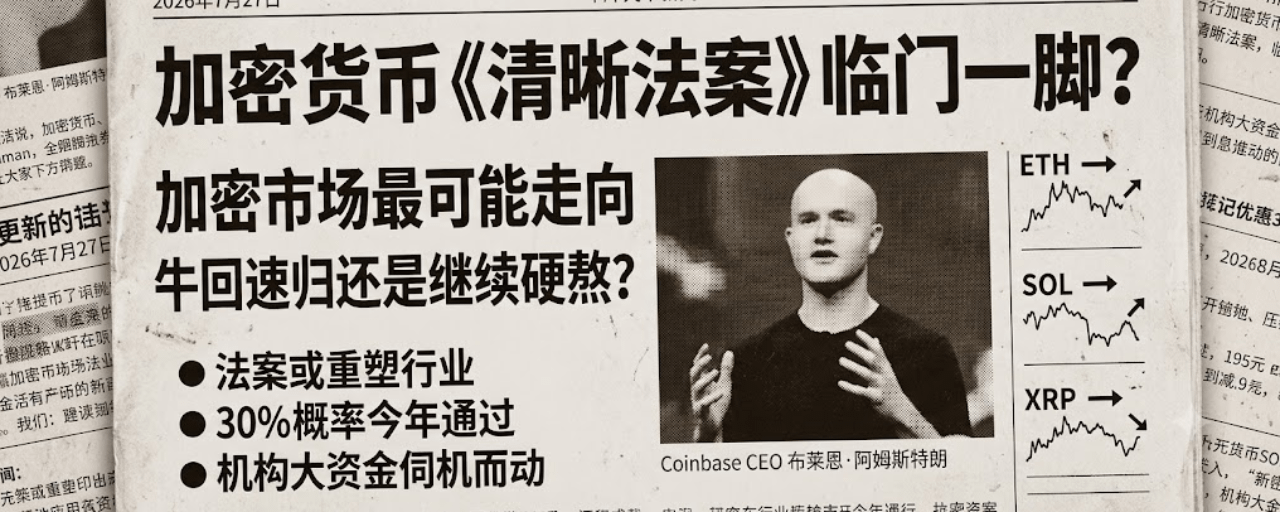
$BTC #CLARITY法案未列入周一参议院日程
But this Friday’s July report… I think it’s going to be tricky. It’s probably not that easy to please. Right now, analysts are predicting new jobs of 85,000 to 88,000—almost double last month’s figure. You tell me, with the overall backdrop full of geopolitical conflicts and inflation, and employers are still hiring steadily—are they just here to drop the hammer on our crypto market?
If this employment data comes out looking really good, then those old Fed folks will have even more excuses to turn hawkish. Last week, three officials came out to support rate hikes. If Friday’s data is strong again, rate cuts are basically off the table. And even that looming “rate-hike sword” could come crashing down.
Look, a few days ago—on July 31—BTC even knelt first, dropping 3%. And the 30-year U.S. Treasury yield has surged to the highest level since 2007. That suggests the old capital players who trade Treasuries were already betting on tightening.
This is really a double-edged sword: if Friday’s data keeps coming in “weak,” then rate-cut expectations will warm up again, and the big coin can definitely pump for a bit—that’s the crypto market’s unique emotional consensus and explosive momentum. When the sentiment hits, even a dog would fly. But if the data is “too solid,” or wage growth is too hot (inflation can’t be brought down), then we might genuinely get hit head-on.
Also, this report will be released on August 7, which is still a full 5 weeks before the Fed meeting on September 16. In the middle, there’s also CPI on August 12 to apply more pressure—too many variables.
Now BTC is no longer trading independently. It often gets led around by the Fed’s economic data swings. The risks are pretty real. Whether this Friday’s move sends us to the moon or straight into the ICU depends entirely on how the report looks.
Take care, everyone.
$BTC #CLARITY法案未列入周一参议院日程
Verified
On Sunday night, Brent crude oil plunged by 9% intraday—dropping from around $91 all the way to above $82!
Just because Trump’s big mouth started blowing hot air again, saying that Iran and several families in the Middle East asked him to stop it. On Monday afternoon, they’re set to hold a meeting and negotiations to reopen the Strait of Hormuz!
So what happened? The plot thickened dramatically! Iran basically mocked Trump outright, calling him a “fool with only poor tactics,” and saying they never even asked him for anything!
So what the hell is this?! These past few years, while we’ve been playing with crypto and trading commodities, we’ve been getting slapped in the face every day by these politicians and macro headlines—first there’s a mouth-off battle, and oil prices and safe-haven assets surge; then they talk about reconciliation, and they instantly drop you into a deep pit. This chart right now is purely a “talk-driven market”!
The Middle East is indeed no joke. If the Strait of Hormuz is locked down, global shipping grinds to a halt, and safe-haven sentiment and consensus can ramp up instantly—money rushes in like crazy. But the risk level is just ridiculously nasty. It all depends on what big-country leaders say. Today they post something on social media and pump it up; tomorrow they’ll report a retaliatory attack—there’s basically no technical indicator at all.
The countdown to the U.S.-Iran understanding memo is coming fast. If the Monday negotiations are once again a back-and-forth, dodging and feinting, we still don’t know how long this slow bleed and pin-prick volatility will torment us.
In this situation, don’t force a bet on a breakout rally or keep stabbing for entries. Macro policy and geopolitics are like a dull blade hanging over your head—headline reversals happen faster than flipping through a book. Us retail traders have no inside information. We can’t outplay these political folks! Hold your chips steady, use lower leverage, control your hands, don’t chase highs at random—let’s wait until this round of headline news fully lands.
Tonight, are you buying the dip on oil prices and crypto prices? Drop a comment and chat in the comments section!
$CL $BZ
Just because Trump’s big mouth started blowing hot air again, saying that Iran and several families in the Middle East asked him to stop it. On Monday afternoon, they’re set to hold a meeting and negotiations to reopen the Strait of Hormuz!
So what happened? The plot thickened dramatically! Iran basically mocked Trump outright, calling him a “fool with only poor tactics,” and saying they never even asked him for anything!
So what the hell is this?! These past few years, while we’ve been playing with crypto and trading commodities, we’ve been getting slapped in the face every day by these politicians and macro headlines—first there’s a mouth-off battle, and oil prices and safe-haven assets surge; then they talk about reconciliation, and they instantly drop you into a deep pit. This chart right now is purely a “talk-driven market”!
The Middle East is indeed no joke. If the Strait of Hormuz is locked down, global shipping grinds to a halt, and safe-haven sentiment and consensus can ramp up instantly—money rushes in like crazy. But the risk level is just ridiculously nasty. It all depends on what big-country leaders say. Today they post something on social media and pump it up; tomorrow they’ll report a retaliatory attack—there’s basically no technical indicator at all.
The countdown to the U.S.-Iran understanding memo is coming fast. If the Monday negotiations are once again a back-and-forth, dodging and feinting, we still don’t know how long this slow bleed and pin-prick volatility will torment us.
In this situation, don’t force a bet on a breakout rally or keep stabbing for entries. Macro policy and geopolitics are like a dull blade hanging over your head—headline reversals happen faster than flipping through a book. Us retail traders have no inside information. We can’t outplay these political folks! Hold your chips steady, use lower leverage, control your hands, don’t chase highs at random—let’s wait until this round of headline news fully lands.
Tonight, are you buying the dip on oil prices and crypto prices? Drop a comment and chat in the comments section!
$CL $BZ

Partly True
Your performance this year has been too bad—$NVDA . In past years, the first half was just casually outperforming the market index, but this year—so far—it’s only up 2%. It hasn’t even beaten the S&P 500’s 7% gain.
There’s a saying that once the earnings report drops on August 26, NVIDIA might really take off—skyrocket. The logic is pretty simple: in AI computing power, it’s still “hard currency.” All the big players are going on a buying spree for capacity. And the forward P/E ratio is only 21x right now, which makes it cheap—basically priced like an ordinary large-cap stock. If Q2 revenue breaks 100 and the Q3 guidance beats expectations, then this upswing is absolutely solid. I’d urge everyone to hurry and pick up shares on the cheap.
NVIDIA really does have strong fundamentals. In this wave of AI, compute power is a necessity. The “leather jacket yellow” GPUs are an industry-wide consensus as unbeatable—if the big companies aren’t buying it, then who would they buy? The fundamentals are still scorching hot. If the earnings report delivers a genuine upside surprise and really ramps up, it can absolutely rip a huge green candle in minutes and blow up the shorts.
But the risks are there too. If it can’t move higher this year, doesn’t that just mean the money is still hesitating? If the macro economy even gets a slight change in tone, or if the earnings guidance misses Wall Street’s picky expectations by even a tiny bit, it could turn into an immediate sell-off—bearish pressure. And that script of “good news being followed by bad news once it’s already out”—haven’t we retail investors been getting cut enough already?
On August 26, this big test—are you planning to set up early positions and wait for takeoff, or continue working and watching from the sidelines?
$NVDAB $NVDA.US
There’s a saying that once the earnings report drops on August 26, NVIDIA might really take off—skyrocket. The logic is pretty simple: in AI computing power, it’s still “hard currency.” All the big players are going on a buying spree for capacity. And the forward P/E ratio is only 21x right now, which makes it cheap—basically priced like an ordinary large-cap stock. If Q2 revenue breaks 100 and the Q3 guidance beats expectations, then this upswing is absolutely solid. I’d urge everyone to hurry and pick up shares on the cheap.
NVIDIA really does have strong fundamentals. In this wave of AI, compute power is a necessity. The “leather jacket yellow” GPUs are an industry-wide consensus as unbeatable—if the big companies aren’t buying it, then who would they buy? The fundamentals are still scorching hot. If the earnings report delivers a genuine upside surprise and really ramps up, it can absolutely rip a huge green candle in minutes and blow up the shorts.
But the risks are there too. If it can’t move higher this year, doesn’t that just mean the money is still hesitating? If the macro economy even gets a slight change in tone, or if the earnings guidance misses Wall Street’s picky expectations by even a tiny bit, it could turn into an immediate sell-off—bearish pressure. And that script of “good news being followed by bad news once it’s already out”—haven’t we retail investors been getting cut enough already?
On August 26, this big test—are you planning to set up early positions and wait for takeoff, or continue working and watching from the sidelines?
$NVDAB $NVDA.US
NVDAB+0.01%
NVDAUS-4.48%
$BTC Since last year’s peak at 126,000, it was cut in half by 50%. The drawdown in a bear market is gradually becoming shallower: it fell 94% in 11 years, 86% in 13 years, 78% in 22 years, and so far this year it’s down only 54%. So some people think the selling pressure is easing, and a rebound is on the way.
The community’s “four-year halving” consensus for BTC is really like a mark burned into everyone’s mind. Even if it drops terribly, that emotion and belief in the community can’t be extinguished. Plus, the drawdown really does seem to be getting smaller now—it looks like there’s genuine confidence at the bottom.
But for a bigger part of people, the heart is both itchy and panicked.
Why do everyone feel so uneasy?
Because these analyses are all based on historical patterns. But can history really represent the future? Can today’s macro environment be the same as before? What if this time it doesn’t follow the script? A 50% cut looks like a discount, but if you try to buy in halfway down, the remaining 50% can still make you bleed.
So when you’re itching to buy the dip, you also end up second-guessing: is the bottom really in for real? If you buy the dip, you’re afraid it’ll keep dropping. If you don’t buy, you’re afraid your legs get crushed.
Brothers, right now are you lying flat and pretending to be dead, preparing to build positions in batches, or are you continuing to watch from the sidelines? Leave a comment—when there’s money, we all make it together.
$BTC
The community’s “four-year halving” consensus for BTC is really like a mark burned into everyone’s mind. Even if it drops terribly, that emotion and belief in the community can’t be extinguished. Plus, the drawdown really does seem to be getting smaller now—it looks like there’s genuine confidence at the bottom.
But for a bigger part of people, the heart is both itchy and panicked.
Why do everyone feel so uneasy?
Because these analyses are all based on historical patterns. But can history really represent the future? Can today’s macro environment be the same as before? What if this time it doesn’t follow the script? A 50% cut looks like a discount, but if you try to buy in halfway down, the remaining 50% can still make you bleed.
So when you’re itching to buy the dip, you also end up second-guessing: is the bottom really in for real? If you buy the dip, you’re afraid it’ll keep dropping. If you don’t buy, you’re afraid your legs get crushed.
Brothers, right now are you lying flat and pretending to be dead, preparing to build positions in batches, or are you continuing to watch from the sidelines? Leave a comment—when there’s money, we all make it together.
$BTC
A few days ago, when I was testing Trustless Bitcoin Vaults (TBV), I got stuck at the water-drip claiming stage so often that it made me question my sanity.
First I used signet BTC, then Sepolia ETH—every time the faucet decided to act up. This creates an extremely misleading impression: many people aren’t actually uninterested in TBV at all; they just haven’t even crossed the threshold yet, and they get turned away by this hurdle at the very start.
If the team counts everyone who’s “stuck outside the door” as a “product conversion failure,” and then blindly rewires the product logic, that would be a textbook case of panic-driven, misguided patchwork. In my view, data is data; external dependencies are external dependencies. Poor compatibility between the entry-side wallet and the faucet has nothing to do with the protocol’s security or appeal.
I’ve had a strict rule for testing: enter with a small amount, fully exit, and leave a trace. Any so-called “success screenshot” that doesn’t validate the entire withdrawal lifecycle end-to-end is, for me, just a worthless piece of paper.
Any protocol that can’t safely exit—no matter how high the promised return—amounts to castles in the air.
Once this analysis is published, I’ll compare the actual data I collect with articles in the same space to see whether the topic is truly worth it—or whether the hook is just in the beginning.
If the sample size isn’t enough, I’ll keep watching and observing on-site. I’ll never jump to conclusions based on a single random fluctuation.
One sentence: if you can truly understand the mainnet’s real retention, you’ll be able to hold the $BABY stake. What do you think? Let’s chat in the comments!
#baby @BabylonLabs_io
First I used signet BTC, then Sepolia ETH—every time the faucet decided to act up. This creates an extremely misleading impression: many people aren’t actually uninterested in TBV at all; they just haven’t even crossed the threshold yet, and they get turned away by this hurdle at the very start.
If the team counts everyone who’s “stuck outside the door” as a “product conversion failure,” and then blindly rewires the product logic, that would be a textbook case of panic-driven, misguided patchwork. In my view, data is data; external dependencies are external dependencies. Poor compatibility between the entry-side wallet and the faucet has nothing to do with the protocol’s security or appeal.
I’ve had a strict rule for testing: enter with a small amount, fully exit, and leave a trace. Any so-called “success screenshot” that doesn’t validate the entire withdrawal lifecycle end-to-end is, for me, just a worthless piece of paper.
Any protocol that can’t safely exit—no matter how high the promised return—amounts to castles in the air.
Once this analysis is published, I’ll compare the actual data I collect with articles in the same space to see whether the topic is truly worth it—or whether the hook is just in the beginning.
If the sample size isn’t enough, I’ll keep watching and observing on-site. I’ll never jump to conclusions based on a single random fluctuation.
One sentence: if you can truly understand the mainnet’s real retention, you’ll be able to hold the $BABY stake. What do you think? Let’s chat in the comments!
#baby @BabylonLabs_io
Still, here’s the same saying: making slow money is nothing to be ashamed of!
Dividend stocks can be a very powerful investment tool. Thanks to the compounding effect, even an initial amount of money that isn’t very large can, over time, grow like a snowball into a substantial asset.
Dividends within the S&P 500 $SPY index have an average annual total return of 9.2% over the past 50 years—more than double the return of non-dividend stocks (4.2%).
First, we have to admit: this traditional U.S. stock strategy of “lying back and living off dividends” really does have its tricks. Look at an index like VYM—it holds shares of more than 600 high-quality large companies, with cash flow supporting it every day. It’s rock-solid.
What you’re selling is “strong consensus” and “low risk,” relying on time and compounding to slowly grow a snowball.
The emotional payoff is plenty—at least it lets you sleep soundly at night. You don’t have to be like us in crypto, where you wake up at 3 a.m. to check the market with your phone, worrying that your position will be wiped out and there won’t be a trace left!
But don’t forget: in the crypto world, people can’t make slow money—they’ll get driven crazy!
Honestly, an annualized return of a bit over 9% is considered pretty good on the U.S. stock market, but in the eyes of crypto people, this pace is so slow it’s like a turtle crawling. What are we getting into for? Aren’t we all here for 100x coins, 1,000x coins? If you really let crypto people put $1,000 in and wait 20 years to turn it into $6,000, they’d probably be so anxious they’d start scratching their ears and cheeks. $VYM.ETF $SPY .ETF
Dividend stocks can be a very powerful investment tool. Thanks to the compounding effect, even an initial amount of money that isn’t very large can, over time, grow like a snowball into a substantial asset.
Dividends within the S&P 500 $SPY index have an average annual total return of 9.2% over the past 50 years—more than double the return of non-dividend stocks (4.2%).
First, we have to admit: this traditional U.S. stock strategy of “lying back and living off dividends” really does have its tricks. Look at an index like VYM—it holds shares of more than 600 high-quality large companies, with cash flow supporting it every day. It’s rock-solid.
What you’re selling is “strong consensus” and “low risk,” relying on time and compounding to slowly grow a snowball.
The emotional payoff is plenty—at least it lets you sleep soundly at night. You don’t have to be like us in crypto, where you wake up at 3 a.m. to check the market with your phone, worrying that your position will be wiped out and there won’t be a trace left!
But don’t forget: in the crypto world, people can’t make slow money—they’ll get driven crazy!
Honestly, an annualized return of a bit over 9% is considered pretty good on the U.S. stock market, but in the eyes of crypto people, this pace is so slow it’s like a turtle crawling. What are we getting into for? Aren’t we all here for 100x coins, 1,000x coins? If you really let crypto people put $1,000 in and wait 20 years to turn it into $6,000, they’d probably be so anxious they’d start scratching their ears and cheeks. $VYM.ETF $SPY .ETF
SPYETF-0.22%
Let’s take a look back at how $SPCX % came out with what was described as the biggest IPO in history. The offering price was $135, and it shot up to $225—holy wow. But now it’s directly kept sliding all the way down to $109, which is 19% below the offering price.!
Everyone compares it to $TSLA from back then. When Tesla first went public, it also crashed by 18%, but didn’t it eventually turn around? SpaceX is after all Musk’s own child, so the fundamentals are still solid. If Starship really gets going, launch costs will come down significantly, and Starlink satellites will be deployed at full speed. The storytelling and “vision-casting” capabilities here are top-tier—arguably among the best across the entire U.S. stock market and even the crypto world. Consensus and belief are basically maxed out!
It’s absolutely worth putting on your watchlist and keeping a close eye on. Once it has fallen enough, or if Starship’s tests truly succeed and performance shows a turnaround, then we can consider buying the dip—no rush.
Everyone compares it to $TSLA from back then. When Tesla first went public, it also crashed by 18%, but didn’t it eventually turn around? SpaceX is after all Musk’s own child, so the fundamentals are still solid. If Starship really gets going, launch costs will come down significantly, and Starlink satellites will be deployed at full speed. The storytelling and “vision-casting” capabilities here are top-tier—arguably among the best across the entire U.S. stock market and even the crypto world. Consensus and belief are basically maxed out!
It’s absolutely worth putting on your watchlist and keeping a close eye on. Once it has fallen enough, or if Starship’s tests truly succeed and performance shows a turnaround, then we can consider buying the dip—no rush.
Monster drinks—yes, that monster energy. It’s announced it will “split” into 1 and 2. For just $200, you can get on board. Friends who want to try a small test finally have a chance to buy.
$MNST.US
It really does kind of look like the “100x black horse” from our crypto circle. Look at its consensus—it’s extremely terrifying. Backed by Coca-Cola, the world’s biggest top-tier player, it gets the pipeline built, traffic delivered, and people all over the world are buying its orders. You can buy it anywhere.
And its marketing is super good at understanding young people—everything is covered: esports, extreme sports, and racing. The emotional value gets maxed out directly. The brand loyalty is rock solid. Honestly, that’s impressive. This level of consensus is ten thousand times stronger than most “air coins,” okay?
New products are also being released nonstop—just like the project teams in our crypto circle updating the roadmap every day—so the buzz stays strong all the time.
If you treat it as a leading asset with real business support, extremely strong community consensus, and steady expansion, then taking $200 as pocket money to buy some spot and hold it is definitely more solid than all those tiny air-coin projects we’re always trading that can go to zero at any moment.
(Not investment advice)
$MNST.US
It really does kind of look like the “100x black horse” from our crypto circle. Look at its consensus—it’s extremely terrifying. Backed by Coca-Cola, the world’s biggest top-tier player, it gets the pipeline built, traffic delivered, and people all over the world are buying its orders. You can buy it anywhere.
And its marketing is super good at understanding young people—everything is covered: esports, extreme sports, and racing. The emotional value gets maxed out directly. The brand loyalty is rock solid. Honestly, that’s impressive. This level of consensus is ten thousand times stronger than most “air coins,” okay?
New products are also being released nonstop—just like the project teams in our crypto circle updating the roadmap every day—so the buzz stays strong all the time.
If you treat it as a leading asset with real business support, extremely strong community consensus, and steady expansion, then taking $200 as pocket money to buy some spot and hold it is definitely more solid than all those tiny air-coin projects we’re always trading that can go to zero at any moment.
(Not investment advice)

MNSTUS+0.33%
They say the first sip of Coca-Cola is worth half the price of the whole bottle.
Coca-Cola—do you pick Coca-Cola or Pepsi?
Recently, when Coca-Cola released its Q2 earnings report, the stock price shot up immediately.
Some people came to look at the numbers, saying Pepsi’s P/E ratio is only 19x and its dividend yield is 4%, while Coca-Cola’s P/E is 27x and its dividend yield is just 2.3%. Why is it so expensive? Isn’t this just cutting into shareholders?
Coca-Cola, if you boil it down, is basically good at one thing: light assets and pure focus.
It outsources the most cash-burning and labor-intensive bottling, trucking, and delivery to third parties. It only sells concentrate and takes the lion’s share of the profits.
And it commits to beverages. Unlike Pepsi, which also has a whole bunch of snacks like Lay’s potato chips and Quaker oats. These days, everyone is chasing health and eating less processed food. Pepsi’s snack business has higher costs and more pressure. Coca-Cola, with its light-asset model, has a profit margin that’s honestly frightening.
Don’t forget what’s most powerful of all: consensus. From 1990 to now, Coca-Cola’s long-term return has nearly always outperformed Pepsi. If you’ve spent enough time in crypto, you know how valuable “consensus” is—it’s basically a belief premium.
By the way: I pick Coca-Cola.
When you usually buy drinks, which one do you choose?
$KOon
Coca-Cola—do you pick Coca-Cola or Pepsi?
Recently, when Coca-Cola released its Q2 earnings report, the stock price shot up immediately.
Some people came to look at the numbers, saying Pepsi’s P/E ratio is only 19x and its dividend yield is 4%, while Coca-Cola’s P/E is 27x and its dividend yield is just 2.3%. Why is it so expensive? Isn’t this just cutting into shareholders?
Coca-Cola, if you boil it down, is basically good at one thing: light assets and pure focus.
It outsources the most cash-burning and labor-intensive bottling, trucking, and delivery to third parties. It only sells concentrate and takes the lion’s share of the profits.
And it commits to beverages. Unlike Pepsi, which also has a whole bunch of snacks like Lay’s potato chips and Quaker oats. These days, everyone is chasing health and eating less processed food. Pepsi’s snack business has higher costs and more pressure. Coca-Cola, with its light-asset model, has a profit margin that’s honestly frightening.
Don’t forget what’s most powerful of all: consensus. From 1990 to now, Coca-Cola’s long-term return has nearly always outperformed Pepsi. If you’ve spent enough time in crypto, you know how valuable “consensus” is—it’s basically a belief premium.
By the way: I pick Coca-Cola.
When you usually buy drinks, which one do you choose?
$KOon
可口可乐
100%
百事可乐
0%
4 votes • Voting closed
I thought that if the Federal Reserve had a new chair, they could roll out some big rescue-market moves. But in the first press conference after Waller took office, he managed to throw the bond market into chaos!
Interest rates haven’t changed—still 3.5%~3.75%—but his remarks were hesitant and contradictory, and he basically couldn’t clearly explain whether they’ll keep raising rates afterward.
Wall Street was left completely dumbfounded.
In plain terms, what the market fears most is “uncertainty.” When those old foxes in the bond market see the Fed’s stance is so vague, they don’t believe the Fed can bring inflation down. They immediately start wildly selling off and dumping Treasuries.
So what happened? The yield on 30-year U.S. Treasuries shot up straight to 5.23%, hitting a 19-year high. With interest rates that high, borrowing gets more expensive for the government, businesses, and ordinary people alike—hurting long-term Treasury funds they hold as well.
In this macro environment, with inflation not coming down and the Fed playing ping-pong with its communications, the risk of blindly jumping into tools with a long duration is just too high. Instead of betting that the long-term trend will reverse, it’s better to stick with some intermediate-to-short-term products first to protect your principal.
Interest rates haven’t changed—still 3.5%~3.75%—but his remarks were hesitant and contradictory, and he basically couldn’t clearly explain whether they’ll keep raising rates afterward.
Wall Street was left completely dumbfounded.
In plain terms, what the market fears most is “uncertainty.” When those old foxes in the bond market see the Fed’s stance is so vague, they don’t believe the Fed can bring inflation down. They immediately start wildly selling off and dumping Treasuries.
So what happened? The yield on 30-year U.S. Treasuries shot up straight to 5.23%, hitting a 19-year high. With interest rates that high, borrowing gets more expensive for the government, businesses, and ordinary people alike—hurting long-term Treasury funds they hold as well.
In this macro environment, with inflation not coming down and the Fed playing ping-pong with its communications, the risk of blindly jumping into tools with a long duration is just too high. Instead of betting that the long-term trend will reverse, it’s better to stick with some intermediate-to-short-term products first to protect your principal.

Log in to explore more content