

On 18/02/2026, Base officially announced the transition to a unified stack managed by itself. This is one of the most important events of the Ethereum Layer-2 system since Base launched in 2023.
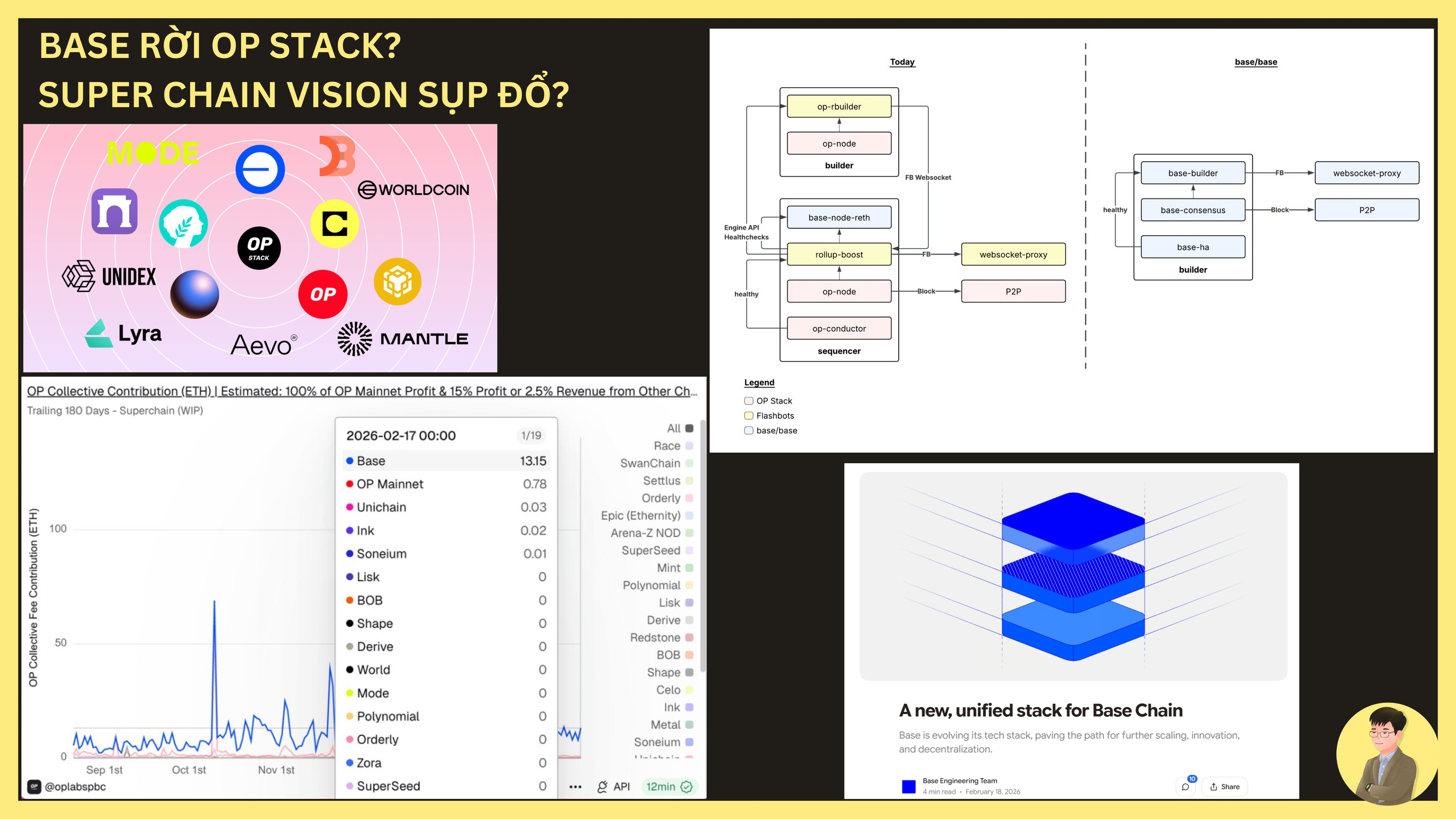
1. The nature of change - Not leaving Ethereum, just leaving OP Stack
- Base is still a pure Optimistic Rollup. The transaction data layer is still posted to Ethereum L1. Settlement and security are still entirely inherited from Ethereum. There is no separate validator set, no separate consensus, and it does not become L1.
- Still Stage 1 Decentralized Rollup, even strengthening the Security Council with an independent signer.
=> Base only changes how software is built: consolidating all execution (based on Reth), derivation, sequencer, node client into a single repo managed by Base itself. This is a separation in technical architecture, while the ecosystem and security remain compatible with Ethereum.
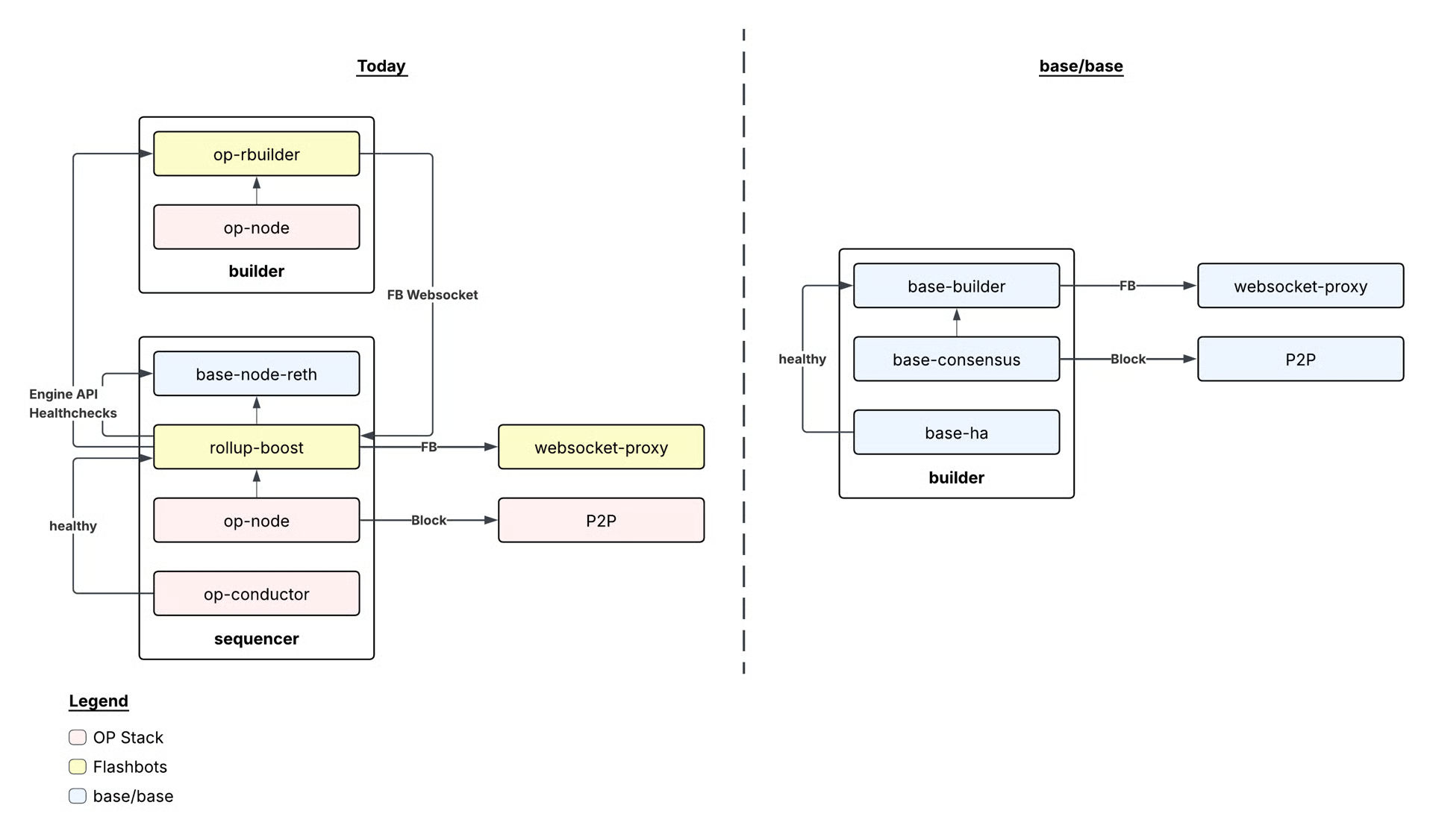
2. Why is OP Stack no longer suitable for Base?
- In the period 2023–2024, OP Stack is the perfect choice for Base to launch quickly due to the availability of op-geth, derivation pipeline, sequencer, bridge, governance. Base is immediately compatible with Superchain, helping to process infrastructure faster to focus on ecosystem development first.
- But when Base becomes the largest L2 on Ethereum (TVL, volume, user), the limitations become apparent such as fragmented codebase: Base has part Optimism, part Flashbots, Paradigm, and part Base self-written.
=> This means that every time there is an upgrade, many parties must coordinate, which is slow. The roadmap is constrained and cannot independently decide on hard forks, must follow the common Superchain spec. Performance is limited as op-geth (a fork of Go) struggles to achieve the goal of 1 gigagas/s that Base aims for.
=> Base's solution: a separate unified stack (base/base). 100% self-controlled upgrade cycle. Increasing from ~3 hard forks/year to 6 hard forks/year. Using Reth (Rust) as the main execution client to optimize throughput.
=> The result will help ship code faster, reduce coordination overhead, and focus entirely on the consumer/retail workload of Coinbase.
3. Economic impacts significantly affect Optimism
* The Superchain of Optimism operates based on 2 pillars:
- 1 is that all chains using OP Stack together facilitate easy interoperability.
- 2 is the chains sharing sequencer revenue according to the Standard Rollup Charter (usually max(2.5% of total sequencer revenue or 15% net profit)).
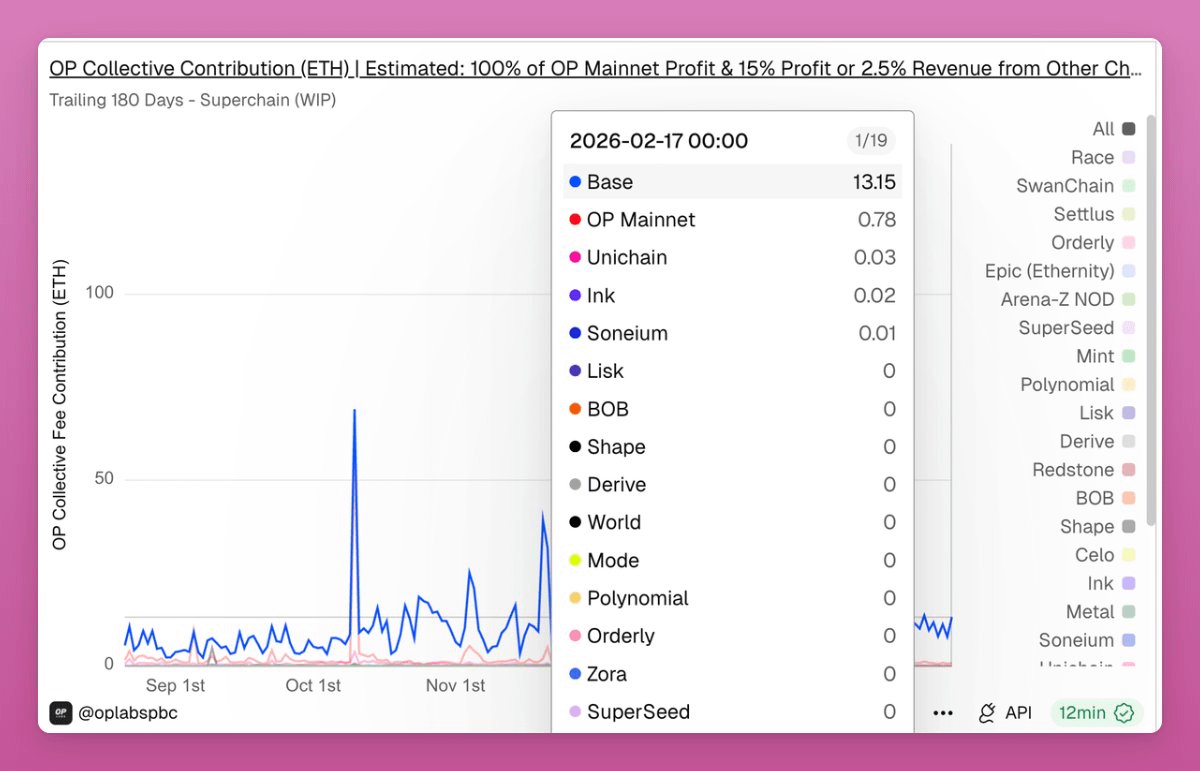
* Official data from OP Labs dashboard (17/02/2026, trailing 180 days):
- Base contributes 13.15 ETH/day to OP Collective.
- While all other Superchain chains combined only 0.84 ETH/day (of which OP Mainnet 0.78 ETH, Unichain 0.03 ETH, Ink 0.02 ETH, the rest nearly zero).
=> Base accounts for exactly 94% of fee revenue sharing of the entire OP Collective.
- So this means that OP Collective will lose 94% of the fee revenue sharing. In addition, previously to exchange for Base's participation in Superchain and sharing revenue according to the charter, Base received 118 million tokens $OP (vesting gradually over 6 years).
+ When signing the agreement (price $OP ~1.50 USD) => value ~265 million USD. Currently (19/02/2026, price $OP only ~0.13 USD after strong news drop) => actual value received is only ~23 million USD.
4. Is Superchain at risk of collapse?
- Theoretically, no, although losing Base is a huge loss with a 94% revenue, Optimism's Super chain still has smaller chains (Mantle, Zora, Mode, World Chain, Unichain, Ink...)
- These chains still need Shared bridge, Shared tooling, Superchain to attract developers and users,... moreover, most chains cannot have the engineering resources + revenue + scale to build a unified stack like Base, so will still need OP Stack to build their own Layer2.
5. Personal conclusion about this event
- Base has grown large enough to be self-sufficient, opening a new era as a national-scale L2, optimized for consumer flow, retail users, but still closely integrated with Ethereum. It can be understood that in terms of the ecosystem, it operates like a separate L1, but technically it is still L2.
- With Optimism severely affected, must strengthen OP Mainnet, find new large chains, or shift to a pure infra provider role (sell OP Enterprise support), it will be very challenging for OP because the L2 boom period has passed.
- With Ethereum, it is even more positive because Base will ship Ethereum-aligned upgrades faster (Fusaka, Glamsterdam…). Currently, $ETH has a different foundational position compared to a few years ago.
- What are your thoughts?