


Bitcoin isn’t just the first cryptocurrency, it’s fundamentally different from the thousands of altcoins that have followed. While altcoins often promise faster transactions, fancy features, or niche use cases, Bitcoin’s design, history, and role in the market make it unique.
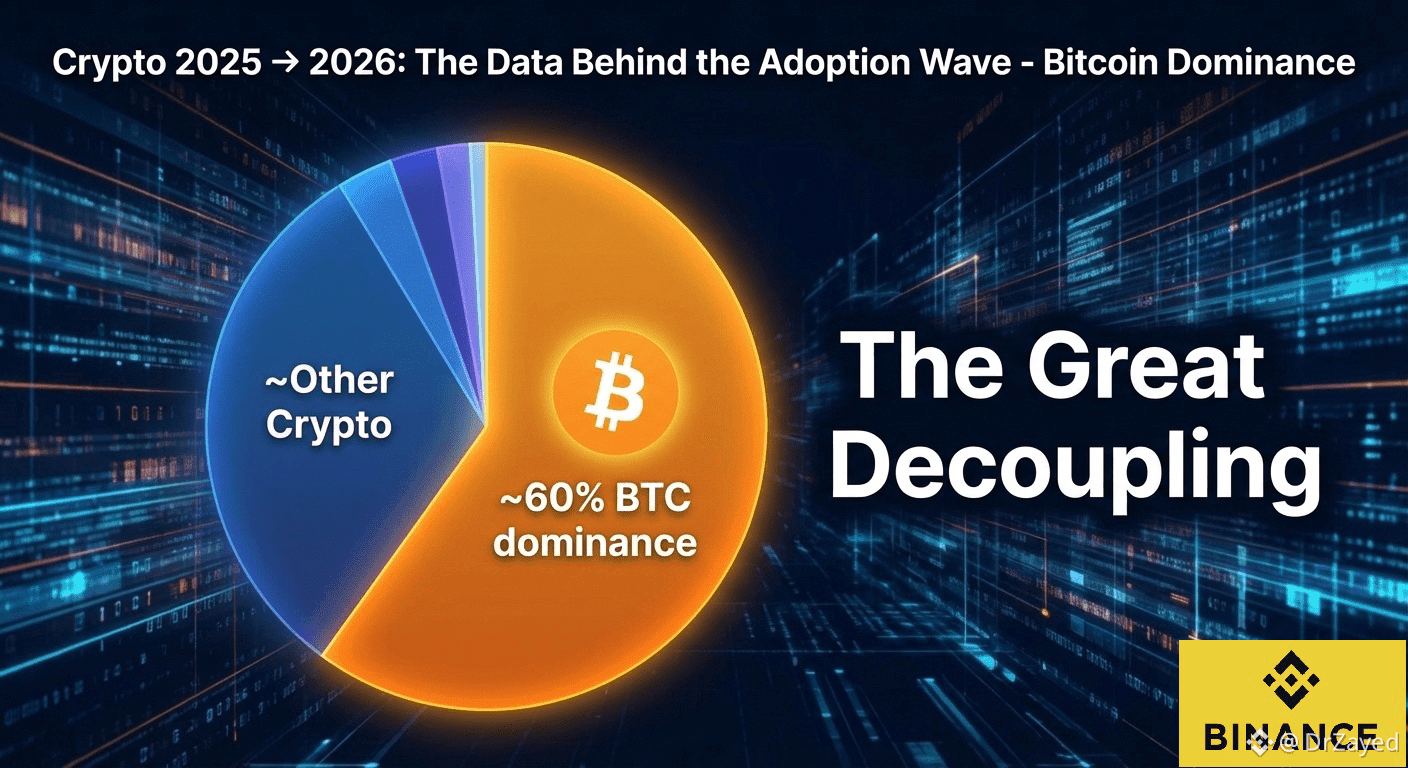
As of early 2026, Bitcoin’s market dominance hovers around 50–60%, and institutional adoption continues to accelerate through ETFs, corporate treasuries, and even sovereign interest. The gap between Bitcoin and the rest of the crypto world feels wider than ever.
Here’s why Bitcoin stands apart and why I personally still view it as the foundation of any serious crypto portfolio.
1. The Original: First-Mover Advantage and Network Effects
Bitcoin launched in 2009, created by the mysterious Satoshi Nakamoto. It solved the double-spend problem without banks, using proof-of-work and a public blockchain.
No altcoin can replicate that first-mover advantage. Bitcoin benefits from massive network effects: the more users, miners, developers, wallets, exchanges, and merchants that adopt it, the stronger and more secure it becomes. It’s a self-reinforcing cycle: high liquidity, top-tier security, and universal recognition make it extremely hard for competitors to catch up.
Even Ethereum or Solana, which I’ve traded and experimented with myself, don’t carry the same “digital gold” brand that Bitcoin has built over more than a decade.
2. Fixed Supply and Sound Monetary Policy
Bitcoin has a hard cap of 21 million coins, with issuance halving roughly every four years (most recently in 2024). This scarcity mimics gold, positioning Bitcoin as a hedge against inflation and fiat debasement.
Most altcoins work differently:
Unlimited or inflationary supply (Ethereum has no hard cap, though it does burn tokens).
Variable issuance models (staking rewards, pre-mines, or governance changes).
What I love about Bitcoin is its predictability. Its supply has never been tampered with since genesis. In contrast, I’ve seen countless altcoins spark community debates over token unlocks, burns, or forks that can dilute holders, sometimes overnight.
3. Proven Security and the Lindy Effect
Bitcoin’s blockchain has run continuously for over 16 years without a major protocol-level hack. Its hash rate dwarfs every other coin combined, making a 51% attack practically impossible.
The Lindy effect applies here: the longer something survives, the more likely it is to keep going. I’ve personally been in the crypto space through several bear markets, and Bitcoin has weathered them all, along with regulatory scrutiny and attacks.
Altcoins, being younger, carry higher risks. Many have suffered hacks, centralization issues, or developer decisions that hurt holders.
4. Primary Use Case: Store of Value vs. Everything Else
Bitcoin is “digital gold.” Its main role is long-term wealth preservation. Sure, the Lightning Network helps with smaller payments, but Bitcoin shines as a secure, scarce store of value.
Altcoins chase other goals:
Smart contracts and dApps (Ethereum)
Fast or cheap payments (Solana, XRP)
Privacy (Monero)
Stablecoins (USDT, USDC)
Community/memes (Dogecoin)
I experiment with altcoins for learning or short-term gains, but when it comes to preserving real value over years, I keep most of my holdings in Bitcoin. It’s calmer, less emotional, and more resilient.
5. Market Behavior and Institutional Preference
Bitcoin leads crypto cycles, its rallies usually kick off altcoin seasons, and corrections hit alts harder. In 2026, Bitcoin’s lower relative volatility, massive liquidity, and institutional inflows make it the “safe” crypto bet.
Altcoins still offer higher upside but come with brutal drawdowns. I’ve learned the hard way that chasing alts without Bitcoin’s stability can wipe out gains in a flash.
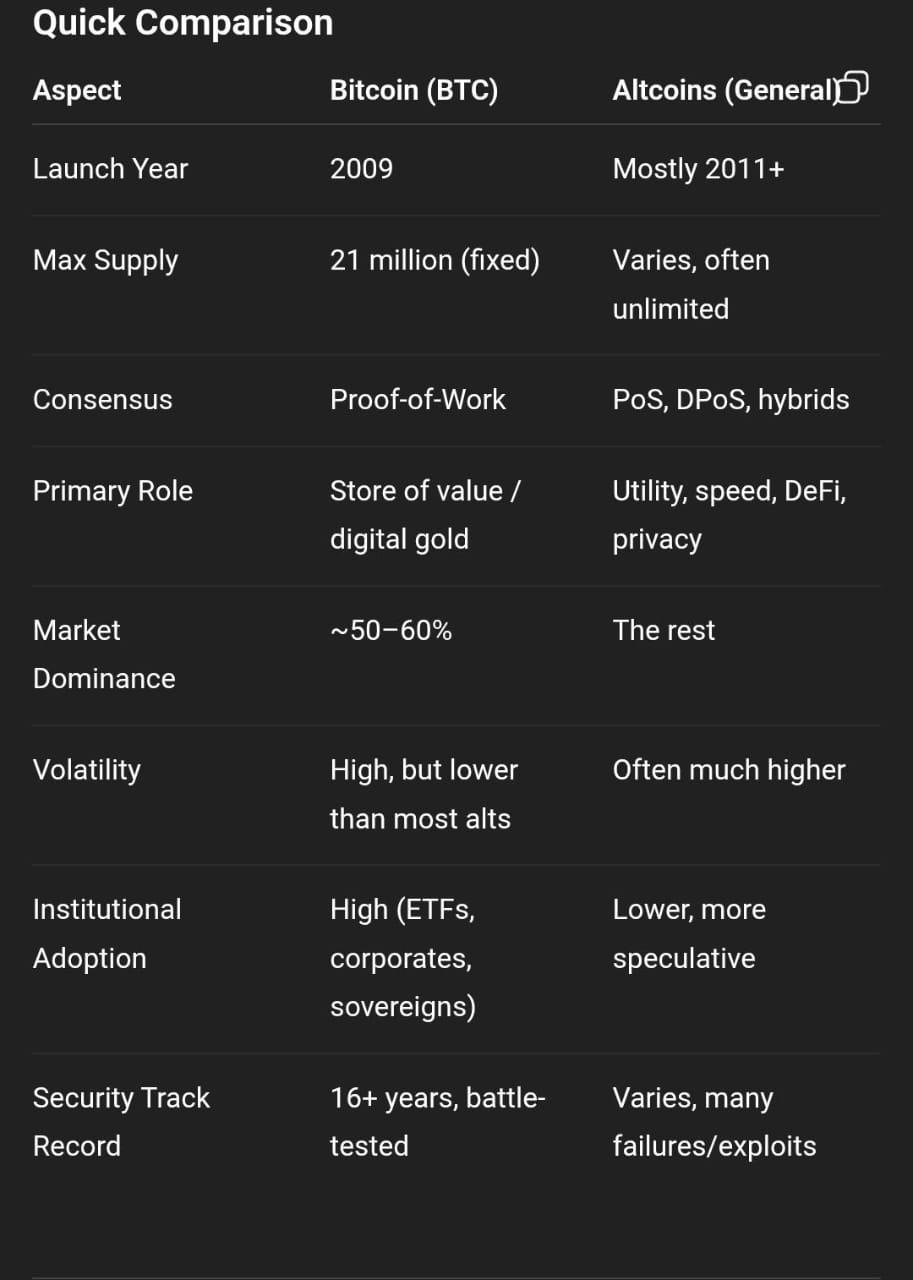
Bitcoin isn’t “just another crypto”, it’s the benchmark. Altcoins can offer exciting features and explosive gains in bull markets, but most compete in a crowded field with higher failure rates. Many analysts believe most altcoins won’t survive long-term, while Bitcoin’s scarcity, network, and longevity make it the closest thing to unbreakable digital money.
From personal experience, I use altcoins for learning, experimentation, and short-term trades but for long-term security and financial sovereignty? Bitcoin still sits at the top.