


In December 2024, a friend excitedly told me that he bought a meme coin called HAWK because "influencer Haliey Welch endorsed it." I said: "Wait, let me check with Bubblemaps." 30 seconds later, an amazing picture appeared on my screen: a huge green bubble, occupying 80% of the entire screen, surrounded by countless tiny bubbles.
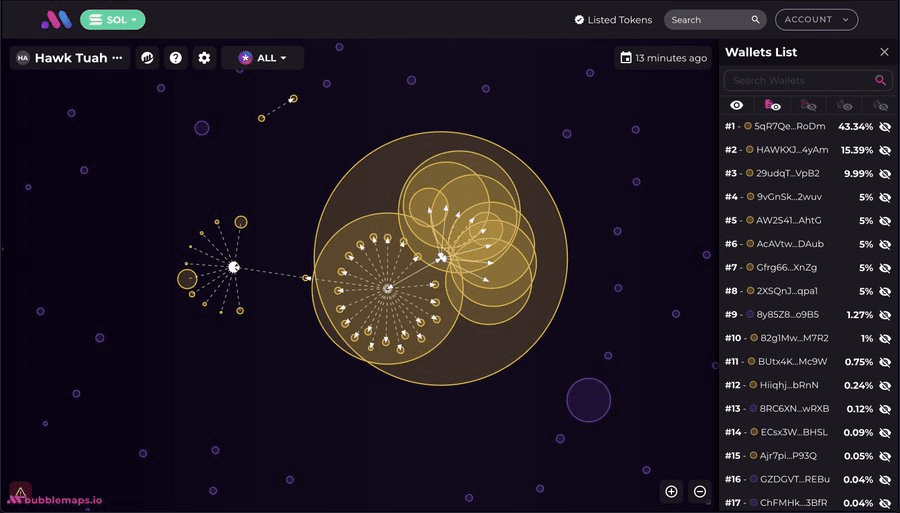
One associated wallet cluster controlled 96% of the Hawk Tuah (HAWK) meme token supply. I told my friend: "Run fast." He hesitated. 20 minutes later, HAWK's market cap plummeted from $500 million to $60 million.
That moment, I realized: Bubblemaps isn't just a tool, it's the X-ray machine of the crypto world.
What is Bubblemaps? Why is it so special?
1. One-sentence explanation: Turns blockchain data into "bubble charts"
Imagine if every crypto wallet was a bubble:
The size of the bubble reflects the share of tokens held by the wallet
If wallets interact (send or receive tokens), they are connected
Color depth represents activity
Clusters show groups of related wallets
Bubblemaps is a blockchain analysis platform that transforms complex on-chain data into intuitive visual representations. The platform specializes in analyzing token distribution and wallet connections through interactive bubble visualizations, making it easier to understand token ownership patterns and identify potential risks.

2. Why can't traditional tools do it?
Problems with traditional blockchain explorers (such as Etherscan):
What you see is an endless stream of transaction hashes
You need to manually track each address.
Unable to quickly identify relationships between wallets
Like a heavenly book for ordinary users.
Bubblemaps' revolutionary breakthrough:
This visual method makes complex blockchain relationships immediately apparent. For example, when analyzing new token issuances, users can quickly identify clusters of associated wallets that may indicate coordinated trading activity or concentrated ownership. Traditional blockchain explorers require users to manually track these connections through multiple transaction records.
Personal feelings:
I once spent 3 hours on Etherscan tracking the token flow of a DeFi project, and ended up confused. With Bubblemaps, I saw the problem in 5 minutes: the top 10 wallets were all connected, clearly controlled by the same team.
Core functions of Bubblemaps: More than just "talking about the charts"
1. Revolutionary upgrade to V2 version (released November 2024)
Time Travel: Complete historical data of token allocation; Magic Nodes: Automatically add addresses to reveal hidden clusters
The power of the time travel feature:
You can see every stage of the token from issuance to the present.
Track when "whales" enter and exit.
Identify whether project teams are secretly selling.
Magic Nodes (AI-powered):
AI "cleans up data" to "reveal clusters hidden in Bubblemaps V1"
Automatically discover hidden intermediate wallets.
Identify money laundering transaction paths.
Examples:
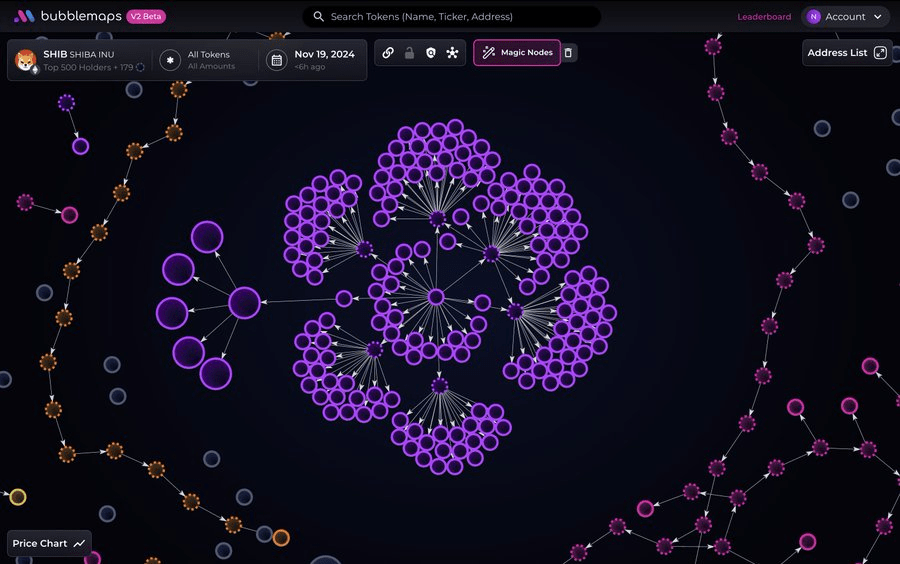
The SHIBA INU bubble chart, after enabling magic nodes, shows hidden wallets that serve as the backbone of the cluster. These wallets appear independent, but are actually controlled by the same entity.
2. Multi-chain support: From Ethereum to Solana
Bubblemaps supports multiple blockchains, including Ethereum, BNB Chain, Fantom, Avalanche, Cronos, Arbitrum, Polygon, Base, Solana, and Sonic.
Why is multi-chain support so important?
Explosive growth of meme coins on Solana
Each chain has its own "dark forest."
Cross-chain tracking of fund flows
Personal experience:
When pump.fun was popular in 2024, I used Bubblemaps to analyze 100 Solana meme coins. I found that 70% of the projects had the top 20 wallets connected. This helped me avoid countless rug pulls.
3. Intel Desk: The world's first community-driven on-chain investigation platform
Intel Desk is Bubblemaps' community-driven investigation platform. Users can submit on-chain cases and stake BMT tokens to vote on which investigations should be prioritized. Any BMT holder can participate, and contributors are rewarded when their insights help discover suspicious activity. The system is designed to make blockchain research more collaborative and transparent.
How Intel Desk Works:
Proposers: Submit new cases by staking BMT, highlighting suspicious on-chain activity
Voters: Allocate BMT to the most compelling cases. The more support a case receives, the more likely it is to be selected.
Investigators: Contribute research, insights, or visual analysis to help discover relevant patterns. Successful contributions can earn BMT rewards
What does this mean? Imagine a "decentralized FBI" that specializes in investigating crypto scams:
The community decides what to investigate
Investigation results are open and transparent
Contributors receive token rewards
Bubblemaps' "Achievements": Industry-changing investigations
1. HAWK token crash event (December 2024)
Bubblemaps revealed that the HAWK team held 80% of the supply, with another 16% secretly unlocked for pre-sale buyers. When these buyers dumped their tokens, the price crashed. Key takeaways:
Saved countless retail investors' funds
Triggered widespread questioning of influencer tokens
The SEC is starting to pay attention to such projects
2. LIBRA "Presidential meme coin" scam
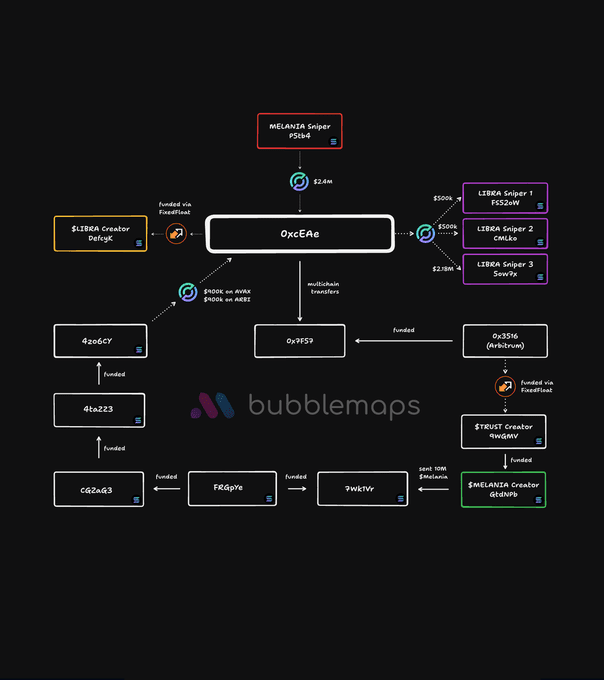
LIBRA was marketed as a presidential meme coin, but Bubblemaps showed that 82% of the supply was held by a single cluster. The team used a cunning strategy: adding liquidity without stablecoins, allowing them to cash out without causing panic.
Personal feelings:
When I saw this analysis, I thought of the SQUID coin scam in 2021. If Bubblemaps had existed at that time, perhaps not so many people would have lost money. The evolution of tools is making it harder for scammers to hide.
3. Wash trading in the NFT market
Notable cases include identifying wash trading in NFT collections, exposing concentrated token ownership in meme coins, and tracking suspicious wallet activity in DeFi protocols.
Real-world cases:
I once used Bubblemaps to analyze a "viral" NFT project and found that among the top 100 holders, 60 wallets were trading with each other, creating false transaction volume. The project team was also boasting about "record transaction volume" in Discord.
BMT Token: From Tool to Economic System
1. The Core Value of BMT
The total supply of BMT is 1 billion, issued on Solana.
What can holding BMT unlock?
P&L (profit and loss) calculation, cross-chain analysis, top 1000 holder map, AI cluster explanation
Governance rights of Intel Desk
Priority access to new features
2. Token Economics: More than just a "governance token"
What makes BMT unique:
Utility-driven: Not an air coin, every function requires BMT
Community incentives: Investigation contributors are rewarded
Value capture: Platform revenue is linked to the token
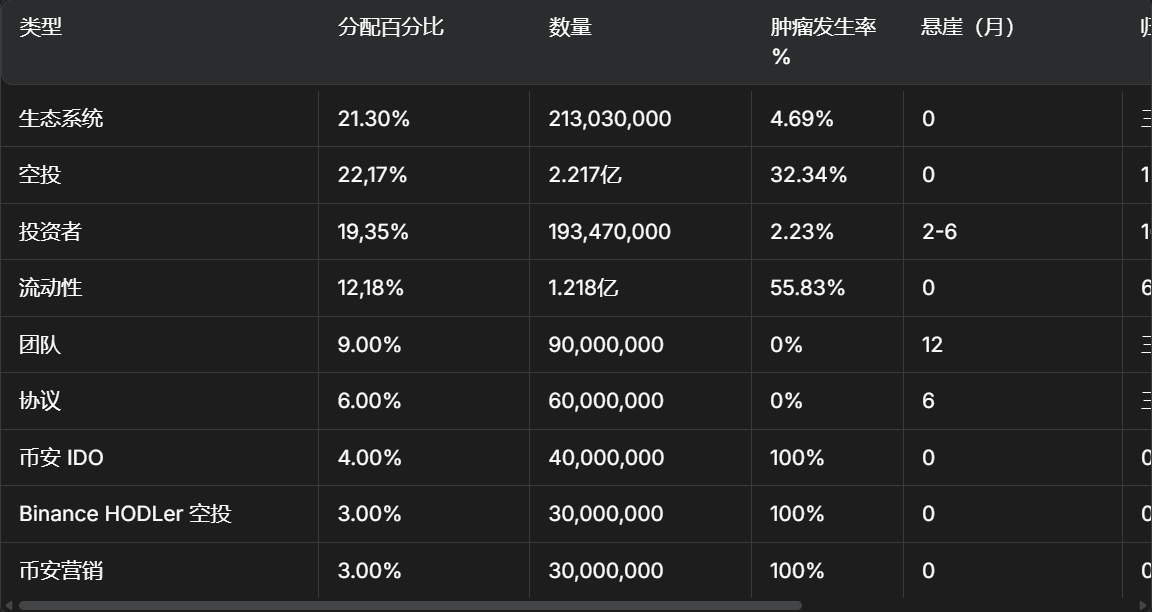
Token Allocation
Price predictions (from multiple institutions):
DigitalCoinPrice: Maximum of $0.3 in 2025
PricePrediction: Maximum of $1.26 in 2030
Telegaon: Maximum of $27 in 2040
Personal opinion:
The value of BMT lies not in hype, but in whether it can become the standard tool for on-chain investigation. If Intel Desk truly becomes the "Wikipedia of the crypto world", BMT may experience amazing growth.
Bubblemaps vs Competitors: Who can be the winner?
1. Comparison with other analysis tools
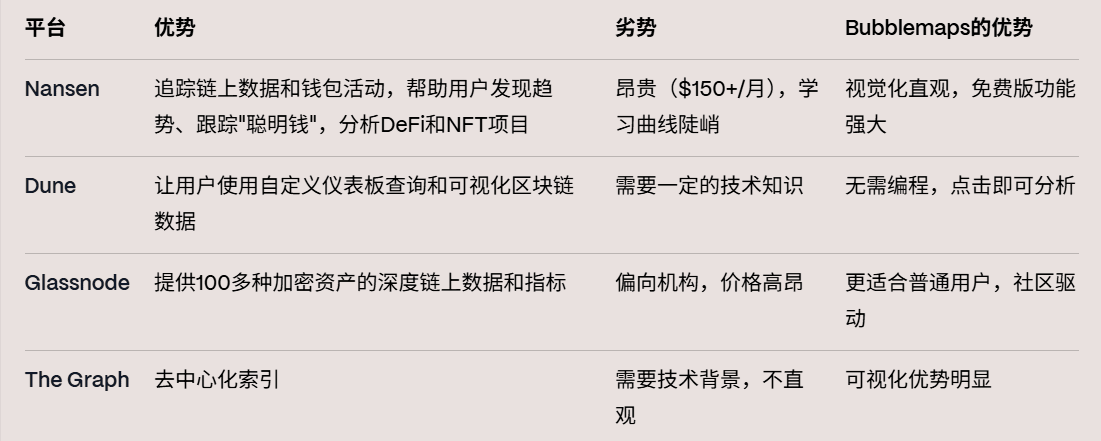
2. Moat: Why is Bubblemaps difficult to replicate?
Technical Moat:
Patented visualization algorithm
AI-driven cluster recognition
Pattern library accumulated over many years
Network effect:
Over 500,000 monthly active users
Direct integration into platforms like Pumpfun, Photon, and Etherscan. Partnerships with leading blockchains like Solana, Arbitrum, Polygon, Avalanche, Sonic, and Base
Brand awareness:
"Bubblemaps" has become a generic term used by people, and is an integral part of crypto culture
Personal feelings:
Just as "Google" became synonymous with search, **"Check with Bubblemaps" is becoming a mantra in the crypto world.** This brand penetration is the strongest moat.
Real usage experience: The daily life of a DeFi farmer
Scenario 1: New project launch
Whenever a new DeFi project or meme coin is launched, my first reaction is not to look at the K-line, but:
Open Bubblemaps
Enter the contract address
Determine if it's a scam in 30 seconds
Real cases:
Last week, an "AI+DeFi" project went viral on Twitter. The project team claimed "completely decentralized." Bubblemaps showed that the top 5 wallets held 65% of the tokens, and all were related. I posted the screenshot in the group, saving at least 20 friends who were about to rush in.
Scenario 2: Tracking smart money
Users should pay attention to several key elements when checking tokens: the relative size of the bubbles represents the proportion of total supply held by each wallet.
I would:
Find the best-performing tokens.
See which large bubbles entered earliest.
Track the other holdings of these wallets.
Discover their new movements
Success stories:
By tracking a Solana whale (the oversized green dot on the bubble chart), I discovered that he was quietly building a position in an obscure GameFi token. Two weeks later, the project announced a partnership with a major company, and the token rose 15x.
Scenario 3: Risk management
Before holding any token, I regularly check:
Are large holders quietly selling?
Are there new associated wallets appearing?
Is liquidity decreasing?
Hedging Experience:
For a DeFi token I held, 3 large bubbles suddenly started to shrink (selling). Although the price was still rising, I sold immediately. The next day, the project team announced that it had "suffered a hacker attack", and the token went to zero.
The Future of Bubblemaps: From Tool to Infrastructure
1. Short-term outlook (2025)
Intel Desk officially launched:
Community investigation mechanism launched
BMT token starts to capture value
Technical upgrades:
AI-driven abnormal wallet behavior detection alerts
Deeper Intel Desk tools supporting scalable investigation proposals
Support for more chains (TON, Sui, etc.)
2. Mid-term vision (2025-2027)
Becoming an industry standard:
Regulators use Bubblemaps for compliance checks.
Exchanges integrate Bubblemaps for listing reviews.
Provide enterprise solutions for protocols and funds.
Ecosystem expansion:
Developer API
Third-party plugin ecosystem
Education and certification system
3. Long-term dream (2030)
Bubblemaps is building more than just a blockchain visualization tool - it is building the InfoFi layer of Web3. As the industry moves towards more transparent and intelligent decision-making, Bubblemaps is providing users with the infrastructure to handle blockchain data with clarity and confidence.
Possible scenarios:
AI Automated Investigation: AI agents automatically identify and investigate suspicious projects
Predictive Analytics: Predict rug pulls based on historical patterns
Global Anti-Fraud Network: Cooperate with international law enforcement
Investment perspective: Is BMT worth buying?
Bullish factors
Unique positioning: Absolute leader in on-chain data visualization
Real demand: Projects are exploding every day, demand will only increase
Network effect: The more users, the more accurate the data
Multiple income streams: API, enterprise services, token economy
Team strength: Recently acquired by Etherscan, proving the team's success in building valuable analysis platforms
Risk factors
Regulatory risks: May be required to censor certain investigations
Technical risks: Competitors may develop better visualizations
Token economics: If Intel Desk adoption is low, BMT may lack demand
Market risks: Demand for analysis tools decreases in bear markets
Personal Judgement
If Bubblemaps' adoption accelerates significantly, it could reach $1, but this depends on multiple factors, including continued platform growth, increased demand for on-chain transparency, and favorable crypto market conditions.
My opinion:
Short term (6 months): $0.2-0.5 (depending on Intel Desk adoption)
Medium term (2 years): $1-3 (if it becomes an industry standard)
Long term (5 years): $5-20 (if the InfoFi narrative comes true)
Game changer
Remember the ICO bubble of 2017? Countless projects raised millions with just a whitepaper. Why? Because information wasn't transparent. Bubblemaps is like an "X-ray" for every project. It's getting harder for scammers to survive, and easier for quality projects to be discovered.
From tool to culture
I've seen too many conversations like this:
"Is this coin worth buying?"
"Did you check Bubblemaps?"
"Yes, 80% is in one wallet."
"Then forget it."
And Bubblemaps is changing the decision-making process of crypto investment.
The power of the community
Intel Desk reminds me of the early days of Wikipedia. A group of volunteers, creating value with collective intelligence. The difference is that this time contributors can receive economic rewards.
This may be the most beautiful vision of Web3: transparency, collaboration, and win-win.
Writing in the end: Why is Bubblemaps important?
The crypto world is a dark forest. Every day, people lose heavily due to information asymmetry.
Bubblemaps is like a lighthouse in the forest, illuminating the traps hidden in the shadows.
It doesn't guarantee you'll make money, but it can help you avoid most scams.
More importantly, it is driving the entire industry towards greater transparency. When scammers know that their every step is being seen, they will think twice.
Last but not least
Yesterday, I received a message from a friend again: "Found a new project, the team is strong, do you want to rush in together?"
I replied: "Send the Bubblemaps link."
He sent me a link. I opened it and saw densely packed small bubbles evenly distributed, with no unusually large clusters.
"You can try a small position." I said.
That's the meaning of Bubblemaps: to give us another pair of eyes in the dark forest.
And you, are you ready to become an on-chain detective?