

DeFi and its booming development have driven the demand for public chains, which have shown amazing explosive power in the last bull market. As the application fields of blockchain become wider and wider, there are more and more high-quality projects on the public chain track. As infrastructure, public chains are often targets for stable and efficient returns. Some public chains will airdrop some Tokens to early supporters and adopters when the mainnet goes online. This opportunity is a gift from the chain. While paying attention to new projects, multi-interaction and airdrops have also become benefits for blockchain participants. The following are seven noteworthy public chain projects that have not yet released tokens and can be focused on research.
1
Sui @SuiNetwork
Sui is the most interesting Move-based public chain besides Aptos. The Sui team comes from Facebook’s previous Diem encryption R&D team. Sui development team Mysten Labs announced in December 2021 the completion of a $36 million Series A round of financing, led by a16z, with participation from Coinbase Ventures, NFX, Slow Ventures, Scribble Ventures, Samsung NEXT, Lux Capital, etc. In September 2022, it received US$300 million in Series B financing, with a valuation of more than US$2 billion. Led by FTX, investment institutions including a16z crypto, Jump Crypto, Apollo, Binance Labs, Franklin Templeton, Coinbase Ventures, Circle Ventures, Lightspeed Venture Partners, Sino Global, Dentsu Ventures, Greenoaks Capital and O'Leary Ventures participated. A total of US$336 million was raised.
Sui is a smart contract platform maintained by a set of permissionless validators that play a role similar to validators or miners in other blockchain systems.
Sui provides scalability and unprecedented low latency for simple use cases. Sui enables most transactions to be processed in parallel. This allows for better utilization of processing resources and provides the option to increase throughput by adding more resources. Sui abandons consensus in favor of simpler and lower-latency primitives to handle simple use cases such as payment transactions and asset transfers. This is unprecedented in the blockchain world and enables many new latency-sensitive distributed applications from gaming to physical point-of-sale retail payments.
Sui's native asset is called SUI, and the total supply is capped at 10 billion. According to the SUI token distribution details announced by the Sui Foundation, the community reserves managed by the Sui Foundation account for 50%, early contributors account for 20%, investors account for 14%, Mysten Lab treasury accounts for 10% and the community Access planning and application testers account for 6%.
SUI has four main uses:
Stake SUI to participate in the proof-of-stake mechanism
Pay the gas fees required to execute and store transactions or other operations on the Sui platform
SUI can be used as a versatile and liquid asset for a variety of applications, including the standard features of money—unit of account, medium of exchange, or store of value—as well as more complex features such as smart contracts, interoperability, and composability.
Voting and governance
Because of the precedent of Aptos' previous airdrops and the allocation details of SUI including the allocation of testers, the market's expectations for Sui are very high. Although the official Twitter has repeatedly emphasized that there are no plans for airdrops, people who use the test network are still happy to do so. Regarding There are also many interactive tutorials on the test network. It should be noted that Sui's test network does not retain data, and all data will be cleared after the test. At present, Sui Testnet Wave 2 has been closed. Whether the third wave of testing will continue or the mainnet will be launched in the future, we need to pay attention to the official announcement.
2
5ire Chain @5ireChain
5ireChain is a layer-1 EVM-compatible smart contract platform focused on developing a beneficial blockchain ecosystem based on the Sustainable Development Goals (SDGs) defined by the United Nations (UN).
It reportedly completed a $21 million seed round in October 2021, with participation from Alphabit, Marshland Capital and Moonrock Capital, among others. In July 2022, 5ire completed a US$100 million financing from Sram & Mram Group, with a valuation of US$1.5 billion. 5ire said the funds raised will be used to expand into Asia, North America and Europe, while keeping India as its hub of operations and core focus area. 5ire CEO and co-founder Pratik Gauri said that 5ires’ business model is Proof-of-Benefit and will empower DAOs and working groups through this model to help accelerate the implementation of the United Nations’ 17 Sustainable Development Goals.
According to the introduction, 5ire aims to embed the benefits paradigm through highly incentivized practices that are aligned with the United Nations Sustainable Development Goals. (5ire has been questioned about false financing. Sarm & Mram Group, which invested US$100 million, did not report on the investment and published a retail investment whitelist application portal on its official website. The partner and investor directories on the official website are also suspected of being fake, etc.) Suggestions Pay attention first.
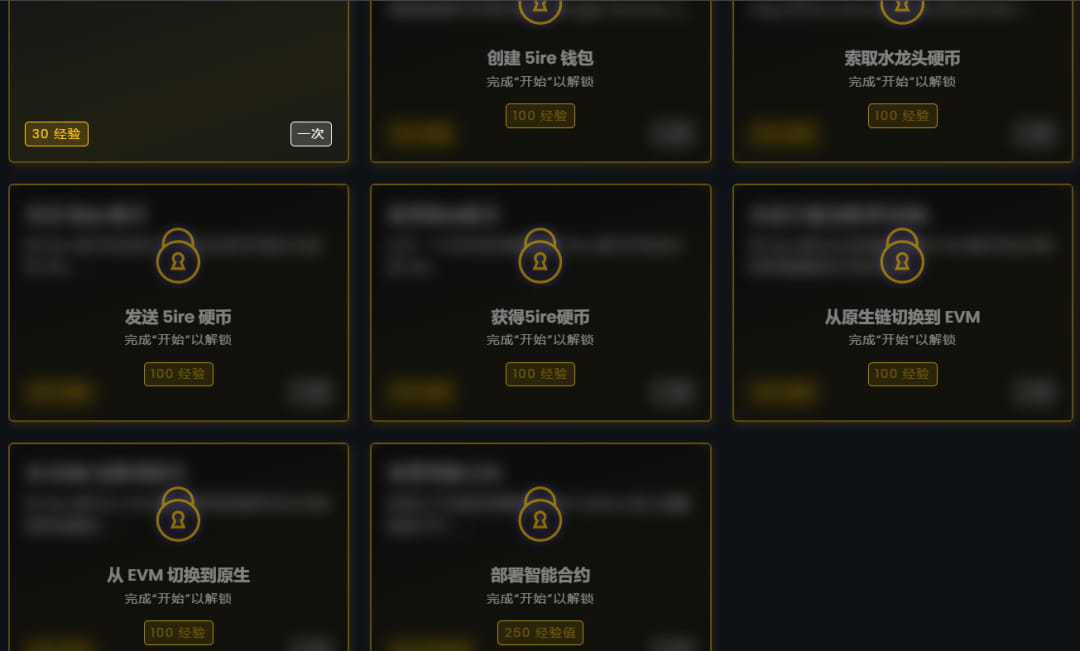
5ire’s roadmap shows that the mainnet is expected to be launched in the third quarter of 2023, and Tokens will be issued after the mainnet is launched. Testnet-Thunder Beta was released on February 13, and there is also an official Crew3 event. However, the MOD’s response to the airdrop in DC is that it has ended, and there is no reward for participating in the Crew 3 mission. If you have time, you can actually participate in it to increase experience points and use it for self-defense. If there is an airdrop, it will be an unexpected gain. If not, it can be considered as participating in a new project in advance.
3
zkSync @zksync
Developed by Matter Labs since 2019, zkSync began opening its mainnet to builders and open-sourcing its code base on February 16. zkSync is an Ethereum Layer2 public chain that uses ZK Rollup technology to improve transaction throughput, reduce costs, protect privacy, and provide interoperability. Thanks to ZK technology, zkSync is supposed to be able to handle over 20,000 TPS, making it one of the most efficient L2 EVM compliant. The implementation of Layer 3 technology and account abstraction will allow the project to achieve its ultimate goal of mass adoption. Since 2018, zkSync has completed 5 rounds of funding. Raising a total of $258 million from the largest investors, venture capital and investment firms, plus BitDAO’s $200 million in funding commitments, it is the most funded L2 project. This scale of investment ensures that ZkSync has sufficient funds to develop projects and establish infrastructure.
The token economics of zkSync have not yet been announced. According to the official DC, when zkSync is fully decentralized, we expect there will be a token used for collateral to protect the zkSync network and ensure the data availability of zkPorter.
zkSync can be said to be the most watched project on the L2 track, with currently 628,000 followers on Twitter. The official DC has Crew3 missions, but there is also no statement about airdrops. There are currently many tutorials on zkSync interaction, and you can follow the tutorials to interact. After the ecosystem is launched in the future, it will also require multiple interactions, locking, staking, etc., which may be conditions for future airdrops.
4
Arbitrum @arbitrum
Arbitrum is an Ethereum L2 expansion solution developed by OffchainLabs. Using Optimistic Rollup technology, it is possible to achieve fast confirmation and significantly reduce gas without sacrificing security. Arbitrum was launched at the end of August 2021, and now has 350+ ecological projects deployed. Arbitrum is fully EVM compatible. In the future, OffchainLabs will also add WASM support to the Arbitrum Nitro upgrade and launch a more economical and faster minimum L2 trust solution - AnyTrust Chain.
The first seed round in 2019 was $3.7 million, led by Pantera Capital. A Series A round in April 2021 raised $20 million, and a Series B round in August 2021 from Lightspeed Venture Partners and other investors including Polychain Capital, Ribbit Capital, Redpoint Ventures, Pantera Capital, Alameda Research, and Mark Cuban $100 million raised.
Recently, the Arbitrum ecology has begun to explode, with TVL reaching US$1.86 billion, a monthly increase of 64.73%, and becoming the public chain with the highest total locked value in the L2 track. Ranked fourth among all L1 and L2 public chains. High-quality projects on the chain have also begun to emerge, with GMX ranking first with an absolute advantage of 500 million total locked-up amounts.
Given the precedent of the OP’s airdrop and the speculation that Arbitrum is about to launch a token, expectations that Arbitrum may conduct an airdrop have skyrocketed. If you want to increase the probability of receiving an airdrop, you can transfer ETH to Arbitrum, participate in official activities, obtain roles in the official DC, interact more on the chain, participate in ecological governance, etc.
5
StarkNet @StarkWareLtd
StarkNet is also an Ethereum L2 expansion solution. Starknet is a permissionless, decentralized Validity-Rollup (commonly known as ZK-Rollup). It operates as an L2 network on Ethereum, enabling any dApp to achieve unlimited computational scale—without compromising Ethereum’s composability and security.
Starknet supports scaling while maintaining the security of L1 Ethereum by generating STARK proofs off-chain and then verifying these proofs on-chain. On Starknet, developers can easily deploy any business logic using Starknet contracts. Starknet delivers Ethereum-level composability—facilitating effortless development and innovation.
StarkWare, the team behind StarkNet, has completed six rounds of funding totaling $273 million. The most recent funding round, which reached $100 million, quadrupled its valuation to $8 billion, making it currently the highest-valued project in L2. Starknet has released the Alphaha version of the mainnet. The on-chain ecosystem has begun to take shape, and some ecosystems have also received institutional financing.
For example, wallets Argent X and Braavos, cross-chain bridges Orbiter Finance, Starkgate, ZKX, zkLend and other DeFi projects.
6
Liquid @Liquid_BTC
Liquid Network is a Bitcoin layer-2 solution that enables the rapid and confidential settlement and issuance of digital assets such as stablecoins, security tokens and other financial instruments on top of the Bitcoin time chain. Bitcoin on the Liquid Network is verifiably backed 1:1 by Bitcoin on the Bitcoin main chain. Once users transfer their Bitcoin to Liquid, they can take advantage of the network’s speed and confidentiality when making transactions. Users can also issue new assets on the network, such as stablecoins and security tokens.
Blockstream, the team behind Liquid Network, has a very strong background. It received US$210 million in Series B financing in August 2021 alone, with a valuation of US$3.2 billion. A portion of these funds will be used to expand Liquid Network.
Liquid Network has approximately 3,550 L-BTC in circulation as of March 1. There are also some projects built on Liquid, such as Hodl, which focuses on lending, DEX SideSwap, etc.
7
Fuel Labs
Fuel Labs is the foundation upon which Fuel is built, the fastest modular execution layer (MEL). Initially they deployed Fuel V1 as Ethereum's L2, focusing on stablecoin payments because stablecoins consumed the most gas at the time (interestingly, this was the first optimistic rollup on the Ethereum mainnet, predating Arbitrum and optimism). However, due to the limited usage scenarios of Fuel V1 and the inability to build Turing-complete smart contracts, the team quickly started working on Fuel V2 (the current modular execution layer).
Fuel has three core pillars:
1. Parallel transaction execution: Fuel provides the ability to execute parallel transactions by using the UTXO model, which allows Fuel to use more threads and CPU cores (this is extremely important when more and more processor threads are available today).
2. FuelVM: FuelVM is one of Fuel’s core innovations and is designed to prevent fraud. It absorbs the essence of Evm, Solana, Bitcoin and Cosmos, reducing the waste of traditional virtual machine architecture. On Fuel, any contract can mint native assets.
3. Sway and Forc (superior development experience): Sway is a language for building smart contracts and applications on Fuel. Unlike other languages that create a virtual machine first and then develop it, Sway is built together with FuelVM. Forc is a toolchain used in conjunction with Sway, and using Forc developers get everything they need to create Sway applications.
In September 2022, Fuel Labs announced $80 million in support led by Blockchain Capital and Stratos, with additional support from Alameda Research, CoinFund, Bain Capital Crypto, TRGC, Maven 11 Capital, Blockwall, Spartan, Dialectic, and ZMT.
Fuel is currently in the Beta-2 test network stage, and officials have made it clear that there are no rewards at this stage. However, you can also learn about the project interactively on the test network and pay attention to subsequent developments.