

Résumé
Choosing a cryptocurrency wallet depends on your needs. Security, custody and interaction with smart contracts are key points to consider. You may also want to access your wallet from different devices.
For browser extension wallets, MetaMask, MathWallet, and Binance Chain Wallet are good options. If you prefer a mobile experience, MetaMask, MathWallet, Trust Wallet, and SafePal are available for iOS and Android. They are decentralized and store your private key on your device. SafePal also offers a storage hardware wallet for anyone looking for the highest security. Apart from the hardware version, all the cryptocurrency wallets mentioned are free.
Introduction
As BNB Smart Chain (BSC) is relatively new, not all wallets currently support BEP-20 tokens. When you find a BSC compatible wallet, you have several types and options to choose from. It's important to consider custody, security and usability, and everyone has their own priorities. The five wallets below are all slightly different. So the best thing to do is to try them out and see what you like best.

What type of cryptocurrency wallet should I use?
Before choosing a specific wallet, think about what you need. There is not just one type of wallet. Most BSC wallets will be non-custodial, meaning you have control of your private key. BSC wallets are also typically online wallets that allow you to quickly connect to DApps or easily start staking. Each type of wallet has its advantages and disadvantages.
1. Custodial – The wallet provider holds your private key. This is the case for digital assets that you leave on an exchange's wallet. If you don't own your private key, you don't have full control of your wallet. You probably won't be able to connect to DApps either. For example, if you only want to spot trade BSC tokens and other cryptocurrencies, a custodial wallet is a reasonable choice. But stay careful. Although you can do this securely on Binance, you should not entrust your funds to just any wallet or exchange.
2. Non-custodial - You own your private keys. This is the safest option for most traders and investors, as long as they take care of their keys and mnemonics. The wallets we'll cover later are all non-custodial options that allow you to interact with DApps.
3. Online wallets: These cryptocurrency wallets are connected to the Internet and are generally not protected (unless you use a centralized exchange). Online wallets are convenient for making transactions, but they carry certain security risks. Your private key is kept in line with your public key and is generally accessible with a user-defined password. Like any password-protected service, you could be hacked or phished. To limit risks, you should use two-factor authentication (2FA) methods.
4. Offline wallet: You store your private key offline on specialized hardware. This option is the most secure way to hold your BSC tokens, but it is often the least convenient method for transacting and interacting with DApps.
You can easily use a combination of the above to combine their strengths. However, for everyday transactions and DeFi applications, a non-custodial wallet is a robust and flexible option. Let's take a look at some of the most popular options.
MetaMask
MetaMask is a browser extension and mobile cryptocurrency wallet supporting BSC and other blockchains including Ethereum, Polygon, and Binance Chain. MetaMask was developed in 2016 by ConsenSys, a renowned blockchain company. For many years, MetaMask only offered its extension, which is why it is still its most popular product.
The MetaMask browser extension allows you to transact and interact with smart contracts and DApps.

MetaMask also allows you to connect to different blockchain networks (you can add custom networks). It also allows you to sign transactions, manage your public and private keys, and offers an exchange service that offers the best prices from multiple decentralized exchanges (DEX). MetaMask is a popular choice among BSC users for its simplicity and ease of use.
Binance Chain Wallet
Binance Chain wallet is an official browser wallet from Binance. Currently, the wallet supports Binance Chain, BSC and Ethereum. Compared to the other wallets presented, the Binance Chain wallet is one of the most basic. If you mainly hold cryptocurrencies on the Binance exchange but occasionally use DApps, its Wallet Direct feature may be useful to you.

By connecting your Binance account to the Binance Chain wallet, you can transfer cryptoassets such as Binance Coin (BNB) or ETH between the two without having to manually enter addresses. If you're interested, check out How to Use the Binance Chain Wallet.
Trust Wallet
Trust Wallet is an open source mobile wallet app available for iOS and Android. It is also the official decentralized wallet of Binance and supports the main ecosystem blockchains Ethereum, BSC, Binance Chain, etc. You also have full access to your private keys through a mnemonic phrase. The app has additional built-in features, including purchasing cryptocurrencies with a credit card and a wallet for non-fungible tokens (NFT). The Android version also has a browser for DApps.
Trust Wallet has a utility and governance token, TWT. By owning the token, you can participate in decision-making, such as adding new blockchain support and integrating new tokens. You can also get discounts on DEX and cryptocurrency purchases with TWT.

If you decide to try Trust Wallet, use our Connect Trust Wallet to BNB Smart Chain (BSC) tutorial to get started.
MathWallet
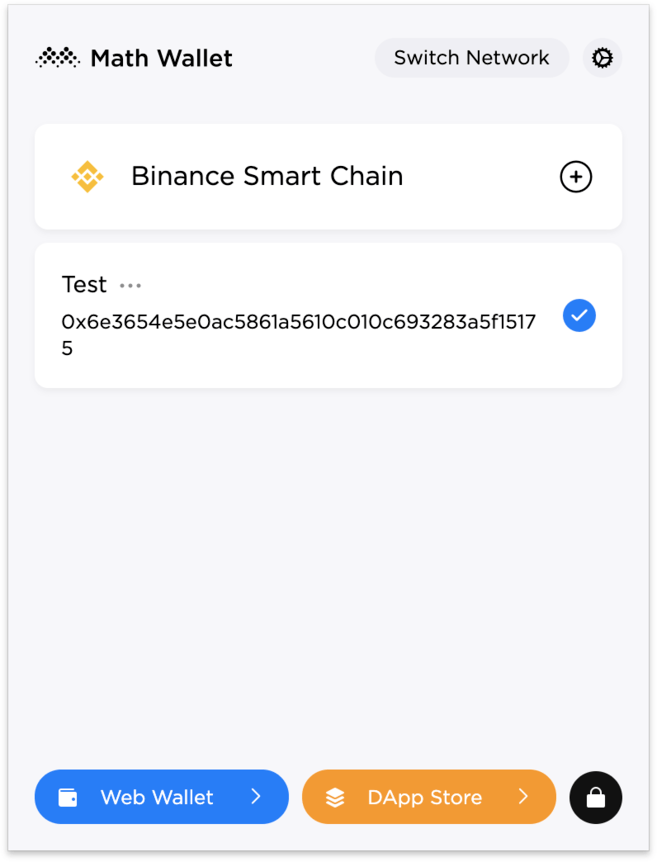
MathWallet offers a wallet in the form of a browser extension, a web wallet and a mobile application for iOS and Android devices. It supports almost 40 different blockchains and was one of the first to support BSC. Founded by MATH Global Foundation in 2017, the foundation raised $12 million in a Series B funding round led by Binance Labs.
If you want to use the same wallet on multiple devices, MathWallet offers a lot of flexibility. It's easy to switch between mobile devices, browser extension and web wallet, depending on your needs.
SafePal
SafePal is a hardware wallet provider that also has a decentralized mobile app. Its operation is similar to that of Trust Wallet with the addition of a decentralized finance (DeFi) section. This section contains links to already popular DeFi platforms and DApps, as well as a browser. If you want to access DApps without switching apps on your device, SafePal is a suitable option for iOS and Android. The project also has an SFP utility token used for discounts and bonuses.
Material wallet SafePal S1
The SafePal S1 hardware wallet is a more affordable option compared to a Trezor or Ledger Nano device. If you want to store your BSC tokens offline, they offer more security than any other wallet as long as you keep your device safe. However, to use DApps, you will need to transfer your tokens to your SafePal online wallet.
To conclude
Having a reliable and stable wallet should be a priority for all cryptocurrency holders. The five wallets mentioned here are deemed trustworthy in the blockchain community and have millions of BSC users worldwide. The selection is much smaller when it comes to BSC, but the key points are the same: DApp interaction, curation, usability and reliability. It also depends on your user profile.
For an active trader, a non-custodial hot wallet will be the fastest way to trade while remaining secure. DeFi farmers will appreciate the usefulness of a wallet as a browser extension for greater control over connecting to DApps via computer. If you're just HODLing, a simple mobile experience might be right for you.
The BSC wallets we recommended are free, except for the hardware wallet. You can make your choice based on the level of security you need and ensuring that your wallet operates reliably. Most importantly, if you have your private keys, keep them safe.