

Résumé
The metaverse is a concept of a persistent, online 3D universe combining several different virtual spaces. You can think of it as a future iteration of the Internet. The metaverse will allow users to work, meet, play and socialize together in these 3D spaces.
The metaverse does not completely exist, but some platforms contain elements similar to the metaverse. Video games currently offer the closest experience to the metaverse. Developers have pushed the boundaries of what a game is by hosting in-game events and creating virtual economies.
Although not required, cryptocurrencies can be an asset to a metaverse. They help create a digital economy with different types of utility tokens and virtual collectibles (NFTs). The metaverse would also benefit from the use of cryptocurrency wallets, such as Trust Wallet and MetaMask. Additionally, blockchain technology can provide transparent and reliable governance systems.
Blockchain and metaverse applications already exist and allow people to have decent income. Axie Infinity is a money-making game that many users play to increase their income. SecondLive and Decentraland are other examples of successful blending between the world of blockchain and virtual reality applications.
When we look to the future, we see that the tech giants are really trying to lead the way. However, the decentralized aspects of the blockchain industry also allow smaller players to participate in the development of metaverses.
Introduction
The connections between the financial, virtual and physical worlds are increasingly important. The devices we use to manage our lives give us access to almost everything we want at the touch of a button. The crypto ecosystem has not escaped this either. NFTs, blockchain games, and crypto payments are no longer limited to crypto geeks. They are now readily available as part of a developing metaverse.

What is the definition of a metaverse?
The Metaverse is a concept of a 3D online virtual space that connects users in all aspects of their lives. It would link multiple platforms, similar to the Internet and containing different websites accessible through a single browser.
The concept was developed in the science fiction novel Snow Crash by Neal Stephenson. However, while the idea of a metaverse was once fiction, today it appears it could become a reality.
The metaverse will be animated by augmented reality, with each user controlling a character or avatar. For example, you can host a mixed reality meeting with an Oculus VR headset in your virtual office, finish your work and relax in a blockchain game, then manage your cryptocurrency portfolio and finances, all inside the metaverse .
You can already see some aspects of the metaverses in existing virtual video game worlds. Games like Second Life and Fortnite or workplace socialization tools like Gather.town bring together multiple elements of our lives into online worlds. Although these apps are not the metaverse, they are somewhat similar. The metaverse does not exist yet.
In addition to supporting gaming or social media, the metaverse will combine economies, digital identity, decentralized governance and other applications. Even today, the creation and possession by users of valuable objects and currencies contributes to the development of a single and united metaverse. All of these characteristics give blockchain the potential to power this future technology.
Why are video games linked to the metaverse?
Due to the emphasis on 3D virtual reality, video games currently offer the closest experience to the metaverse. But it's not just because they're 3D. Video games now offer services and features that extend to other aspects of our lives. The Roblox video game even hosts virtual events like concerts and meet-ups. Players no longer just play the game, they also use it for other activities and part of their lives in “cyberspace”. For example, in the multiplayer game Fortnite, 12.3 million players participated in Travis Scott's virtual music tour in the game.
How does cryptocurrency fit into the metaverse?
The game provides the 3D aspect of the metaverse but does not cover everything needed in a virtual world that can cover all aspects of life. Cryptocurrency can offer the other key elements required, such as digital proof of ownership, transfer of value, governance and accessibility. What does that mean ?
If, in the future, we work, socialize, and even purchase virtual items in the metaverse, we need a secure way to prove ownership. We also need to feel safe moving these items and money into the metaverse. Finally, we will also want to play a role in the decision-making that takes place in the Metaverse if it will be a large part of our lives.
Some video games already contain some basic solutions, but many developers see crypto and blockchain as a better option. Blockchain allows subjects to be processed in a decentralized and transparent manner, while video game development is more centralized.
Blockchain developers also have an influence on the world of video games. Gamification is common in the areas of decentralized finance (DeFi) and gameFi. It looks like there will be enough similarities in the future that the two worlds will be even more integrated. The main aspects of blockchain suitable for the metaverse are:
1. Proof of Digital Ownership: By holding a wallet with access to your private keys, you can instantly prove ownership of the activity or an asset on the blockchain. For example, you can view an exact transcript of your transactions on the blockchain while at work to prove what you are doing. A wallet is one of the most secure and robust methods of establishing digital identity and proof of ownership.
2. Digital Collection: Just as we can establish who owns something, we can also show that an item is original and unique. For a metaverse that seeks to integrate more real-world activities, this is important. Through NFTs, we can create items that are 100% unique and can never be accurately reproduced or counterfeited. A blockchain can also represent ownership of physical objects.
3. Value Transfer: A metaverse will need a way to transfer value securely and confidently. In-game currencies in multiplayer games are less secure than cryptocurrencies on a blockchain. If users spend a lot of time in the metaverse and even earn money there, they will need a reliable currency.
4. Governance: The ability to control the rules of your interaction with the metaverse should also be important to users. In real life, we can have voting rights in businesses and elect leaders and governments. The metaverse will also need ways to implement fair governance, and blockchain is already a proven way to do this.
5. Accessibility: creating a wallet is open to everyone worldwide, on public blockchains. Unlike a bank account, you don't need to deposit money or provide any information. This makes it one of the most accessible ways to manage finances and build a digital identity online.
6. Interoperability: Blockchain technology continually improves compatibility between different platforms. Projects such as Polkadot (DOT) and Avalanche (AVAX) make it possible to create personalized blockchains that can interact with each other. A single metaverse will need to connect multiple projects, and blockchain technology already has solutions for this.
What is a job in the Metaverse?
As we mentioned, the metaverse will combine all aspects of life in one place. While many people are already working from home, in the Metaverse you will be able to enter a 3D office and interact with your colleagues' avatars. Your job can also be associated with the metaverse and provide you with income directly usable there. In fact, these types of jobs already exist in a similar form.
GameFi and earning gaming models now provide stable revenue streams for people around the world. These online jobs are great candidates for implementing metaverses in the future because they show that people are willing to spend their time living and earning a living in virtual worlds. Revenue-generating games like Axie Infinity and Gods Unchained don't even have 3D worlds or avatars. However, they could be part of the metaverse to make money without leaving the online world.
Metaverse Examples
While we don't yet have a single, connected metaverse, we do have many platforms and projects similar to the metaverse. Typically, they also incorporate NFTs and other blockchain elements. Let's take an example :
SecondLive
SecondLive is a 3D virtual environment in which users control avatars for socializing, learning and business. The project also features an NFT marketplace for trading collectibles. In September 2020, SecondLive hosted Binance Smart Chain's Harvest Festival on its first anniversary. The virtual exhibition featured different projects in the BSC ecosystem for users to explore or use.

Axie Infinity
Axie Infinity is a game that allows players in developing countries to generate a regular income. By purchasing or receiving three creatures known as Axies, a player can begin farming the Smooth Love Potion (SLP) token. When sold in the market, it is possible to earn $200 to $1000 (USD) depending on one's level of play and the market price.
While Axie Infinity doesn't provide a singular 3D character or avatar, it does give users the ability to perform a metaverse-like job. You may have already heard the famous story of Filipinos using it as an alternative to employment or to improve their standard of living.

Decentralized
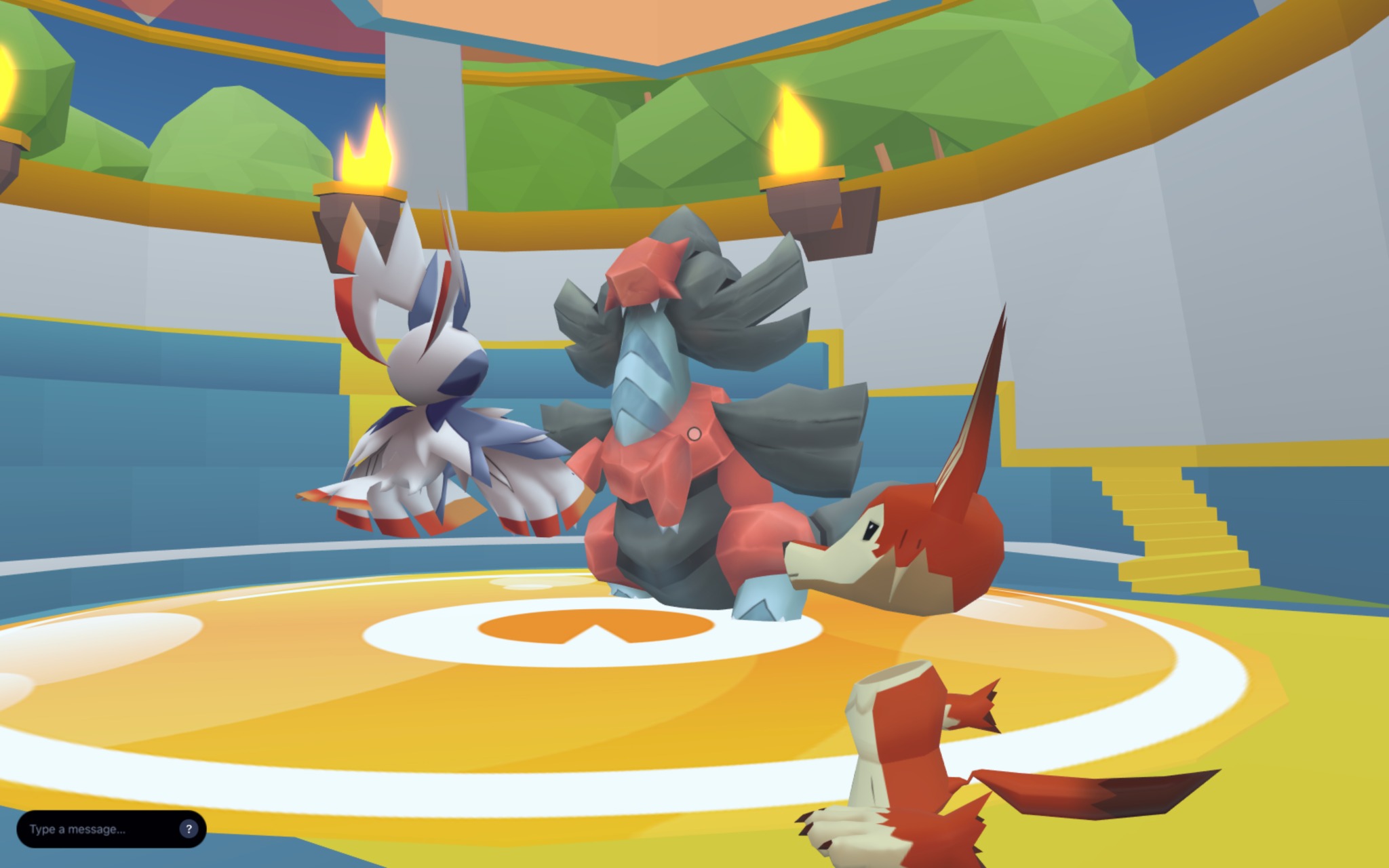
Decentraland is an online digital world that combines social elements with cryptocurrencies, NFTs and virtual real estate. Additionally, players also play an active role in the governance of the platform. Like other blockchain games, NFTs are used to represent collectible cosmetic items. They are also used for LANDs, 16 x 16 meter plots of land that users can purchase in-game with the MANA cryptocurrency. The combination of all these elements creates a complex crypto-economy.
What is the future of the metaverse?
Facebook is one of the loudest voices for creating a unified metaverse. This is particularly interesting for a metaverse that would be powered by a cryptocurrency, here the Diem project, Facebook's stablecoin. Mark Zuckerberg has explicitly mentioned his intention to use a metaverse project to improve remote work and improve financial opportunities for people in developing countries. The fact that Facebook owns social media, communications and cryptocurrency platforms gives it a good start in combining all these worlds into one. Other major tech companies are also targeting the creation of a metaverse, such as Microsoft, Apple and Google.
When it comes to a crypto-powered metaverse, further integration between NFT marketplaces and 3D virtual universes seems to be the next step. NFT holders can already sell their goods from multiple sources on marketplaces like OpenSea and BakerySwap, but there is no popular 3D platform for this yet. On a larger scale, blockchain developers could build popular metaverse-style applications with more organic users than a major tech giant.

To conclude
Although we are still far from a single, unified metaverse, we can already see developments that could lead to its creation. This appears to be another use case of blockchain technology and cryptocurrencies in science fiction. It is not certain that we will ever reach the metaverse stage. But in the meantime, we can already experience metaverse-like projects and continue to further integrate blockchain into our daily lives.