

Résumé
Hammer candlestick patterns are one of the most used patterns in technical analysis. This is the case not only in cryptos, but also in stocks, indices, bonds and forex trading. Hammer patterns can help price movement traders spot potential reversals at the end of uptrends or downtrends. Depending on the context and time frame, these candlestick patterns may suggest a bullish reversal at the end of a downtrend or a bearish reversal after an uptrend. Combined with other technical indicators, hammer patterns can give traders good entry points for long and short positions.
Bullish hammer patterns include the hammer and inverted hammer, which appear after a downtrend. Bearish variations of hammer patterns include the hanging man and the shooting star, which occur after an uptrend.
Introduction
The hammer pattern is a pattern that works well with various financial markets. This is one of the most popular candlestick patterns that traders use to assess the likelihood of an outcome when studying price movement.
Combined with other trading methods such as fundamental analysis and other market analysis tools, the hammer candlestick pattern can provide insights into trading opportunities. This article explains what hammer figures are and how to interpret them.

How do candlesticks work?
In a candlestick chart, each candle relates to a period, depending on the time horizon you choose. If you look at a daily chart, each candle represents one trading day. If you look at a 4 hour chart, each candle represents 4 hours of trading.
Each candlestick has an opening price and a closing price which forms the body of the candle. They also have a wick (or shadow), which indicates the highest and lowest prices of that period.
If you are new to candlestick charts, we recommend reading our Beginner's Guide to Candlestick Charts first.
What is a hammer candlestick pattern?
A hammer is formed when a candle shows a small body with a long lower wick. The wick (or shade) should be at least twice the size of the candle body. The long lower shadow indicates that sellers pushed the price down before buyers pushed it back above the opening price.
Below you can see the opening price (1), the closing price (2) and the highs and lows that form the wick or shadow (3).

Bullish Hammers
Hammer candlestick pattern
A bull candle hammer forms when the closing price is higher than the opening price, suggesting that buyers had control of the market before this trading period ended.

Inverted Hammer Candlestick Pattern
An inverted hammer forms when the opening price is lower than the closing price. The long wick above the body suggests that there was buying pressure trying to push the price higher, but it was ultimately moved lower before the candle closed. Although not as bullish as the classic hammer candle, the inverted hammer is also a bullish reversal pattern that appears after a downward reversal.

Bearish hammers
Figure of the hanged man
The bearish hammer pattern is known as the hanging man. It is formed when the opening price is higher than the closing price, resulting in a red candle. The wick on a bear hammer indicates that the market has experienced selling pressure, suggesting a potential reversal to the downside.
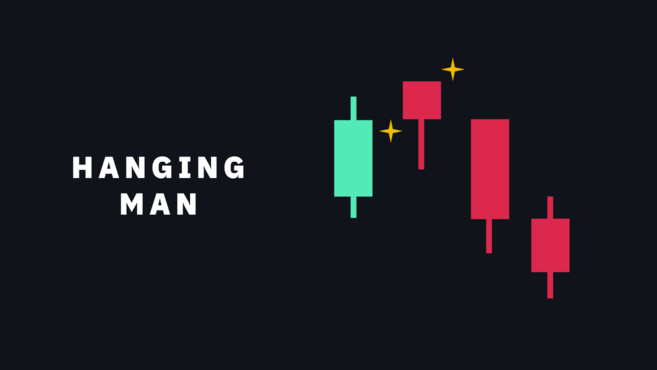
Figure of the shooting star
The bearish inverted hammer is called a shooting star pattern. It looks like a classic inverted hammer, but it indicates a potential bearish reversal rather than a bullish one. In other words, shooting star candlestick patterns are like inverted hammers occurring after an uptrend. They form when the opening price is higher than the closing price, and the wick suggests that the market's upward movement may be coming to an end.

How to use hammer patterns to spot possible trend reversals
Bullish hammer patterns appear during downtrends and indicate a potential price reversal, marking the bottom of a downtrend. In the example below we have a bullish hammer candlestick (image from TradingView).

A bearish hammer pattern can be a hanging man or a shooting star. They appear after uptrends and indicate a potential downward reversal. In the example below we have a shooting star (image provided by TradingView).
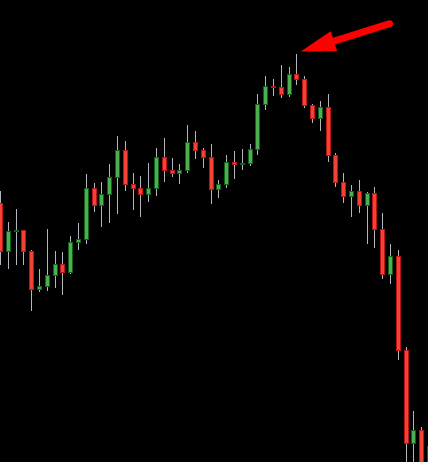
So, to use hammer patterns in trading, you need to consider their position in relation to the previous and following candlesticks. The reversal pattern will either be invalidated or confirmed depending on the context. Let's take a look at each type of hammer.
The Strengths and Weaknesses of Hammer Candlestick Patterns
Each candlestick pattern has its advantages and disadvantages. After all, no technical analysis tool or indicator can guarantee 100% gains in all financial markets. Hammer candlestick chart patterns tend to work best when combined with other trading strategies, such as moving averages, trendlines, RSI, MACD, and Fibonacci.
Points forts
The hammer pattern can be used to spot trend reversals in any financial market.
Traders can use hammer patterns under multiple time horizons, making them useful for both swing trading and day trading.
Weak points
Hammer candlestick patterns depend on the context. There is no guarantee that trend reversals will occur.
Hammer candlestick patterns are not very reliable on their own. Traders should always combine them with other strategies and tools to increase their predictive quality.
Hammer and Doji candlestick: what is the difference?
Dojis are like hammers without a body. A Doji candle opens and closes at the same price. While a hammer candlestick indicates a potential price reversal, a Doji generally suggests market consolidation, continuation, or indecision. Doji candles are often neutral patterns, but they can precede uptrends or downtrends in certain situations.
The Dragonfly Doji looks like a hammer or a hanged man without the body.

The Tombstone Doji is similar to an inverted hammer or shooting star.

Yet hammers and Dojis don't provide much information when used alone. You should always consider context, such as market trend, adjacent candlesticks, trading volume and other indicators.

To conclude
Although the hammer pattern is a useful tool that helps traders spot potential trend reversals, these patterns alone do not necessarily constitute a buy or sell signal. Like other trading strategies, hammers are most useful when combined with other analysis tools and technical indicators.
You must also employ good risk management, by evaluating the return ratio of your trades. You should also use stop-loss orders to avoid large losses during high volatility.

