

Disclaimer: This article is for educational purposes only. Binance has no affiliation with or endorsement of these projects. The information provided through Binance does not constitute investment or trading advice or recommendation. Binance is not responsible for your investment decisions. Please seek professional advice before taking financial risks.
Key aspects
Meme coins are meme-inspired cryptocurrencies that tend to be more volatile than major cryptocurrencies such as bitcoin (BTC) and ether (ETH).
Meme coins typically gain popularity due to their low prices, community-driven nature, active marketing via social media, and endorsements from high-profile individuals.
Meme coins carry significant risks due to their often inflationary tokenomics, high volatility, and high potential for rug pulls.
Introduction
Meme coins are a significant part of the cryptocurrency market and are known for their fast and unpredictable price movements. They are often inspired by internet memes and jokes, gaining popularity through social media and online communities. In this article, we will explore what meme coins are, why they have gained so much popularity, and the potential risks associated with them.
What are meme coins?
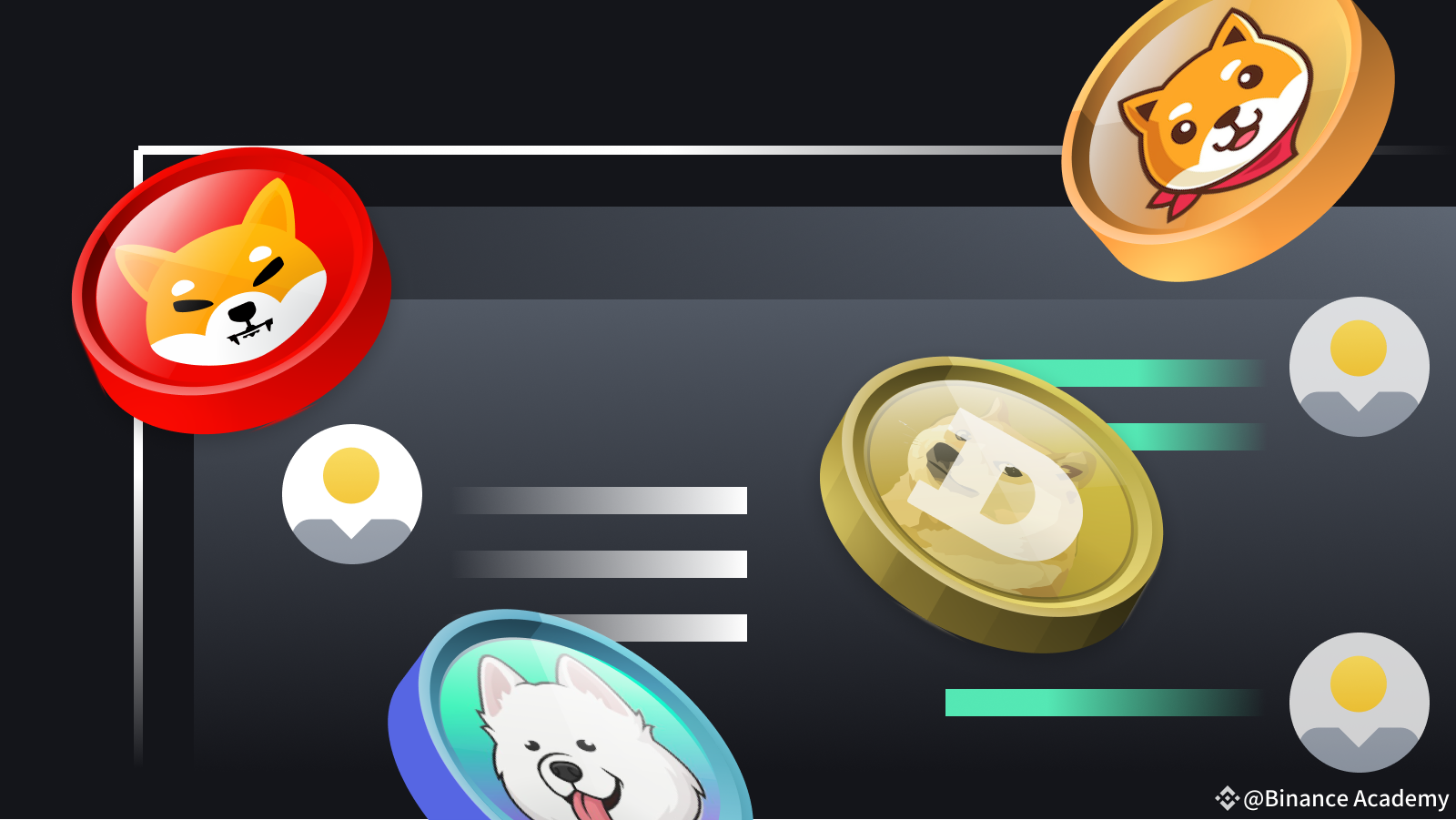
Meme coins are cryptocurrencies inspired by memes or jokes from the internet and social media. The first meme coin to be created was Dogecoin (DOGE). It was launched in 2013 as a parody inspired by the popular Doge meme of a Japanese Shiba Inu dog named Kabosu.
Meme coins tend to be very volatile. They are primarily community-driven and can become very popular overnight as a result of online community support and FOMO. Still, their price can also plummet unexpectedly if traders turn their attention to the next meme coin.
Another typical feature of meme coins is their huge or unlimited supply. For example, Shiba Inu (SHIB) has a total supply of a quadrillion tokens, while DOGE has no maximum supply. Since meme tokens generally do not have a coin burning mechanism, their huge supply explains their relatively low prices.
Why are meme coins so popular?
During the COVID-19 pandemic, the cryptocurrency market boomed as retail investors looked for ways to hedge against inflation. Amid this rush, meme coins flourished, increasing in both market capitalization and variety. The phenomenon gained momentum after the “meme stock” saga involving GameStop (GME) and AMC Entertainment (AMC), where the Reddit community significantly boosted the prices of these assets.
Inspired by this, people started joking about the possibility of boosting the price of Dogecoin (DOGE) to create a crypto equivalent of GME. This trend, coupled with endorsements from high-profile figures like Tesla CEO Elon Musk, led to a significant rally in the price of DOGE.
The excitement around meme coins was further fueled when traders began exploring other meme coins like Shiba Inu (SHIB), hoping to replicate DOGE’s success. Retail investors were drawn to meme coins because they are typically very affordable, often costing just a few cents or even fractions of a cent. This allows traders to hold thousands or even millions of tokens, which feels different from holding fractions of major cryptocurrencies like ETH or BTC.
The meme coin frenzy is also driven by community and market sentiments. Meme coins are inspired by popular internet memes and are meant to be entertaining; they often serve as “inside jokes” for their communities. Buying meme coins can be seen as a way to show support for these communities.
The institutionalization of meme coins significantly boosted their popularity in 2024. A key development was the launch of a meme coin index by VanEck, which tracks the six largest meme coins by market cap (DOGE, SHIB, PEPE, WIF, FLOKI, and BONK as of May 2024).
VanEck’s Meme Coin Index has increased the visibility of meme coins and is serving as a benchmark in the asset management industry, encouraging funds to try to outperform it. Additionally, the inclusion of meme coin tickers on channels like Bloomberg helped spread information about meme coins and attract more trading activity.
What do meme coins mean for the crypto community?
Many meme coins, such as Dogecoin (DOGE), were launched with a fair distribution model, meaning they were available to the public without pre-mining or significant early allocations to the project founders. This aligns with the views of many cryptocurrency enthusiasts who value open access and community-driven growth. The decentralized nature of these launches fosters a sense of ownership and participation among the community.
However, not all projects follow the same principles. Some meme coins are pre-mined, with a significant portion of the tokens allocated to creators or early investors before public distribution. This often raises concerns about transparency and fairness, as it could allow a few individuals or groups to control a substantial portion of the coin’s supply. For example, coins like Shiba Inu (SHIB) have had mixed reactions due to the allocation strategies used by their creators.
Decentralized meme coins tend to be viewed more favorably by the community as they embody the principles of decentralization and community participation that are central to the crypto movement. In contrast, centralized meme coins often face criticism due to potential risks of manipulation and unfair practices.
Potential risks of investing in meme coins
Tokenomics
First, the tokenomics of meme coins can be worrying. For example, Bitcoin has its blockchain, a well-written whitepaper, an established ecosystem, and is deflationary.
In contrast, most meme coins are inflationary and have no maximum supply. Their ecosystem, use cases, and fundamentals are often defined by the collective banter of the community.
Volatility
Meme coins are largely community-driven and are generally more volatile compared to cryptocurrencies with larger market caps. Their prices can randomly spike due to celebrity endorsements or FOMO, or unexpectedly plummet when the community decides to move on to the next meme coin.
Rug pull
Rug pulls are a significant risk in the meme coin market; with this scam, developers abandon the project and disappear with investors’ funds. Unfortunately, these types of scams are very common and have occurred many times over the years.
Examples of meme coin rug pulls
Let's look at the following examples:
SQUID – a 2021 meme coin inspired by the popular Netflix series, suddenly gained traction due to the popularity of the series. However, the development team rug-pulled the project, resulting in users losing their funds.
BALD: In July 2023, the meme coin BALD experienced a rug pull when the developer withdrew all liquidity from the coin on Coinbase’s Layer 2 Base network, causing the token’s value to plummet to zero.
MetaSwap: In early 2024, the MetaSwap token experienced a rug pull, resulting in substantial losses for investors. Developers suddenly withdrew liquidity, leaving investors holding worthless tokens.
URF: In March 2024, the team behind the URF meme coin disappeared after a $450,000 presale, leaving investors with worthless tokens. Promoted by boxer and social media influencer Bryce Hall, the team disappeared within 24 hours of launch.
How to reduce risks when investing in meme coins?
Investing in meme coins can be highly speculative and risky due to their volatility and community-driven nature. However, there are strategies you can use to reduce these risks:
Do Your Own Research (DYOR): Before investing in meme coins, it is important to research the project. Whenever possible, check out the team behind the project, its goals, whitepaper, roadmap, and general community sentiment.
Understand the tokenomics: Pay close attention to the supply dynamics of the meme coin. Coins with unlimited or extremely high supplies may face inflationary pressures, which can lead to devaluation. Understanding the distribution of tokens and any mechanisms like burning or staking can also provide insight into the long-term viability of the coin.
Diversify your portfolio: Avoid putting all your funds into a single meme coin. Diversification can help you spread risk across multiple assets. Consider balancing your investment portfolio with more established cryptocurrencies, such as bitcoin (BTC), ether (ETH), SOL, and BNB.
Stay up to date: Meme coins are heavily influenced by social media trends and news. Stay alert to the latest news and updates related to your investments. You can use tools like Google Alerts, join relevant social media groups, and follow influential figures in the cryptocurrency space.
Set stop-loss orders: Consider using stop-loss orders to automatically sell your meme coins in case the price drops below a certain level. Stop-loss orders can protect you from significant losses.
Avoid impulsive decisions: Only invest what you can afford to lose and avoid impulsive decisions driven by emotions like FOMO (fear of missing out). The hype surrounding meme coins can lead to impulsive buying decisions. Take a step back and evaluate whether the investment makes sense based on your research, rather than being carried away by emotion.
How to avoid meme coin rug pulls?
Check liquidity: A healthy liquidity pool is essential for the stability of any cryptocurrency. Make sure the meme coin you are interested in has locked liquidity, meaning developers cannot easily withdraw funds. Services like Unicrypt can be used to verify the status of the liquidity lock.
Examine the smart contract: If you have the technical know-how, review the project’s smart contract. Look for red flags, such as functions that allow developers to mint unlimited tokens or transfer large amounts of funds. You can also look for third-party audits from reputable security firms like CertiK or Hacken.
Research the team: An anonymous team can be a red flag. While anonymity is common in the crypto world, it can also be used by scammers to disappear without a trace. Look for projects with transparent and credible teams that have a verifiable track record in the industry.
Evaluate community engagement: A strong and active community can be a sign of a legitimate project. Interact with the community on platforms like Discord, Telegram, or Twitter to gauge their sentiment and activity. Be wary of projects with fake followers or an unusually high number of people supporting the project because they are paid to do so.
Check the project roadmap: Legitimate projects usually have a detailed roadmap outlining their development goals and timelines. Compare the roadmap to the project's actual progress to see if they're delivering on their promises. Projects that make unrealistic promises or frequently delay milestones may be suspicious.
Look for red flags: Be wary of projects that rely heavily on advertising and celebrity endorsements without offering any substantial information about their technology or use case. High-pressure tactics, such as limited-time offers or guaranteed profits, are often signs of a scam.
By following these guidelines and maintaining a healthy level of skepticism, you can better navigate the meme coin landscape and avoid potential scams like rug pulls. Always remember that investing in cryptocurrencies, especially meme coins, comes with significant risk, and it’s essential that you only invest money you can afford to lose.
Overview of popular meme coins
As of June 2024, the total market capitalization of meme coins is approximately $63 billion. The top 6 meme coins are DOGE, SHIB, PEPE, WIF, BONK, and FLOKI, according to data from CoinMarketCap.
Dogecoin (DOGE)
Dogecoin (DOGE) was created in 2013 by software engineers Billy Markus and Jackson Palmer. Inspired by the Shiba Inu meme, it was intended to be a joke cryptocurrency to attract the attention of the general public. Being a fork of Litecoin (LTC), DOGE adopts the same Proof of Work (PoW) mechanism and lacks a maximum supply.
If you want a more in-depth description of DOGE, check out What is Dogecoin?
Shiba Inu (SHIB)
Shiba Inu (SHIB) is DOGE's rival and is often referred to as the "Dogecoin killer." SHIB's name comes from a dog breed of Japanese origin. It was created in August 2020 by an anonymous developer named Ryoshi. The main difference between DOGE and SHIB is that the latter has a limited supply of 1 trillion tokens, of which 50% were burned and donated to charity. SHIB's ecosystem also includes a decentralized exchange, an NFT art incubator, as well as various NFTs and an NFT game.
To learn more about SHIB and its ecosystem, see What is Shiba Inu (SHIB)?
PEPPER (PEPPER)
PEPE (PEPE) is a meme coin inspired by the popular internet meme character Pepe the Frog. Launched in April 2023, PEPE has quickly gained popularity due to its humorous and nostalgic appeal to internet culture enthusiasts. PEPE has a circulating supply of 420 billion tokens.
Dogwifhat (WIF)
Dogwifhat (WIF) is a meme coin that has garnered significant attention since its launch in late 2023. Unlike some meme coins that pivot towards utility, Dogwifhat remains purely a meme-focused token.
FLOKI (FLOKI)
FLOKI (FLOKI) is a meme coin inspired by Elon Musk’s Shiba Inu dog. Launched with the vision of merging memes with real-world utility, FLOKI has grown into a project with an ecosystem that includes NFT marketplaces, NFT collections, and staking.
Bonk (BONK)
BONK (BONK) is a dog-themed meme coin on the Solana blockchain. Launched in 2022, BONK gained attention after 50% of its total supply was airdropped to the Solana community.
Moneda Milady Meme (LADYS)
The Milady Meme Coin (LADYS) was launched in May 2023. Inspired by the Milady NFT collection, LADYS aims to combine meme coins with the growing popularity of NFTs. The total supply of LADYS is 888 billion tokens.
How to buy meme coins
You can buy the most popular meme coins, such as DOGE, SHIB, PEPE, and WIF, on cryptocurrency exchanges like Binance. For less famous meme coins, you can turn to decentralized exchanges. Let’s take DOGE as an example.
1. Log in to your Binance account. Next, go to [Trade] on the top bar to select the Spot market page.
2. In the search bar that appears on the screen, type "DOGE" to open a list of available trading pairs. As an example, we will use DOGE/BUSD. Click on "DOGE/FDUSD" to open the trading page.
3. Scroll down to the [Spot] box and select the order type. In this example, we'll use a market order. Enter the amount of DOGE you want to buy and click [Buy DOGE] to confirm the order. When the order is complete, you'll see the DOGE you purchased appear in your Binance Spot wallet.
Conclusions
With new meme coins entering the market every day and traders hoping to replicate the gains generated by DOGE and SHIB, it is important to do your own research (DYOR) before committing to any of these meme coins. Keep in mind that meme coins are very volatile compared to other digital currencies. Cryptocurrency trading and investing involves a high level of risk. Meme coins are largely community-driven and can go down unexpectedly, so you should never invest more than you can afford to lose.
Further reading
What is Dogecoin?
What is Shiba Inu (SHIB)?
What is a coin burn?
Disclaimer: This content is provided "as is" for general information and educational purposes only, without representation or warranty of any kind. It should not be construed as financial, legal, or other professional advice or as a recommendation to purchase any specific products or services. You should seek individual advice from qualified professional advisors. As this article is a product of third-party contributions, please note that the views expressed are those of the third-party contributor and do not necessarily reflect those of Binance Academy. For more information, please read our full disclaimer here. Prices of digital assets can be volatile. The value of an investment can go down as well as up, and you may not get back the amount invested. You alone are responsible for your investment decisions. Binance Academy is not liable for any loss you may incur. This material should not be construed as financial, legal, or other professional advice. For more information, please see our Terms of Use and Risk Warning.