

What is a DAO?
DAO stands for Decentralized Autonomous Organization, and simply put, a DAO is an organization composed of smart contracts where members (usually token holders) collectively decide how an organization or product develops. Example scenario:
1. 10,000 token holders each deposit cryptocurrency into a smart contract and vote on what to buy with their total.
2. 1 million token holders control a decentralized version of Twitter, where token holders propose and vote on feature updates.
DAOs can enforce community-driven decisions about when and how to update the code that shapes an organization or product.
What is SNS?
SNS stands for Service Nervous System, and SNS is a powerful form of DAO that allows the community to manage smart contracts and decentralized applications (dapps) running on Internet Computers (ICP) completely on-chain. Key considerations for SNS:
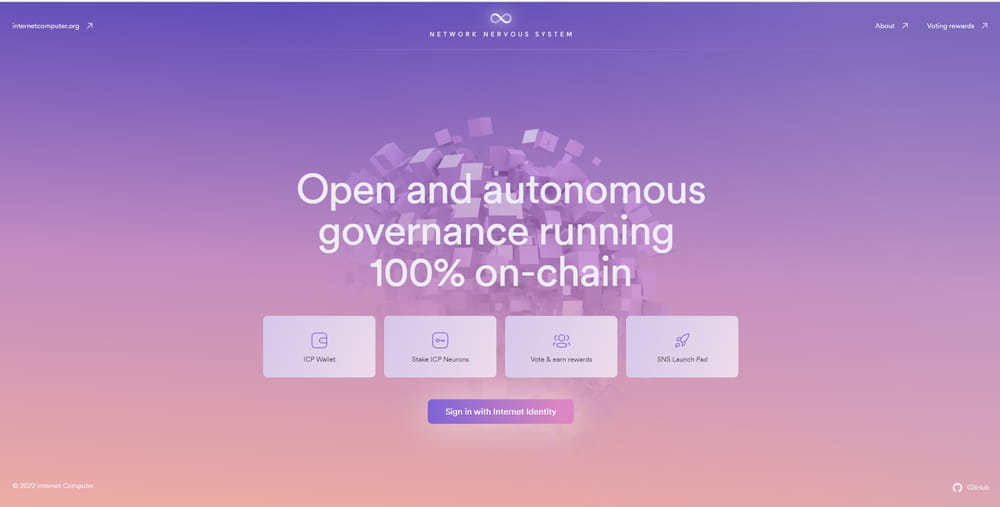
1. The design of SNS is similar to the design of the Network Nervous System (NNS), which is an on-chain DAO that manages the entire ICP.
2. Dapps controlled by SNS DAO are managed by SNS token holders who submit on-chain proposals and vote on them. No one developer or group of people controls the dapp, and the dapp is controlled by token voting.
3. There can be many SNS on ICP, and any developer can give control of their dapp to SNS DAO, which will give control to DAO token holders.
How unique is SNS DAO in Web3?
A DAO is an evolving form of organization used to achieve goals. For example, in the ETH ecosystem, Uniswap and MakerDAO are popular DAOs with billions of dollars locked in their respective smart contracts.
However, ICP is unique in that it can host a fully on-chain dapp (frontend, backend application logic and data), so SNS DAOs are unique in that they have full control (through voting) of every aspect of the dapp, Because everything is on chain.
Having a fully on-chain DAO is important because it enables all decisions to be executed on the blockchain. This is in contrast to existing DAOs on other blockchains, where voting occurs on-chain but execution of the results is typically performed off-chain by developers. This helps achieve true decentralization.
Therefore, SNS DAO serves as a tool to provide fully decentralized online services owned and managed by its community.
What are the advantages of SNS DAO?
SNS DAO promotes healthy communication between developers, entrepreneurs, end-users and VCs. Some of the advantages of handing control of dapps to a DAO include:
1. Community participation: As co-owners of the product, users become core contributors and developers provide value propositions.
2. Accelerate user adoption: As co-owners, users become the product’s biggest advocates.
3. Funding: Projects are funded through community-driven decentralized sales.
What is SNS-1?
SNS-1 is the first SNS DAO launched by DFINITY on the main network to test SNS decentralized sales with ICP community participation. The SNS-1 test exposed areas for improvement that are currently being addressed, and the SNS-1 dapp is now controlled by a community of token holders who will collectively determine its future.
Because SNS-1 was intended as a test, it was unusual among SNSs in that it was launched as a blank canvas without a product or development team. Future SNS will likely originate from established ICP dapps, with SNS-1 tokens tradable on ICDex.
Are there any other existing SNS DAOs?
The ICP community has shown great interest and enthusiasm for the launch of SNS technology. OpenChat has publicly announced that they plan to transform their dapp into an SNS DAO in the first quarter of 2023. Dapps such as distrikt, Catalyze, Canistore and Nuance are considering creating own SNS.
How to participate in SNS DAO
What should I do after becoming an SNS DAO member?
The most important thing you can do as an SNS DAO member is participate in governance. On-chain governance is what differentiates DAOs from traditional web applications, as members play a key role in the success of the DAO.
DAO members can contribute in a variety of ways, from pushing code to designing a logo or UI to simply voting on SNS proposals that impact how dapps develop.
In what ways can you participate in SNS DAO?
Members can participate in the SNS DAO in a variety of ways, both on-chain and off-chain, and creating proposals requires coding skills. Some examples include:
1. Vote on SNS proposals: You can vote on different types of proposals manually, or you can follow other voting neurons.
2. Create an upgrade proposal: Submit an upgrade proposal to update the code of the dapp controlled by SNS DAO, which allows anyone to contribute code to SNS DAO.
3. Upgrade the asset container: Currently, updates to the asset container are not approved. However, you can still change the front end by upgrading the asset container controlled by the SNS DAO. To do this, you must first create a proposal that adds your principal ID to the list of controllers that can be updated.
4. Create motion proposals: Motion proposals will not upgrade the code of the dapp, but guide the direction of the DAO in terms of new features and dapp development.
5. Create SNS parameter update suggestions: You can make upgrade suggestions for many DAO parameters, such as maximum staking period, voting rewards, etc.
Examples of non-governance related contributions are:
1. Content Moderation: Many social media dapps may incorporate content moderation as they scale to millions of users, with moderators reviewing and approving content based on the DAO’s content policy.
2. UI/UX design work: Users can not only contribute through coding but also design different aspects of the dapp.
3. Off-chain marketing/inviting friends: Members of the DAO can become advocates of dapps and promote them in different ways.
How does voting work in SNS DAO?
Once you have earned SNS tokens, you can lock them in SNS Neurons and create a proposal or vote on a proposal. If the proposal is adopted, the code of the SNS DAO or the dapps it controls will be upgraded.
Depending on the SNS configuration, voting users may be rewarded with additional tokens for participating in governance. If you want to get more involved, you can also propose feature updates to improve DAO-controlled dapps via proposals.
How do you obtain an SNS token?
Each SNS DAO has its own unique SNS token, for example, when OpenChat turns their dapp into an SNS DAO, they will have CHAT tokens.
There are three main ways to obtain SNS tokens:
1. Participate in decentralized sales: When SNS is released, it must go through decentralized sales. You can participate in the NNS front-end dapp under the Launch Pad tab. During the sale, you can use ICP to purchase SNS tokens.
2. Buy tokens on decentralized exchanges (DEX): After the decentralized sale ends, liquidity tokens are usually listed on multiple DEXs where you can use ICP utility tokens or other tokens Buy them, depending on the token pair listed on the DEX, for example, but also Bitcoin or Ethereum. The price of the SNS token, which is in high demand, may be higher on the DEX than in its decentralized sale, and ICDex already supports the SNS token.
3. Airdrop: In addition to purchasing SNS tokens, you can also obtain tokens by receiving airdrops or participating in dapps, thereby receiving tokens as rewards. In this case, the token is used as an incentive to encourage active participation in the dapp, which helps increase the active user base. Finally, if you already own tokens and participate in governance, you can receive tokens as voting rewards just like in NNS.
Are you rewarded for your participation in governance?
SNS works very similarly to NNS, but each SNS DAO can configure their parameters differently. Once you have locked your SNS governance tokens to SNS Neurons for at least the minimum required time, you can participate in a vote which, depending on the configuration, may reward participants with SNS governance tokens.
What is a community fund?
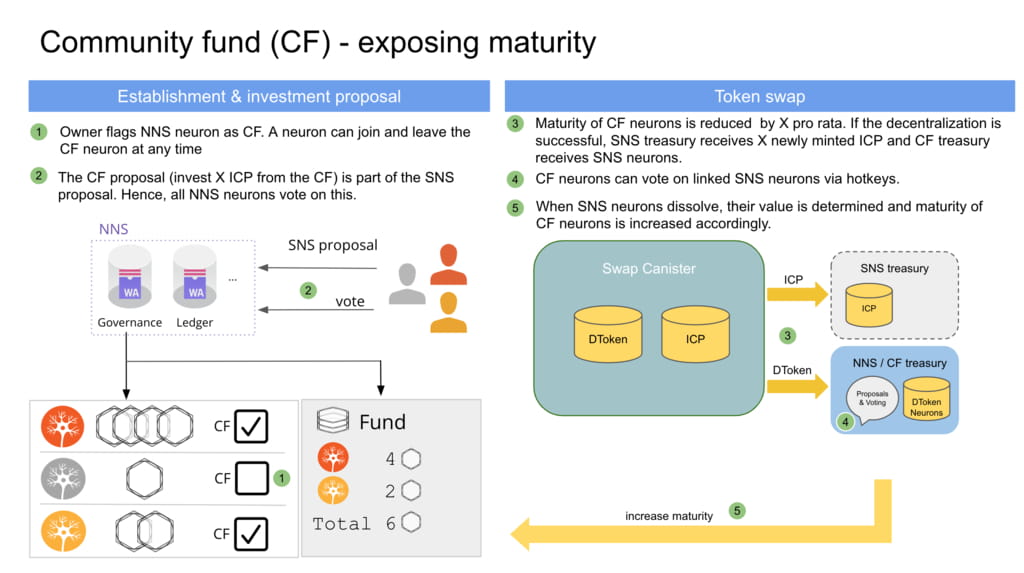
From the vantage point of the ICP ecosystem, the Community Fund helps guide the SNS DAO ecosystem and reinvests in the continued growth of the ecosystem, and the Community Fund itself is controlled by the DAO (NNS).
From a user perspective, the Community Fund is a way for those staking ICP in NNS to leverage their maturity to fund future SNS, thereby achieving greater diversification. Because NNS determines how community funds are distributed, those participating can tap into the broader community’s “wisdom of the crowd” to decide which SNS tokens to acquire.
You can find more information about the Community Fund here:
wiki.internetcomputer.org/wiki/Community_Fund
Decentralized sales
What is decentralized sales?
The decentralized sale is a process by which the SNS DAO becomes decentralized and users can purchase SNS tokens by participating. After the sale, each participant receives a basket of neurons. These neurons hold SNS tokens and therefore have voting rights for the DAO, which is one of the many ways you can obtain SNS tokens for a specific SNS DAO.
Where does decentralized selling take place?
Decentralized sales run entirely on-chain, with sales initiated by NNS. Through this approach, every aspect of the sale, from inception to execution, is completely decentralized and beyond the control of any centralized entity.
Even the decision to create the SNS and its token was made by the NNS (a DAO) rather than the developers to avoid adverse legal implications for developers who wanted to decentralize their applications.
Decentralized selling follows a list of configurable parameters:
1. The number of SNS tokens to be sold.
2. The amount of ICP that must be obtained for a decentralized sale to be successful, if the target is not reached, participants will return their ICP and the sale fails.
3. The maximum amount of ICP that can be obtained before the decentralized sale ends. If the maximum ICP is reached, the sale ends and the control of the dapp will be handed over to the token holders. Since the number of tokens to be sold is fixed, The amount of ICP raised determines the initial price of the SNS token.
4. Minimum and maximum number of ICPs per participant.
What can I get from the sale?
If the decentralized sale is successful, you will receive a basket of Neurons containing your SNS tokens. Depending on the SNS configuration, the basket may contain multiple neurons, each with a different lysis delay. You can use your tokens to participate in governance, or sell liquidity tokens on the exchange after the neuron dissolves.
The number of SNS tokens you receive and the price you pay for each token depends on the amount of ICP raised during the sale, the more ICP raised, the fewer SNS tokens you receive, but their price will be higher.
How is the price of SNS token calculated?
SNS tokens can be purchased with ICP during the decentralized sale, and the number of tokens sold during the sale is fixed, meaning their price is determined by the amount of ICP raised. You can calculate the token price by dividing the amount of ICP raised by the number of tokens sold, price = ICP amount raised / number of tokens sold.
Please note that the final price of SNS tokens when purchased during the decentralized sale is unknown as it depends on the total amount of ICP raised in the sale. However, you can calculate the minimum and maximum price based on the minimum and maximum ICP accepted by the sale, which you can verify in the sales proposal.
A few examples:
1. Decentralized sale raised 1000 ICP by selling 5000 tokens, you contributed 10 ICP, which means you will have 50 SNS tokens, each token is worth 0.2 ICP.
2. Decentralized sale raised 500,000 ICP by selling 1 million tokens, you contributed 200 ICP, which means you will have 400 SNS tokens, each token is worth 0.5 ICP.
3. Decentralized sale raised 10,000 ICP by selling 100 tokens, you contributed 5 ICP, which means you will own 0.05 SNS tokens, a full token is worth 100 ICP.
How do I participate in the sale?
You can participate in decentralized sales in the NNS frontend dapp, which requires an ICP utility token. ICP tokens can be exchanged for SNS tokens during the decentralized sale, and if you don’t have ICP, you can buy some from any exchange.
Please follow the steps below to participate in decentralized sales:
1. Enter the NNS front-end dapp (nns.ic0.app), click “Launch Pad” on the sidebar to view all ongoing SNS decentralized sales.
2. Select the SNS Sale you are interested in under “Current Launches” and click the checkbox.
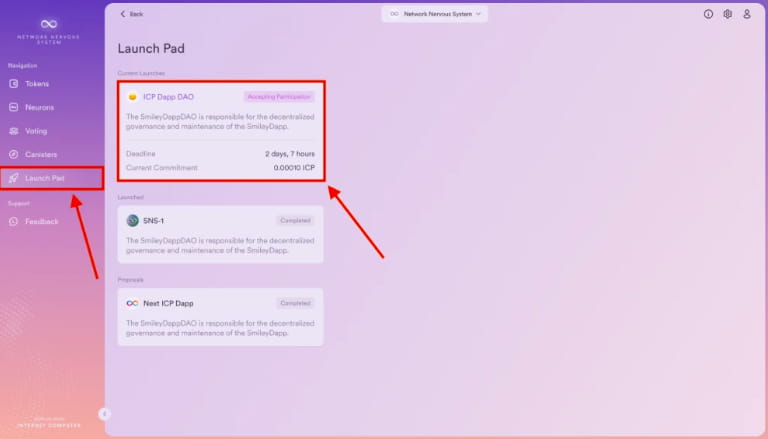
3. Click "Participate".
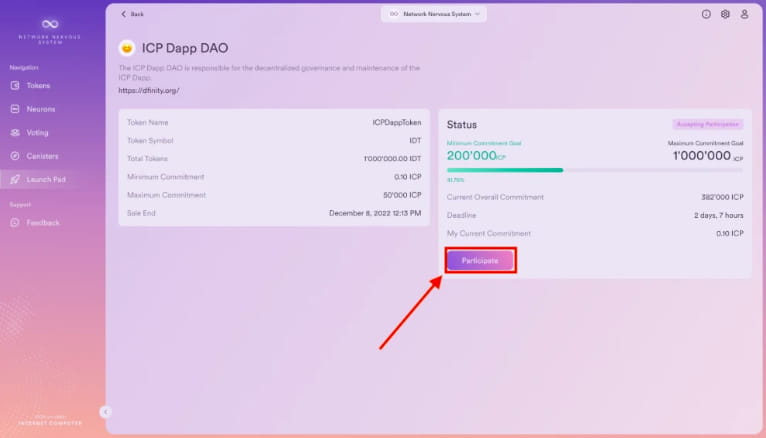
4. Enter the number of ICPs you want to participate in or click Max, then click Go.
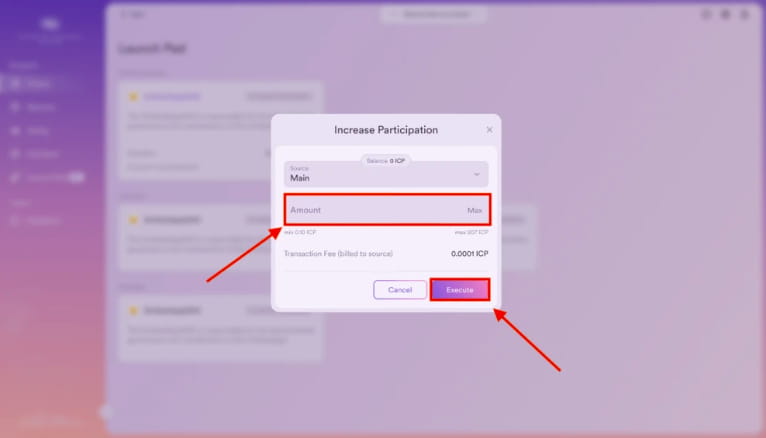
5. You will be prompted to review your participation, if you see the correct number of ICPs, check the box and click Go.
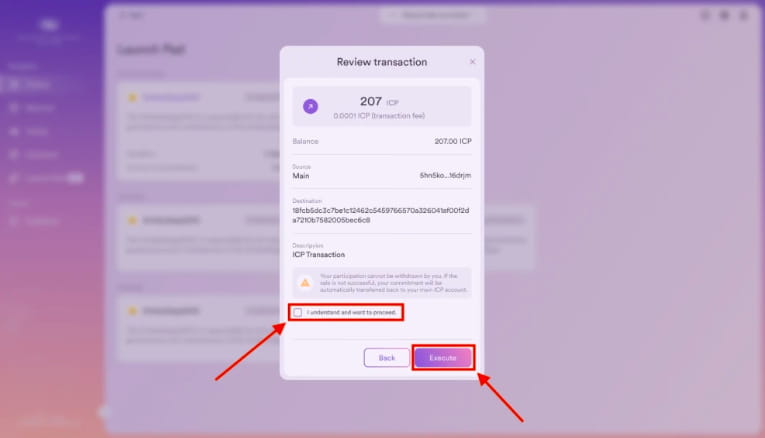
6. On the last screen you should see the amount of ICP you entered for your participation, you can repeat the process if you want to contribute more.
Once the sale is closed and successful, you will receive SNS tokens, please note that this may take a few hours after the sale ends. The number of SNS tokens you receive, and the price you pay for each token, depends on the amount of ICP raised during the sale and the amount of ICP spent. The more ICP raises, the fewer SNS tokens you receive.
If the stated goals of the decentralized sale are not reached, participants will receive a refund. The duration of the sale is configurable and therefore depends on the configuration of each SNS. It will only take 4 to 8 days for the original proposal to launch the SNS. Sales cannot begin until after the NNS voting period (unless a 51% majority is reached earlier).
Who initiates decentralized sales?
The development team first creates an NNS proposal for the decentralized sale, and once the NNS proposal is adopted, the sale itself starts automatically.
As a participant in SNS decentralized sales, what do I need to trust?
Before participating in the SNS decentralized sale to share the voting rights of the SNS DAO, it is strongly recommended that you conduct due diligence on the relevant dapp to ensure that the SNS DAO is trustworthy. The Dapp developer is responsible for providing all necessary information for you to verify the dapp and its SNS configuration.
Please note that by participating without due diligence, you are implicitly trusting the NNS community and the developers of decentralized dapps. Regardless, you have to trust the developers not to change the dapp during the SNS launch.
Learn what you can verify and what to watch out for:
wiki.internetcomputer.org/wiki/SNS_decentralization_sale_trust
How to verify SNS decentralized sales proposal?
Depending on your level of technical understanding, you can perform multiple levels of validation and you can validate SNS containers at any time, even before decentralized sales, but after they are installed on the SNS subnet.
Here are some verification methods:
1. Sales parameters: You can verify what the parameters of the decentralized sale are in the Launch Pad or the decentralized sale NNS proposal.
2. SNS root container: An SNS DAO consists of multiple SNS containers with different functions. The root container is the container that controls other SNS containers in a given SNS DAO. You should verify that the SNS root container is the only one that controls other SNS in the SNS DAO. Container of containers, verification is important to ensure there are no built-in backdoors.
3. dapp container: You can verify that the container id of the dapp controlled by the SNS DAO is the same as the one you are interacting with.
Learn more about verification here:
wiki.internetcomputer.org/wiki/How-to:_Verify_SNS_decentralization_sale_proposal
governance
How do I view and vote for SNS proposals?
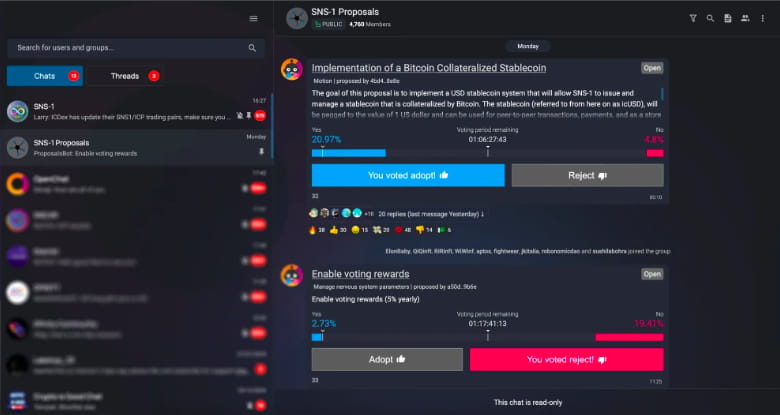
Voting and creation of SNS proposals can take place in dapps controlled by the SNS DAO, and soon in NNS front-end dapps, proposals will be listed in the dapp itself, as shown in OpenChat's example.
How to create a proposal for SNS DAO?
Creating SNS proposals requires knowledge of the command line tools dfx and quill, check out the documentation:
github.com/dfinity/sns-quill#submit-a-proposal
Can I transfer SNS tokens to others?
Yes, SNS tokens are ICRC-1 tokens and can be transferred between any internet computer-based wallet that supports ICRC-1, including your NNS wallet. Note that each SNS has its own ICRC-1 compliant ledger for tracking its tokens.
When receiving your SNS tokens in the form of Neurons, Neurons may have a dissolution delay, which means that your tokens may not be liquid, i.e. not immediately transferable. Instead, these tokens become liquid (transferable) over weeks, months, or years, depending on the dissolution delay of the individual neuron.
Can I sell SNS tokens to other people?
Yes, because tokens can be sent to other people, they can also be sent to exchanges and exchanged for other tokens. The easiest way to sell SNS tokens is through a decentralized exchange (DEX) that lists the token, and you can exchange your SNS tokens for other tokens, depending on the token pairs available on any DEX.
Likewise, you can exchange other tokens for SNS tokens on the DEX.
Are SNS tokens inflationary or deflationary?
Depending on the specific SNS configuration, the SNS DAO may have both inflationary and deflationary pressures.
inflation:
1. An SNS DAO can be set up to mint voting rewards for people participating in governance (similar to ICP).
2. If SNS token holders vote, the SNS DAO can mint tokens, for example: a game mints 2% of the total supply every year and distributes it to players.
Deflation:
1. SNS tokens will be destroyed with every transaction.
2. Locking SNS tokens into neurons removes them from circulation, which, while not technically deflationary, acts as a deflationary pressure.
IC content you care about
Technology Progress | Project Information | Global Events

Collect and follow IC Binance Channel
Stay up to date with the latest information