


Today we look at a new project, a Bitcoin staking project, somewhat similar to a Bitcoin-focused Lido + Pendle, which is the Solv protocol. You can stake your idle Bitcoin and engage in various yields and investments, so let's take a look at the project's fundamentals.
I. Introduction
The Solv protocol is an on-chain Bitcoin staking protocol that connects traditional finance (TradFi), centralized finance (CeFi), and decentralized finance (DeFi), unlocking the potential and liquidity of Bitcoin. Through SolvBTC and SolvBTC.LST (liquid staking tokens), Solv enables both retail and institutional investors to earn from their held Bitcoin, transforming it from idle assets into yield-generating tools that can seamlessly integrate with a broader financial ecosystem, thus promoting a new era of Bitcoin finance.
II. Current State of Bitcoin Staking
Bitcoin accounts for over 50% of the total cryptocurrency market, valued at about $2 trillion. Over $1 trillion worth of BTC is idle. More than 80 projects have emerged this year around Bitcoin, such as the layer two network Merlin, Bitcoin staking Babylon, BounceBit, etc. However, there is not yet a major player. Currently, the largest WBTC on Ethereum has 120,000 coins, so there is significant space in the Bitcoin staking sector, which is a large pond.
Due to the lack of smart contracts on Bitcoin, most Bitcoin holders either keep their coins in cold wallets or on exchanges.
However, the yield for pure BTC staking on centralized exchanges is very low, with BN only at 0.26%, which is essentially negligible.

On the other hand, for decentralized exchanges, such as Uniswap, the yield for WBTC/USDC is 24%, but you first need to convert to WBTC, put in half the proportion of stablecoins in the pool, and constantly adjust the price range, which requires a certain level of management skill.

Currently, the stable financial product in collaboration with Binance offers a yield of 1.5%-3.6% for foolish investment products, although it provides SOLV, it is essentially free.

III. Technical Architecture
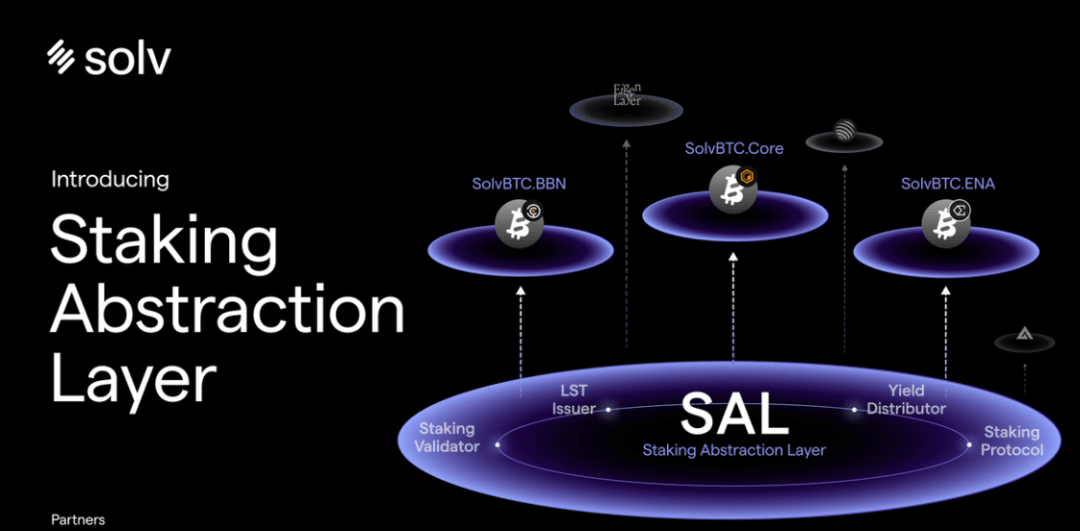
The Staking Abstraction Layer (SAL) is a modular architecture, with key modules in SAL including LST generation services, staking validation services, transaction generation services, and yield distribution services. All these modules rely on the SPM (Staking Parameters Matrix) to define transaction rules, validation standards, and yield calculations.
In simple terms, it is a configuration that requires parameter adjustments for different staking services, not much else, yet they insist on packaging a SAL!
IV. Main Products
1. SolvBTC:
Solv has its own packaged BTC, supporting multi-chain liquidity, allowing free transfer of assets across blockchains such as Ethereum, BNB Chain, Avalanche, Arbitrum, Base, BOB, and Mantle, enabling users to choose platforms with higher yields.
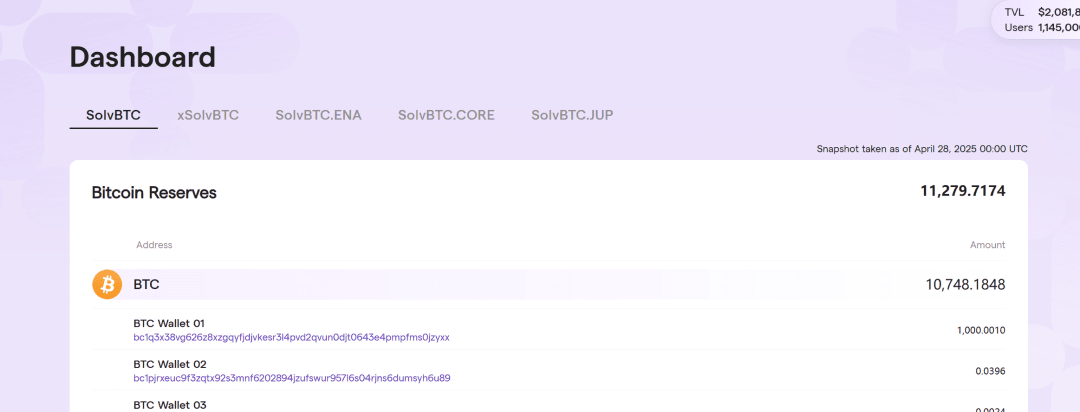
Currently, the platform has exchanged 11,000 Bitcoins, and of course, SolvBTC can be exchanged back anytime.
2. SolvBTC.LST - Staking
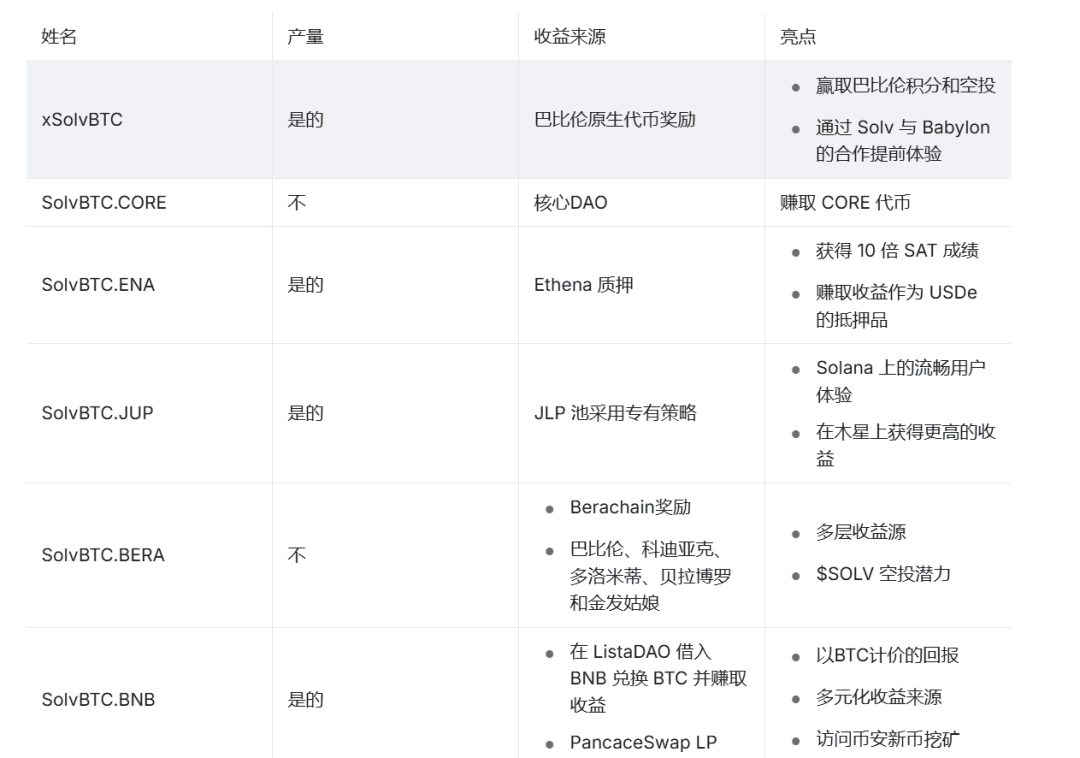
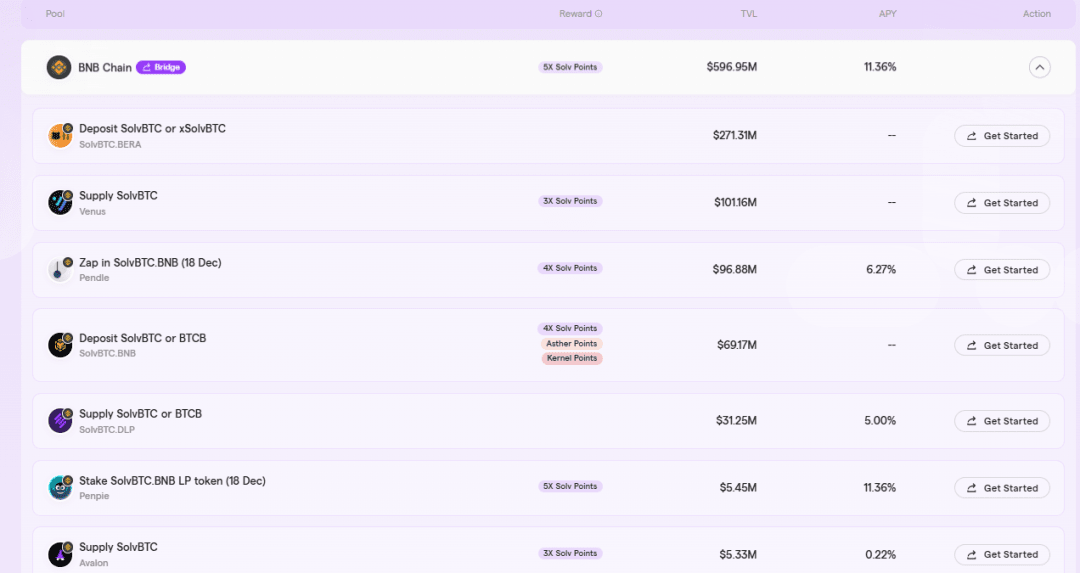
Through SolvBTC, staking can be done on different platforms, currently supporting 8 platforms: Berachain, Babylon, BNB, Jupiter, Core, DEXlp, AVAX, ENA, etc. You can exchange different tokens through SlovBTC, as described in the figure below. Currently, the highest yields are from Berachain at 6%-8%, and BNB at 2%-6%, with different chains offering different rewards.
3. DEFI Supports more types of DeFi activities, which is an extension of previous staking.
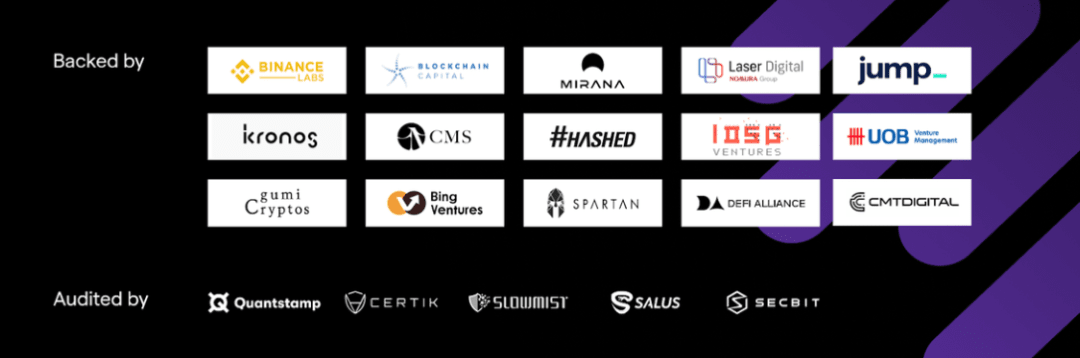
V. Financing Situation The Solv Protocol has received support from well-known investors such as Binance Labs, Blockchain Capital, Laser Digital, and OKX Ventures. The Solv Protocol has undergone comprehensive security audits by leading companies such as Quantstamp, Certik, SlowMist, Salus, and Secbit.
Currently, three rounds of financing have been identified:
July 2023: $6 million financing, October 2024: $11 million strategic financing, valuation of $200 million, April 2025: strategic financing, amount not disclosed. The third round should not be less than the second round, so at least it is calculated as $10 million, resulting in at least $27 million in financing.
VI. Team
The team members are all Chinese, including Meng Yan, who is also a KOL to represent the project, so at least they are all real names.

VII. Token Economics
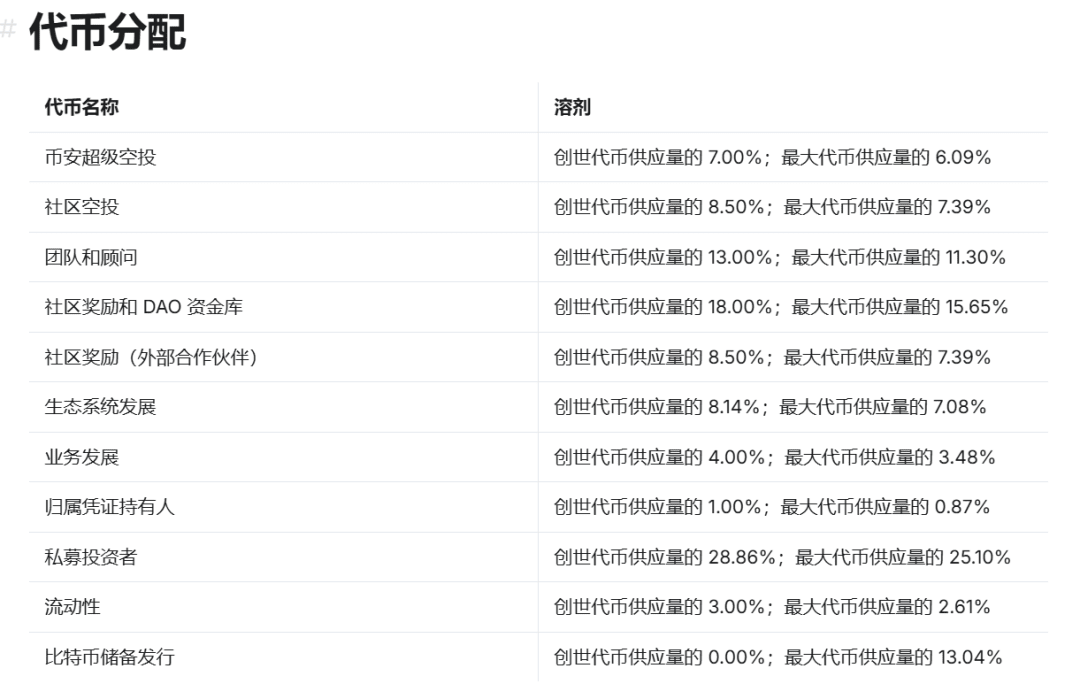
Total token supply is 9.66 billion (dynamic, may increase through network governance issued by Bitcoin reserves), genesis total supply: 8.4 billion, currently circulating 1.48 billion, current price comparison at $0.04, market cap at $60 million, FDV at $430 million, token distribution as follows, where the 25% share for private investors is too high.
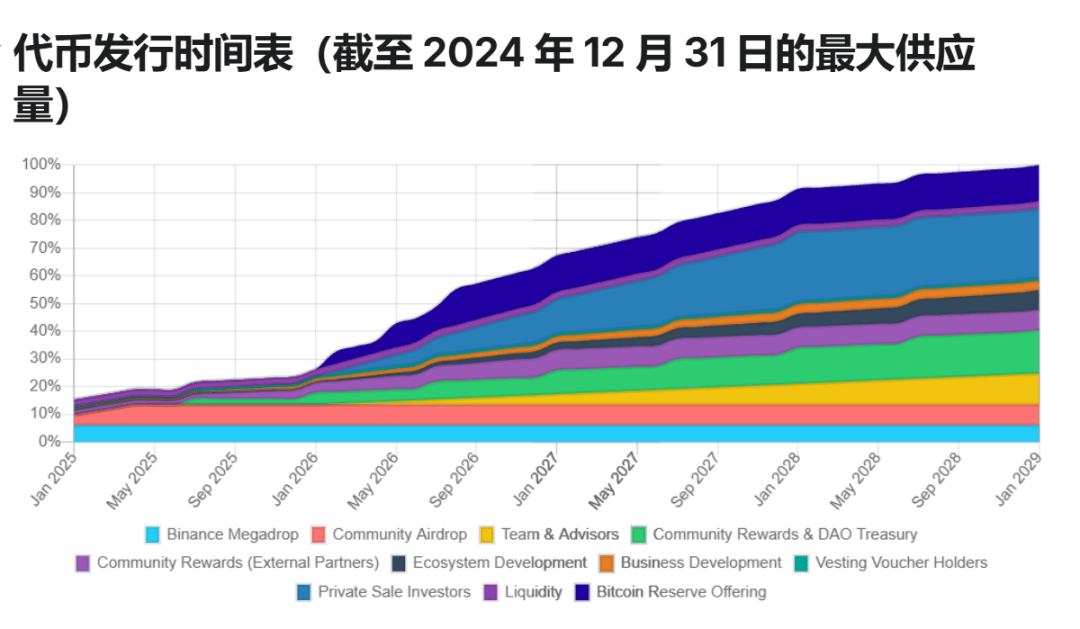
The chart below shows the token release schedule, with all tokens released over 4 years, starting large-scale releases in January 2026! Pay attention to the timeline!!
VIII. Summary
Solv launched in January 2025, originally priced at 0.1, but has since fallen below the issue price. Since it is a financial yield project, the yield it offers is its own token, so it lacks the ability to capture value, which is the root of the problem.
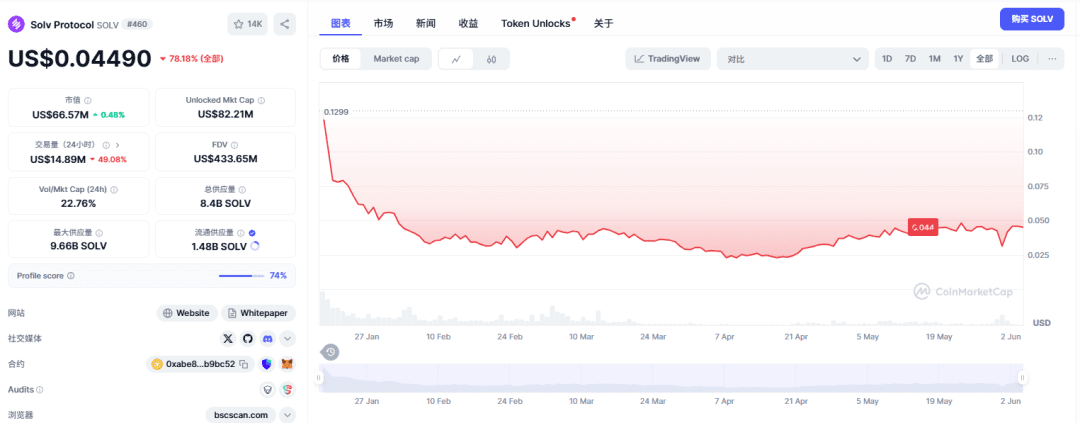
Based on the financing valuation, since the strategic round was not disclosed, we will calculate using the minimum of 200 million, so the price comparison would be around $0.023. If there is no internal trading, investors will incur losses when it unlocks in January 2026.
The advantage is that the project is focused on BTC staking yield, which is somewhat useful because there are many people holding Bitcoin without moving it. A yield of 5% is acceptable, but the level of innovation is insufficient. Although it is similar to Pendle on Ethereum, Pendle offers exaggerated yields, with some projects achieving 30%-40%, but it is difficult to achieve more than 10% on Bitcoin.
For this product itself, it's best if you have BTC on Binance to invest, it's definitely better than leaving it idle!