

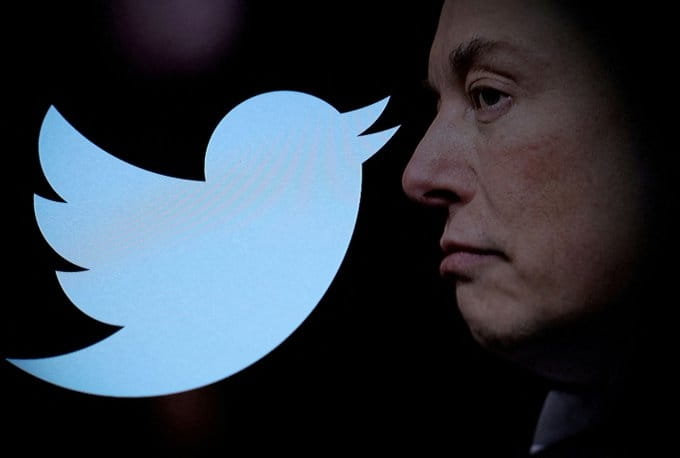
"OpenAI was originally created as an open source non-profit company to compete with Google, but now it has become a closed source for-profit company effectively controlled by Microsoft, which is completely contrary to my original intention."
Since the advent of ChatGPT, the number of users has reached hundreds of millions, and the business potential hidden behind it has slowly emerged. However, this has also triggered controversy in the industry over ChatGPT’s delay in open source.
Musk, the founder of OpenAI, has recently "bombarded" OpenAI on the social media Twitter for violating the "original intention" when it was founded.
He wrote on Twitter: "OpenAI was originally created as an open source non-profit company, which is why I named it OpenAI. But now it has become a closed source for-profit company, owned by Microsoft Effective control, which is completely contrary to my intention.”
OpenAINot Open
OpenAI is a non-profit AI research organization co-founded by Musk and investor Sam Altman in 2015. Due to differences in views on AI within the organization, Musk left the OpenAI board of directors in 2018. Since then, he has focused on Dedicated to brain-computer interface company Neuralink.
Last weekend, Musk finally broke the long silence after the advent of ChatGPT, publicly expressed his dissatisfaction with the current situation of OpenAI, and stated that it went against the original intention of its early creation.
After Musk withdrew from the OpenAI board of directors, in 2019, Microsoft announced an investment of US$1 billion in OpenAI to build Azure AI supercomputing technology for the general artificial intelligence (AGI) system. In order to obtain funds for the development of artificial intelligence technology, OpenAI decided to license part of its pre-AGI technology to Microsoft according to the agreement, emphasizing that the cooperation between the two parties is based on "shared principles of ethics and integrity."
In the cooperation statement between the two parties, Microsoft and OpenAI aim to enable general artificial intelligence to work with people to jointly solve current thorny cross-field and cross-professional problems, including global challenges such as climate change, personal health, and education.
Recently, Microsoft has invested billions of dollars in OpenAI and added OpenAI technology to its search engine Bing. The open source of ChatGPT seems even more distant.
Open source refers to making the source code of software, code, technology, etc. freely available to the public, so that anyone can view, use, modify, share, distribute, and even commercially use it.
The benefits of open source include increasing product transparency and helping users and developers better understand and trust the software or technology. In addition, because the source code of open source software is public, the code can be reviewed and tested by developers around the world, thereby discovering and fixing vulnerabilities and errors, and improving the stability and reliability of the software. Open source software can also foster collaboration on a global scale and encourage and drive broader innovation.
Many industry insiders, including Cheetah Mobile Chairman Fu Sheng, told China Business News that Chinese developers definitely want ChatGPT to be open source, but they do not think OpenAI will do so because it involves a lot of capital and cost investment.
When a reporter asked in the ChatGPT question and answer box whether it would be open source, ChatGPT responded: "I am a large language model trained by OpenAI, but my code and technical details are not open source. This is because I use OpenAI's unique There are training data and computing resources, and these resources are very expensive. In addition, my training and maintenance require a lot of manpower and technical support."
As ChatGPT answered, the reason it is not open source is that training is very expensive. According to reports, the cost of completing word training for the ChatGPT large model is approximately US$12 million and takes one month.
Or open API interface
Nonetheless, ChatGPT said: “OpenAI is still committed to promoting openness and transparency in artificial intelligence. They have launched open source projects in many fields and provided some useful tools and resources to help developers build better artificial intelligence systems. "
Nie Zaiqing, Professor Guoqiang of Tsinghua University and chief researcher of the Intelligent Industry Research Institute, told reporters: "So far, OpenAI has not said when ChatGPT will be open source, or its future open source plan. It should be said that it deviates from the original intention when it was founded. Of course, the computing power and labor costs of training ChatGPT are huge, and it also needs to be considered whether full open source can obtain enough social resources to continue the project."
In his view, although it is unlikely that ChatGPT will be open sourced in the near future, since OpenAI is based on the principle of openness in general, it should be very soon for ChatGPT to be opened through APIs. The so-called open API interface allows third-party applications to call its functions by accessing ChatGPT, but the code is still closed source.
"The current business model of ChatGPT data and model open source is not clear yet, but API openness is in line with business interests." Nie Zaiqing told reporters. But he emphasized that open source ChatGPT should be a decision that needs to be made after weighing many business gains and losses.
"When the cost increases, someone needs to be able to explain whether the value of the project is worth the huge investment. If there is direct commercial value, it will be easier to convince investors, but it will be more difficult to quantify other specific social values. Bigger." Nie Zaiqing told reporters.
He added that if there is a person or team that everyone trusts enough, the short-term value can be less assessed, and I believe they will be able to achieve some long-term social value in the future. "This kind of trust will be very valuable, and it is also what some major revolutionary inventions need most."
A senior computer expert told reporters: "When OpenAI was founded, it chose open source because of the donation mentality of the sponsors. But just like Android's predecessor, the Open Mobile Alliance, it hoped to win over the ecosystem through open source, but when the ecosystem was established, It is not advisable to start closing the source and creating barriers. I think there will always be real open source projects in the world."
The views in this article represent only the author's personal views and do not constitute investment advice. I do not make any guarantees about the accuracy, completeness and timeliness of the information in the article, nor am I responsible for any losses caused by the use or reliance of the information in the article.