


Written by Babywhale, Foresight News
After the atomic swap was officially launched in 2022 and achieved good results, Synthetix put V3 on the agenda. As one of the "oldest" DeFi protocols, Synthetix was the absolute leader in the synthetic asset track in early 2021, and also caused a lot of discussion in the industry about synthetic asset protocols.
According to OKX market data, the price of SNX reached an all-time high of about $29 on February 14, 2021, while neither Bitcoin nor Ethereum reached their all-time highs. However, SNX has not performed too well since then. On the one hand, this is because the mechanism design of Synthetix is too complicated. On the other hand, it is also because everyone finds that trading synthetic assets sETH and sBTC with such a high collateral rate is not as good as directly trading Bitcoin and Ethereum. In addition, the rise of a large number of emerging assets has greatly reduced the attractiveness of Synthetix's yield.
However, Synthetix did not decline because of this. Instead, it cleverly used the zero-slippage mechanism between sUSD and sToken to tell a new "atomic swap" story.
Synthetix in the Past
Synthetix first appeared in the market as a synthetic asset platform, and set up a very special "debt pool" mechanism: users borrow sUSD by staking SNX. Unlike MakerDAO's collateralized assets to mint DAI, although Synthetix will also liquidate when the SNX collateral ratio is insufficient (the current liquidation line is a collateral ratio of 160%), the underlying logic is completely different.
In Synthetix, all users who pledge SNX to mint sUSD share a "debt pool", which means that when you mint sUSD, the proportion of the amount of sUSD minted to the total amount of sUSD is your proportion of the entire debt pool, and all minted sUSD is the debt of the entire system. Since everyone shares a debt pool, if other users make the asset appreciate through operations (for example, using sUSD to buy sBTC, and sBTC rises), it will cause the debt of the remaining users to increase.
The reason is that the appreciation of some users’ assets means that the overall liabilities of the system have increased. At this time, if your asset appreciation rate is not higher than the system average, it means a loss. On the other hand, if some users suffer losses, then even if you hold sUSD and do not do anything, your debt will be reduced.
It has to be said that this design is indeed very novel, which keeps the entire system in a dynamic balance. However, novelty does not mean that it can be accepted by most people. When the income from interacting with other DeFi protocols, holding other tokens or NFTs has high potential returns, Synthetix is not good enough.
In simple terms, SNX needs to be overcollateralized to mint sUSD for investment, and the investment targets are subject to certain restrictions. In addition, the income generated by investment may be diluted because other users also generate income. Although Synthetix provides SNX inflation incentives and transaction fee incentives for pledgers, compared with tokens that double in value at any time in a bull market, users will naturally choose to invest their principal directly.
Atomic Swaps
As I just said, although there is a shadow of over-collateralized stablecoin minting similar to MakerDAO, its mechanism is relatively more complicated, more strategies need to be set, and the user experience is not friendly. The narrative of synthetic assets is also gradually declining in the bombardment of new projects that change with each passing day in the bull market.
But Synthetix is not left with nothing. The team also realized that clinging to the narrative of synthetic assets might eventually be abandoned by the market. Therefore, they cleverly used the mechanism of exchanging sUSD for other sTokens directly using oracle price feeds without considering deep slippage-free transactions, officially starting the narrative of atomic swaps.
The atomic swap function first appeared in SIP-120 (https://sips.synthetix.io/sips/sip-120/), which was jointly proposed by Kain Warwick, the founder of Synthetix, and Andre Cronje, the founder of Yearn. The proposal was originally intended as a trading model within the Synthetix ecosystem, but was later found to be an excellent liquidity tool due to the increasing externalities of the Synthetix ecosystem.
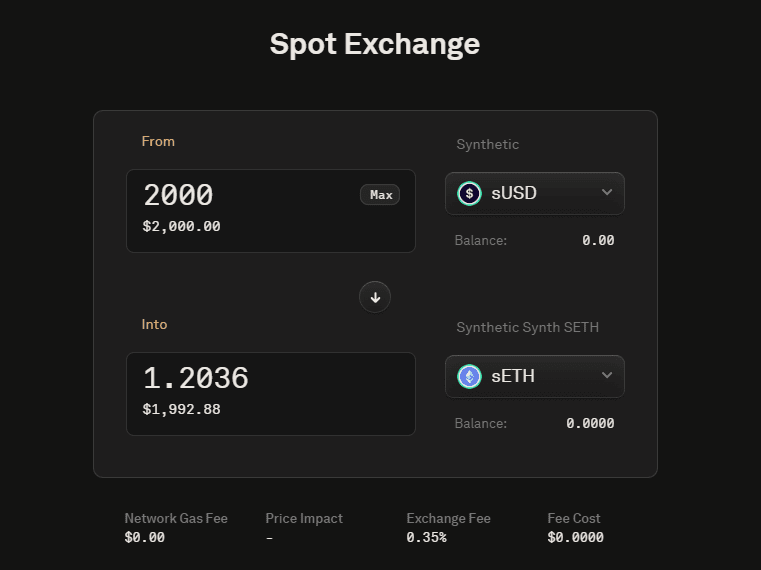
In August 2022, with the update of Tiaki version, the atomic swap function was officially integrated into 1inch, and began to provide a zero-slippage transaction path for on-chain transactions (mainly concentrated in block transactions).
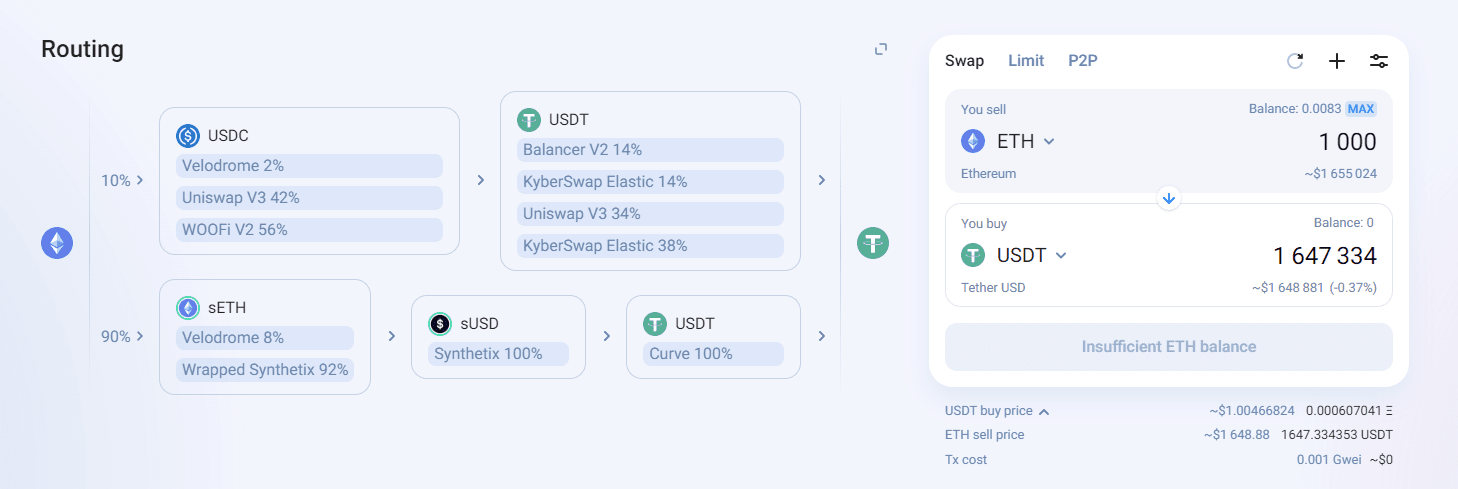
Therefore, the Synthetix team no longer struggled with the narrative of synthetic assets, but made atomic swaps one of the most important functions of Synthetix. Of course, the deep integration of the Synthetix ecosystem with Optimism and the expansion of the ecosystem such as options (Lyra) and contracts (Kwenta) are also important parts of the Synthetix strategy.
The Birth of Synthetix V3
For Synthetix, although atomic swaps have indeed improved the liquidity and trading depth of assets including Ethereum and Bitcoin to a certain extent, it is difficult to further expand its influence. Synthetix currently has a c-ratio (which can be understood as the excess collateral ratio of SNX) of 400% for SNX inflation rewards. In addition, the total number of SNX tokens is only slightly over 300 million. Considering the amount of SNX staked, the proportion of sUSD used to provide liquidity, and the proportion of sUSD traded for other tokens, there are not many assets such as sUSD, sETH, sBTC, etc. that can truly provide liquidity in atomic swaps.
According to Dune data, at the time of writing this article, the total amount of SNX was approximately 314 million, and the total staking rate of L1 and L2 was approximately 67.37%. There were approximately 36.9 million sUSD, 19,180 sETH, and 576.7 sBTC (including L1 and L2) that provided liquidity on Curve and could be atomically swapped. According to the SNX and Bitcoin and Ethereum prices at the time of writing this article, the total value of these sTokens providing liquidity was approximately US$83.4048 million, and the total value of staked SNX was approximately US$558.9 million. The total value of sTokens that can be used for atomic swaps is less than 15% of the total value of staked SNX.
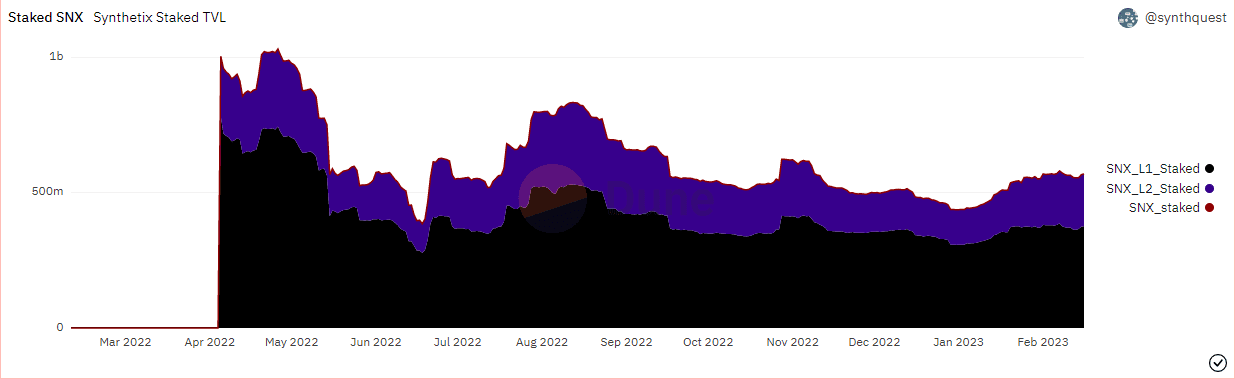
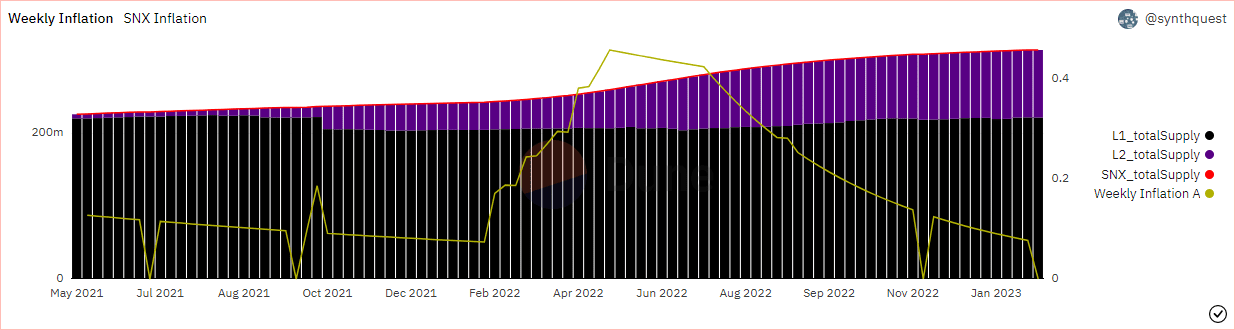
Therefore, for Synthetix, if it wants to provide better trading depth and higher fee income, it can only increase the number of sTokens such as sUSD, and this is far from enough with SNX alone. Therefore, Synthetix V3 came into being, while retaining the futures, contracts and other markets, it made significant optimizations in the atomic swap narrative.
The V3-related improvements that have been voted on include:
SIP-255
SIP-255 adjusts the distribution path of the fees generated by atomic swaps that were originally intended to be awarded to SNX stakers, so that these fees are automatically destroyed to repay the stakers' debts, thereby reducing debts and possible liquidation risks. It can also be understood that users receive sUSD from atomic swap rewards, and then this part of sUSD that users originally need to manually collect is automatically destroyed to reduce the stakers' liabilities. Stakers can choose to re-stake the redeemed SNX to obtain this part of the reward.
From the perspective of the project, this measure can help stakers, especially those who often forget to claim their rewards, maintain a healthy long-term debt ratio and reduce liquidation risks. In addition, this solution can also increase the utilization of SNX and sUSD and reduce the sensitivity of stakers to the mortgage rate, thereby stimulating stakers to stake more, effectively reducing the overall debt of the protocol, and minting more sTokens.
SIP-301
SIP-301 aims to create account token NFTs in ERC-721 format for users, allowing users to transfer their SNX staking positions between different wallet addresses. The proposal decouples the absolute binding of "account" and "address". In addition, the ERC-721 standard can maximize the composability of smart contracts and existing user interfaces. It also allows the creation of a secondary market for account tokens.
Additionally, operational security is improved by adding stronger delegation capabilities. For example, a hardware wallet may have an account that is entitled to claim rewards delegated to a software wallet. If the software wallet is compromised, the attacker will only be able to claim the account's outstanding rewards (e.g., they cannot cancel all collateral of a staked account).
SIP-302、303、304、305
These four SIPs include the design of the V3 mechanism for pools, markets, liquidations, and rewards. In simple terms, when other collateral assets (such as Ethereum) that have been voted on are used to mint sUSD in V3, each market can set custom parameters based on asset attributes. In other words, the new market in V3 will no longer follow the debt pool model, but will be similar to MakerDAO's CDP model. The difference is that the minted sUSD can increase the on-chain transaction depth through the special function of atomic swaps.
In addition, V3 has also made improvements in the experience in supporting the establishment of permissionless spot and futures markets, as well as liquidation, rewards, etc.
Judging from the existing SIPs that have been passed, Synthetix V3 has the potential to be expected by the market:
Supports asset collateral other than SNX. As analyzed above, using only SNX as collateral to mint sUSD will limit the actual circulation of sUSD due to the project's own mechanism. The new version solves this limitation by supporting multiple collaterals to mint sUSD, increasing the channels for producing sUSD and further unleashing the imagination of the project itself.
On the one hand, this imagination is that the new market is not restricted by the unified debt pool and adopts the more popular CDP model, which may make assets such as sUSD that support atomic swaps an important hub for future on-chain transactions. With only a 0.35% handling fee (current data, which may change in the future), the model of direct transactions based on oracle prices can greatly increase transaction depth and further become the preferred path for transactions through aggregators.
On the other hand, the increase in the number of sUSD allows for a richer superstructure design around sUSD in addition to its own unique atomic swaps (such as the permissionless spot futures market mentioned above). In this way, Synthetix's own fee income will be further improved compared to the current level. With the current mechanism of burning fees, SNX stakers can focus more on using sUSD to generate income.
More importantly, in addition to sUSD, the properties of Synthetix's own synthetic assets allow it to include assets such as sETH, sBTC, etc. The current expected time for the launch of Synthetix V3 is the end of the first quarter and the beginning of the second quarter. By then, Synthetix will change from a pure synthetic asset market that aims to become a "decentralized brokerage" to a comprehensive DeFi protocol focused on liquidity, driven by synthetic assets sToken and atomic swaps. For Synthetix, this can be said to be a relatively successful transformation. For the DeFi market, it provides another good choice besides using mathematical formulas that consume a lot of Gas to improve liquidity and transaction depth.