

TL;DR
Ethereum Name Service (ENS) is a naming service for wallet addresses, hashes, and other machine-readable identifiers. This service converts hard-to-read data strings into easy-to-read addresses. The way it works is similar to the Domain Name System (DNS) used for websites.
Initially, ENS auctioned six-, five-, four-, and three-letter domain names to interested players using the Vickrey auction format. Each name has an .eth at the end and can be attached to multiple cryptocurrency addresses, hashes, and other information.
You can now easily buy a name without an auction and rent it out annually. The price depends on the length of the name you want to rent. Additionally, if you own an ENS domain on October 31, 2021, you will be eligible to receive the $ENS governance token airdrop. You have until May 04, 2021 to collect them.
Introduction
One of the biggest challenges of blockchain is increasing its ease of use and accessibility. If we look at payments using Ethereum (ETH) or Bitcoin (BTC), new and even experienced users can find wallet addresses cumbersome and confusing. Strings of hexadecimal numbers are simple for a computer to read, but less intuitive for human users. Ethereum Name Service (ENS) solves this problem by allowing anyone to create simple website-style addresses that are easier to remember and use.

What is Ethereum Name Service?
Ethereum Name Service (ENS) is an Ethereum-based project launched on May 4, 2017 by Alex Van de Sande and Nick Johnson of the Ethereum Foundation. This project allows users to display long Ethereum public addresses in a simple text-based form. This makes it easier for you to share, use and remember addresses and other data. Converting machine-readable numbers like 0xAb5801a7D398351b8bE11C439e05C5B3259aeC9B into human-readable alternatives is an important part of increasing blockchain adoption.
ENS is not just limited to wallet addresses either. ENS can be used to represent transaction IDs, hashes, and metadata which are all commonly found in the cryptocurrency world. You may already be familiar with the Domain Name System (DNS), which is a naming system that functions like an internet telephone book. DNS changes hard-to-remember IP addresses, then attaches them to easy-to-use URLs, such as https://academy.binance.me. In practice, ENS is the DNS of the Ethereum blockchain.
Since then, ENS launched a governance token as part of its transition to a decentralized autonomous organization (DAO). Due to the huge increase in token prices, the project started trending and attracted a lot of interest.
How does the Ethereum Name Service work?
An ENS domain name uses an ERC-721 Non-Fungible Token (NFT) to represent a unique address. You can trade domains by transferring or selling NFTs to others. Wallet addresses and other information are attached to each token that its owner can manage. Top-level domains like .eth are owned by smart contracts called registrars that control the creation of subdomains. If you want to create BinanceAcademy.eth, you need to interact with the .eth registrar.
To buy an Ethereum domain name, you can check its availability and rent it annually. However, the popular name was originally auctioned off. Then, the highest bidder who wins the domain can attach an address, create a subdomain, and lend or sell their domain name. For example, if you own BinanceAcademy.eth, you can also create learn.BinanceAcademy.eth for free.
What can be done with ENS?
If you are confused by several addresses when sending cryptocurrency, you will understand that ENS is needed. Like saving a friend's phone number under their name, ENS allows users to convert long numbers into easy-to-remember words. This makes for an easier experience with less chance of error.
ENS domain owners can also create subdomains that can be assigned with other data. The form also doesn't always have to be a wallet address. You can use it to point to smart contracts, transactions, or metadata.
How do I get my own ENS domain?
Nowadays, getting an ENS name is as easy as checking its availability at https://app.ens.domains/ and registering it. Let's look at an example of how to start this process. First, visit https://app.ens.domains/, connect your wallet, then type in the domain of interest.

You will now see the availability of the selected name. In our example, BinanceAcademy can be registered.

After clicking on the name, you will see instructions for registering an ENS domain. You can select the registration period and also see the estimated costs. With ether (ETH) in your wallet, you can follow the three steps shown and request to register an address.

In the early days of ENS, popular six-, five-, four-, and three-letter names were auctioned off at Vickrey-style auctions. A smart contract carries out the entire process for five days. Anyone can participate in public auctions and try to purchase the same domain name. Each interested party will send a transaction containing the maximum bid within the first three days of the open auction.
Then, the auction will enter the disclosure stage. Everyone will reveal their bid or lose their locked ETH and the winning bidder will pay an amount equal to the second largest bid. Then, all disclosed offers will receive a refund.
How much does it cost to get an ENS domain?
There are two possible cost components of an ENS domain: auction fees and rental fees. The price of an ENS domain name in an auction depends on the popularity of the name. Familiar names, such as Dewa, Mobil, or ETH fetch higher prices and three-letter words are usually the most expensive. You can see examples of some of the prices paid for domain names below.

Once you own an ENS domain, you will need to pay an annual renewal fee paid in ETH. Fees are denoted in dollars, but converted using the exchange rate provided by Chainlink's ETH/USD oracle. The annual renewal fee is $5 per year for names with five or more characters, but becomes more expensive the fewer letters there are.
How to claim Ethereum Name Service airdrop?
Anyone with a .eth address during the snapshot on October 31, 2021 was eligible to receive $ENS tokens. You can claim it with a few simple steps. You have until May 4, 2022 to claim your tokens before they burn.
1. First, visit ENS Airdrop, then connect your wallet with the [Connect] or [Connect wallet] button.

2. Select the wallet you want to connect, such as MetaMask, WalletConnect, or another provider.

3. Click [Get started] to continue.
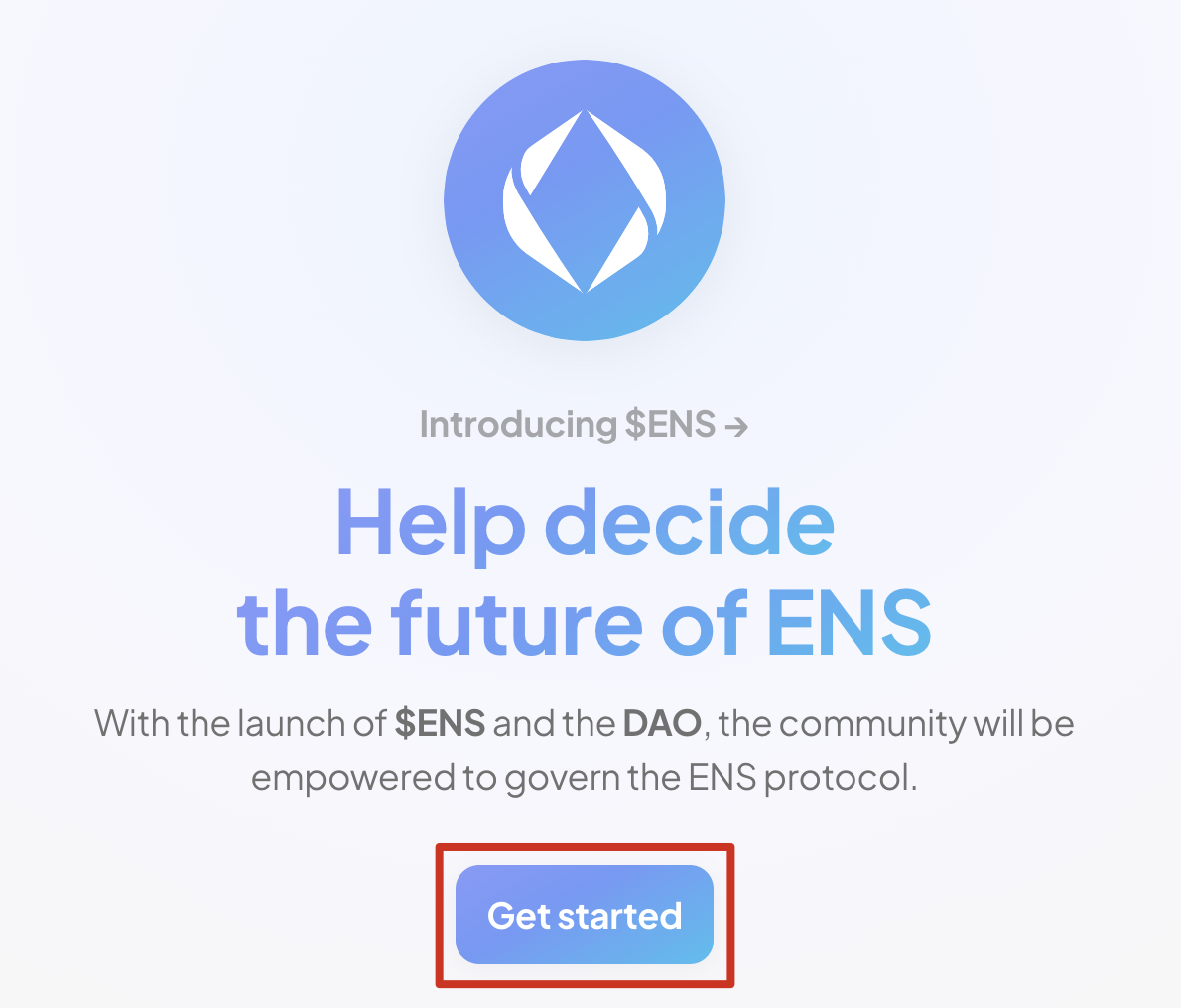
4. You will now see the [Start your claim process] option along with the acceptable amount.
5. Be sure to read the educational information regarding $ENS and the Constitution that must be signed using your wallet.
6. You can now choose to delegate your token voting power to yourself or other users.
7. Finally, check the amount claimed, then delegate before clicking [Claim] and paying the gas fee to unlock the token.

Closing
In the world of decentralized networks, ENS is a step forward in creating an accessible way to interact with the blockchain. Just as we no longer use IP addresses to navigate the web, we can see the rise of the ENS name due to its usefulness and increasing popularity. Since the airdrop, there has been increased interest from the cryptocurrency ecosystem in the project.