


TL;DR
Polygon Bridge allows users to quickly transfer ERC tokens and NFTs to the Polygon sidechain. There are two main bridges at Polygon, namely Proof of Stake (PoS) Bridge and Plasma Bridge. Both can bridge assets from Ethereum to Polygon (and vice versa), but adopt different security methods.
PoS Bridge uses a Proof of Stake (PoS) consensus algorithm to secure its network. This bridge supports the transfer of Ether (ETH) and most ERC tokens. This option is recommended for most users.
Plasma Bridge is aimed at developers who need increased security. The bridge uses the Ethereum Plasma scaling solution and supports MATIC, ETH, ERC-20, and ERC-721 token transfers.
Introduction
As the number of blockchains in the crypto space increases, sharing data and tokens among various networks has become challenging. Some projects address this problem by building bridges between networks to facilitate asset transfers.
Polygon Bridge is designed to improve interoperability between the Polygon and Ethereum blockchains. With a compatible cryptocurrency wallet, users can transfer tokens back and forth easily.

What is Polygon Bridge?
Polygon is a framework for creating Ethereum-compatible blockchain networks and scaling solutions. The goal is to enrich the Ethereum ecosystem by providing tools to build scalable decentralized applications (DApps) and increase Ethereum transaction throughput at lower costs. Several popular Decentralized Finance (DeFi) platforms have started to be implemented on Polygon, such as Aave, Curve, and SushiSwap.
To interact with DApps and tools on Polygon, you must transfer assets to the Polygon network. This is where the role of Polygon Bridge is seen. Polygon Bridge is a trustless cross-chain transaction channel between Polygon and Ethereum. This bridge allows users to transfer ERC tokens and non-fungible tokens (NFTs) to the Polygon sidechain using smart contracts.
How does Polygon Bridge work?
Polygon Bridge uses a dual consensus architecture to optimize speed and decentralization. The bridge also supports arbitrary state transitions in Ethereum Virtual Machine (EVM) compatible sidechains. Cross-chain token transfers can be achieved instantly without third party risk or market liquidity limitations.
When bridging a token on Polygon Bridge, there will be no change to the circulating supply of that token. Tokens leaving the Ethereum network will be locked and an equal number of those tokens will be minted on the Polygon network as benchmark tokens on a 1:1 basis. When bridging tokens back to Ethereum, the benchmark tokens on Polygon will be burned and existing tokens on Ethereum will be unlocked during the process.
There are two types of bridges at Polygon for asset transfers, namely Proof of Stake (PoS) Bridge and Plasma Bridge. As the name suggests, PoS Bridge adopts a Proof of Stake (PoS) consensus algorithm to secure its network. Deposits on PoS Bridge are completed almost instantly, but withdrawals may take a while to be confirmed. PoS Bridge supports ether (ETH) transfers and most ERC tokens.
On the other hand, Plasma Bridge supports the transfer of Polygon's native token, namely MATIC, and certain Ethereum tokens (ETH, ERC-20, and ERC-721). This bridge uses the Ethereum Plasma scaling solution to offer increased security. Please read the official documentation for more technical details.
How to bridge tokens from Ethereum to Polygon via PoS Bridge?
To bridge tokens from Ethereum to Polygon, you need a compatible cryptocurrency wallet, such as MetaMask. If you don't have a MetaMask wallet, follow the steps in this tutorial to create one. You'll also need to download and install the MetaMask browser extension.
1. Log in to Polygon Web Wallet by clicking [Polygon Bridge].

2. Next, you need to connect your crypto wallet. In this example, we will use MetaMask.

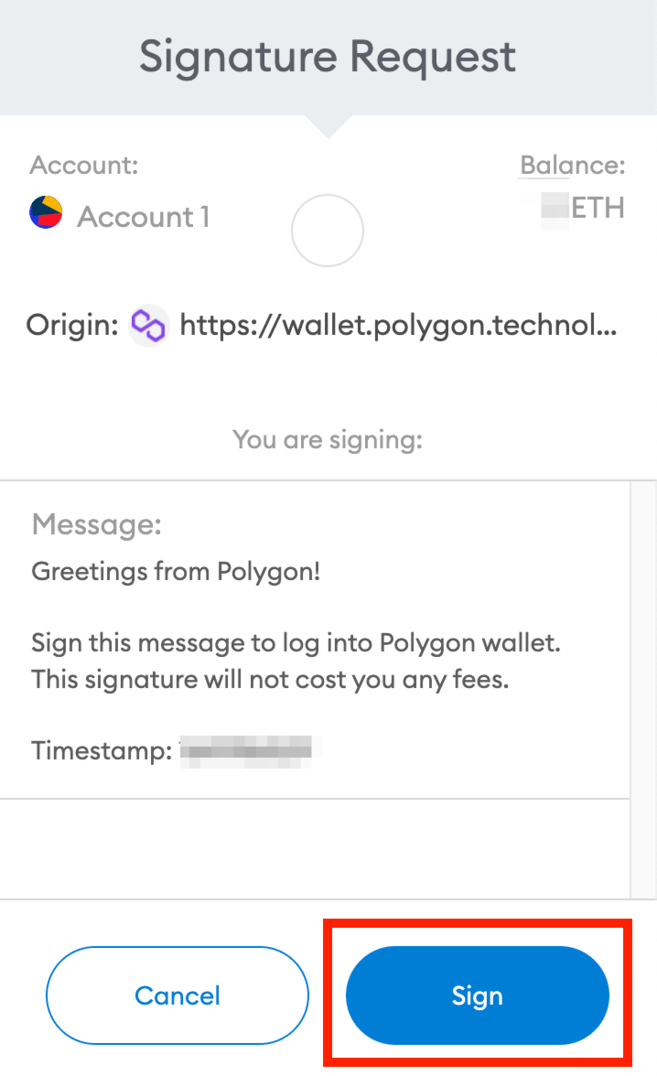
3. You will be asked to sign a message to connect the MetaMask wallet to the Polygon wallet. There is no charge for this signature. Double-click on the URL to ensure that you are on the correct website, then click [Sign] to continue.
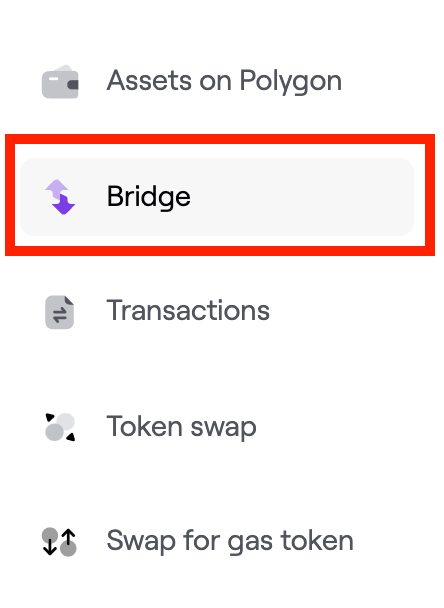
4. You will be redirected to the Polygon Bridge interface. If not, click [Bridge] in the left side menu bar.
5. To send tokens from Ethereum mainnet to Polygon, go to the [Deposit] tab. Click the token name to select the token you want to bridge. In this example, we will use ether (ETH). Enter the amount, then click [Transfer].

6. Read the important notes, then click [Continue] when ready.

7. You will also see the estimated gas fees for this transaction. If you agree to the gas fee, click [Continue] to continue.

8. Review the transaction details, including the token amount and estimated transaction fees, before clicking [Continue].
Note that the PoS Bridge is secured by validators. If you decide to move funds back to the Ethereum network, this process can take up to 3 hours.

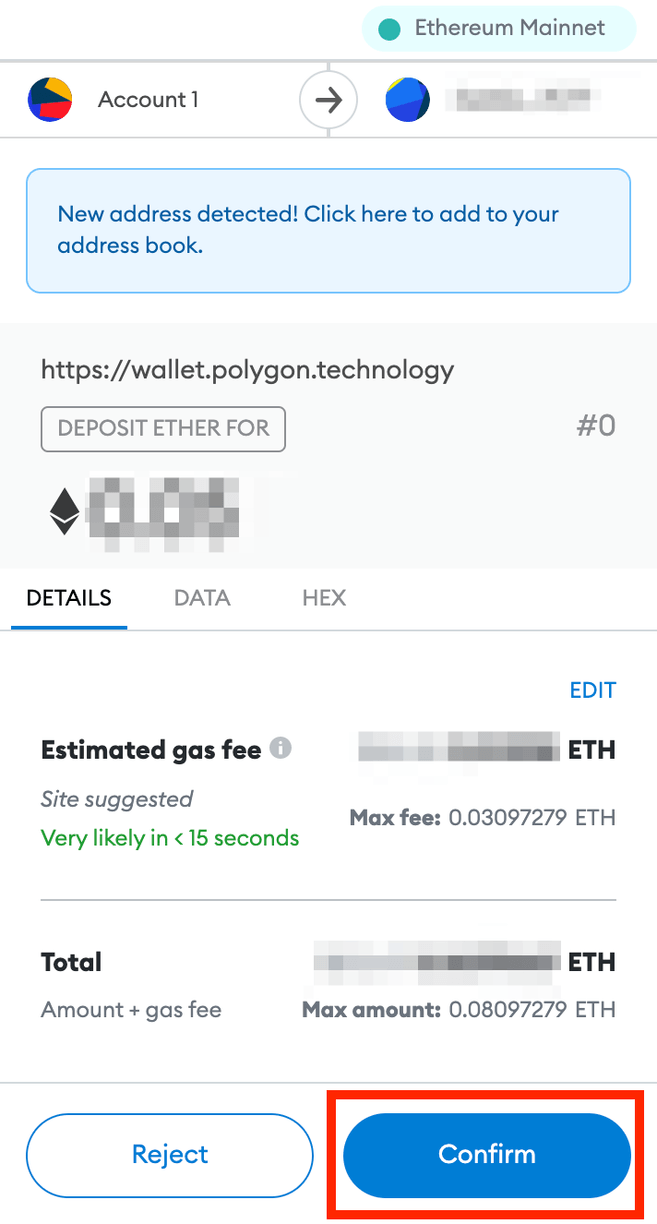
9. Then, you will be asked to sign and approve the transfer in the MetaMask wallet. Make sure that the details are correct, then click [Confirm].
10. Once confirmed, wait until the token arrives in the Polygon wallet. You can click [View on Etherscan] to check the transaction status.

How to bridge tokens from Polygon to Ethereum via PoS Bridge?
You can also use Polygon Bridge to transfer tokens from Polygon to Ethereum. Likewise, you will also need a crypto wallet, such as MetaMask.
As mentioned, there are two bridges in the Polygon network: Plasma Bridge and PoS Bridge. Withdrawal times vary depending on the Polygon Bridge used. PoS Bridge withdrawals typically take anywhere from 45 minutes to 3 hours, while Plasma Bridge can take up to 7 days.
Let's see how to transfer from Polygon to Ethereum via PoS Bridge.
1. Click [Withdraw] in the [Bridge] interface. Select the token you want to transfer to the Ethereum network.

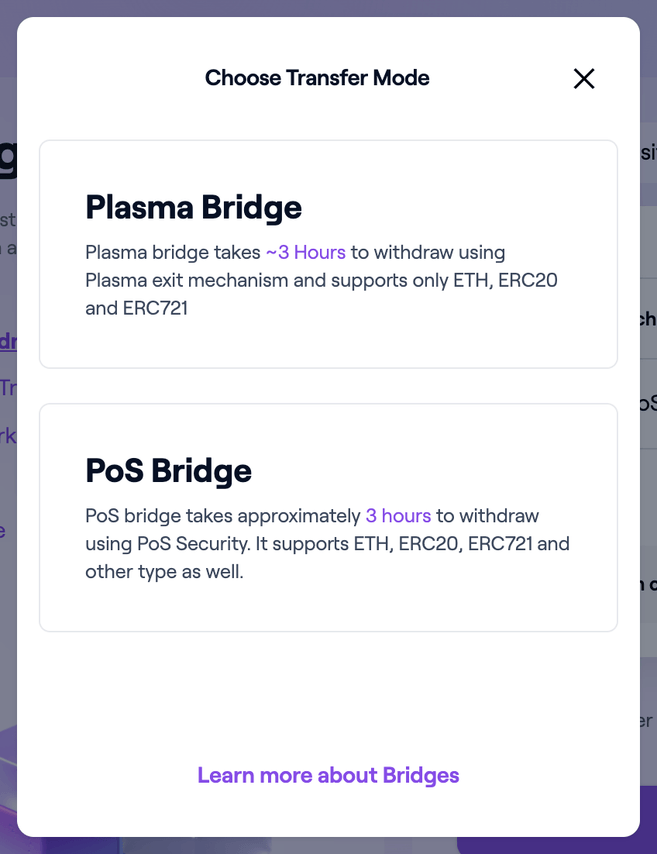
2. You may notice that there is a [SWITCH BRIDGE] button next to [Transfer Mode]. The platform will automatically select a compatible bridge for you based on the tokens selected.
PoS Bridge is recommended for transferring tokens from Polygon to Ethereum. This bridge supports the transfer of Ether (ETH) and other Ethereum tokens, including ERC-20, ERC-721, ERC-1155, and others.
3. After selecting the token, enter the amount you want to send, then click [Transfer].

4. Read the important notes, then click [Continue] when ready.

5. You will also see a [Transfer Overview] pop-up with the estimated gas fees for this transaction. If you agree to the gas fee, click [Continue] to continue.
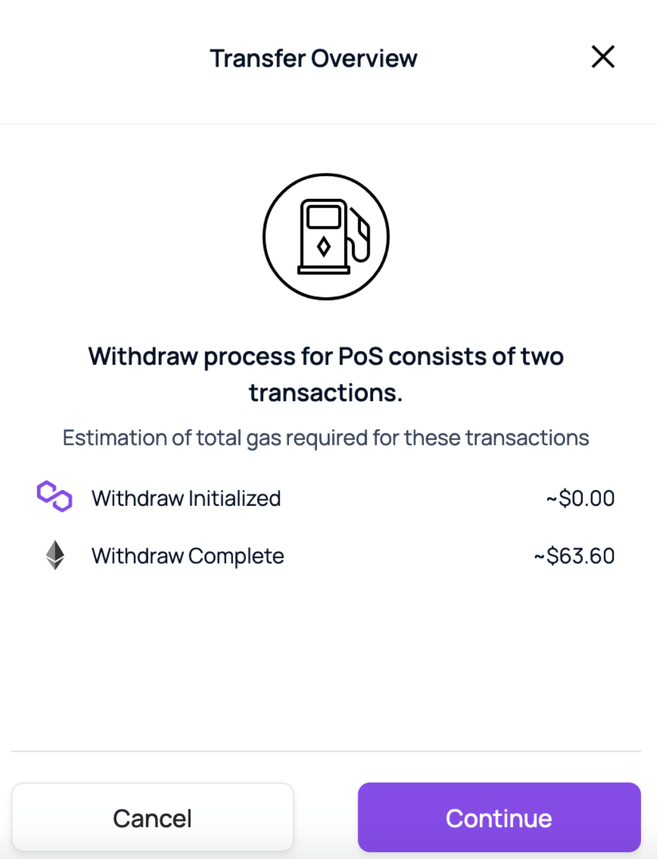
6. You can review the transaction details, including the number of tokens, bridges used, and estimated gas fees, before clicking [Continue].

8. You must sign and approve the transfer in the MetaMask wallet. Make sure that the details are correct, then click [Confirm].
Once confirmed, wait for the token to arrive in the Polygon wallet. You can click [View on Etherscan] to check the transaction status.
8. Next, you will see the transfer progress. Your withdrawal will be initiated on the network, then the PoS validator will verify the transaction. This process can take up to 3 hours to complete, but you don't need to take any action.
9. Once the transaction is validated, you must claim the tokens to the MetaMask wallet. Click [Continue], then you can see the assets when the withdrawal is completed.

How to bridge tokens from Polygon to Ethereum via Plasma Bridge?
If you want to transfer MATIC or other Polygon tokens to Ethereum, you can do so via Plasma Bridge. Note that Plasma Bridge only supports ERC-20 and ERC-721 token transfers which include ETH and MATIC.
In this example, we will transfer MATIC tokens from Polygon to Ethereum using MetaMask. By default, the MetaMask wallet only connects to the Ethereum mainnet. You must add the Polygon network to your wallet before you can view MATIC and start the process.
Step 1: Adding Polygons to MetaMask
There are two methods to add the Polygon network to a MetaMask wallet. The default method is to add them manually (read How to Add Polygons to MetaMask). However, you can also use the Polygon Wallet interface to quickly add Polygon to the MetaMask network list.
1. To do this, click the [Switch to Polygon] button at the top. Make sure that you have connected your MetaMask wallet.

2. You will see a pop-up of the MetaMask extension with Polygon network details. Click [Approve].

3. Done. Polygon Network has been added to MetaMask. You must now switch MetaMask from Ethereum Mainnet to the Polygon network. You can do this by clicking [Switch network].
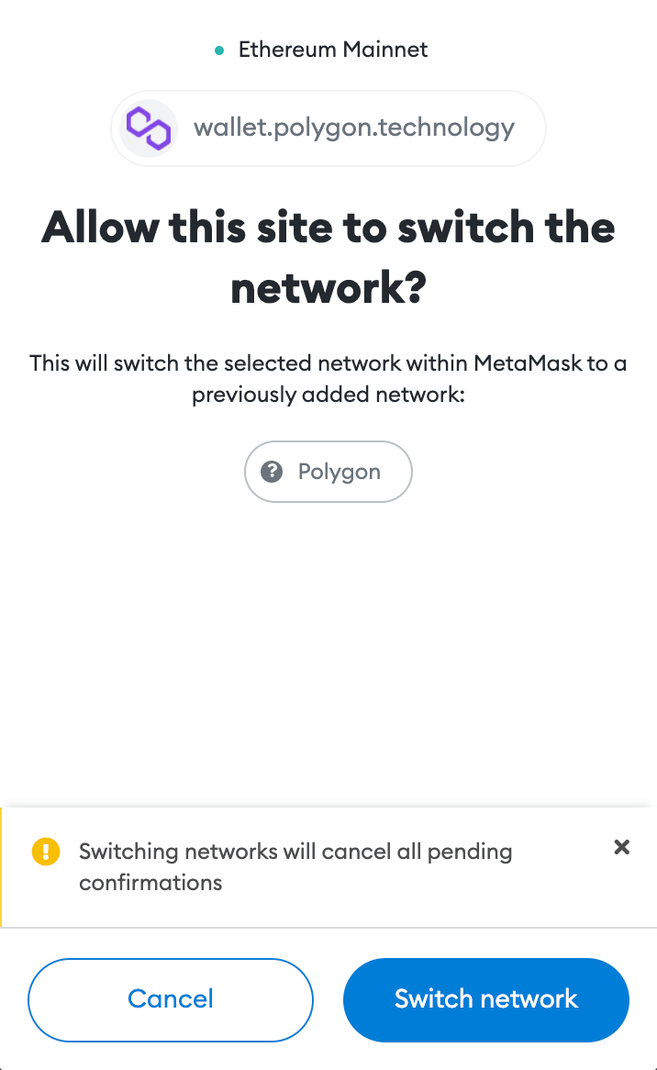
4. You can now see MATIC in your MetaMask wallet.

Step 2: Bridging MATIC to Ethereum using MetaMask
1. Open the [Bridge] interface, then click [Withdraw]. Select [Matic Token] from the token list, enter the amount, then click [Transfer].
The system will automatically select [Plasma Bridge] as the transfer mode.

2. Read the important notes, then click [Continue] when ready.

3. You will also see the estimated gas fees for this transaction. If you agree to the gas fee, click [Continue] to continue.

4. Review your transaction details before clicking [Continue].
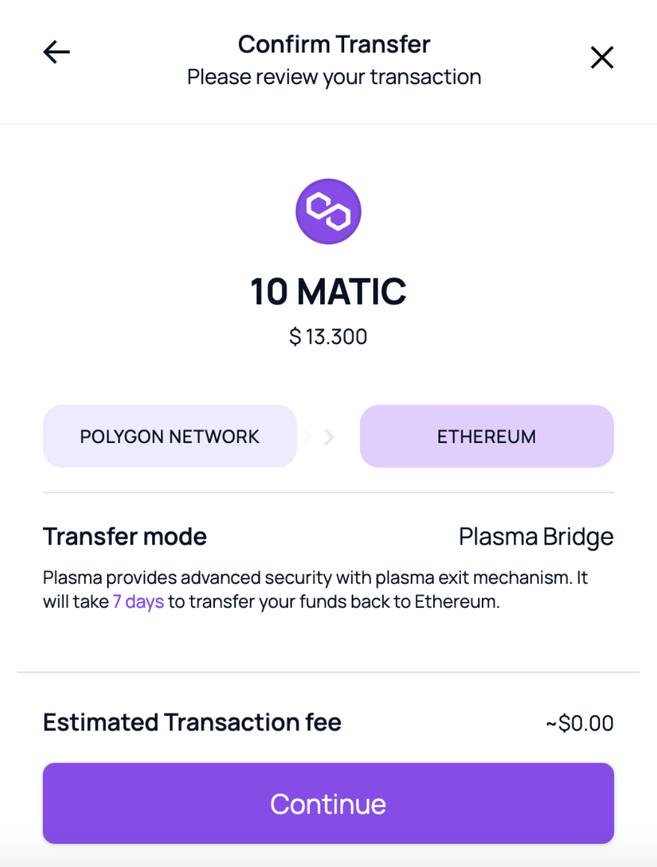
5. A MetaMask pop-up will appear for you to confirm the transaction. Click [Confirm] and you will see the transfer taking place.
You must manually confirm three transactions for Plasma Bridge transfers. The first transaction is to initiate a withdrawal from the Polygon wallet which can take up to 3 hours.

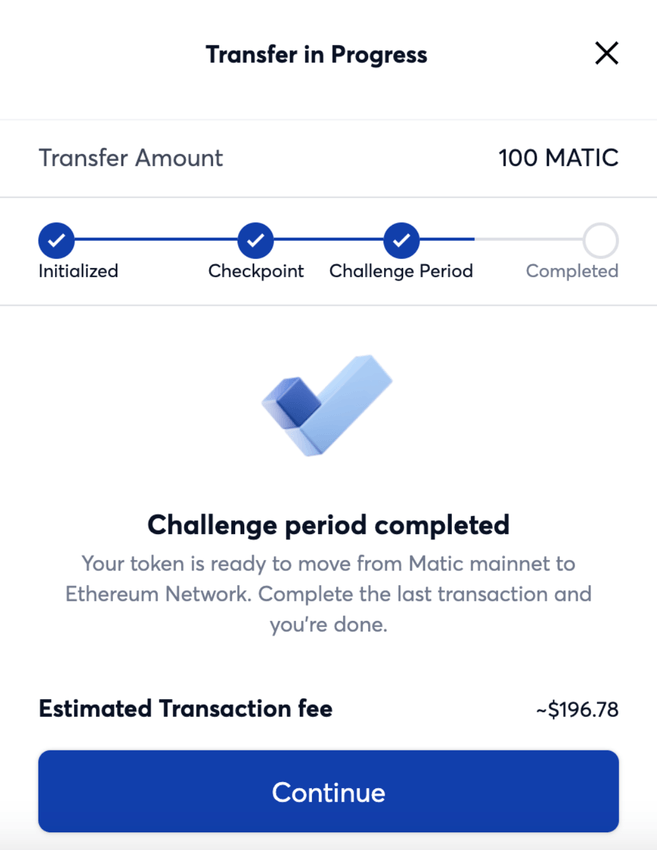
6. When the checkpoint arrives, your transaction is validated on the Ethereum blockchain. You must confirm the second transaction to start the challenge period. This is a step to offer increased security for withdrawal transactions.
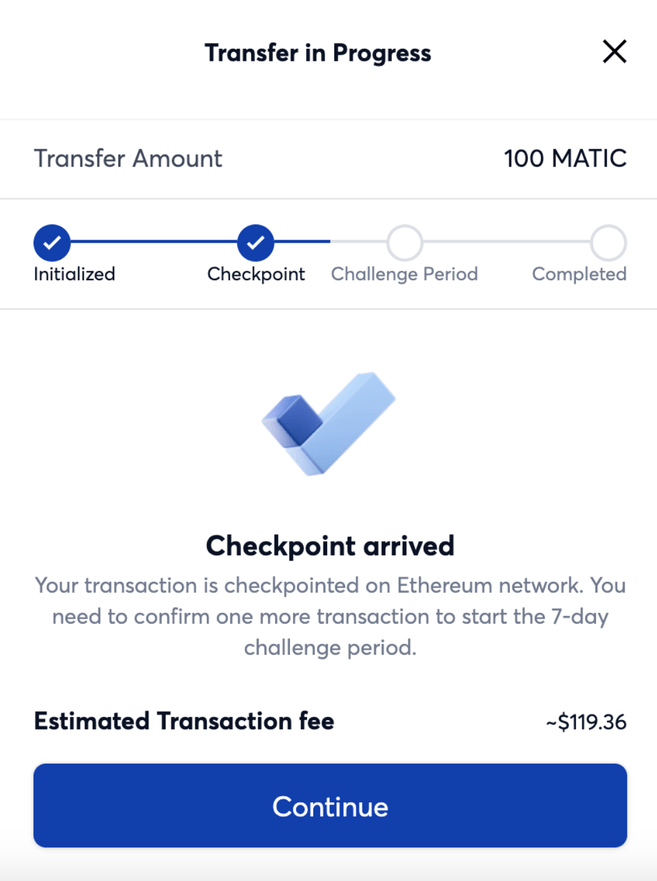
7. After the challenge period, all that is left to do is click [Continue] to send MATIC tokens to the MetaMask wallet.

Closing
The interoperability of Polygon Bridge allows users to transfer assets between the Ethereum and Polygon blockchains. Polygon Bridge offers an alternative to users who want to enjoy the various DeFi platforms and DApps available on the Polygon network.