

In brief
If you want to create your own NFT then the Binance NFT marketplace is a great place to start. You can also do this directly on Binance Smart Chain (BSC) using DeFi platforms like BakerySwap or TreasureLand. BSC has low fees, fast transaction times and a growing NFT community.
There are plenty of platforms to choose from, but typically you just need to fill in the NFT details, upload your work or digital file, and then pay the minting fee. If you want to sell your NFTs, you can quickly list them on several NFT marketplaces.

Introduce
You must be living under a rock to not have heard anything about NFTs (non-fungible tokens). Celebrities, digital artists, and creators are all set to put their art on the blockchain.
From paintings to songs and even NBA collectible cards, there's a lot of potential when it comes to turning them into NFTs. This is also a great way to prove the authenticity and ownership of creative products.
If you're really talented (or lucky), you can make a decent amount of money from this trend. Think of it as a collectible digital edition of your work or an exclusive canvas. If your NFT has a lot of interest, the price can be sky-high. You may have heard of visual artist Beeple, who sold an NFT called "Everydays: the First 5000 Days" for more than $69 million.
In addition to Beeple, other artists are selling their NFTs on marketplaces and exchanges built on blockchain technology. The top products with their sales are saying that.

What to prepare when minting NFTs?
Before you start minting your own NFTs, you'll need to prepare three things:
Your songs, artwork or collectibles
Some cryptocurrency to pay minting fees
Crypto wallet - a place to store your cryptocurrency
You will also need to choose the blockchain where you will create your NFT (non-fungible token). We will go into detail on this issue later.
What are NFTs?
You're looking to create your own NFT, but do you know exactly what an NFT is? Essentially, an NFT is like a cryptocurrency, but it represents something unique, collectible, and impossible to copy.
A simple example of NFTs are Pokémon cards. Anyone can use a piece of paper and print these cards, even making it look close to a real photo. But to collectors, these cards are not the same.
We value Pokémon cards for their uniqueness and "authenticity". This is the same with an NFT. Of course, you can download NFT-like images or collectibles, but that doesn't represent ownership or actual authenticity.
Even NFTs within the same limited collection are not the same. You may have an item that occupies position 01/100 in the series, and this item may be more valuable than the remaining units.
To learn more about the origins of the NFT craze, you can look into the cases of the games CryptoKitties and CryptoPunks. Below are some of the most popular collectible NFT projects, first launched on the Ethereum network.

What can become an NFT?
This is a big question that needs to be answered precisely - what can NFTs ultimately represent. Can NFTs only be digital items or real-world works of art? Although not so common, even physical things can be represented by NFTs. In these cases, the private key of the wallet containing the NFT is often pre-generated or provided with the item.
Christie's is even auctioning physical blockchain-inspired NFT art - Block 21 (42.36433°N, -71.26189°E) (from Portraits of a Mind), with an associated NFT on a hardware wallet OpenDime.
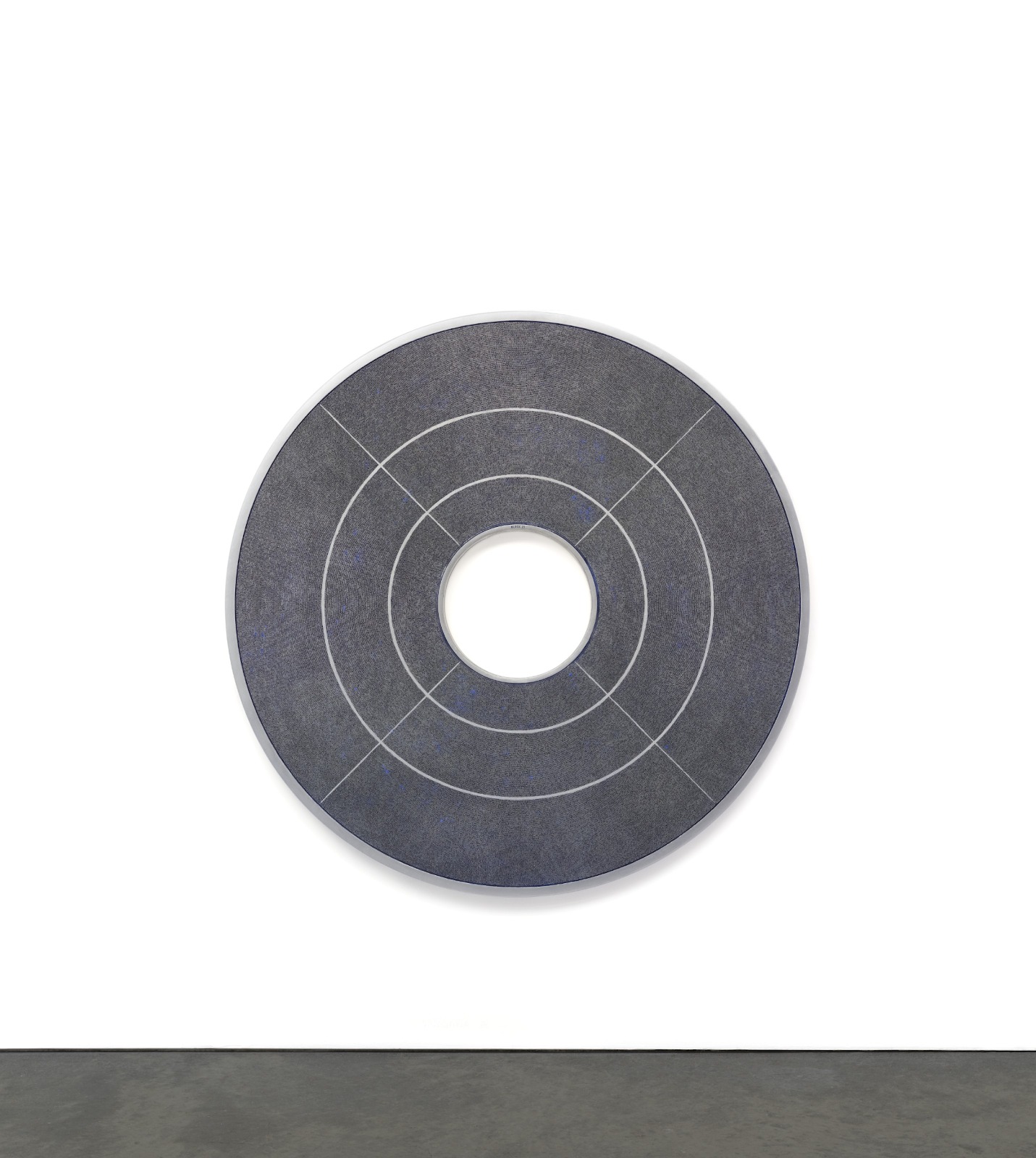
However, turning digital works of art, songs, animations, and videos into NFTs is much more common than the above cases. Even video game collectibles can be represented by NFTs and stakeable financial products. Cryptographic art and NFTs are not limited to one format, so there are no limits when it comes to creating your own new NFTs.
Is a specialized wallet needed to use NFTs?
This depends on the network you choose to generate tokens. Luckily, nowadays, most wallets support Ethereum and Binance Smart Chain, so there shouldn't be too much difficulty getting started. These blockchains are the two most popular blockchains used for NFTs.
The most important thing to remember here is to carefully check the blockchain network your token was created on. If it is an Ethereum token, you will need a wallet that supports Ethereum. If it is the Tezos blockchain, you will need a wallet that supports Tezos.
To keep things simple, we recommend using MetaMask or Trust Wallet. These are two cryptocurrency wallets that support different types of blockchains. However, you should always double check that your wallet supports the blockchain your token is on.
Which blockchain should I choose?
There are quite a few blockchains to choose from if you want to create an NFT. The Ethereum network was the first major blockchain to offer non-fungible tokens as we know them today. The current list of NFT-compatible blockchains includes Binance Smart Chain, Polkadot, Tron, Tezos, and more.
Most NFTs today exist on Ethereum or BSC. However, gas fees on Ethereum have made mining and processing NFTs quite expensive. Binance Smart Chain is a cheaper alternative with faster transaction speeds. There are many NFT marketplaces and projects that have a large audience - potential customers.
Which platform to use to create NFTs?
Choosing a platform to mint NFTs depends on personal choice and the blockchain you want to use. Most BSC protocols will generate NFTs for you in the form of BEP-721 tokens, so technically the NFTs will be the same no matter which platform you choose.
If you want to trade your tokens easily, it is best to choose a platform that has an existing exchange or exchange that you are familiar with. This way, you won't need to move your NFT somewhere else after minting it.
For ease of use, you should use BakerySwap and Treasureland. These BSC projects all have simple interfaces and cheap NFT minting fees. BakerySwap has the largest NFT marketplace. So, it is a suitable choice for anyone who wants to sell their NFTs after minting. You can mint NFTs for free with Treasureland. If you are looking to use Ethereum, OpeaSea or Rarible are two of the most popular platforms.
Is it possible to transfer NFTs from the BSC exchange to another marketplace?
You can easily transfer your NFTs between exchanges, as long as the new platform supports your token type. As for BSC marketplaces and exchanges, the majority of these platforms will support both the BEP-721 token and the BEP-1155 token. These are the most common types of NFTs on BSC that you will find.
What you can't do is transfer your NFT directly to a marketplace operating on another blockchain. For example, OpenSea does not support NFTs on Binance Smart Chain. While it is possible to wrap your tokens, we recommend keeping your NFTs securely on their original blockchain.
To transfer your NFTs to another exchange, transfer the collection to your wallet. Once you have it stored securely, you can easily send it to the correct address on the new platform. Always make sure to double check that the NFT token standard is supported by your wallet, and do the same with whichever platform you want to transfer it to.

How to mint NFTs on By Binance NFT Marketplace
1. Go to the Binance NFT Marketplace homepage and click [Create]. You need to connect to your crypto wallet to continue.

2. Then you just need to upload your digital files (images, audio, video, etc.).
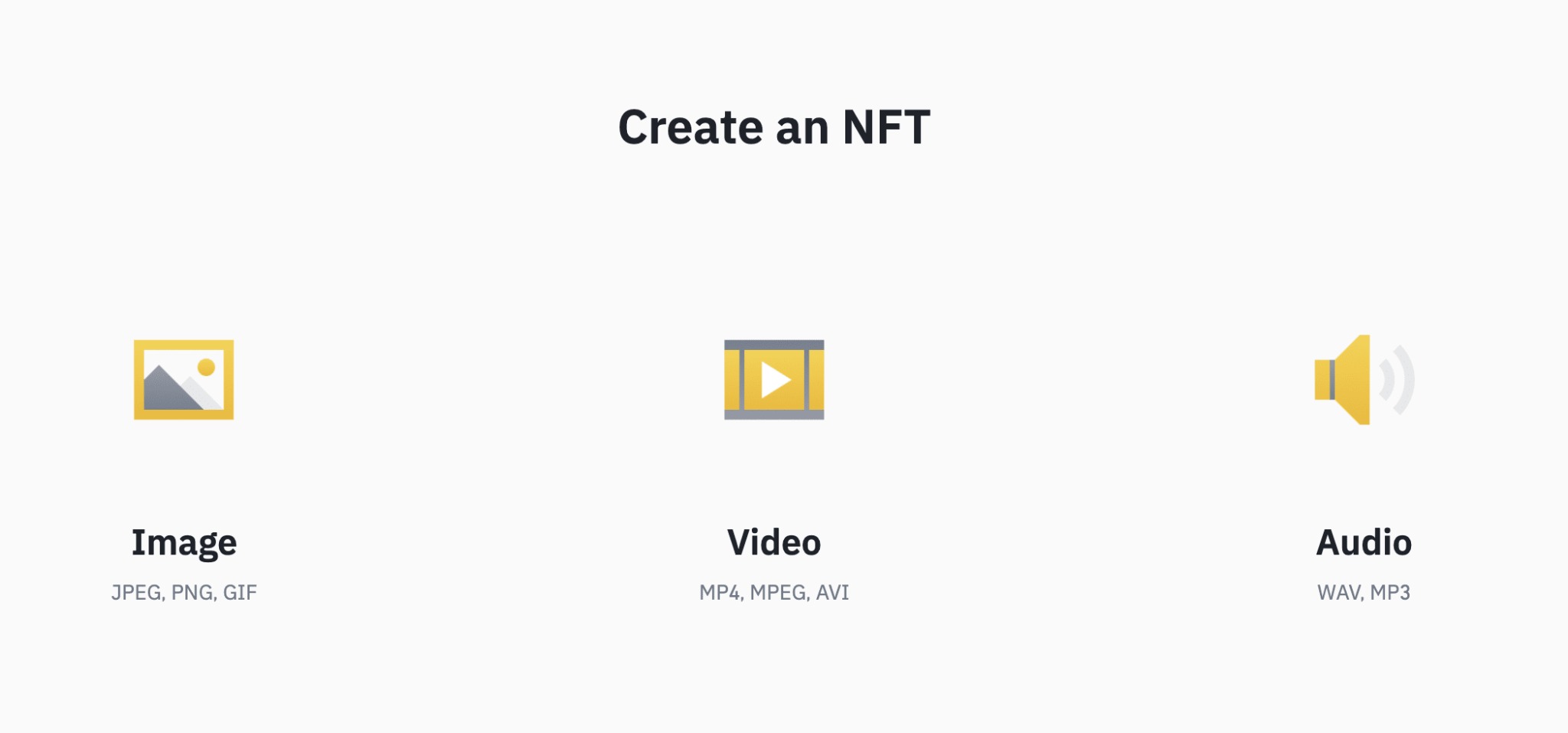
3. Remember to add a description (metadata) to your NFT. You also have to choose between individual NFTs or a collection (a group of NFTs).

How to mint NFTs on BakerySwap
It only takes 5 minutes to create an NFT on BakerySwap from start to finish. Just make sure you have some BNB available to pay the minting fee (0.01 BNB at the time of writing) and a crypto wallet to store the BNB.
Note that minting fees may vary based on the price of BNB. If you don't have a wallet yet, we recommend mobile users to use Trust Wallet and desktop users to use MetaMask.
With BakerySwap, you can create NFTs from:
Photos
Animation
Video
Audio - audio files
The following steps will demonstrate how to mint NFTs on BakerySwap.
1. First, go to BakerySwap NFT Marketplace and connect to your wallet by clicking the button in the upper right corner of the screen.
2. Once you have connected your wallet, click [Mint Artworks] to start creating your NFT.

3. Completely fill in all required fields.

4. Below the information section, click the [+] icon to upload your file. You can also see the minting fee at that time, below is a statement against counterfeiting and plagiarism.

5. After checking the information you have filled in is correct and uploading your image, choose to agree to the statement against counterfeiting and plagiarism before clicking [Mint].

6. If you are using MetaMask, a window will pop up asking you to confirm payment of your NFT minting fee.

7. Once you have paid, you can view your NFT on the blockchain with BscScan. Now, your NFT is available and you can transfer or trade it.

How to mint an NFT on Treasureland
Treasureland is an NFT marketplace that belongs to the BSC Dego Finance project. Treasureland owns a protocol that combines decentralized finance (DeFi) and the NFT ecosystem. Minting NFTs with Treasureland is free for the creator, as NFT buyers will be charged a fee.
Treasureland currently only allows users to create photos and GIFs, but you can choose to create a single NFT or create a shank and set royalties for the creator.
1. Go to Treasureland Create and connect your crypto wallet to get started.
2. Next, you go to the NFT creation page, fill in all the information about the NFT, then upload your photo or gif.

3. Note, Treasureland has locked in royalties at 10% before you create your NFT.

4. You can now view your NFT or sell it. If you want to transfer it, you will have to pay a minting fee.

How do I send my NFT to someone else?
Once you've purchased or created your own NFT, you can send it to others directly from your wallet. If your wallet has an NFT section, you can simply select your NFT and click on the send option (Trust Wallet and MetaMask offer this feature).
Note that the recipient of the NFT will have to provide their exact shipping address to you. And this address must match the type of token you have. If you own the NFT as an ERC-721 of the Ethereum network, the recipient must send you an Ethereum ERC-721 sending address from their wallet.
Is it possible to share ownership of NFTs and proceeds with others?
Collaboration with NFTs is currently a bit complicated. For the most popular NFT types (ERC721, ERC1155, BEP721, BEP1155), NFTs of this type only allow one owner.
However, some projects plan to allow the proceeds from the initial sale to be divided among multiple wallets. This feature is not built into the token's code but depends on the exchange or NFT marketplace you use. Therefore, we recommend that you check whether the exchange you use allows splitting the proceeds of NFT sales.
If you want complete control over your NFTs and store them in a non-custodial wallet, you can use a decentralized platform.
summary
The non-fungible token ecosystem is growing rapidly and becoming accessible to many people. If you want to mint your own NFTs, the process is quite simple. Whether you want to create, buy or sell NFTs, there are platforms available to help you do this. Try creating your own NFT!