

In brief
Stop loss and take profit are two basic concepts that many traders rely on to determine their trade exit strategy. These two levels depend on the level of risk the trader is willing to accept. These levels are used in both traditional and cryptocurrency markets, and are especially popular among traders who rely on technical analysis.
Introduce
Market timing is a strategy in which investors and traders try to predict future market prices and find an optimal price to buy or sell an asset. With this approach, finding the right time to exit the market is very important. That's where stop loss and take profit levels come into play.
Stop loss and take profit levels are price targets that traders set for themselves in advance. Often used as part of an exit strategy for a disciplined trader, these predetermined levels are designed to minimize emotional trading and are essential for risk management. .

Stop loss and take profit levels
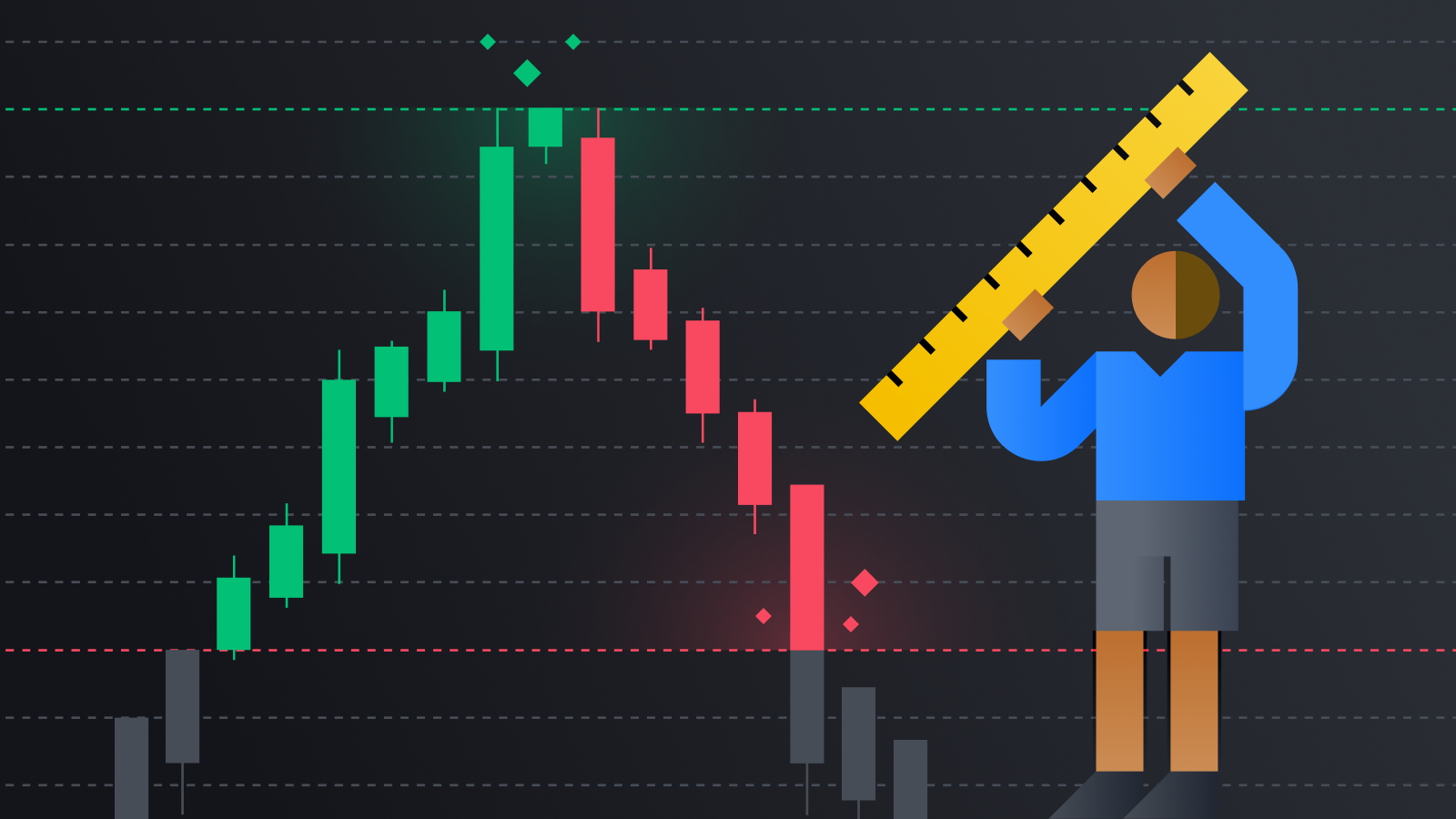
Stop loss level (SL) is a predetermined price of an asset, set below the current price, at which a position is closed to limit the investor's loss on this position. In contrast, the take profit (TP) level is a pre-set price at which traders close a position at a profit.
Instead of using real-time market orders, traders can set these levels to trigger automatic selling without having to monitor the market 24/7. For example, Binance Futures has a Stop Order function that combines stop-loss and take-profit orders. The system decides whether an order is a stop-loss or take-profit based on the trigger prices and the last price or mark price when the order was placed.
Why use stop loss and take profit?
Implement risk management
The SL (stop loss) and TP (take profit) levels reflect the current market dynamics, and essentially determining the correct optimal value is about identifying favorable trading opportunities and possible risk levels. acceptable. Assessing risk using SL and TP levels can play an important role in maintaining and growing your portfolio. Not only will you systematically protect your holdings by prioritizing less risky trades, but you'll also prevent your portfolio from being completely wiped out. Therefore, many traders use SL and TP levels in their risk management strategies.
Prevent emotional trading
A person's emotional state at any given time can seriously influence decision making and this is why some traders set up strategies in advance, to avoid trading in a state of panic. stress, fear, greed, or other strong emotions. Learning to determine when to close a position can help you avoid impulsive trading and allows you to manage your trades strategically rather than haphazardly.
How to calculate risk/reward ratio
Stop loss and take profit levels are used to calculate the risk to reward ratio of the trade.
The risk-to-reward ratio is a measure of possible risk compared to the potential reward. In general, it is better to enter trades with a lower risk-to-reward ratio as this means your potential profits are greater than the potential risks.
You can calculate your risk-to-reward ratio using the following formula:
Risk to reward ratio = (Input price - Stop loss price) / (Take profit price - input price)
How to calculate stop loss and take profit levels
There are many different methods that traders can use to determine optimal stop loss and take profit levels. These approaches can be used independently or in combination with other methods, but the end goal remains the same: use existing data to make more informed decisions about when to close a position. position.
Support and resistance levels
Support and resistance are core concepts familiar to any technical trader in both traditional and cryptocurrency markets.
Support and resistance levels are areas on the price chart that are most likely to experience increased trading activity - be it buying or selling. At support levels, the downtrend is expected to pause due to increased levels of buying activity. At the resistance levels, the uptrend is expected to pause due to the increased level of selling activity.
Traders using this method typically place their take profit level just above support and their stop loss level just below the resistance level they have identified.
Below is a detailed guide to Support and Resistance Levels.
Moving average
This technical indicator filters market noise and smooths price action data to reveal the direction of a trend.
Moving averages (MAs) can be calculated over a shorter or longer period, depending on the individual trader's preference. Traders closely watch moving averages, looking for selling or buying opportunities demonstrated in crossover signals, where two different MAs intersect on the chart. You can read about Moving Averages in detail.
Typically, traders using MAs identify stop losses below a long-term moving average.
Percent method
Instead of a predetermined level calculated using technical indicators, some traders use fixed percentages to determine SL and TP levels. For example, they may choose to close their position when the asset price is 5% higher or lower than the price they entered. This is a simple approach that works well with traders unfamiliar with technical indicators.
Other indicators
We've covered some popular TA tools used to set SL and TP levels, but traders use many other indicators. Other tools include the Relative Strength Index (RSI), which is a momentum indicator that signals if an asset is overbought or oversold, Bollinger Bands (BB), which measure market volatility and Moving Average Convergence Divergence (MACD), which uses exponential moving averages as data points.

summary
Many traders and investors use one or a combination of the above methods to calculate stop loss and take profit levels. These levels act as technical incentives for them to exit a trade - be it giving up a losing position or realizing a potential profit. Note, each trader has a different way of determining stop loss and take profit levels, and these levels do not guarantee successful performance. Instead, stop losses and take profits aid decision making, making it more systematic and robust. Therefore, assessing risk by determining stop loss and take profit levels or using other risk management strategies is a good habit when trading.