


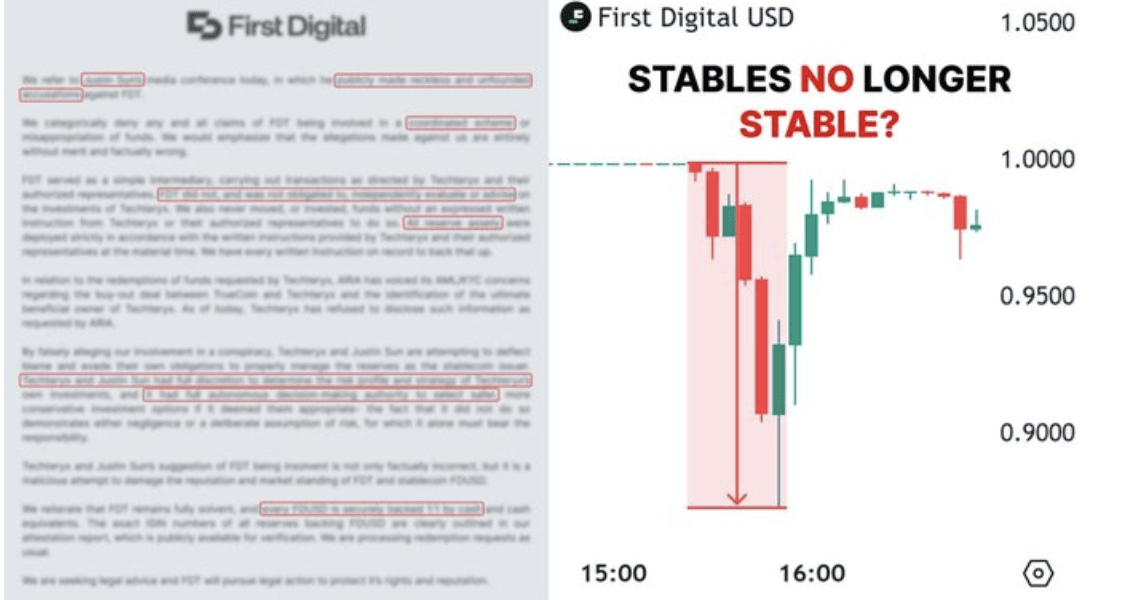
On a certain day in March, the stablecoin FDUSD suddenly decoupled by 10%, briefly falling below $0.90, triggering widespread panic in the market. As a stablecoin issued by the Hong Kong institution First Digital Trust (FDT), FDUSD was originally seen as a 'stable haven', but this incident exposed the hidden systemic risks in the stablecoin market.
🧨 Cause of decoupling: public accusations by Tron founder Sun Yuchen.
The catalyst of the event was Sun Yuchen's post on platform X, questioning FDT's solvency and urging investors to withdraw their assets quickly. His main points include:
- There are loopholes in Hong Kong's financial trust system.
- FDT's internal risk management mechanism is weak.
- Calling for Hong Kong regulators to intervene and investigate.
🛡️ FDT's response: denies allegations and counters.
FDT immediately denied all allegations, stating:
- This incident is related to TUSD (TrueUSD), not FDUSD.
- FDT remains in a fully solvent state.
- Allegations are a 'smear campaign' by Sun Yuchen to suppress competitors.
They also announced they would hold an AMA to address public concerns. Binance also stated that FDUSD has over $2 billion in US Treasury and overnight deposit reserves.
🔍 The truth behind: the spread of the TUSD crisis.
According to CoinDesk and Hong Kong court documents:
- Sun Yuchen once intervened to 'take over' TUSD, which was facing a liquidity crisis.
- A portion of TUSD's reserves is held by FDT, and about $500 million of it became irredeemable at one point.
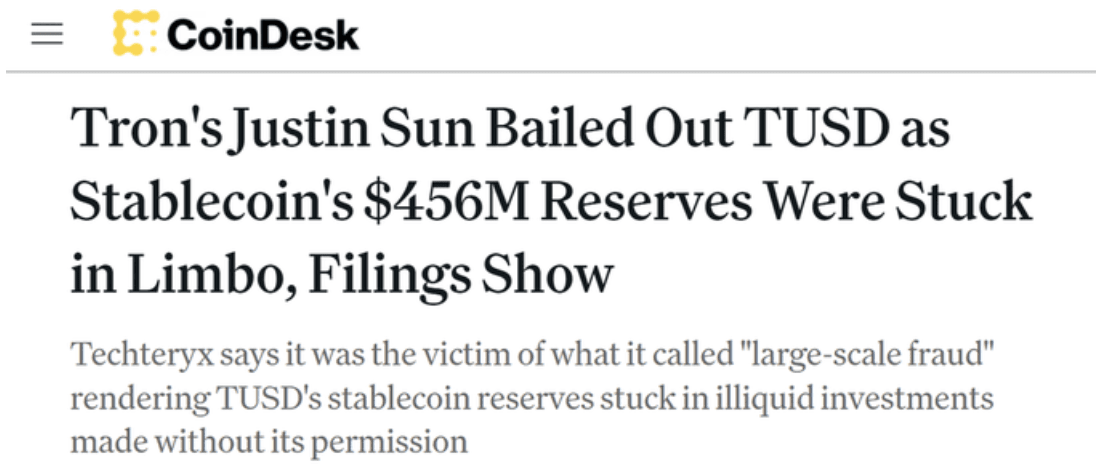
This raised public concerns about the independence of funds between FDT and FDUSD.
🔄 Historical lessons of stablecoins decoupling:
FDUSD is not the first stablecoin to decouple; history shows that 'stability' is actually quite fragile:
📉 BitUSD (2018)
- Backed by BTS, the mechanism is similar to DAI.
- But BTS prices surged 15 times, leading to a severe imbalance in collateral ratios.
- Market capitalization once exceeded reserves by 16 times, leading to unsustainable decoupling.
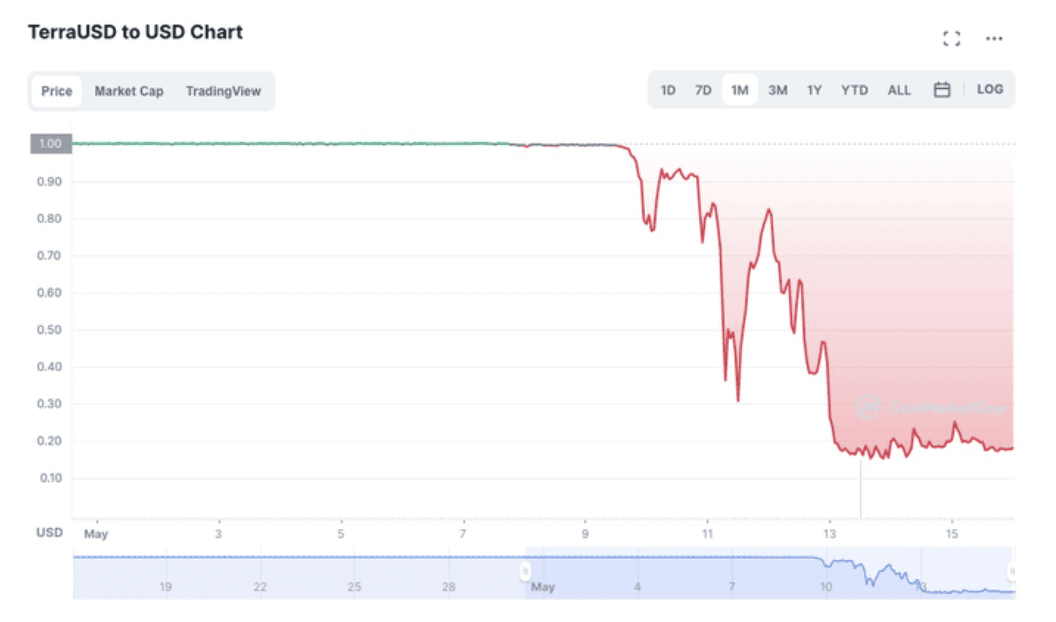
💣 TerraUSD (USTC, 2022)
- Algorithmic stablecoin, pegged to LUNA.
- Market sentiment and selling pressure led to a 'death spiral'.
- Catastrophe: losses exceed $45 billion, triggering the 'crypto winter'.
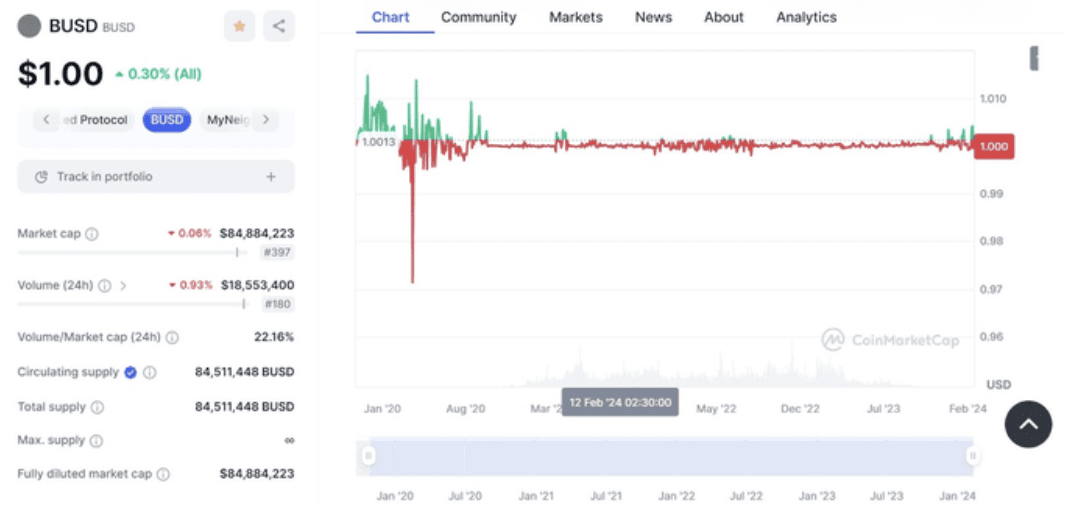
⚠️ BUSD (2023)
- Issued by Paxos, previously regulated by the New York Department of Financial Services.
- Regulators suddenly halted issuance, triggering panic redemptions among users.
- Although it was an 'orderly' exit, confidence was severely damaged.
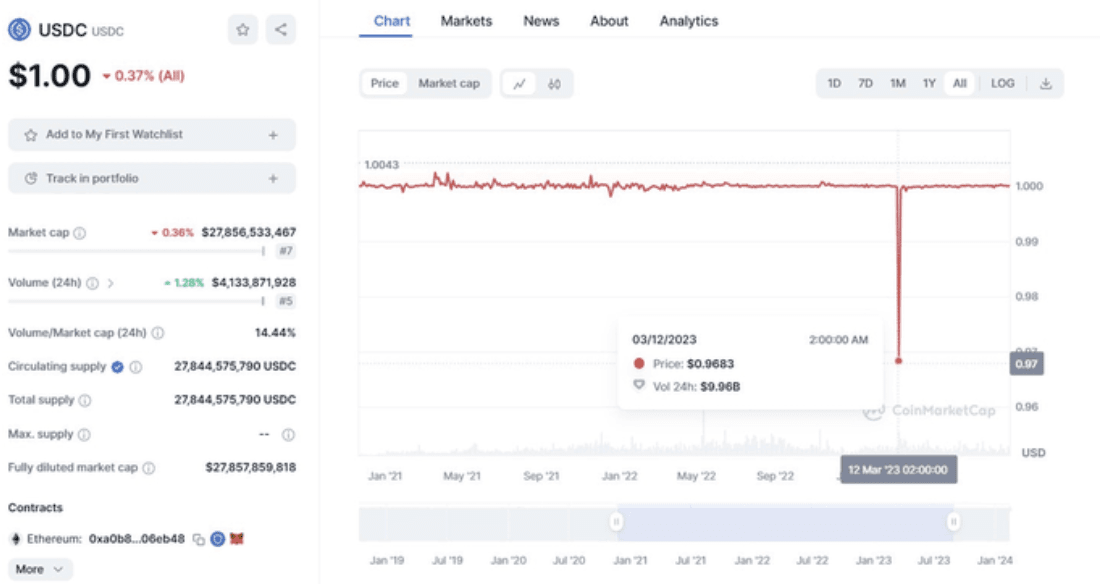
💥 USDC (2023)
- Issued by Circle, once regarded as one of the 'most reliable' stablecoins.
- $330 million in reserves trapped in Silicon Valley Bank, causing market panic.
- Circle paused redemptions, prices briefly plummeted, then recovered with Federal Reserve intervention.
✅ Conclusion:
Stablecoins ≠ zero risk, learn to identify and diversify risks.
The FDUSD incident reminds us that even 'compliant' and 'backed' stablecoins can face public attacks, reserve liquidity issues, or regulatory risks.
🧠 Investors should:
Diversify holdings across different types of stablecoins (fiat-backed, crypto-backed, RWA, etc.).
Continue to monitor reserve disclosures and audit reports.
Maintain awareness of the issuing institution's background and regulatory environment.
Do not equate stablecoins with bank deposits or 'risk-free assets'.