

Author: Cookie, BlockBeats
In the article Bitcoin NFT "Pioneering": Ordinals Protocol, FOMO and Controversy", the author introduced the current trading difficulties of Bitcoin NFT - there is no trading market, all relying on OTC. The Emblem Vault to be introduced this time encapsulates Bitcoin NFT and brings it to the Ethereum mainnet, allowing Bitcoin NFT to be traded directly on OpenSea.
How to achieve?
Emblem Vault assumes the role of a “custodian” - handing over the Bitcoin NFT to them, obtaining a custody certificate that can be traded on the Ethereum mainnet, and claiming the corresponding NFT based on the custody certificate.
The seller uses Emblem Vault to mint a "Vault" NFT and transfer the NFT to be sold to the Bitcoin network address specified by Emblem Vault. When the Bitcoin network address is detected to have assets deposited, the "Vault" NFT will be displayed on OpenSea with the cover image and description set by the seller.
Once the buyer purchases the "Vault" NFT on OpenSea, the seller loses control of the "Vault" NFT. The buyer can choose to continue selling on OpenSea, or go to the Emblem Vault official website to perform the "Open" operation on the "Vault" NFT. Once the "Open" operation is performed, the "Vault" NFT will be removed from OpenSea and destroyed, and the private key of the Bitcoin network address that stores the corresponding NFT asset will be given to the "Open" operator.
Seller Operation Process
Resources Required:
- Sparrow Wallet
- 250 $COVAL
First, go to the Emblem Vault official website and mint the "Vault" NFT.
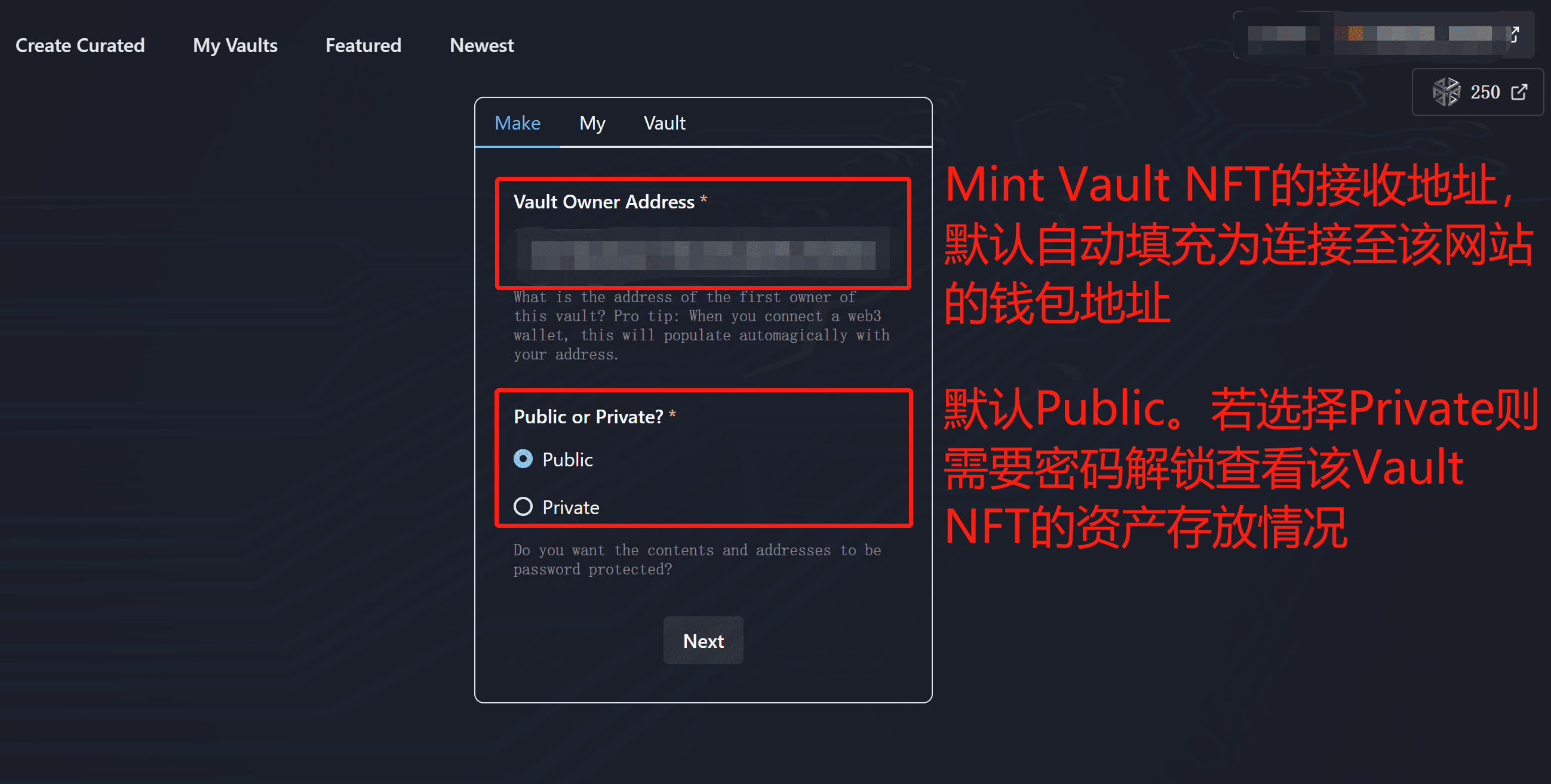
After confirmation, click "Next" to proceed to the next settings page.
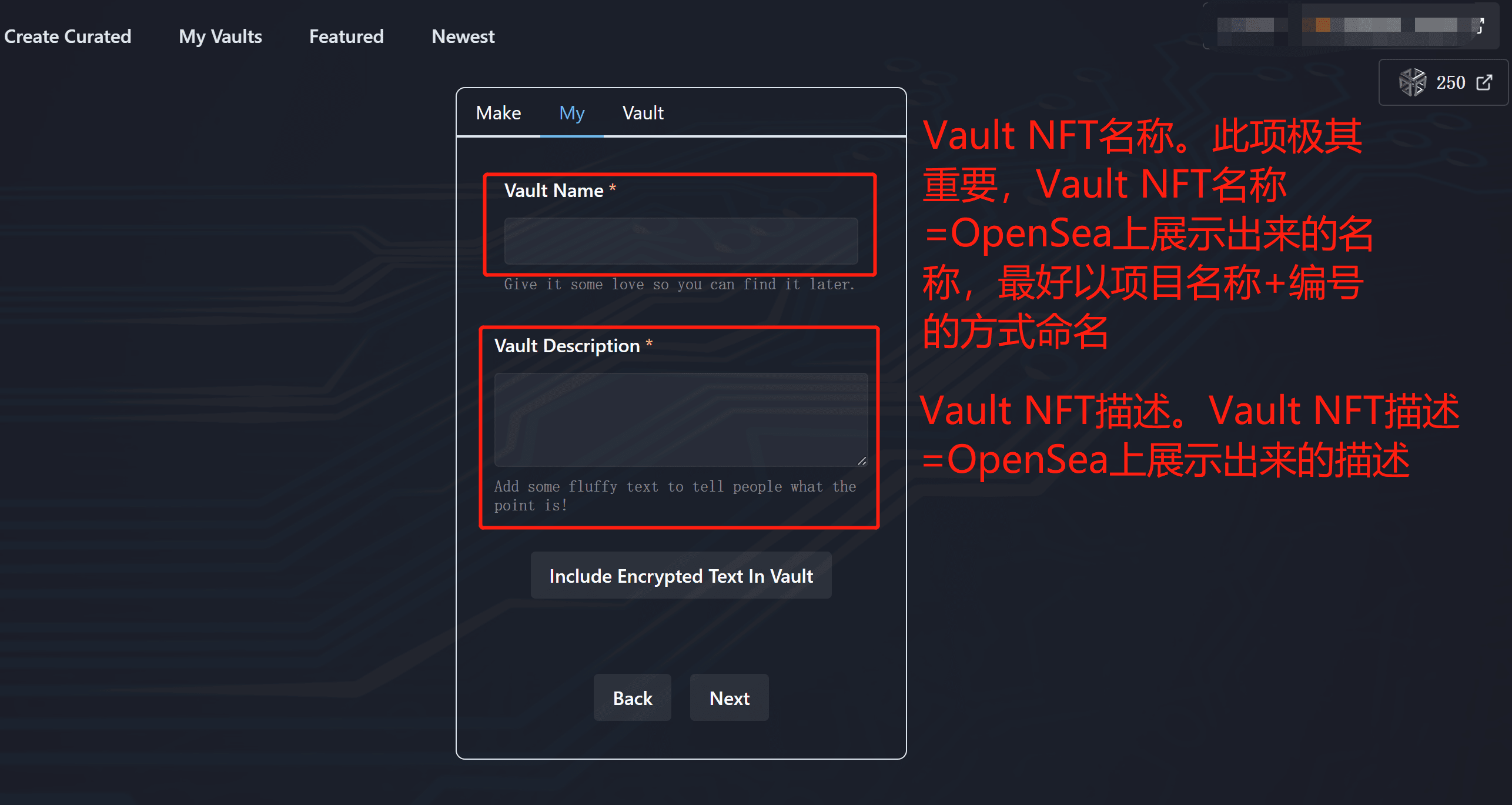
After confirmation, click "Next" to enter the last setting page.
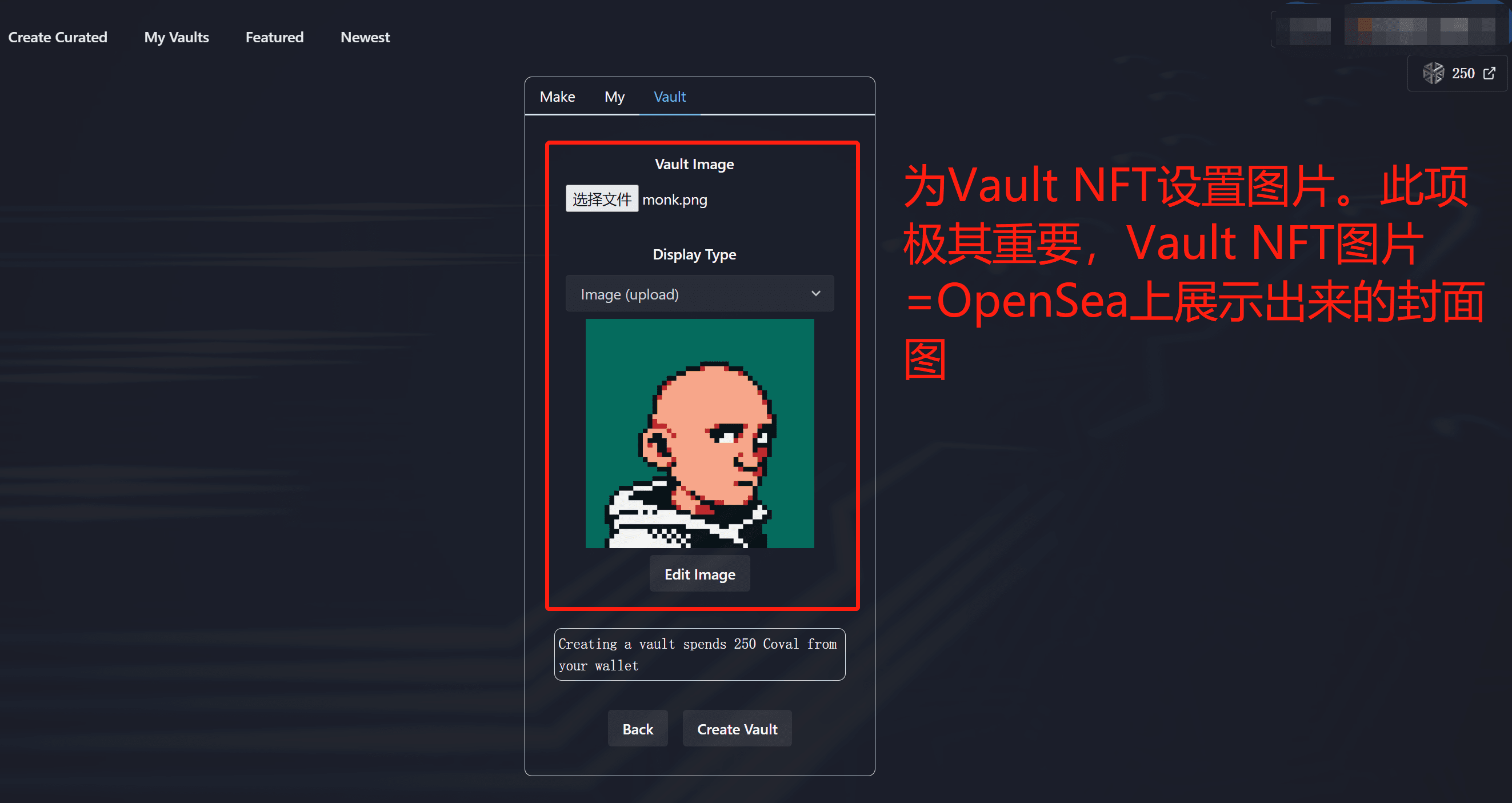
After the settings are completed, click "Create Vault" to create the Vault. After the creation is completed, select "BTC/SCP/OMNI" in the options under "Deposit Addresses" to get the address specified by the Emblem Vault for storing Bitcoin NFT assets.
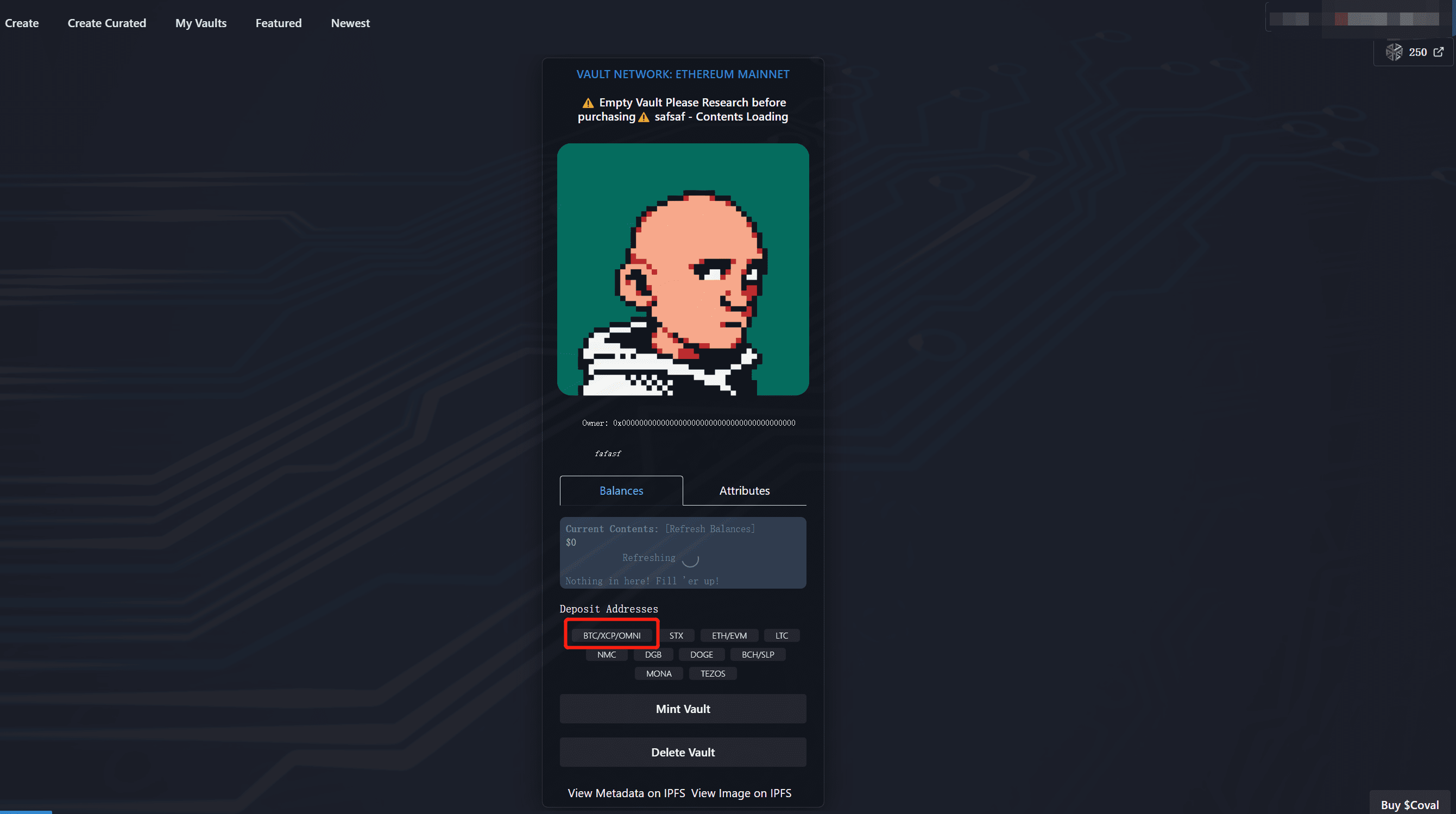
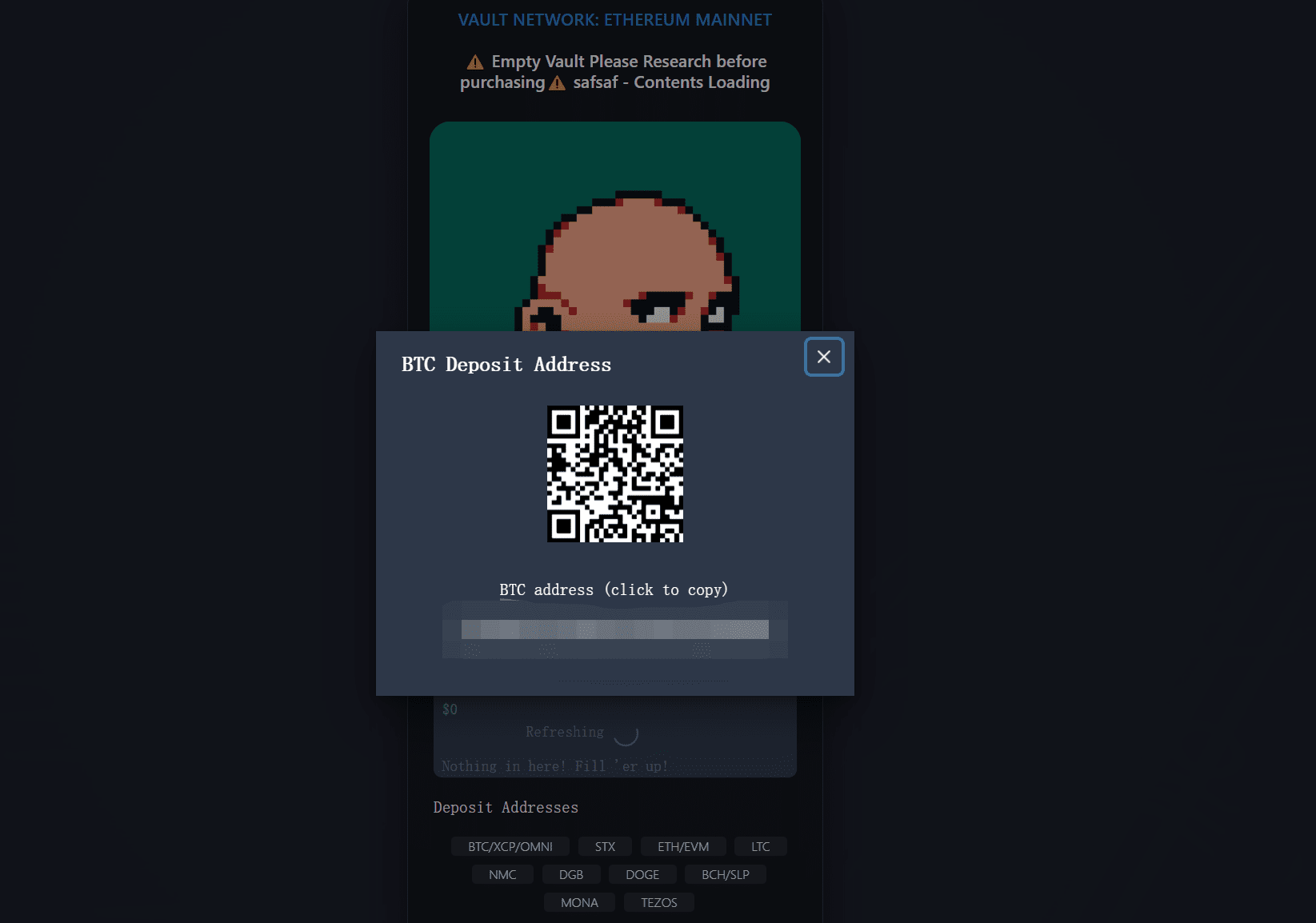
Next, open the Sparrow wallet and transfer the Bitcoin NFT to the address. Import the address containing the Bitcoin NFT asset to the Sparrow wallet and click the "UTXOs" option in the left navigation bar.
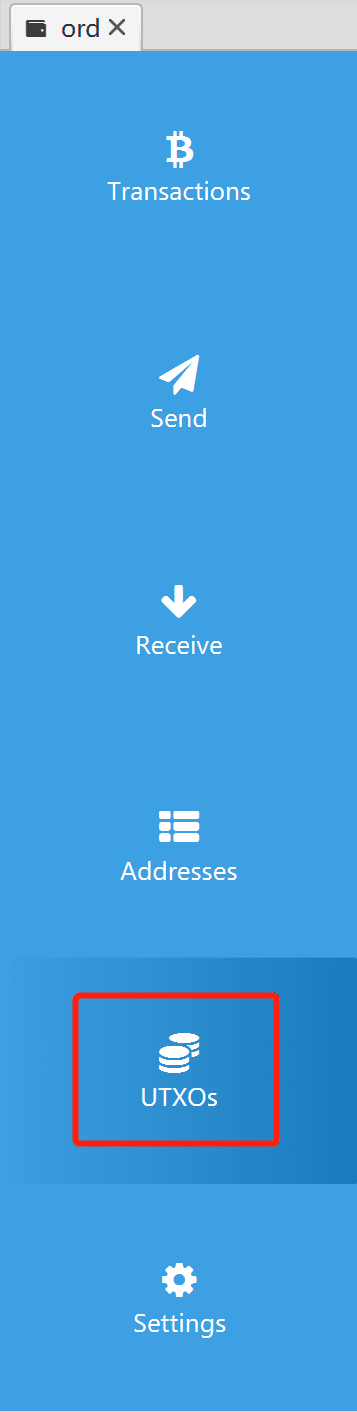
Select the UTXO to which the NFT belongs that you want to transfer to the Emblem Vault for safekeeping and circulation on the Ethereum mainnet. Be very careful in this step, make sure the selected UTXO contains the NFT, and only select this one for subsequent operations! If you are not sure whether the UTXO contains the NFT, right-click to call out the menu and select the "Output" option, then click "Copy Transaction Output", and paste the copied result into the Ordinals official website for query confirmation.

Then click "Send Selected". In the "Pay To" box, fill in the address given by Emblem Vault for storing Bitcoin NFT assets (the "BTC Deposit Address" shown in the picture in the above setting steps), and in the "Label" box, fill in the name of the Valut NFT (the "Vault Name" shown in the picture in the above setting steps). The rest of the options do not need to be filled in or modified. Here you need to confirm again that this transaction must be 1 Input - 1 Output! The correct transaction structure should be as shown in the red box below. There is only xxxx Inscription... on the left, and the top of the right must be Send inscr..., followed by the fee prompt.
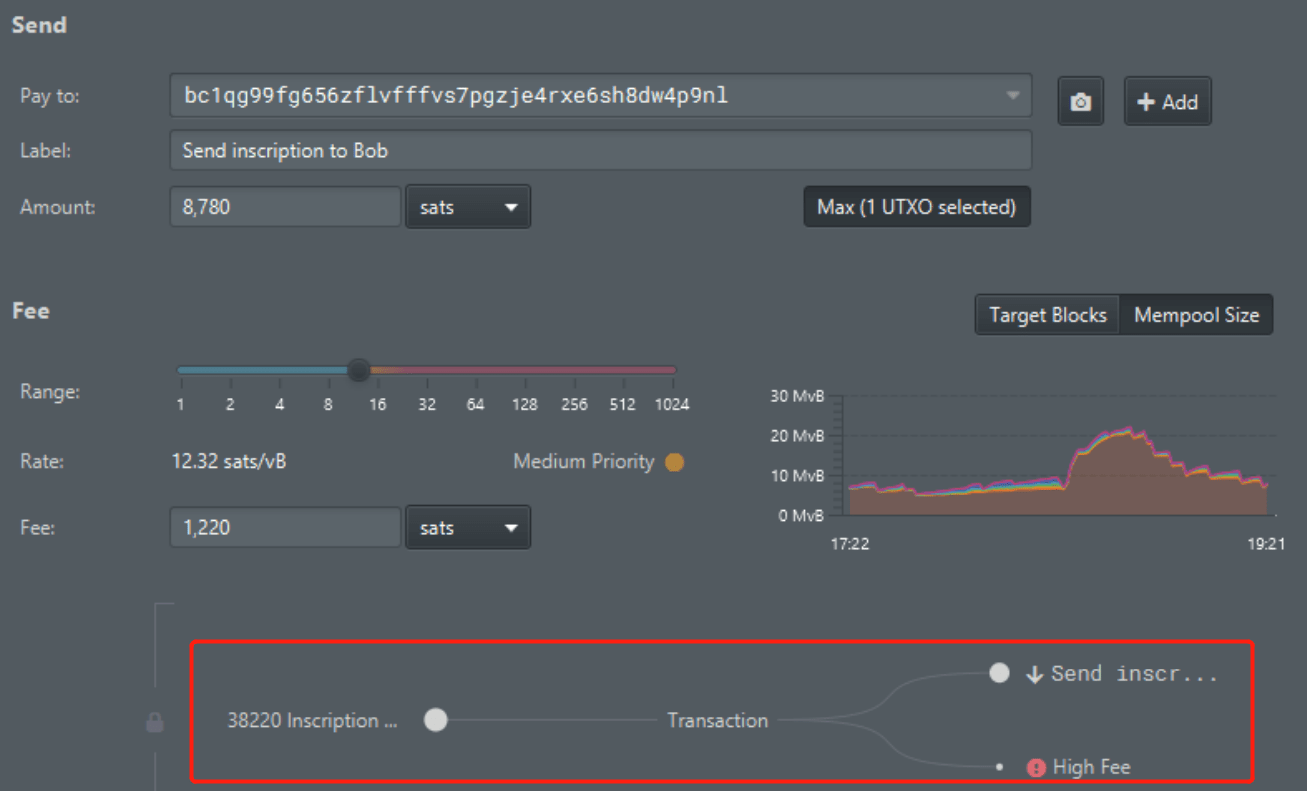
Then click "Create Transaction" (here you still need to check whether the transaction structure is as shown in the figure above, otherwise you need to re-operate), "Finalize Transaction for Signing", "Sign" and "Broadcast Transaction" to submit the transaction.
After the transaction is submitted, return to Emblem Vault and find the newly created Vault in the "Not Minted" directory of "My Vaults". When Emblem Vault confirms that it has received the assets, the "Balance" column will show a certain balance. Click "Mint Vault" to submit a Mint request (Mint costs 250 $COVAL). After completing the Mint, you can trade the Vault NFT on OpenSea.
You may have two questions here:
What is the Vault NFT I got?
The Vault NFT you get is the "custody certificate" given to you by Emblem Vault. Since the Bitcoin NFT has been hosted in the wallet designated by Emblem Vault, whoever owns the Vault NFT can obtain the private key/mnemonic phrase to unlock the wallet and gain control of the NFT. You cannot obtain the private key/mnemonic phrase of this wallet in advance, because once the acquisition operation is performed, the corresponding Vault NFT will be immediately removed from the shelves and destroyed.
When using Sparrow wallet for transfer transactions, does the wallet not require additional Bitcoins as gas fees?
No. Although the Ordinals protocol writes data into a single satoshi to give Bitcoin NFT properties, Ordinals actually creates a UTXO with 10,000 satoshis when Mint is completed, and the satoshi that is the NFT is ranked first in the output. When the transaction is 1 Input - 1 Output, according to the first-in-first-out principle, the satoshi that is the NFT will be assigned to 1 Output first, followed by the second, third, and then the satoshi that is the value sent to the recipient. In other words, the satoshis other than the satoshi that is the NFT will be paid as gas fees. Every time such a transfer occurs, the UTXO will become smaller and smaller, until finally other UTXOs can only be used to ensure that the NFT is not lost.
Since Bitcoin NFTs are very new on the market, transferring them under the 1 Input - 1 Output transaction structure can basically ensure that the NFT is not lost. Once again, it is necessary to ensure that only 1 Bitcoin NFT is transferred each time, the transaction is 1 Input - 1 Output, and the transaction structure is "There is only xxxx Inscription... on the left, and the top of the right must be Send inscr...". It is strongly recommended to use a combination of Bitcoin full node + Ordinals Wallet to ensure that there is no risk.
Buyer Operation Process
The buyer's operation process is relatively simple. Basically, he purchases the corresponding Vault NFT on OpenSea, executes the "Open" operation on Emblem Vault to obtain the private key/mnemonic phrase of the address where the Bitcoin NFT is stored, and then transfers the Bitcoin NFT to the corresponding wallet.
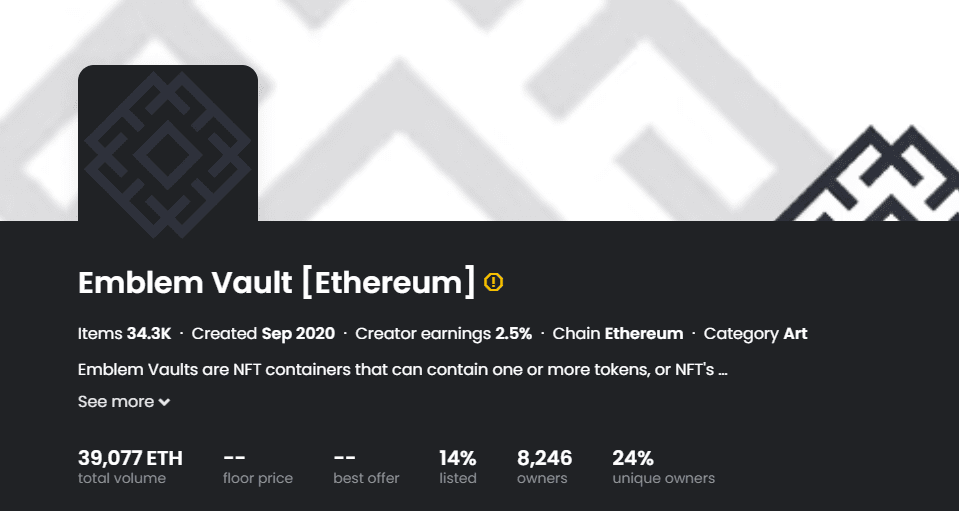
First, go to the Emblem Vault OpenSea page to select Bitcoin NFTs. Be careful not to be fooled by fake series. The total transaction volume of the real series is very high, close to 40,000 ETH, which is a more direct judgment indicator.
By checking the BTC-related options in the filter on the left, you can filter out Bitcoin NFTs that are mapped to Ethereum mainnet transactions through Emblem Vault.
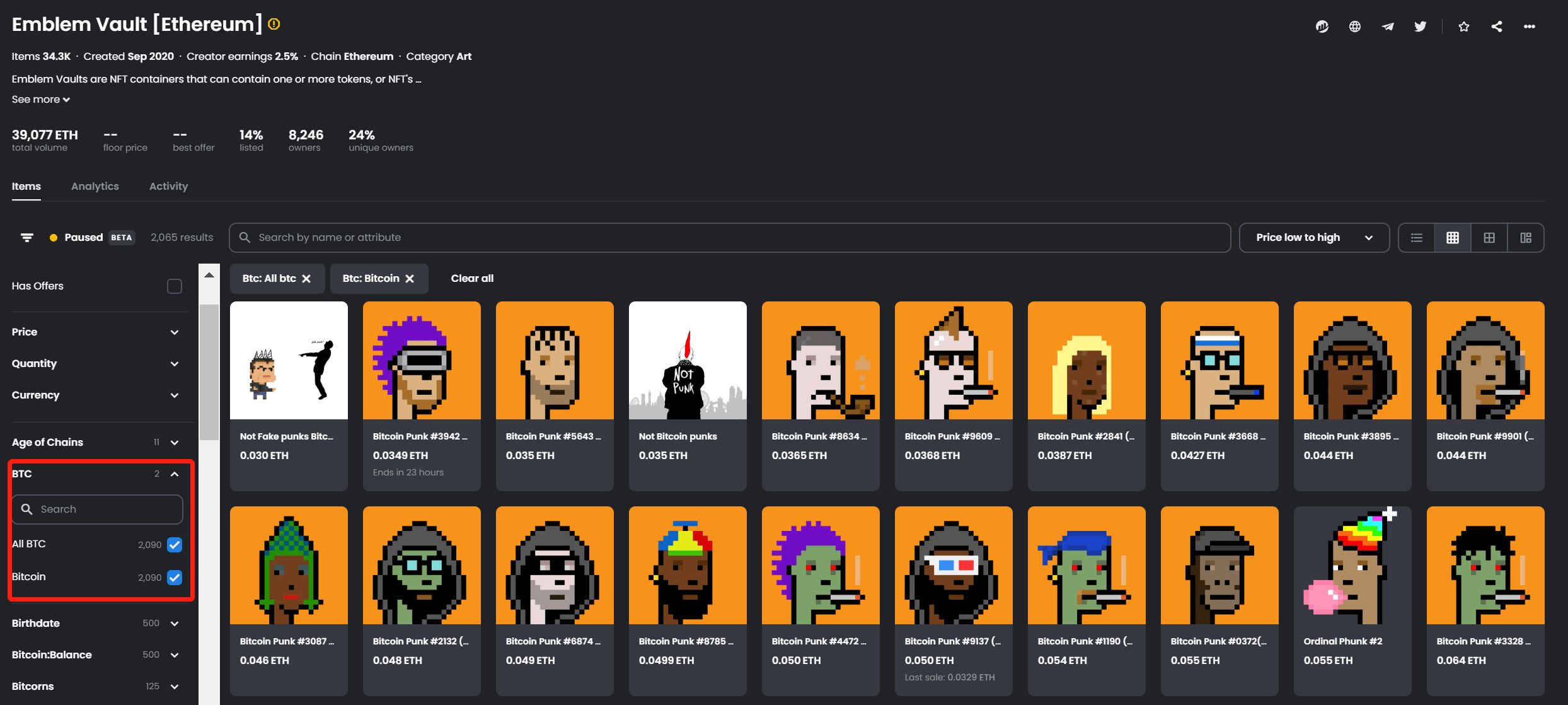
Here is another key point to prevent fraud. As shown in the picture above, the prices of many Bitcoin Punks are not expensive. But in fact, the transaction price of real Bitcoin Punks is generally above 0.5 ETH. These low-priced Bitcoin Punks are not even fake pictures, but there is no Bitcoin NFT in the Vault at all.
As mentioned above, when creating a Vault NFT, its settings determine the name, cover image, and description displayed on OpenSea. Therefore, the Bitcoin NFT listed on OpenSea is not actually associated with the assets stored in the Vault. Even if there is only $1 worth of Bitcoin stored in the Vault, it will be displayed on OpenSea (if no assets are deposited in the Vault, the display will indicate that this is a Vault without any assets).
The steps to check are as follows. First, check whether the Vault contains the corresponding Bitcoin NFT. Find the "View website" option on OpenSea and click it.
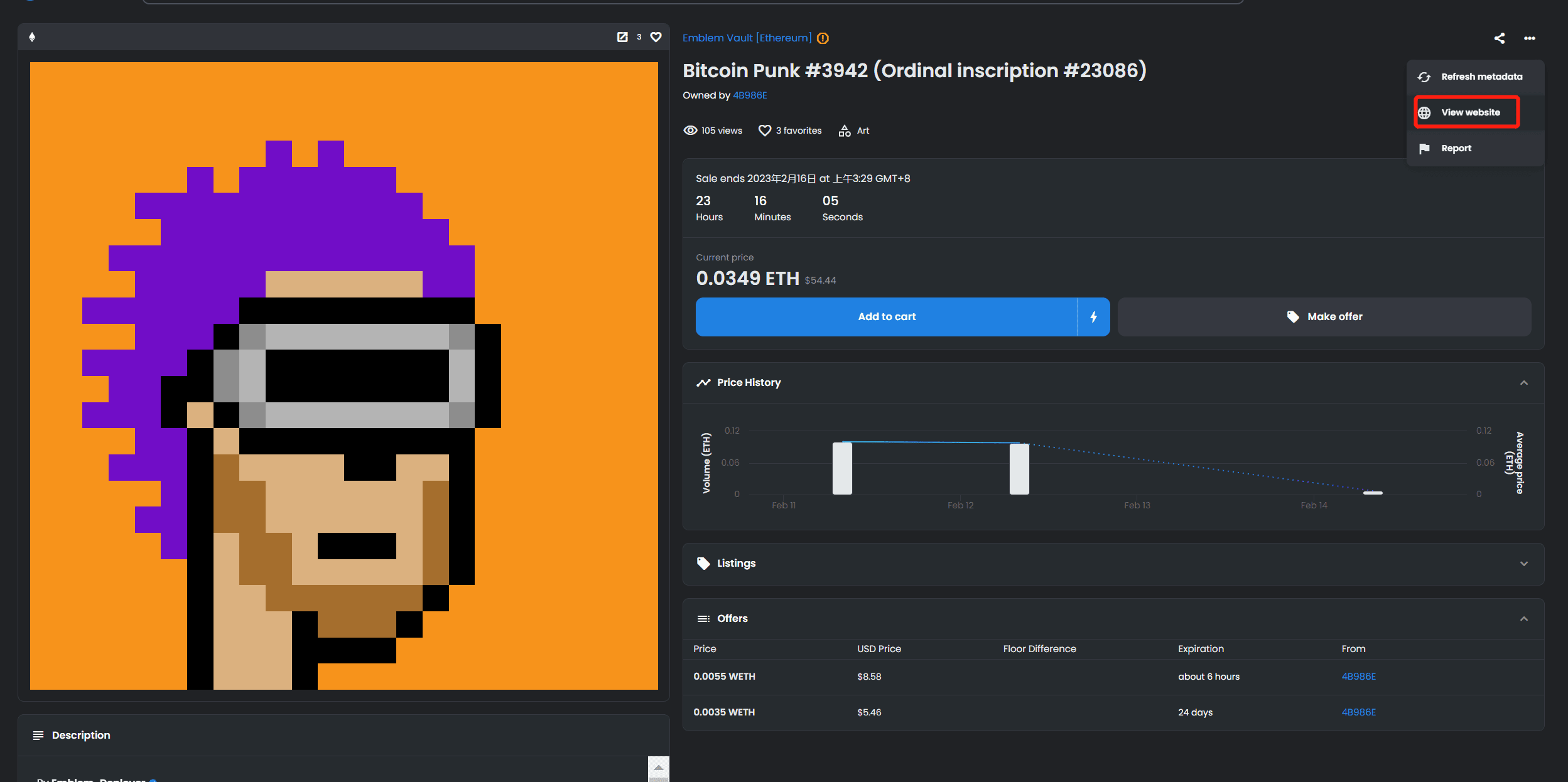
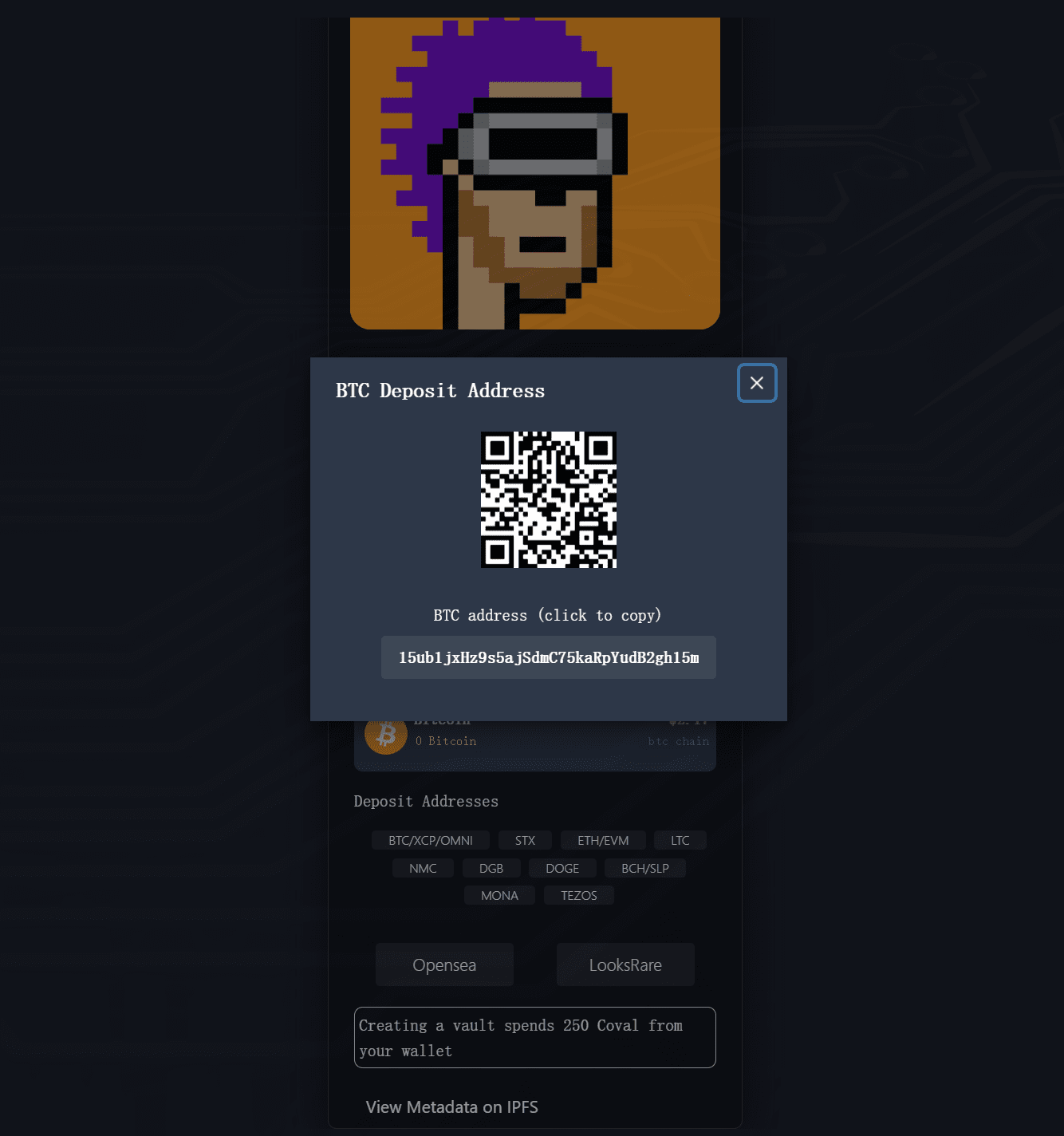
After jumping over, click "BTC/SCP/OMNI" under "Deposit Addresses" to get the address where the Vault stores assets.
Next, go to the Bitcoin Punks official website and find the link to this Punk on Ordinals Explorer. You can directly see the address where the real Punk is currently stored (if it is a project without an official website, you can go to Discord to find the series ID table and enter the ID into Ordinals Explorer for viewing).
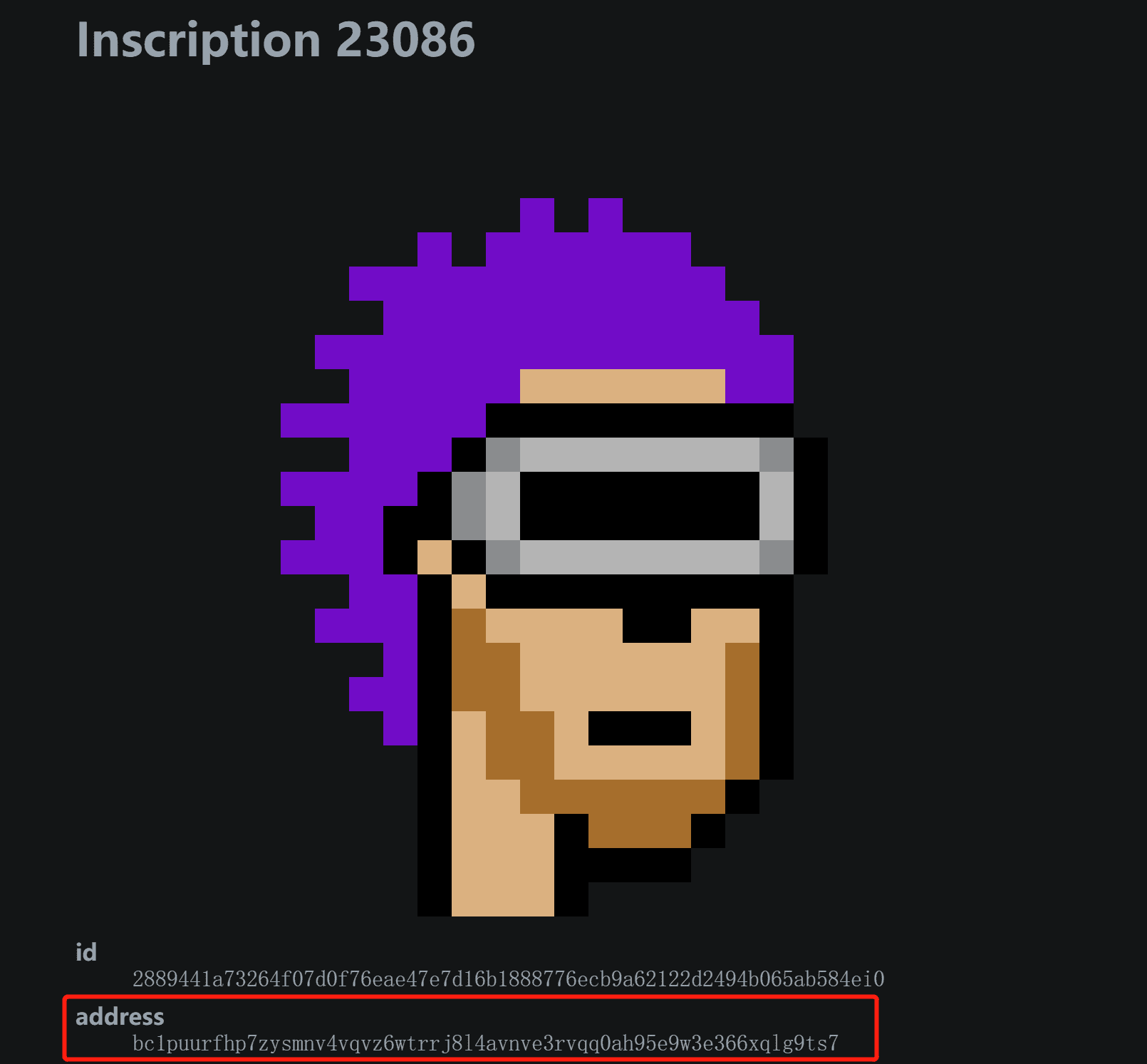
The above picture shows that the current storage address of the real Punk is bc1puur..., while the storage address specified by Vault is 15ub.... The two are inconsistent, and the target on OpenSea mentioned above is identified as false.
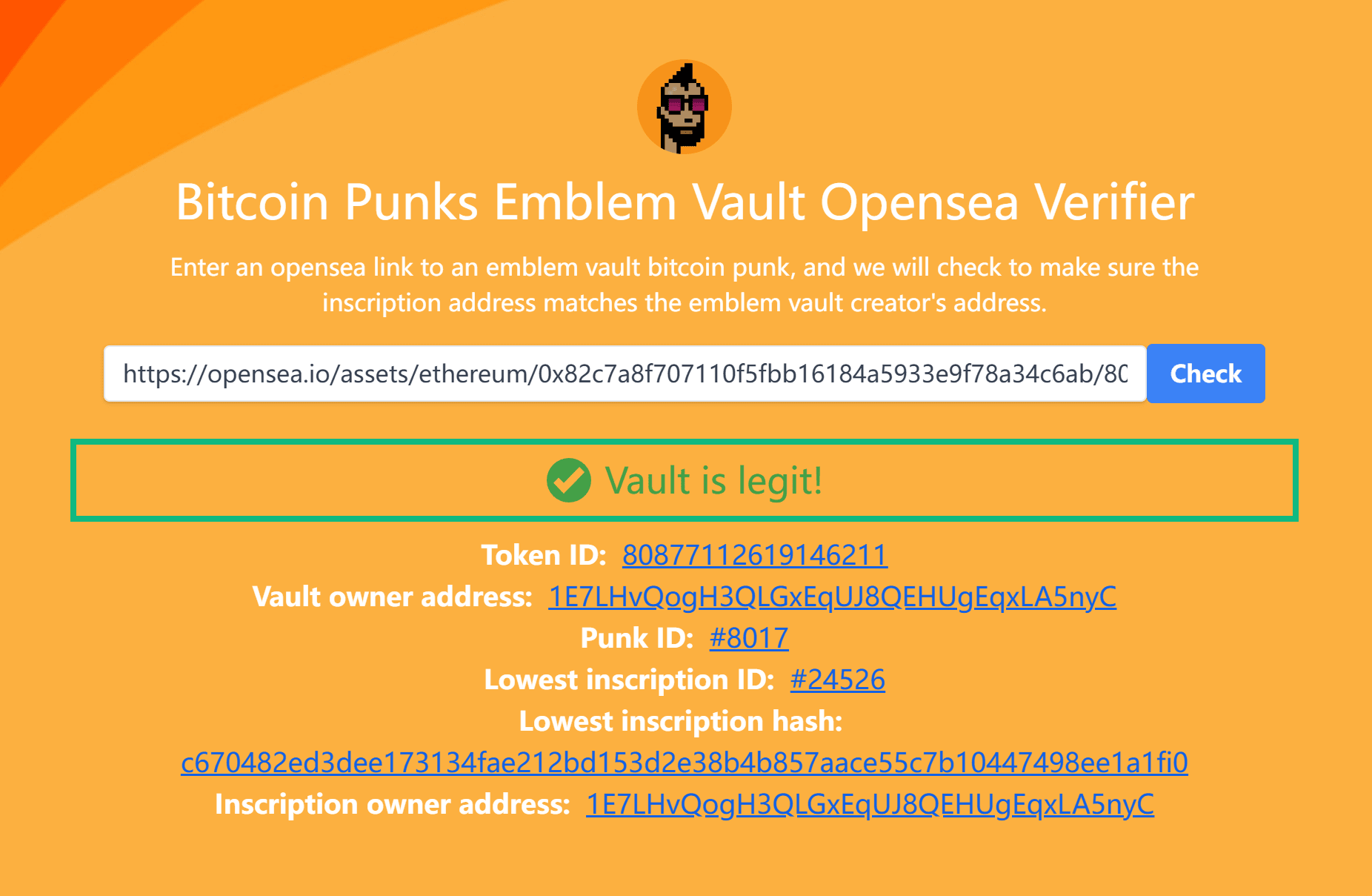
For the Bitcoin Punks series, an enthusiastic netizen has developed a quick screening tool that can identify the authenticity by simply entering the OpenSea link for query. For the time being, other Bitcoin NFT series can only be screened manually according to the above steps.
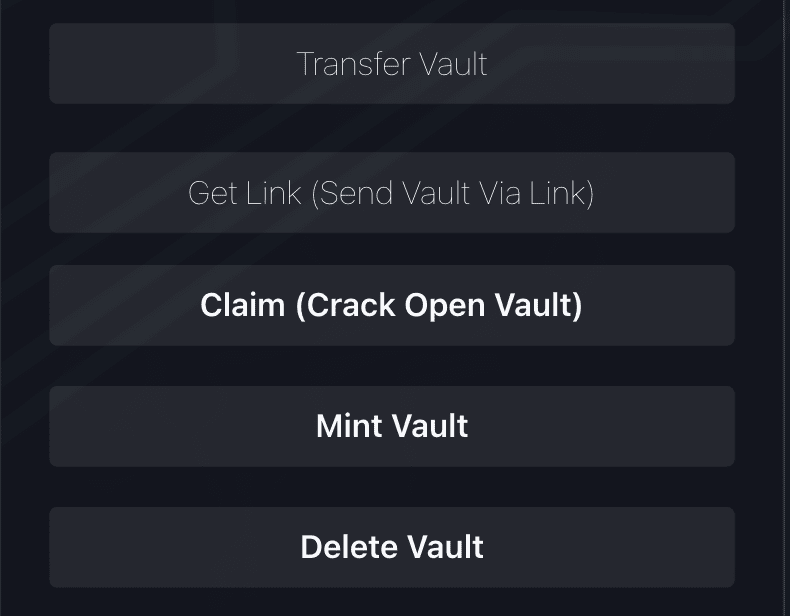
After the purchase is completed, you can see the Vault NFT you own on the "Locked" page of "My Vaults" on Emblem Vault. You can perform the "Claim (Crack Open Vault)" operation to obtain the private key/mnemonic phrase that stores the corresponding Bitcoin NFT address.
Finally, import the wallet and transfer the Bitcoin NFT.
Conclusion
Emblem Vault has greatly improved the liquidity of Bitcoin NFTs at this stage. For sellers, being able to sell their Bitcoin NFTs on OpenSea has undoubtedly greatly improved the efficiency of transaction matching. For buyers, trading directly on OpenSea has greatly reduced the technical threshold. At the same time, Emblem Vault also solves the mutual trust problem between buyers and sellers, reducing the risk of one party running away with the money.
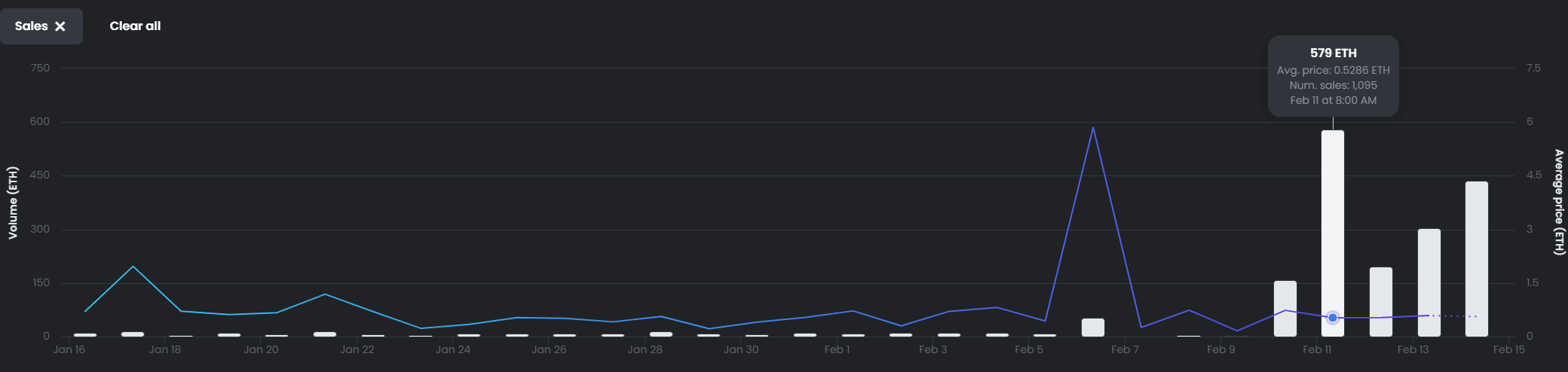
(Since Emblem Vault brought Bitcoin NFT trading to the Ethereum mainnet, the volume of its Vault NFT series has increased significantly)
However, the effect of Emblem Vault in lowering the technical threshold of Bitcoin NFT is still limited. There are too many issues to pay attention to when transferring Bitcoin NFTs, especially for collectors who want to collect Bitcoin NFTs in their own Bitcoin wallets, various operations are simply torture.
We still expect Ordinals or other developers to bring us simple and fast lightweight wallet applications in the future. Even the Emblem Vault, which is still quite complicated to use, has shown us the consumption potential of the emerging market of Bitcoin NFT. I believe that after the implementation of various supporting "infrastructures", Bitcoin NFT will surely release greater energy.