


Original title: (Only 4,000 eligible addresses, has RedStone's airdrop angered the masses?)
Original author: Alex Liu, Foresight News
On the evening of March 5, RedStone launched the airdrop query. Since its listing on Binance's pre-market on February 28, RED has hit the newly introduced price limit mechanism on Binance for three consecutive days, reaching above $1.40 after the price limit was lifted, currently reported at $0.87, with a market cap of $34 million and a fully diluted market cap of $860 million.
As the latest Launchpad project from Binance, RedStone has attracted considerable attention in the community, along with many participants in the airdrop activity. As a price oracle provider known for its low cost, the project has not experienced any major pricing errors since its launch and has received support from well-known investment institutions like Coinbase Ventures and Blockchain Capital. However, after the airdrop query page went live last night, the community's reputation took a sharp turn for the worse, with some netizens even calling it a 'scam project.' Why is that?
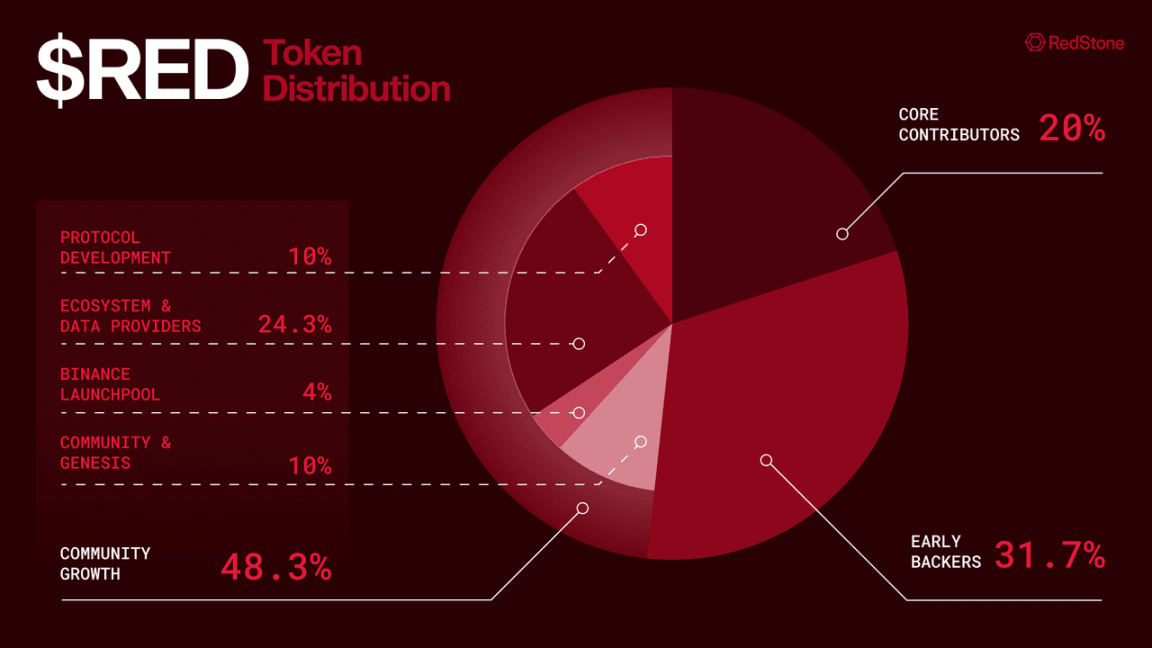
Looking at its tokenomics, a 10% community airdrop ratio is not insignificant and does not adequately address the issue. On social platforms, community users have reported participating in tasks for several years (such as mining activities in S1-S3 seasons, hundreds of tasks on Zealy, Spring Festival activities, etc.), yet they still have not received an airdrop. In the official statement from RedStone, I found the answer.
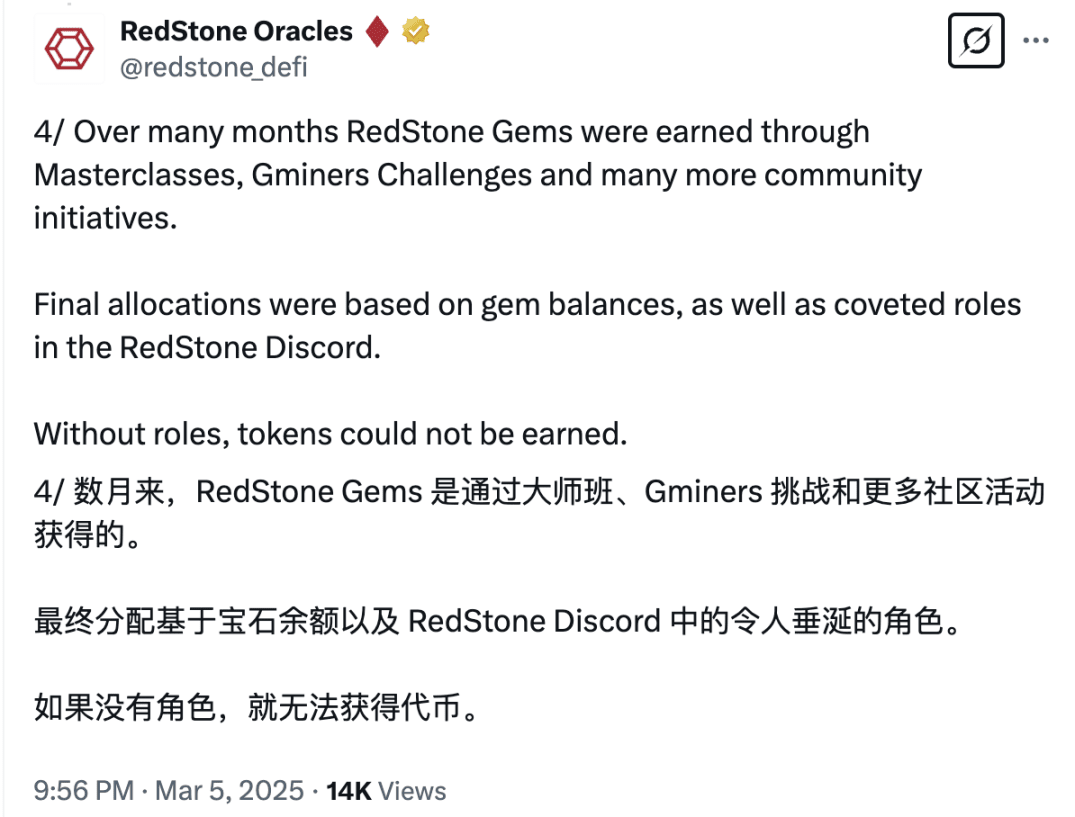
Without a specific role in the RedStone Discord, one cannot obtain tokens! Eligible roles include Vein Master, Deep Miner, Professor, IRL (participants of offline events), etc., but the proportion of members with any of these roles among nearly 230,000 community members in RedStone Discord is less than 2%!
It may not be the small amount of tokens that makes community users so angry (currently, RedStone DC has entered 'slow mode' due to excessive criticism), but the inconsistency between the actual reward mechanism and the project's promotion, which left many users feeling like their efforts were in vain, is likely the crux of the issue.
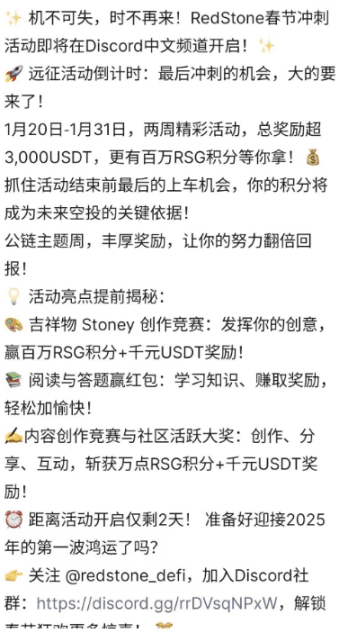
In past promotions, the project team directly stated, 'Your points will be a key basis for future airdrops!', but in reality, the top 10 holders in the RSG points ranking, including the 5th and 7th places, were disqualified from receiving RED tokens due to not having Discord roles. The leaderboard has over 170,000 participants, but only 2,296 addresses are eligible. Among approximately 200,000 members in the community, only about 4,000 ultimately meet the conditions for receiving the airdrop, with many users receiving only a few hundred tokens, making its distribution logic appear extremely 'selective' compared to other mainstream projects on the market.
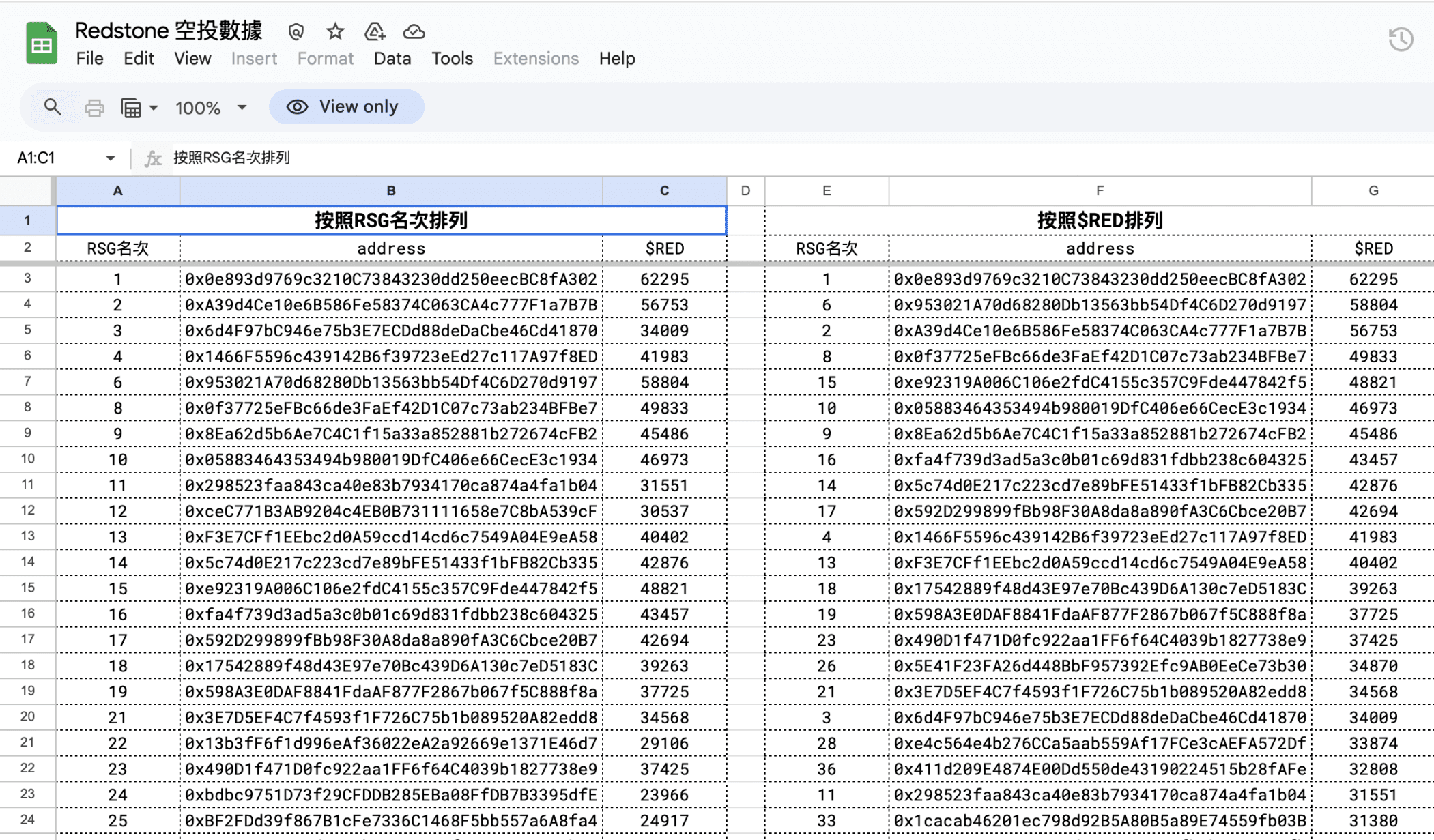
Data from: @OshinoAJ_eth
Thus, what truly provoked the outrage among community members was—RedStone's activity design is filled with high-intensity 'PUA' style marketing: continuously releasing tasks to attract user participation, creating an illusion that 'as long as you work hard enough, you can earn rewards,' while actually setting invisible barriers in the threshold, excluding many ordinary users who invested time and resources at the last moment.
This goes against industry norms. Other airdrop projects in the industry typically place more emphasis on the breadth of user participation in their distribution mechanisms. In dYdX's airdrop activities, tens of thousands of participants who met the conditions were generally able to receive a certain number of governance tokens; while projects like Optimism have clear, fair, and transparent airdrop rules aimed at covering more ecosystem users.
In contrast, the threshold for 'special roles' in RedStone seems overly narrow, making it difficult to motivate the long-term activity and trust of the entire community.
Conclusion
The project team may be attempting to implement a more refined incentive mechanism for airdrop distribution, ensuring that core users can receive a higher proportion of rewards, but this approach undoubtedly neglects the contributions and expectations of the majority of participants.
In the long run, airdrops are not only a promotional tool to attract users, but also an important indicator of project governance transparency and ecological health. The current controversy undoubtedly serves as a wake-up call for the entire industry: only by establishing a fair, open, and reasonable incentive distribution mechanism can users truly feel the value of participation, thereby promoting the sustained prosperity of the entire ecosystem.
Original link