


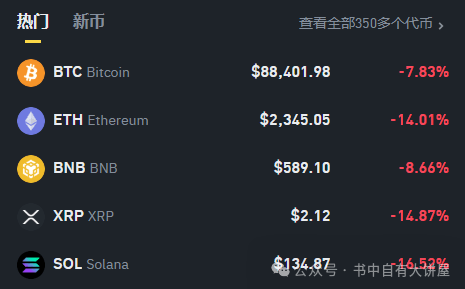
Today, let's take a look at the market. Today, there has been a massive crash, with Bitcoin dropping to the 88,000 mark, a maximum decline of 8%. Ethereum has fallen back below 2,400, with a drop of up to 10%. SOL has fared even worse with a 15% drop, due to the previous Libra incident and the 2 billion USD FTX compensation on March 1, which has exacerbated its decline.
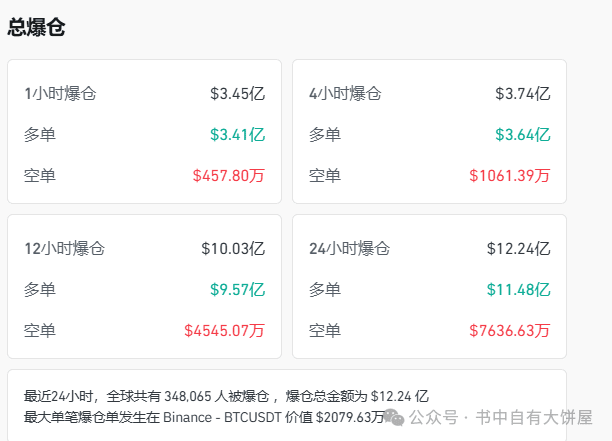
Currently, there have been liquidations amounting to 1.2 billion USD across the network in the last 24 hours, with 1.1 billion USD from long positions. We have mentioned this data a few times before; this liquidation figure is not as high as the 2 billion USD liquidation on February 3. This is the second occurrence of a liquidation of 1 billion USD within a month, indicating that the risks in the crypto space are still high, but likewise, there are many opportunities.
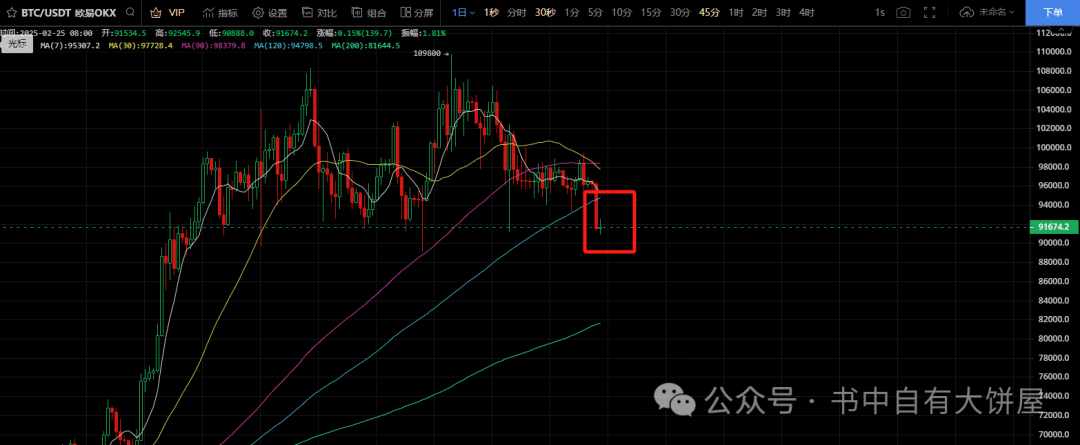
This drop has breached the MA120, and the strongest support below is the MA200, which is around the 81,000 position. The MA200 also serves as a bull-bear demarcation line; if it falls below this, it is generally considered a bear market. Therefore, we cannot yet say it is a bear market.
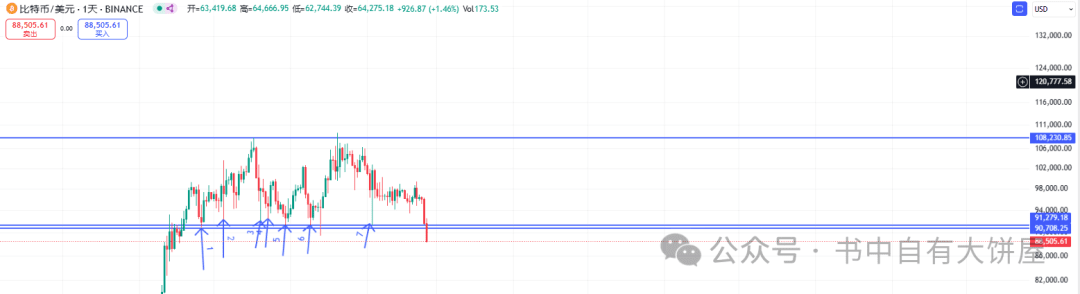
Currently, this drop has breached the previous support line (90,000-91,000). This support line had held successfully several times before, but this time it has broken, so we can only look at the next support around 88,000. Whether it will drop further is uncertain, especially since the distance from the 110,000 peak is significant; an 88,000 drop represents a maximum decline of 20%. Last year's maximum pullback was 33% (from 73,000 to 49,000), so if we calculate based on the previous maximum pullback of 33%, the lowest range for this wave would be around 73,000.
As mentioned, the bull-bear demarcation line of MA200 is at the 81,000 position. If it really drops to the 73,000 range, won't many people believe that a bear market has arrived, thus causing the bear market to actually come? I will answer this question at the end.
Let's first look at other data aspects - BTC ETF
Currently, Bitcoin ETFs have seen a net outflow for two consecutive weeks, with a net outflow of 350 million USD on February 24 and 360 million USD on February 20. Since February 6, there has been a continuous net outflow, marking the first time since Bitcoin ETFs were introduced that there has been a consecutive weekly net outflow.
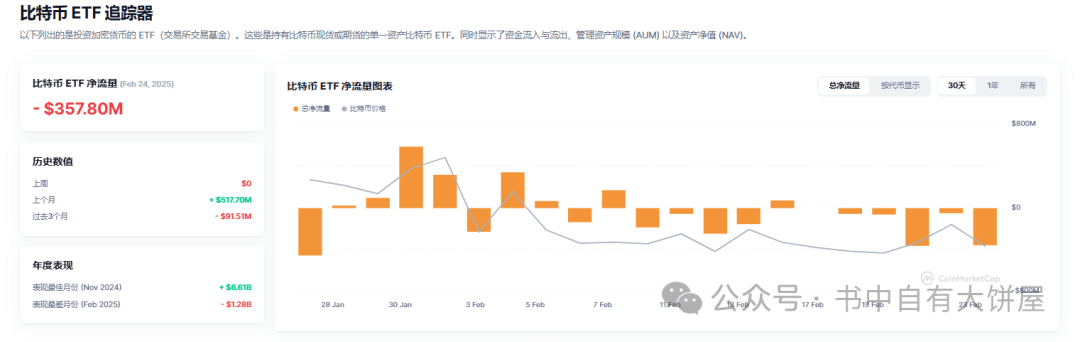
The overall crypto market cap is also declining, now down to 2.9 trillion, indicating a substantial reduction in funds. Currently, the fear and greed index has reached 29, which is equivalent to the lowest point in September 2024, indicating an extreme state of fear.
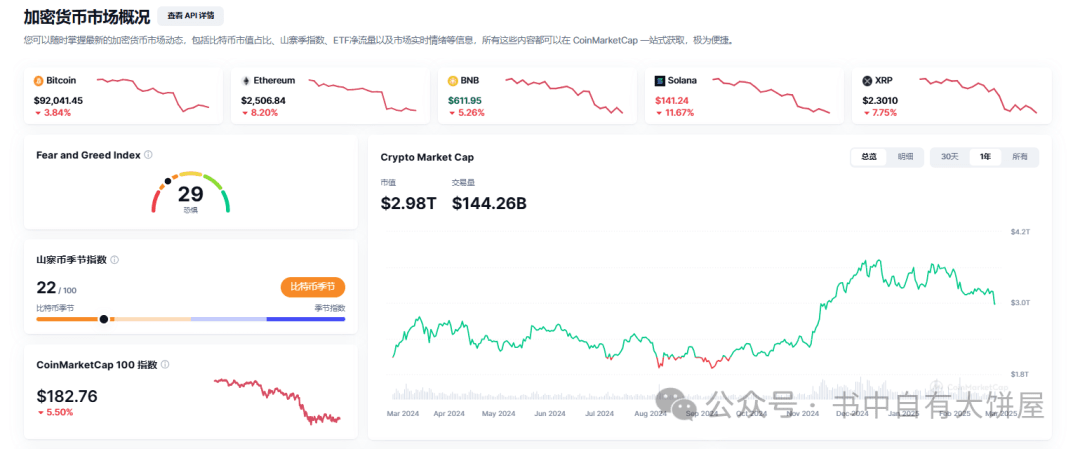
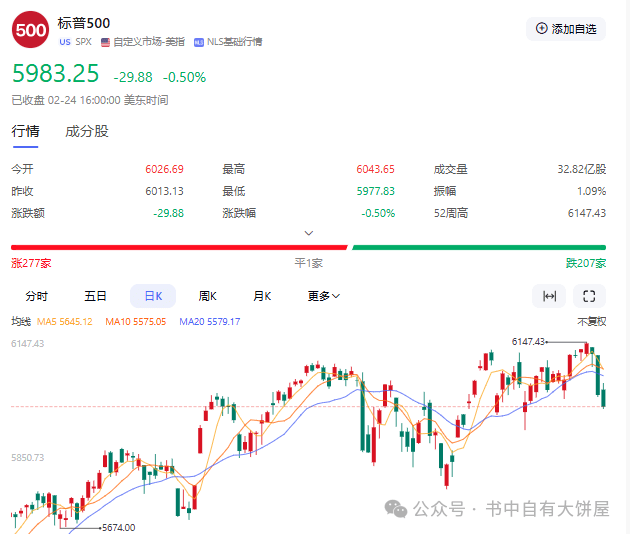
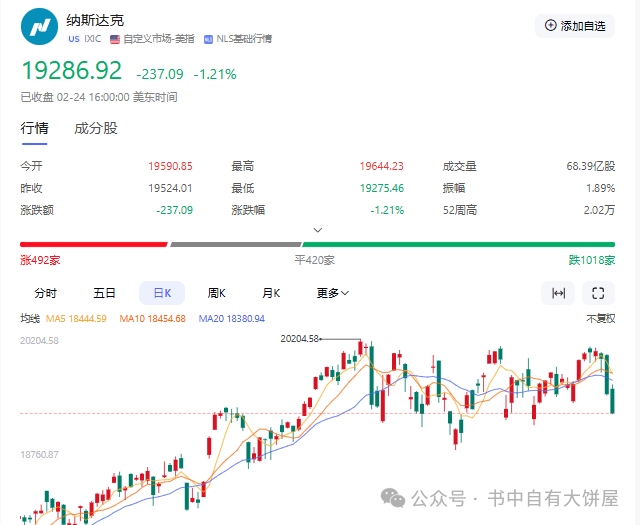
Third, U.S. stocks have also fallen for two consecutive days, with the S&P 500 dropping 0.% on February 20, 1.7% on the 21st, and 0.5% on the 24th since last Thursday. The Nasdaq has also dropped for three days, with a maximum decline of 2.2%. Therefore, U.S. stocks are consolidating. We previously mentioned that cryptocurrencies currently follow U.S. stocks. With such a severe decline in U.S. stocks, cryptocurrencies will only decline further. While U.S. stocks are reaching new highs, many 'experts' are predicting a major crash in the stock market after 20 years of gains, especially as U.S. debt continues to reach new highs. Many predict that the U.S. economy may collapse, which is why Buffett, this old bull, has started selling assets and now holds 330 billion USD in cash, accounting for 51% of the company's total assets, the highest proportion in history.
But if the U.S. economy collapses, why is Buffett not exchanging stocks for gold, but rather for cash? This indicates that Buffett still believes in the U.S. economy.
Fourth, the significant drop in cryptocurrency is also largely due to the hacking incident two days ago, which resulted in the largest theft in crypto history (1.5 billion USD). Currently, the hacker has been laundering and transferring funds through cross-chain infrastructure like Chainflip, Thorchain, Uniswap, and eXch. According to on-chain tracking data, in just two days, 89,500 ETH (224 million USD) has been laundered, which is 18% of the total ETH stolen (499,000 ETH). If this rate continues, the hacker could exchange the remaining 410,000 ETH for other assets (BTC/DAI, etc.) in another half month, and the laundered funds are likely to be sold off, causing concern among many.
Is there still a bull market?
I believe the biggest reason currently is the lack of expectations. Any investment or trading market requires a sense of expectation. Currently, with the Federal Reserve not easing, the market lacks expectations. It now comes down to whether Trump will manage to push Powell out or whether the U.S. economy will buckle first, forcing Powell to ease.
Second, if Bitcoin drops to the 7 range, do people believe a bear market has come or should they look to buy the dip? This needs to be evaluated from a timeline perspective. If it drops to 73,000 before the U.S. announces quantitative easing, then it might be a good time to buy. Even if it has already breached the 81,000 MA200 line, if it drops to 73,000 after the Federal Reserve announces a rate cut, then it could be seen as the bull market is over, and the market might turn bearish.
Third, there have been statements about a major economic collapse in the U.S. I believe such a macro-level event is unlikely to happen in the short term. As mentioned in yesterday's program, experts predict that it won't reach a tipping point until U.S. debt hits $50 trillion, while currently it is at $35 trillion, which gives us some time. Based on the current pace, I estimate it will be at least next year, although there is a trend of exponential growth. If the U.S. economy collapses, then the global economy would also collapse, so it wouldn't matter what you buy.
In conclusion, this round is indeed quite difficult. There is currently one last ray of hope, but it may become increasingly difficult. Therefore, you must keep learning and improving to survive in this harsh environment. Let's encourage each other.