


Today is the 15th of December, and it's our first program after the hiatus. Many of you may know that I was hospitalized for a week, which is why we stopped updating. During my hospitalization, it was quite uncomfortable. After losing my health and the ability to move freely, I realized the importance of health. When you are not healthy, you won't think about making money or other distractions, and money doesn’t really help much with certain diseases, as some cancers remain incurable; having more money doesn’t change that. Now that we understand the importance of health and we emphasize the integration of knowledge and action in our community, we not only need to know but also to act. For example, after realizing the importance of health, you should rest on time, eat on time, exercise regularly, and avoid bad habits like smoking and drinking. Acting is always much harder than knowing. Just as I mentioned in 'Everyone Should Own a BTC,' once you understand Bitcoin, you should immediately buy some, even if it's just 0.01 BTC; that is truly understanding the value of Bitcoin.
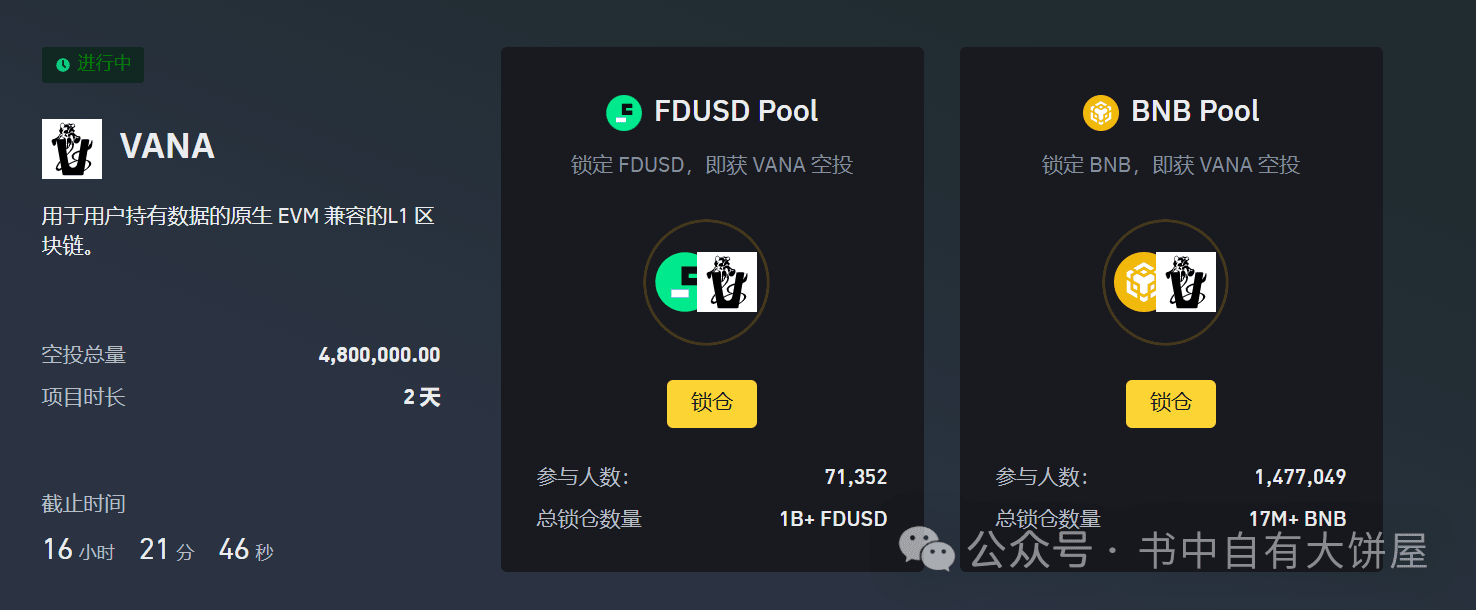
To get back on track, let's take a look at the 62nd issue of the Binance Launchpool - VANA, and predict a reasonable price range.
Genesis token supply: 112,641,600 VANA (93.87% of max token supply)
Max token supply: 120,000,000 VANA
Initial circulating supply of spot when listing on Binance: 30,084,000 VANA (25.07% of max token supply)
Total Launchpool: 4,800,000 VANA (4% of max token supply)
Introduction
Vana is a network focused on user-owned data. Vana L1 allows users to aggregate data into DataDAOs while maintaining control and privacy.
Developers can leverage these decentralized datasets to create the next generation of applications, such as AI models and data-driven dApps.
System Architecture
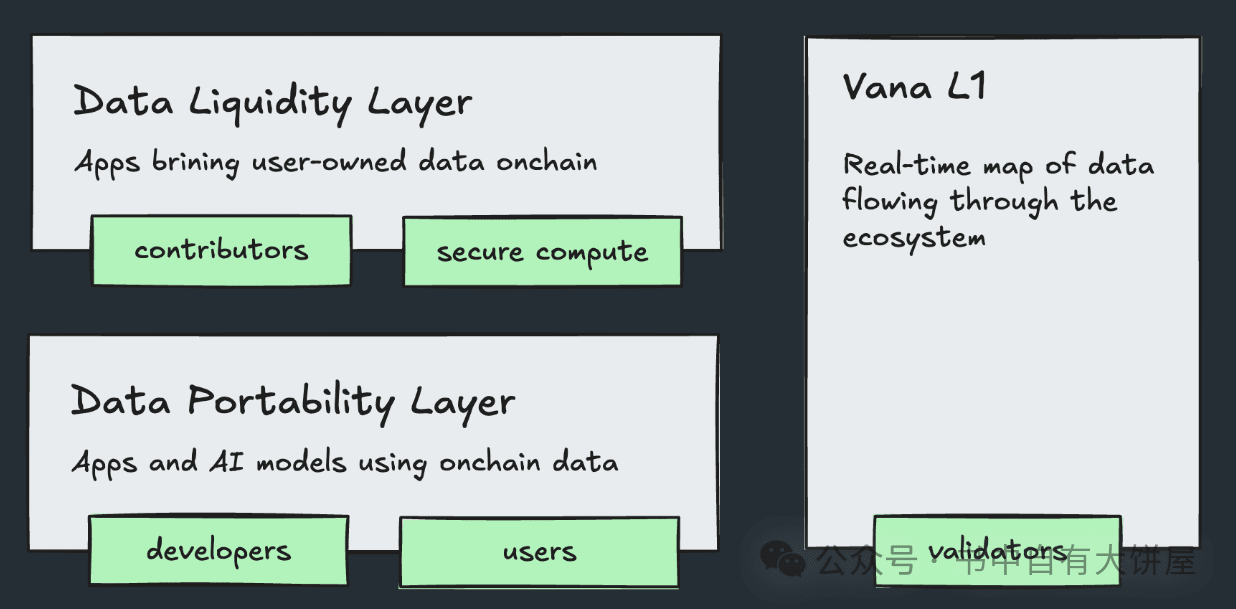
The network consists of two main layers to ensure data ownership, security, and availability:
Data Liquidity Layer: The operational foundation of Data Decentralized Autonomous Organizations (DataDAOs), aimed at bringing data on-chain and converting it into transferable digital assets.
Data Portability Layer: Supports applications based on user data, achieving user sovereignty through validated data.
Data Liquidity Layer
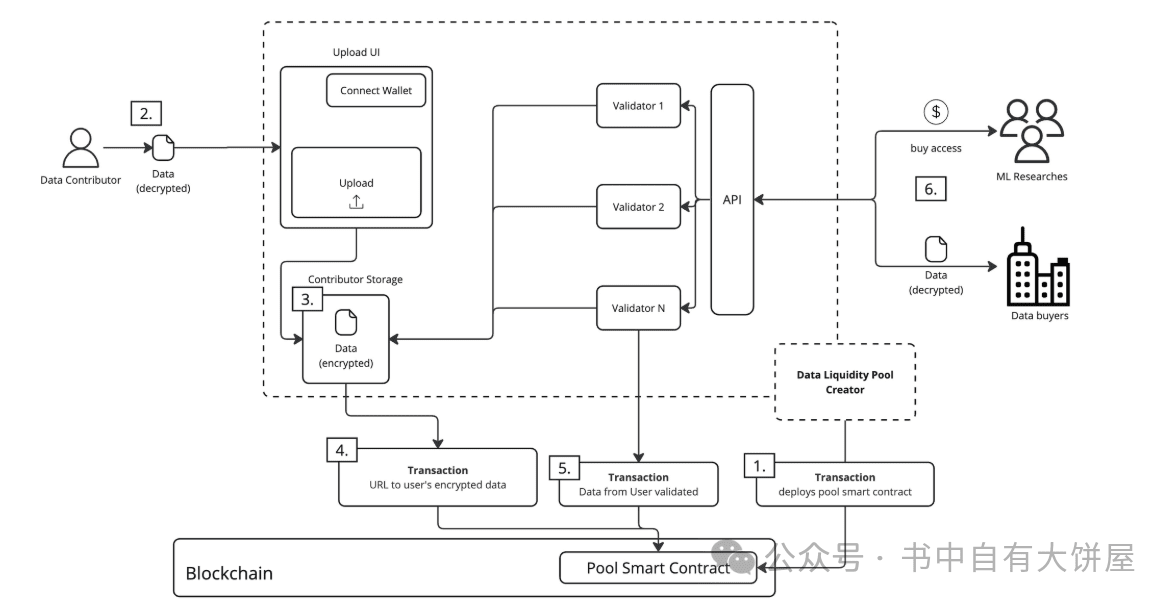
The data liquidity layer is the core foundation of Vana, supporting the processing of data as a liquid asset. Through decentralized mechanisms, data can be securely validated, tokenized, and traded in this layer. This layer introduces DataDAOs, which aggregate similar types of data from different contributors to create a decentralized and trustless data market.
Main Features
Data Validation: Verifying contribution data through the 'Proof of Contribution' (PoC) mechanism to ensure authenticity, ownership, quality, and uniqueness.
Data Tokenization: Verified data will be tokenized for trading or use within the network. Each DataDAO will issue its own tokens to reward contributors providing valuable data.
Transactions and Governance: DataDAO tokens allow users to participate in data governance and trade data as assets within the Vana ecosystem.
DataDAOs
DataDAOs are decentralized markets for data:
Data Contributors: Submit data to DataDAOs and receive governance rights and rewards.
Data Validation: Conducted within the Satya Network (a set of secure computing nodes) to ensure data quality and integrity.
Data Consumers: Can access these verified datasets for AI training or other uses.
DataDAOs encourage the contribution of high-quality data and provide transparent mechanisms to ensure the use and training of data.
Data Portability Layer
The data portability layer is the application layer of Vana, allowing decentralized datasets to be accessed, shared, and utilized across different platforms and applications. This layer ensures that data owned by users is interoperable across different services and systems while maintaining privacy and security. Each DLP defines a standardized metadata architecture and data structure for its domain, ensuring consistency and availability of aggregated datasets.
Main Features
1. Cross-Application Data Sharing
- This layer supports seamless data flow between applications while ensuring users have complete control. Users can authorize specified applications to access their data, ensuring privacy and security.
2. Interoperability
- The data portability layer is designed to be compatible with various platforms, protocols, and applications, allowing data to be used across ecosystems. For example, AI models trained on Vana's decentralized datasets can be accessed by multiple AI applications.
3. Governance and Access Control
- Data owners retain control over their data, including decisions on how the data is used and who uses it. Additionally, contributors participate in governance by holding DataDAO tokens, influencing decisions on data sharing.
Decentralized Applications (dApps)
The data portability layer supports decentralized applications that interact with verified datasets:
- AI Models
Developers can build AI models, access, and train on decentralized datasets to ensure ethical use of data.
- Data-Driven Applications
Applications relying on user-generated data can utilize Vana's secure and interoperable datasets to provide better user experiences and data insights.
Token Economics
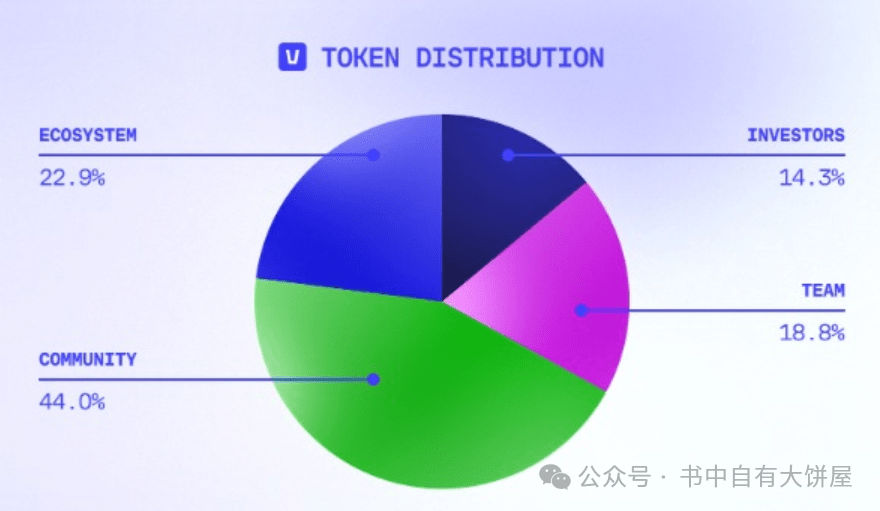
Total token supply is 120,000,000, with an initial circulation of 25.1%. Token distribution is as follows: core contributors/team 18.8%, community 44%, investors 14.2%, ecosystem 22.9%. The team and investors are locked for 12 months, and all tokens will be released over 5 years (team). Currently, the project has received an investment of 20 million USD, and investors are definitely profiting, as based on the proportion of investors, its market value is only 140 million.
Next, let's calculate the token price for its launchpool. Based on a pool of 17 million BNB, the previous launchpool returns were about 1%-2%. Thus, the token price should be around 30-60 USD (calculating with BNB at 700 USD). Considering the total supply, its market value would already reach between 3.6 to 7.2 billion USD, which is quite exaggerated. In comparison, the investment market value we calculated before was 140 million, which has already surged 20X.
So what should a reasonable market value be for an AI data project? We can compare it to Ocean (the leading decentralized data trading platform - Ocean Protocol), which is also a company involved in AI data processing. Their operations are quite similar, and Ocean merged with AGIX and FET, with a market value of around 1 billion USD prior to the merger.
The Ocean team is quite impressive, and I found that Vana's team is relatively lacking. In terms of technical comparison, Ocean appeared in 2017, and at that time, there wasn't much experience in data processing and trading, so merely creating an NFT-based data trading market was not sufficient. The data double-spending issue mentioned in Vana's white paper also seems to lack a good solution, as there are many steps involved in data trading—if I acquire data, process it once, and then try to double-spend, there isn't a good way to avoid that. So while Vana's approach may be a bit newer, fundamentally, there hasn't been a significant advancement in data training and trading.
However, it is undeniable that training and valuing personal data is definitely the right path, although there are many challenges at present. This does not stop waves of entrepreneurs from brainstorming various solutions. Sometimes, technological progress may initially seem slow, accumulating little by little, but this quantitative change can lead to a qualitative change at any moment, accelerating the arrival of our AI era! The future is coming!