

Interview: Jack, BlockBeats
Compiled by Kaori, Jaleel, BlockBeats
Binance recently announced the launch of the Web3 wallet, and the technical support is provided by the Trust Wallet team that Binance acquired as early as 2018.
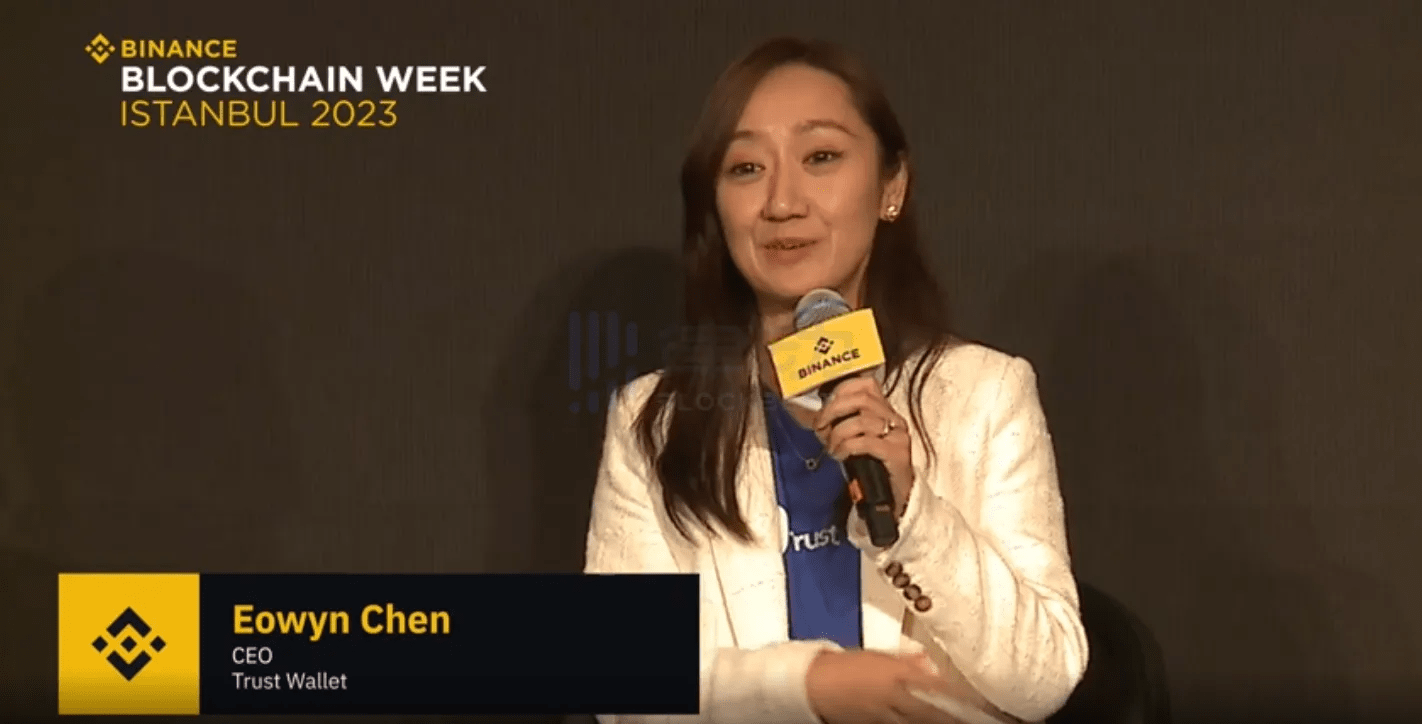
On November 8, at the Binance Blockchain Week held in Istanbul, Trust Wallet CEO Eowyn Chen said that the cooperation with Binance to launch the Binance Web3 wallet is to help users participate in on-chain practices and increase the adoption of blockchain, so that users can enjoy both transactions in centralized platforms and a real on-chain experience.
Trust Wallet was founded in 2017 by "tech geek" Viktor Radchenko, who was working at a mobile banking company at the time. Due to the ICO craze at the time, Viktor created a mobile wallet and published it on GitHub, which quickly gained a large number of users. In 2018, Viktor did not want to take time off from the technology he loved to be responsible for the operation and development of the wallet, so he contacted Binance to sell Trust Wallet. CZ admired Viktor and his team and suggested that he join Binance, have full autonomy over Trust Wallet, and focus on the technical development of the wallet in the way he wanted without having to consider economic issues.
In March 2022, Viktor Radchenko announced that he would step down as CEO of Trust Wallet, hoping to spend more time with his family and other interesting projects. He would also always support the Trust Wallet team and continue to provide services as a user, mentor, and community contributor. Eowyn Chen, former vice president of marketing at Binance, succeeded Viktor as CEO.
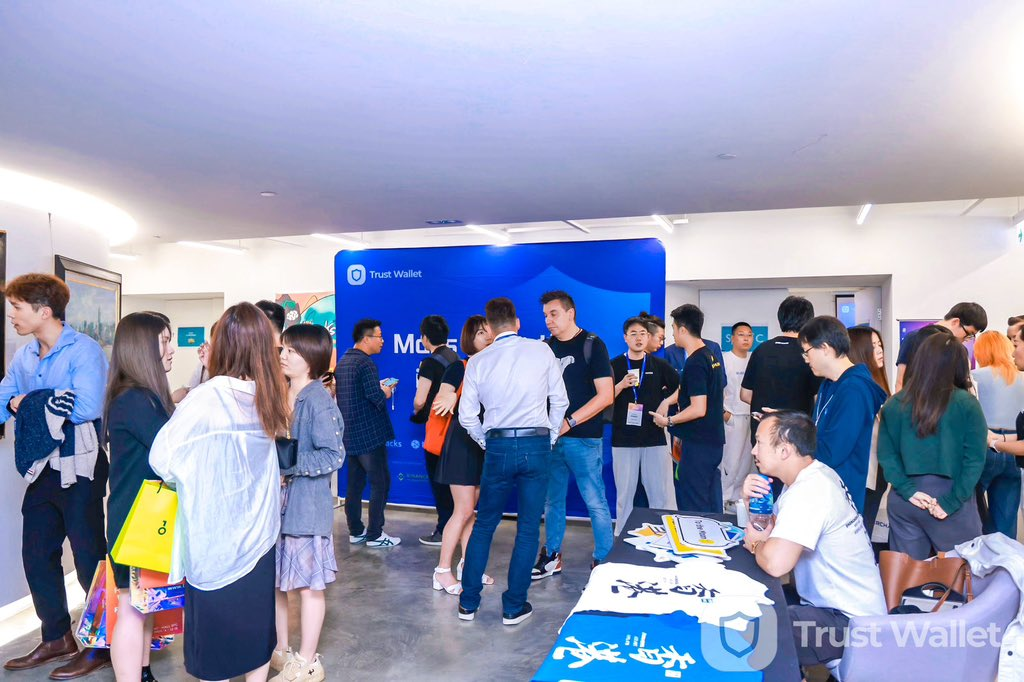
On April 12, Trust Wallet held a Meetup event in Hong Kong with the theme of "Mass Adoption is coming..." Eowyn Chen said at the event: "The long-term opportunities provided by this industry should convey hope, not FOMO and fear." As a wallet, "how to give users the right to fully own their assets and give users peace of mind rather than fear" is the core point of Trust Wallet. In the past year since Eowyn Chen took office, the size of the Trust Wallet team has tripled and now serves more than 10 million users.
BlockBeats took the opportunity to interview Trust Wallet CEO Eowyn Chen to learn more about her contributions to the crypto space, as well as Trust Wallet’s opportunities, challenges, and future prospects.
The Binance Woman from Harvard
When seeing the word "strong woman", most people in the crypto world think of He Yi, who is known as the "No. 1 Lady of Binance", but in fact there is another "strong woman" in Binance, she is Eowyn Chen.
Eowyn graduated from Harvard University and joined the financial industry on Wall Street. Although she gained a lot of experience there, she also realized that the industry was losing its innovative vitality. With a spirit of exploring new things, she came to San Francisco and joined ofo to participate in the startup's journey to develop the US market. Here, she not only deeply understood the importance of business and cash flow, but also developed many practical skills.
After leaving ofo, Eowyn did not rush to find another job, but spent time building her own values and thinking about the impact of artificial intelligence and blockchain technology on society. She is increasingly concerned about decentralization and checks and balances, and believes that the Internet currently only promotes the circulation of information, but has not yet brought about real value circulation.
In 2018, Eowyn met He Yi and entered the crypto industry. At that time, Binance was planning to expand into the international market. At first, Eowyn worked as He Yi's assistant, helping her grow Binance's international market from 0 to 1. At the end of the bear market in 2019, Eowyn began to build a user growth foundation, so she was responsible for Binance's growth team, working on the delivery team and organic growth business.
Prior to taking up the position at Trust Wallet, Eowyn Chen also held several key positions while working at Binance.
As Binance Global Vice President and Head of Central Marketing and Growth, she led the central marketing team, including user acquisition, user lifecycle, and brand and community management. She played an important role in the marketing strategies of more than 10 product lines within the Binance ecosystem.
Eowyn Chen played an important role in Binance's international user growth between 20 and 21. She approached the Argentine Football Association with local partners in Argentina to discuss sponsorship with the Argentine national team. In the sponsorship cooperation, they came up with an interesting idea to combine NFT with fan tokens. Eowyn Chen and the team chose some countries with a fanatical belief in football, rather than just sponsoring the World Cup, because they believe that the emotional connection of football is more related to the national team or the players themselves.
In just six months, the team led by Eowyn Chen achieved explosive growth, attracting 45% of the total new users with a payback period of only 1-2 months. By optimizing SEO and ASO, they successfully increased the market share of organic user acquisition to more than 60%, surpassing other major competitors. The team also successfully doubled the total number of community members to more than 10 million and became a leader in the fintech community worldwide. In addition, Eowyn Chen has cultivated more than 300 global ambassadors as pillars of the community, as well as increased positive coverage and gained more exposure in mainstream media such as Forbes and Bloomberg.
As a team manager, Eowyn Chen manages a team of 50-100 people globally, covering APAC, Americas, and Europe. She is committed to developing and promoting high-potential talents and helping them integrate successfully into the team. In addition, she also transferred 15% of talents to other departments in the organization and optimized the 10% of talents in the existing team that were not matched to the positions.
Eowyn has been working as the CEO of Trust Wallet for one year and three months since taking over from Viktor in March 2022. So what made Eowyn decide to leave Binance and join Trust Wallet?
“At that time, I was a little bit away from my original intention of joining the cryptocurrency industry. I felt that I didn’t understand the cryptocurrency industry deeply enough. If I changed my brand to any other brand, the work would not be much different.” Eowyn exchanged these ideas with CZ and He Yi, hoping to cultivate more well-rounded leaders in the industry. Eowyn wanted to develop into business work, but she had not found a suitable business opportunity.
It just so happened that Eowyn was a good friend of Viktor, the founder of Trust Wallet. Viktor was tired of working for four or five years and wanted to take a break and return to his family. Eowyn thought Trust Wallet was an excellent product and team, and it would be a pity not to continue to develop it, so she wanted to take over and apply the experience she learned from Binance, such as user growth, to the decentralized field.
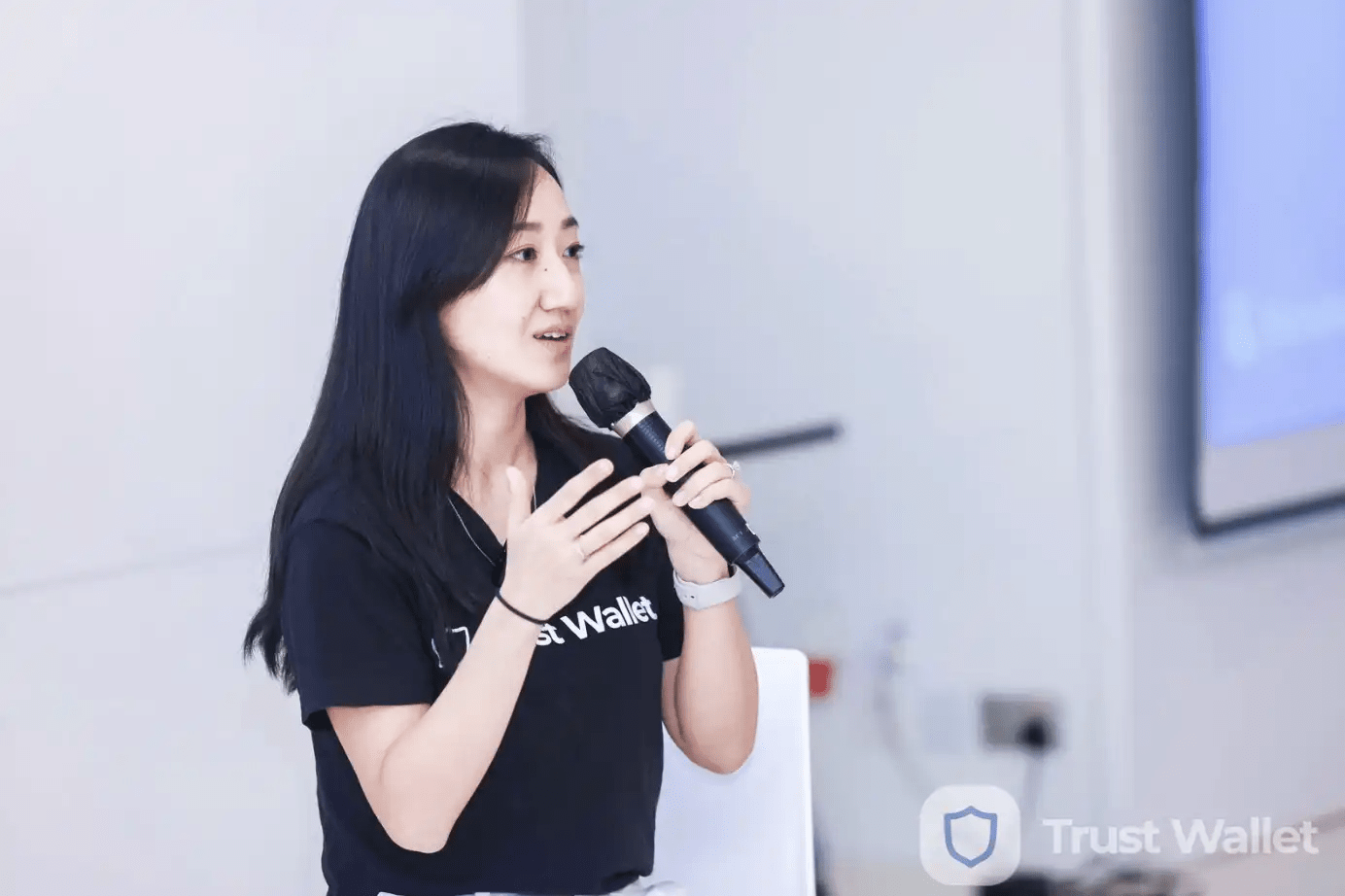
Eowyn said the main reason for choosing Trust Wallet was because of Viktor. Viktor has very upright values, makes very accurate decisions, and the entire team is very down-to-earth. They have been working on infrastructure for the past five years. "Viktor is a very selfless person who is willing to share everything he knows."
The Trust Wallet team has built a solid reputation in the cryptocurrency industry by providing excellent products and services to its users. Although the developers do not participate in any events or conduct any marketing, they have been working on an open source project called Wallet Core for five years to help other mobile wallet developers.
On November 8, Trust Wallet announced the launch of Trust Wallet WaaS (Wallet as a Service) to help startups and traditional enterprises expand their products through decentralized solutions. It enables enterprises to provide various decentralized services to their users, such as asset management, cross-chain transfers, and integration with existing ecosystems.
The products developed by Trust Wallet are very user-oriented, which is why many OGs in the European and American crypto circles recommend Trust Wallet to newcomers. It is very consistent with user habits, so there is no need to do too much promotion to attract many users to participate. "As a marketer, I particularly like this kind of product that is very strong but does not have too much marketing promotion. It has established a good user growth foundation, so further development becomes very easy."
The vision and values of the Binance team are very similar to those of Trust Wallet, and when collaborating, they tend to consider the pros and cons of technology and the reliability of the team rather than just short-term profits. In Eowyn's view, although the industry is in a relatively relaxed and permissionless environment, Binance and Trust Wallet still maintain relatively strict standards when there is an opportunity to support other projects. Eowyn hopes to bring some of the experience he has learned at Binance and achieve more goals with the team. Trust Wallet will continue to be the user's preferred decentralized wallet and provide more people with a convenient and secure cryptocurrency experience.
In addition to her contributions to Trust Wallet and Binance, Eowyn Chen is also very concerned about the power of women in the crypto space. The technology world dominated by male developers seems to have made crypto a boys' club, so Eowyn believes that her emergence in the industry will be of great help in attracting more female talents and users. "This is also why I am exposing myself now. I don't think the crypto industry is a boys' club. I have been working on the management team of Binance for nearly 4 years, but I always stay behind the scenes and empower others, but most people don't know that most of Binance's executives are women."
Mobile phone market share surpasses Metamask, opportunities and challenges in the wallet market
As Eowyn said, the Trust Wallet team has been very low-key from the beginning to the end. Although the Trust Wallet client has been downloaded more than 60 million times, the web plug-in wallet has been downloaded in the top three in the industry since it was launched in November last year.
MetaMask, the leading company in the wallet market, once monopolized the industry, but Trust Wallet currently has a market share of about 38% to 40% on mobile phones, Metamask accounts for about 20%, followed by Coinbase Wallet. If we really look at user activity and observe third-party comparison data, we will find that the top three wallets basically occupy 70% to 80% of the market, and Trust Wallet has become the wallet with the largest market share.
As an EVM (Ethereum Virtual Machine) wallet, Metamask only supports Ethereum and related chains. However, users do not want a separate wallet for each chain, and it is impossible to have 50 wallets for 50 chains. Therefore, Trust Wallet's work over the past five years has been to fully support the underlying structures of many non-EVM chains, so that one wallet can meet 99% of user needs.

Sometimes the most basic needs of users are not sexy, but it is very important to be able to meet these basic needs in the simplest way. At present, the Web3 industry is still exploring the pain points and preferences of users, but most pain points are not very obvious, and most benefits are not so obvious. However, for most people in the world, blockchain solves the need for financial security, especially in decentralized storage management and cross-border transfers.
Before Trust Wallet was acquired in 2018, it was an open source community-developed product. At that time, the wallet did not have a good profit model, which was the main reason why Trust Wallet sought acquisition.
After the acquisition, Trust Wallet has more energy and professionals to support user growth and brand operations. As the parent company, Binance can provide better advice and support in terms of law, technology, etc. At the same time, Binance's risk control and security infrastructure as well as the competitiveness of underlying data in the industry also help Trust Wallet to move more steadily.
However, the Trust Wallet team did not pursue big success, such as expanding the upstream and downstream of the wallet track and developing hardware wallets and other businesses. Eowyn mentioned the word "focus" many times in the interview. The Trust Wallet team currently has 60 people. In terms of software development, Eowyn still feels that resources are relatively tight and needs to be more focused. "It is hard to imagine a larger team developing hardware and software at the same time. This will have higher requirements for managers and greater challenges for the team to focus on their own fields."
This is a challenge as well as an opportunity. "It is not easy to be focused. Frankly speaking, our team's strength lies in software development, not hardware wallet development. If you want to grow, it is a logical approach to move upstream, but this will distract the attention of the entire team." Eowyn has always believed that it is impossible for one company to dominate a field forever, and this is not a good situation. In the early days of the industry, instead of completely monopolizing the upstream and downstream, she believes that a better way is to maximize the advantages of the team and create a product form that meets the needs of most users.
The development trend of the Internet is towards the cloud. Eowyn believes that software wallets are more humane, more convenient, and easier to use, and may be more secure than users keeping their own assets. The core value of hardware wallets lies in security, just like a gun, which most people will not use, but at a critical moment, it can be an important means of protection.
But hardware wallets cannot solve the problem of frequent use by users, or it can be said that this is not the core problem that hardware wallets need to solve. Hardware wallets are more like a hardware mechanism that helps users manage deposits and keys on the chain. The best way for software wallets to exist is similar to cash wallets, where the amount of funds may not be that large, but they will be used frequently.
If software wallets can find a balance in terms of security attributes, they should be a product form that is more suitable for the general public. Software wallets and hardware wallets can be combined in some aspects to make the entire ecosystem more complete.
Therefore, the breakthrough point of Trust Wallet is to make a secure Web3 wallet that is friendly to beginners. However, the biggest obstacle to the development of wallets is still the "impossible triangle" problem, that is, the balance between security, usability and decentralization.
As the entrance to Web3, the user experience and security of decentralized wallets directly affect when the entire industry can usher in large-scale adoption. For wallet teams, security issues are the key to life and death.
In order to solve the current decentralized wallet experience problems of difficult-to-remember private keys and security issues of private key leakage, there are two mainstream solutions in the industry: one is the off-chain solution, namely the MPC wallet (Multi-Party Computation); the other is the on-chain solution, namely the smart contract wallet (Smart Contract Wallet).
The Trust Wallet team is trying to use more cutting-edge technologies such as MPC, AA and Smart Contract Wallet to conduct some security experiments, but the specific application scenarios have yet to be developed. Eowyn talked about the process. All parts of Trust Wallet related to user keys need to be reviewed by the internal security team, and will also be reviewed with the help of Binance's security team and third-party security team. For example, the team responsible for Security Scanner cooperates with Binance's risk control and security team to warn users of risks when transferring money and using dApps. And through the Transaction simulation function, users can visualize what may happen after the signature authorization. However, this may slow down the speed of market launch. Once a security problem occurs, the entire team will feel anxious and have difficulty sleeping at night.
However, no matter how secure a wallet is, it cannot protect users who are not on guard. Eowyn believes that the core security issue is the weakness of human nature. Scammers will take advantage of users' lack of solid product knowledge or some human weaknesses, such as greed or fear. They will ask users to pay a certain amount to unlock their wallets on the grounds that their wallets are locked. Combined with the user's unfamiliarity with the product and the user's state of emergency and fear, they will pay the money. But when problems arise, the responsibility will be attributed to the team, saying why they took my money but did not solve my problem.
For example, there is a scam where hackers take advantage of users to make minor adjustments to the last few digits of the address or the middle links during the transfer process, which looks very similar, but is actually a different address. They will first provide the user with an address for transfer, and the user will directly copy the address from the historical record they received. If copied directly, it will be transferred to the scammer's address, and this tiny difference has deceived many people.
Trust Wallet's solution is to let users store their addresses in the official system and not look up the corresponding addresses from the historical records, which is equivalent to establishing a whitelist. Users only need to submit the corresponding address from their own whitelist. The second solution is that once such a scam is detected, the team will report it, and the report will be entered into the database shared with Binance. Because many industry databases are collecting the addresses of hackers or scammers, whether they are hacked wallets or scammers' wallets.
Binance has its own offline database, which can understand which address the user has reported, and law enforcement agencies around the world will also investigate these addresses. They have their own database system, which combines online and offline databases, as well as user reports, to provide users with prompts. If the target of your transfer is a scammer, a risk warning will pop up.
Eowyn said that in this case, "it will not prevent users from transferring money, nor will it restrict their freedom. First, because there may be problems with the data; second, you may know about this situation. But we will give users enough prompts, and ultimately users will make choices based on these prompts."
Targeting new users, and serving billions of users together with Binance
Most of Trust Wallet's users come from outside East Asia, and the distribution is relatively even, including Europe, America, Africa, the Middle East, and even parts of Central Asia and Southeast Asia. They may choose Metamask because they have a better experience with the web plug-in or are more familiar with it. But for users who are new to Web3, what they care most about is having a place to store assets, being able to transfer money, and being able to transfer various assets.
“Usually 90% of people trade on centralized exchanges, but for the remaining 10% of the brave, they will try to figure out what an on-chain wallet is. They need to research what is on the on-chain wallet they need to use, remember the mnemonics and private keys, and keep backups. I didn’t count how many steps these processes take, but it’s at least 10-20. That’s why we are working with Binance to launch the Binance Web3 wallet. We want to bring a true blockchain on-chain experience to those users on centralized exchanges. Trust works with Binance to help users get involved. We can now easily create an on-chain wallet. We hope to increase the adoption of blockchain so that users can enjoy both transactions in centralized platforms and a true on-chain experience.”
Eowyn Chen expressed the vision of Trust Wallet at Binance Blockchain Week. This time, Eowyn once again chose to stand with Binance to serve billions of users.
Related reading: Trust Wallet may help Binance again after being acquired, TWT rose more than 20% in 24 hours
According to the latest report from Grand View Research, a US market research and consulting company, the global crypto wallet market is expected to reach $482.7 billion by 2030, with a compound annual growth rate of 24.4% during the forecast period. At the same time, according to Triple-A's report, the number of global cryptocurrency users is expected to exceed 320 million by 2022. By August 2022, the number of global cryptocurrency wallet users had reached 84.02 million, compared with 76.32 million users in August 2021.
However, user conversion is still an existing problem in the cryptocurrency field. Current wallet products have not yet been fully recognized and many people still mainly use trading platforms to manage their assets. This shows that there is still huge potential to be developed to improve the user experience and promote wider wallet adoption. Unlike MetaMask, Trust Wallet's product ideas and design paths from beginning to end, as well as the focus of the entire team, are all focused on helping novice users solve problems.
Metamask is very strong in developer support because its original goal was to provide tools for developers. Therefore, the design, core functions, and the strengths of the entire team are all focused on this aspect. Trust Wallet's original goal was to facilitate ordinary users to hold various tokens. Its product ideas, design paths, and team focus are all dedicated to solving the problems faced by ordinary users. Because advanced users have abundant resources, they can always find tools and channels that suit them.
Many times, very good developers, especially those in technology-oriented development teams, can easily fall into a misunderstanding, focusing on the solution to a problem while ignoring the problem itself. The value that Eowyn helped the team establish is that although technology is based on technology, what is ultimately created is products and services for people, not for machines.
When asked how overseas Chinese can develop products and expand the market, Eowyn said that they should return to the essence. To be a user, you must first get in touch with users, talk to a few users, listen to a few of their stories, understand their pain points, how wide the coverage is, how much of it is your own imagination and assumption that I think users want this, and how much of it is what users actually tell you they want this. "If you really want to increase user growth, you have to understand users and put aside your own assumptions. Users tend to be more tolerant. They don't expect perfect products, but expect that if they share problems with you, you can listen and respond and make changes accordingly."
It is precisely because of the value orientation of "If we really want to serve users, then we should be willing to put aside our egos and not necessarily use this means or that means, thus forgetting the user's voice, what they need, and human limitations" that Trust Wallet requires all leadership members to provide customer service. "No matter if they are technical managers, product managers or financial managers, only by experiencing customer service personally can they truly feel the difficulties and challenges involved."
An ideal software wallet may be invisible and imperceptible to users. The wallet must first fulfill the role of a channel, which is the construction of infrastructure. If the infrastructure is not built, considering application integration is like building an unstable building. The real support for the success of the application layer does not rely on the wallet itself, but on the application developers and product teams.
The ultimate goal of the wallet is to provide integrated functionality, invisible operation, and security.