


Today I will talk about a project that is also a very potential project. It is also the leader of decentralized cloud rendering and is RNDR. Its current market value is around 500 million U.S. dollars. From several fundamental points of view, it really has great potential. First of all, what he does Things are valuable things, we will talk about it later, and the combination of its business and tokens is also very good. Unlike some projects, although the products are very good, they issue tokens for the purpose of issuing tokens. You got it. Then the company's fundamentals are also very good, and it has also made achievements in the field of rendering. It is currently the leader in cloud rendering in the web3 world. In short, it is a three-good project.
Let’s talk about this company first. Render Network is a decentralized GPU rendering solution provider based on the blockchain under OTOY. It aims to connect more creators with idle GPUs, so that rendering is no longer limited to hardware conditions. Spending little time and cost and providing digital rights management for creators furthers the development of the Metaverse.
OTOY was founded in 2008. As early as 2016, Otoy received investment of up to 300 million US dollars from HBO and Disney. Likewise, Otoy is also a well-deserved "aggregator" of hard-core technology in the field of graphics rendering. In the 13 years since its establishment, Otoy's research on the rendering sector has included motion capture, light fields, compression, etc. Similarly, Otoy took the lead in applying blockchain technology in 2017 and launched the blockchain project RNDR Render Network. It also issued the cryptocurrency RNDR, integrating various cutting-edge technologies.
RNDR held a public token sale in October 2017. The Render Network network has been fully launched in April 2020, and has currently reached two-way cooperation with major companies such as Apple, Microsoft Azure, Google, Disney, and Unity. In addition, RNDR received US$30 million in financing led by Multicoin at the end of 2021, with other investors including Alameda Research, Solana Foundation, Sfermion, Vinny Lingham and Bill Lee.
Then let’s talk about what this demand is, because I actually know a little about rendering, but not a lot, because I was making game videos when I was very young, and the last step is rendering, which is very time-consuming. I know. Then I checked some information and let's take a look.
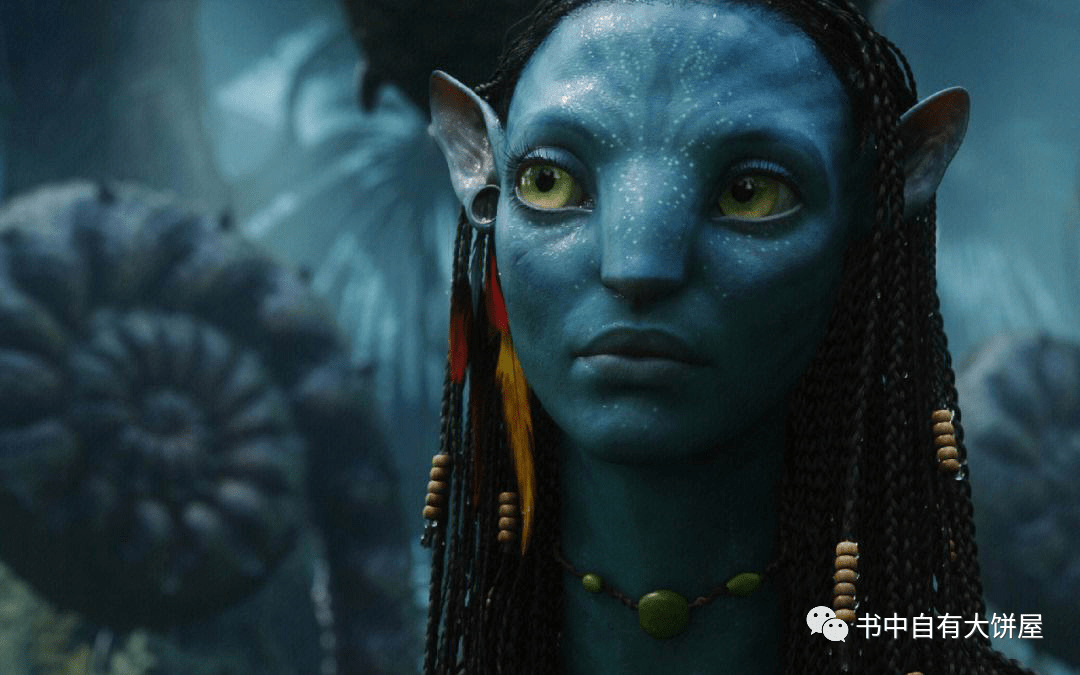
It is said that the rendering of "Avatar" used 40,000 CPUs, 104TB of memory, and 10G network bandwidth, and it took more than a month to render day and night.
Therefore, large-scale rendering scenes generally require professional studios to complete with the help of professional tools and high-end equipment. Otoy is currently one of the authoritative companies in the global graphics field, mastering Oscar-winning top technologies in graphics rendering, scanning, etc. The flagship OctaneRender renderer is the world's first GPU-accelerated physically unbiased renderer, firmly established in rendering. The first echelon of the track. Otoy is used by leading visual effects studios, artists, animators, designers, architects and engineers on major Hollywood films.
Data research shows that in 2018, the overall size of the global rendering and simulation software market was US$16.6 billion, and is expected to reach US$30.942 billion in 2025, with a compound annual growth rate of approximately 9.57%. The rendering sector can be said to be one of the sectors with great potential for development.
So the demand is actually there, and it is a real demand. Then let’s take a look at its white paper:
The value of Render
It will allow complex GPU-based rendering jobs to be distributed and processed over peer-to-peer networks, making the transactional process of rendering and streaming 3D environments, models and objects much simpler for end users. Additionally, the Rendering Network will eventually grow to include crowdsourced 3D projects to digital rights management, creating a vibrant new market for funding digital ideas, assets and applications that anyone can access and exploit.
RNDR’s project background
Rendering is the last important process for creators to create 3D images. It is the process of generating images from models. With the rapid development of film, television, animation, games and other industries, the demand for rendering has also increased exponentially.
Rendering usually requires the use of rendering and simulation software and hardware devices such as CPU and GPU. When rendering a single image, traditional CPU rendering often takes minutes or even hours, and this speed obviously cannot meet the needs of creators. OTOY's OctaneRender rendering software is a pioneer in the field of GPU rendering, which allows creators to create excellent works at home.
Although OctaneRender solves the problem of rendering speed, traditional rendering is performed locally. If a creator is working on a large-scale creation at home, rendering often takes days, weeks or even months, and other work cannot be done simultaneously, which will greatly reduce the number of creations for the creator. On this basis, cloud rendering became popular, using remote rendering servers to distribute rendering workloads among multiple computers on the network.
RNDR was born on the basis of cloud rendering. As Ethereum and GPU mining mature, OTOY sees an opportunity to leverage the millions of GPUs used for cryptocurrency mining to render a new generation of media content. Compared with centralized cloud rendering, RNDR is an unlimited decentralized network that solves the problem of supply and demand, breaks the limitations of centralized storage, gathers spare GPUs, and connects creators who need additional GPU computing power to maximize resource utilization. . While RNDR provides decentralized cloud rendering, it also solves the problem of traceability of creators’ digital copyrights. Every work uploaded to the RNDR network will be verified on the blockchain, and the metadata will be archived in depth.
How does RNDR work? What does the RNDR rendering network consist of?
The RNDR rendering network consists of two main roles, creators and node providers.
Creator: 3D image creator who needs additional GPU computing power
Node provider: Users with idle GPU computing power
Creators need to first subscribe or purchase an OctaneRender license on the OTOY official website, then export the scene document and upload it to RNDR, set the rendering parameters, select the required network nodes, and evaluate the rendering cost. The account needs to have enough RNDR points or RNDR Token, submit the rendering, wait for the rendering result, check whether you are satisfied after the rendering is completed, and then download or send an email.
Users with idle GPUs can apply to join as node operators. Node providers register their GPUs to the RNDR network and rent them to creators who need additional computing power, thereby receiving rewards in RNDR tokens paid by the creators for leasing.
There are three layers of network nodes:
Layer 1 (Trusted Partner Network): For example, enterprise-level nodes provided by Microsoft Azure, Google Cloud A2, etc. are very reliable and closed. They are currently only open to studios and have not yet been announced to the public.
Tier 2 (Priority Level): More powerful than Tier 3, faster on average, able to handle larger and more complex scenes.
Tier 3 (Economic): The most economical rendering solution. The cheapest but takes longer and is recommended for jobs that are not time sensitive.
RNDR points (exchanged for RNDR tokens)
In order to facilitate the use of creators in the non-crypto field, Paypel and Stripe payments are currently supported and can only be used in the RNDR network. When the creator uses points to pay, the contract will select the corresponding amount of RNDR tokens from the repurchase pool to pay the node provider.
Governance and rewards of RNDR currency
In order to allow better cooperation between creators and node providers, RNDR has a set of evaluation mechanisms, namely reputation scores.
Reputation score is the core of the network resource allocation process. Creators with higher reputation scores can enter rendering work faster and access more nodes during rendering. Likewise, node providers with higher reputation scores will receive work assignments faster than mining nodes with lower reputation scores.
The creator’s reputation score encourages creators to carefully check the rendering parameters when uploading tasks, reducing network congestion caused by repeated applications or cancellations during the rendering process. The determining factor of a node provider's reputation score is the success rate of rendering work. The higher the reputation score, the more opportunities it will have to enter the priority node layer, receive higher-level work, and receive more token rewards.
Rendering costs and mining rewards of the RNDR network
The rendering pricing of the RNDR network requires the use of OctaneBench (OB). OctaneBench is a tool created by OTOY. It evaluates the GPU computing power score based on the number of samples calculated per second.
The current scoring benchmark is based on RTX 2700. The OB of RTX 2700 running for one hour is 200. On this basis, fast graphics cards have higher scores, while slow graphics cards have lower scores.
Positioning at the node provider level will be tiered based on factors such as total system OB, node history (percentage of jobs processed successfully), VRAM and minimum RAM that make up the composite node score.
RNDR Network will charge 0.5% to 5% of the transaction fee as a handling fee, depending on the nature of the transaction. The handling fee is mainly used for storage and bandwidth costs.
The RNDR network helps creators further trace the provenance of artworks, storing the hash value of all assets used by the system to construct source renderings for the completed work. This raw data will be of great help to original creators.
From a product level, with the emergence of 8K content, augmented reality (AR), virtual reality (VR) and holographic displays, the demand for GPU computing power will reach unprecedented heights in the future. Currently, the global chip supply is in a tight state, and the RNDR network solves the problem of computing power shortage from another angle. According to official information, the number of node provider registrations reached 16,000 in January 2021, and the latest data has not yet been found. The lack of full disclosure of data is one of the current shortcomings of the RNDR network. In terms of rendering technology, the official is also constantly updating. This year, OctaneX was launched in cooperation with Apple, and the mobile version may be supported in the future. Imagine a future where people can create the metaverse they want anytime and anywhere, no longer limited to renderer versions or computing power. As more artists join the RNDR network, they can render more work at the same time to a greater extent, creating more work than they would otherwise be able to create. In terms of partners, the computing power layer cooperates with large enterprise clouds such as Google and Microsoft, but it has not yet been developed for ordinary users and is only open to large studios. At the creator level, it cooperates with leading NFT artists Beeple, PAK, etc., and famous film and television companies such as Disney and HBO are also its partners.