

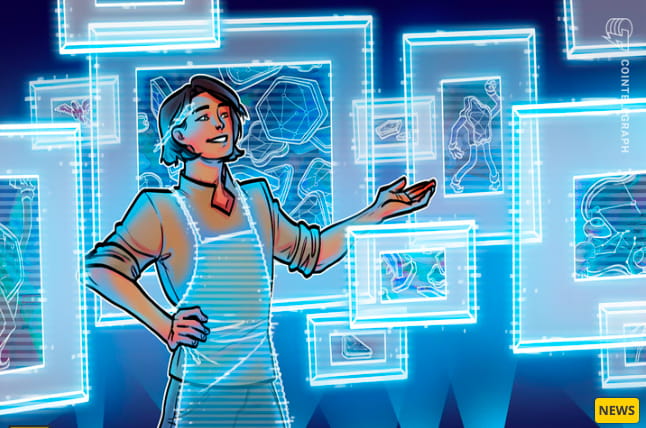
The idea of a decentralized social media platform continues to gain widespread traction, with users growing increasingly concerned about the centralized nature of traditional platforms and the potential for censorship, and even the former Twitter CEO publicly pushing for a decentralized Twitter alternative.
Cointelegraph spoke with Rick Porter, CEO of decentralized social media startup DSCVR, a Web3 social media built on the Internet Computer, about the platform’s potential to change the way users interact and share information online.
Decentralized social media platforms offer “the potential for users to own their own content, their own data, and make decisions about its monetization,” Porter said.
Porter also believes that decentralized social media platforms can be profitable for both the platforms and users, who, according to him, can monetize and generate revenue through “native liquid tokens and digital assets.”
“The fees from these transactions present a massive opportunity to disrupt traditional advertising-driven social media monetization while also providing users with an ad-free experience,” he explained.
The CEO mentioned that decentralized social media platforms offer individual creators the possibility to enable advertising or monetize their content, "which would essentially replicate the advertising revenue model pioneered by traditional social media, while also providing more choices, power, and income to content creators on the platform."
He also noted: “The cryptographic components of decentralized social media will enable more powerful and personalized advertising techniques that can take into account financial assets and transactions, giving users control over exactly how this data is accessed.”
According to Porter, Web3 social media platforms will take product placement, influencer marketing, and social advertising to the next level and further democratize them.
Advertisers can use non-fungible tokens, or NFTs, as a form of product placement and a way to reward their most loyal customers. These advertisers will want to work with relevant creators and communities, and Web3 ad tech will enable these creators to prove that their communities are a good fit for advertisers.
When talking about the challenges facing decentralized social media startups, Porter shared: “Building on-chain is not easy. Web3 social media platforms are built on new technology stacks and have much smaller teams than Web2 giants. From this perspective, it can be a challenge to scale quickly to meet user demand and provide every Web2 user with the level of features and improvements they want.”
Speaking about regulation within the decentralized social media ecosystem, Porter said: “It is likely that there will be regulations to protect user data and privacy or prevent the spread of misinformation, and there is benefit in having clear rules that society generally agrees on.”
However, he claimed: “Technology often advances faster than regulation, which is why it’s important to give users the tools and power to help police platforms and their communities.”
Porter believes that decentralized autonomous organizations can be a way to self-regulate and make decisions as a group, rather than handing everything over to outside parties or powerful individuals.
Thanks to blockchain technology, the social media landscape as we know it may soon evolve to empower users in novel ways.
IC content you care about
Technology Progress | Project Information | Global Activities
 Collect and follow IC Binance Channel
Answer your questions at any time