


Today we are going to take a look at a project that has been very popular in the past two days. Recently, everyone must have heard about Desci, which is decentralized science. At the Solana Breakpoint conference of Token 2049, the Solana ecosystem Desci platform Molecule DAO launched a new meme coin issuance platform Pump.Science.
The feature of Pump.science is not the coin issuance mechanism, but that medical researchers can submit drug research proposals on the platform and transmit the test results to the front end of the platform. Users can participate in the trial process by trading meme coins representing drugs. Pump.science introduces a drug experiment prediction mechanism. Users buying meme coins is equivalent to voting for a certain drug. Ideally, if the price trend of the token changes synchronously with the performance of drug trial data, it can provide an incentive plan for medical research. Enter the Pump.science interface, and you can see the Marketplace page, which shows the experimental results and price curves of completed projects, making it convenient for users to compare.
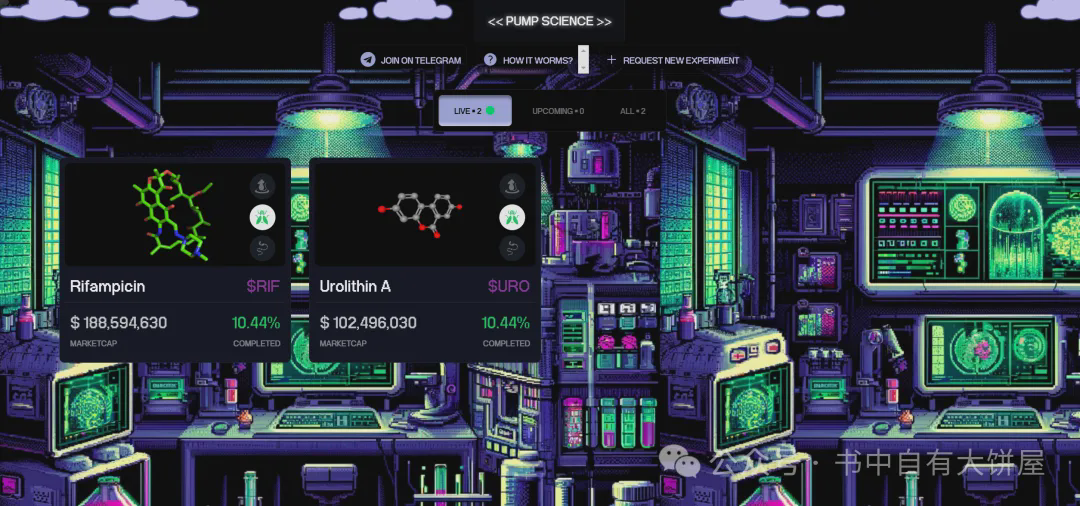
The hottest topics in recent Desci discussions should be RIF and URO, both of which have increased by hundreds of times, with market values exceeding 100 million dollars. Currently, these are the only two tokens on the Pump.science platform, so what exactly is this Pump.science?
Background
To accelerate the prospects of a healthy future, we must develop new financing and scientific systems to reduce the risks of interventions (i.e., proving their safety and efficacy), thereby helping us become healthier.
1. Obtaining candidate drugs through the U.S. Food and Drug Administration (FDA) is a long and expensive process, and for most scientists, this cost is too high unless substantial funding is obtained from the private sector (venture capital).
2. The FDA does not classify aging as a disease and only approves compounds that treat diseases.
3. Health insurance only pays for the costs of drugs that treat diseases, so the private sector often does not invest in general lifespan-extending drugs, as these drugs are not covered by insurance.

Introduction
The goal of pump.science is to create a 'game' aimed at identifying chemicals that extend human lifespan in the most time-efficient and cost-effective way. As we gather feedback from the community, the best design for this 'longevity game' will evolve over time. At its core is the 'Longevity Trilemma'—balancing cost, speed, and data quality to predict the potential impact of drugs on human lifespan.
To quickly and economically generate meaningful high-quality data, tests are first conducted on shorter-lived and lower-cost model organisms. Each level in the game gradually 'lowers' the risk of chemicals, first establishing evidence in simpler organisms before moving on to more complex and higher-cost organisms.
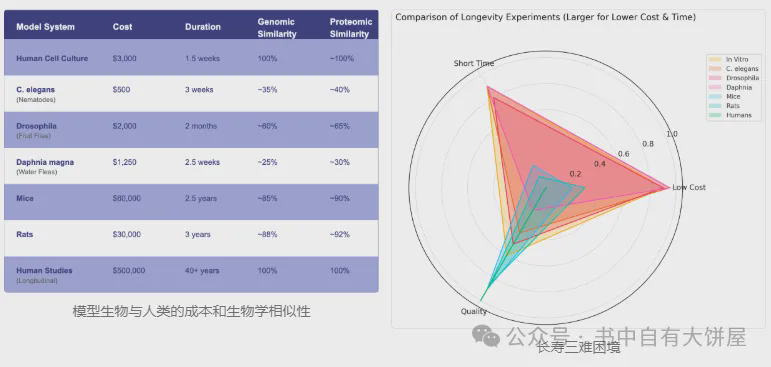
Initial game levels
Worms (Level 1): Starting with Caenorhabditis elegans, a tiny nematode about the size of a cilium. The lifespan of the worm in the laboratory is only 20-30 days, so potential lifespan-extending chemicals can be quickly observed through worm testing. High-quality drug screening in worms requires about $300 to $500.
Flies (Level 2): Next, fruit flies will be tested, as they can survive about 3 months in the laboratory. The cost of breeding fruit flies is relatively low (about $2,000 to $3,000 per experiment).
Mice (Level 3): Promising chemical drugs will then enter the mouse testing phase. Mice have a lifespan of about 2-3 years, and the experimental costs range from $30,000 to $60,000, depending on the setup. Due to their longer lifespan and higher costs, only the most promising candidate drugs can enter this stage, where more expensive, time-consuming, but more human-relevant data can be collected.
How pump.science works
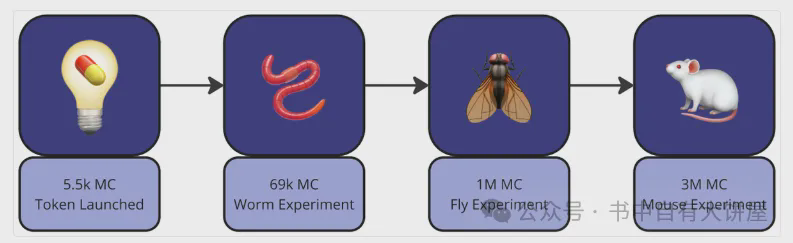
Milestone-based financing: As the token's market value grows, tokens will be sold at key milestones to pay for increasingly advanced testing costs:
Worms: Tokens worth $500 are sold for a market value of $70,000.
Flies: Tokens worth $2,500 are sold for a market value of $1 million.
Mice: Tokens worth $20,000 are sold for a market value of $3 million.
How to play
All experiments on pump.science (currently) are to test whether a certain compound can extend the lifespan of animals.
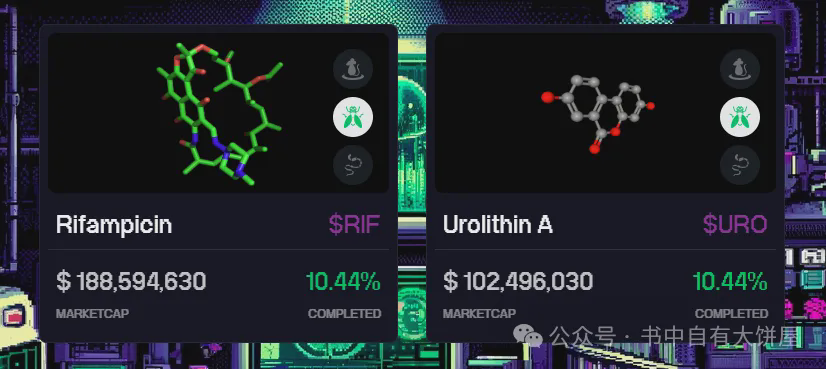
On the homepage, real-time experiments can be seen, and the animal icon on the right will show which animals are being tested in that experiment. In the screenshot below, this means two experiments are being conducted on fruit flies, one testing Rifampicin and the other testing Urolithin A.
Flies
The fly longevity experiment involves feeding compounds or placebos to a tube of flies (about 15 flies per tube). Flies receiving the compound are placed in one tube, while flies receiving the placebo are placed in another. Your goal is to predict whether the compound will enable the flies to live longer than those receiving the placebo. They will be recorded and uploaded to pump.science.
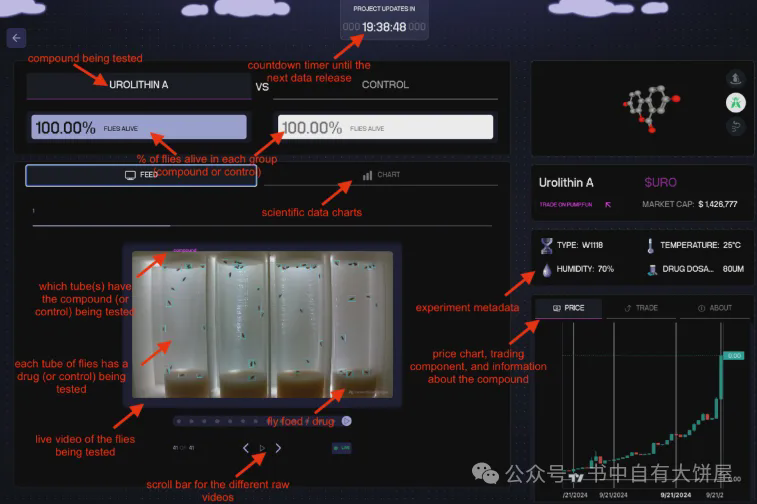
Flies move around during their lifetime. If you click on the 'Graph' tab, you can see the AI model's data output, which can predict the number of flies still alive (count), their average flying speed (speed), and the distance they fly (distance). Count is the most important, as the goal is to predict whether the compound will extend the lifespan of the flies, but the speed and distance graphs will help you predict which flies are likely to die first.
At the end of the experiment, there will be a final score: the percentage of lifespan extension (PLE). This indicates how much longer the animals that took the drug lived compared to the control group. The goal of the game is to find more compounds that can increase the PLE of all tested animals.
Once the experiment is completed, if the market value of the compound token reaches the next milestone threshold, the next experiment will be funded and executed.
RIF&URO
What exactly are the two projects being tested on the platform right now? I wonder if everyone has investigated thoroughly?
According to my investigation, RIF stands for Rifampicin, a broad-spectrum antibiotic belonging to the rifamycin class of drugs. It is renowned for its potent bactericidal effects against a variety of bacteria. It was first developed in the 1960s and remains a core drug for treating various infectious diseases.
Rifampicin inhibits RNA synthesis by binding to the DNA-dependent RNA polymerase of bacteria, ultimately preventing the production of bacterial proteins. This mechanism is particularly effective against various Gram-positive and Gram-negative bacteria, as well as some actinobacteria (such as Mycobacterium tuberculosis).
Currently, only some animal experiments suggest that Rifampicin may extend lifespan by clearing aging proteins from cells or modulating immune function. This earliest research was discovered in 2010 with fruit flies and nematodes, and after 2020, studies on mice have begun, so the research currently on the platform has actually been done long ago.
Similarly, URO is also the same, Urolithin A (UA) is a natural metabolite produced by the human gut microbiota from ellagic acid or ellagitannins. In recent years, Urolithin A has gained attention for its potential in anti-aging and cellular health, especially showing significant roles in extending healthspan and improving mitochondrial function. This Urolithin A was initially discovered in 2006, and experiments on mice were already conducted in 2016, and Urolithin A has now entered the commercialization phase!
In conclusion, this Desci is indeed very popular, and many big names are paying attention. Binance Labs has also invested in it. The topic of immortality has been something that royalty and the wealthy have aspired to throughout history—who wouldn't want to live longer? This is also a new concept in the cryptocurrency world, and many people are pushing it vigorously. Currently, the cryptocurrency world is indeed in the stage of hype, which will create new growth points.
However, we must have our own thoughts and not just follow the crowd. The experiments of these two items released currently were actually validated years ago, so in scientific research, it can only be said that it is recycling old ideas. But the concept is good, and I still have hope for Desci.