


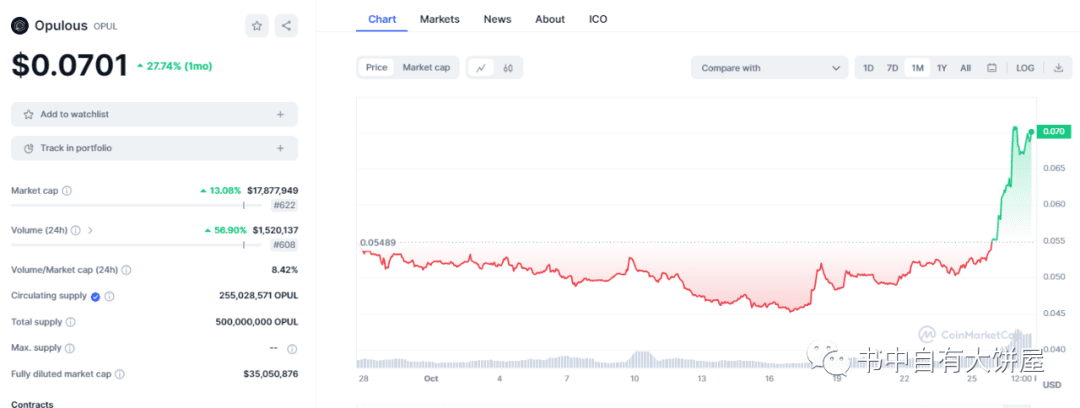
Today we continue to talk about an interesting project, which we call the QQ Music of the blockchain world. We have previously talked about the NetEase Cloud Music of the blockchain world. In fact, the VIB we talked about before is not a music platform, but a big data platform for music or artists. The Opulous we are talking about today is a real music platform. It has grown rapidly recently, nearly doubling from 0.04 to 0.07. Its current market value is 17 million US dollars, ranking 600+.
background
According to the International Federation of the Phonographic Industry's "2020 Global Music Report", the global music industry market revenue in 2020 was US$21.1 billion, an increase of 9.7% compared to 2019.
The current state of digital music
These data show that the market demand for commercial digital music copyright is strong. However, despite the strong market demand, the development of the online music market has been criticized.
On the one hand, the online music market is seriously monopolized by giants.
Super platforms occupy a core position in the online music ecosystem. Among the $21.1 billion in global music copyright revenue, the three major record companies, Universal, Sony and Warner, even accounted for 68.6% of the share.
On the other hand, online music works are very easy to be copied and spread.
After multiple disseminations, copyright confirmation has become a major problem, leading to frequent infringement incidents. It is very difficult for both individuals and platforms to protect their rights through legal means.
For creators:
The copyright income is low, the cost of protecting rights is high, the passion for creation is easily worn out, and it is difficult for independent musicians to survive
The report "Survey on the Current Living Conditions and Copyright Awareness of Musicians" released by the School of Music and Recording Arts of Communication University of China shows that 30% of musicians in China have zero income, nearly 70% of musicians work part-time, and 95% of musicians cannot make a living solely from music income.
For the platform
Music copyright expenses are too high and maintenance costs are high
For online music consumers:
Music fans, as consumers only, are unable to participate in the platform economic ecosystem and their enthusiasm for participation is limited.
The blockchain NFT craze has swept the global art market. The immutable and tradable attributes of NFT have effectively improved the efficiency of the traditional art market. It has not only been recognized by crypto asset users, but also attracted a wider range of mass consumers.
In fact, even in China, people are paying more attention to the issue of music copyright. We now have to pay for listening to songs on major music platforms. However, the interests of many unknown singers cannot be guaranteed, so there are still problems.
Introduction
Opulous is a protocol focused on the tokenization of the music industry, aiming to empower artists so that music rights can be used as value-backed assets in decentralized finance (DeFi). The project claims that its goal is to liberate artists from the traditional financial system and provide them with more autonomy and income sources.
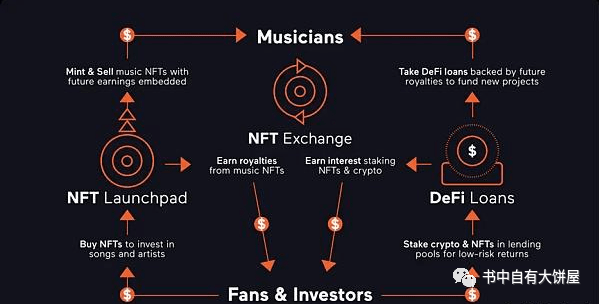
The Opulous platform includes three main functions: NFT launchpad, NFT exchange and DeFi loans. It aims to change the way musicians get the funds they need by providing NFT (non-fungible tokens) and DeFi loans, and provides a launchpad for the first batch of NFT and crypto loans supported by music copyright.
NFT Launchpad
Opulous is the first platform to launch NFTs backed by music copyright. Unlike other NFTs, Opulous tokens provide buyers with a share of future royalties from music as well as exclusive rewards and fan experiences.
These groundbreaking NFTs will generate monthly royalty income and increase in value as artists' careers develop. Fans and investors can not only earn royalties, but also unlock other exclusive rewards such as backstage passes, show tickets, and merchandise by sharing music on social media. NFT owners can also track and withdraw their income directly from their Opulous accounts. In addition, they can also trade on the upcoming Opulous NFT exchange. The Spade Ace Community is a large-scale primary market high-quality token aggregation center dedicated to the promotion of high-quality tokens. Founded in 2015, it has more than 50 cooperative projects and has established partnerships with many institutions, determined to create a high-quality reputation brand in the primary market.
NFT Exchange
Opulous NFT Exchange creates a new music-based sharing economy where anyone can buy and trade NFTs backed by music copyrights to earn the royalties generated.
For example, music fans may discover an underrated song that they know will become more popular over time. They can purchase it as an Opulous NFT, supporting an upcoming artist from the very beginning of their career and earning increasing rewards as the track becomes more valuable and gains popularity.
DeFi Lending
Opulous launches low-risk DeFi lending backed by real-world music assets and future royalties.
Despite receiving a steady income from royalties, too many artists are shut out of traditional banks or forced into unfair deals with major record labels. With Opulous, musicians can use DeFi loans to fund new projects, up to the amount of royalties they generate in a 12-month period.
On the other hand, investors can pledge their crypto assets on the platform to generate high returns. Unlike most DeFi platforms, Opulous loans are always backed by predictable music assets reviewed by a team of experts, which greatly reduces investment risks.
Background of the platform
The Opulous platform was designed and launched by Lee Parsons, founder of DIY music distribution platform Ditto, and has made a certain impact in the music industry since its release earlier this year.
Ditto is an award-winning global music distribution and label services company that has processed over $1 billion in royalties to date. Ditto has expanded from distribution to provide label, publishing and management services. Every step they take is based on their mission to help artists take control of their music careers.
In April 21, British rapper Big Zuu and American musician Taylor Bennett successfully sold most of their shares of unreleased records (50% and 75% respectively) through the platform. These shares were divided into 125 NFTs, each sold for $100, including a 1% copyright share.
This was also the first time that Opulous split and sold music copyrights through NFT. At that time, 125 items were sold out in 30 seconds, attracting more than 10,000 buyers to participate.
Financing
In 2021, it announced a financing of US$6.5 million. The specific investors were not disclosed, but the background of the parent company is still good.
Token Economy
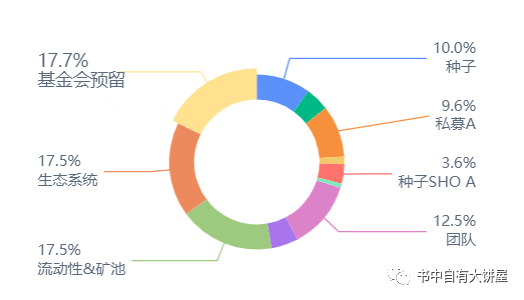
The project token was launched in 2021, with a total token supply of 500,000,000 OPUL. Currently, 255,028,571 OPUL are in circulation, with a circulation rate of about 50%. The current coin price is US$0.07, and the historical high is $7.6909 (2021-11-18). From this perspective, it has fallen by 99%, which can basically be said to be zero. In terms of token distribution, the team 12.5% + the foundation 17.7% + the ecosystem 17.5% = 47.7%, and the coin holding ratio is too high.
To sum up, this project is quite creative. As for music NFT, it could have been done when NFT came out, but the feasibility was relatively low and the circulation was also relatively troublesome. Blockchain can indeed solve the copyright problem, but the technology is not mature at present. A platform like this can only be built by inviting top celebrities. In fact, it still depends on the operational capabilities of the team, not a technical problem. The project's market value management is not done well. The current market value is a bit low and the risk is extremely high. This issue mainly shows you a project, and we just need to gain something, because I have shown you so many projects and seen the development of the blockchain industry. Before 2017, there were only various chains, and now there are so many applications. With the great development of the industry, we can also reap the dividends of the industry. This is the charm of innovation.