




Blockchain technology is revolutionizing the digital world with its secure, transparent, and decentralized nature. One of the most notable currencies in this space is the EOS cryptocurrency. This article explores the scalability, fee-free structure, security features, governance, and growth potential of the EOS ecosystem.
Guidelines for this article:
What is EOS?
History of EOS
How does EOS work?
What is unique about EOS?
What is the best EOS crypto wallet?
EOS price potential
Is it worth buying EOS cryptocurrency?
What is EOS?
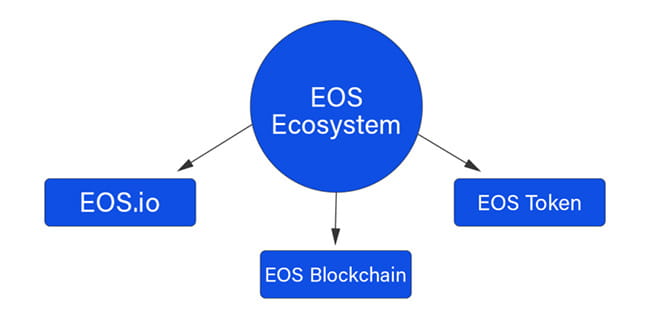 EOS Ecosystem: ByteTree
EOS operates as a layer 1 blockchain built on the open source Antelope protocol (formerly known as EOSIO), supporting scalable, secure, and user-friendly blockchain applications. It solves key issues such as scalability, security, and decentralization. Unlike Ethereum's leasing system, EOS directly allocates computing resources to coin holders without paying rent or gas fees.
EOS stands out in terms of scalability, using vertical and horizontal scaling to provide users with free applications. Block producers actively participate in maintaining the network infrastructure. EOS aims to create a powerful platform that prioritizes user-friendly and business-friendly application development while mitigating limitations in other blockchain platforms such as Ethereum.
History of EOS
The Block.one team, led by key figures Dan Larimer and Brendan Blumer, launched the EOS project in August 2016. Although Block.one was founded in 2017, the team launched the EOS GitHub repository in April of the same year. In addition, in June 2017, they released a technical white paper detailing the vision of the project.
EOS’s initial coin offering (ICO) began in June 2017, as the ICO boom saw blockchain projects amass billions of dollars in funding and the appeal of digital tokens soared. The round raised a record $185 million in just five days and closed in June 2018 for a record $4 billion, making EOS the most important ICO in cryptocurrency history.
EOSIO 1.0 was released in 2018, and the mainnet was officially launched in the same year. Token holders played a key role in its launch. In April 2023, the EOS Network Foundation launched the EOS EVM on the mainnet, facilitating interoperability between EOS and Ethereum.
How does EOS work?
EOS was developed to facilitate the creation of scalable, user-friendly, and secure blockchain applications. It was specifically designed to overcome the limitations and difficulties that developers encounter when developing applications for large user bases in traditional blockchain networks.
Key aspects of EOS functionality include:
WebAssembly C++ Engine
EOS uses WebAssembly (Wasm) technology, which enables developers to create high-speed applications using popular programming languages such as C++. This can speed up development and provide developers with an easier learning curve.
Scalability
Scalability of blockchains is a major issue due to the slow speed caused by the consensus requirements of transaction processing. For example, Ethereum only processes 20 transactions per second compared to Visa's 1,667 transactions. EOS solves this problem by using Delegated Proof of Stake (DPoS), which can manage millions of transactions per second. DPoS uses real-time voting and reputation mechanisms to select block producers, in which EOS cryptocurrency holders also participate. Each coin represents a vote that can be used to support platform development.
Delegated Proof of Stake (DPoS)
In DPoS, computers on the network do not compete for computing power by mining. Instead, the network's network users vote for a group of computers, called block producers, that they believe are best qualified to run the network. Additionally, DPoS offers a faster and more energy-efficient solution compared to PoW. Here's how DPoS works on EOS:
Block Producers: In EOS, the 21 block producers with the most user votes are entrusted to run the network. These block producers are usually professional teams operating enterprise-grade hardware.
Transaction Verification: Each block producer takes turns verifying transactions and generating blocks, which are then verified by the other 20 block producers.
Reward system: This system provides EOS cryptocurrency to block producers for maintaining the integrity of the network and ensuring it operates seamlessly. EOSIO demonstrates its efficiency by producing a new block every half a second, compared to Bitcoin, which takes ten minutes per block.
User Oversight: Importantly, EOSIO allows users to withdraw their votes for Block Producers who are not performing their duties, which can result in the immediate replacement of underperforming Block Producers.
EOS’s flexibility and security
EOS has a complete permission system, and developers can develop customized authorization schemes for different business scenarios. Developers can protect specific smart contract functions and distribute the permissions of contract functions among multiple accounts. EOS allows developers to upgrade applications and allows them to fix code and add features without protocol restrictions.
EOS Governance
EOS establishes governance through a legally binding constitution attached to transaction signatures. In addition, the constitution is binding on users and includes jurisdiction, choice of law, and agreed-upon regulations. This framework ensures transparent governance of the EOS platform.
What is unique about EOS?
Unlike Ethereum’s leasing system, EOS allocates computing resources directly to token holders, eliminating the need for rent or gas fees and marking its unique success in the blockchain world.
Key network elements/characteristics:
Scalability: EOSIO is designed to scale efficiently, allowing applications to process transactions with significantly lower latency compared to other blockchains. EOSIO transactions take only half a second, rather than waiting minutes or hours for transactions to be confirmed.
·Zero transaction fees: Unlike many other blockchains that charge transaction fees, EOS transactions are free. This means that users can send tokens, participate in microtransactions, or perform various actions without incurring additional costs.
User-Friendly: EOSIO focuses on ease of use for developers and users. It provides fee-free transactions for actions such as sending tokens, selling in-game items, and liking comments. These on-chain transactions are highly secure, and users can even choose short account names for themselves to make account management easier.
Unique security features: EOSIO introduces permissioned private keys, which have limited functionality. For example, a permissioned private key can publish messages but cannot send tokens, thereby enhancing the security of the ecosystem.
Governance: EOS maintains governance through a legally binding constitution, establishing jurisdiction, choice of law, and mutually agreed-upon regulations. The system ensures a structured and regulated environment.
EVM Integration: Connecting two well-known blockchain ecosystems: Ethereum and EOS. The mainnet replicates Ethereum’s virtual machine (EVM), providing developers with the ability to launch decentralized applications (DApps) coded in Solidity.
EOS (EOS Ecosystem)
The EOS cryptocurrency is the native token of the EOS ecosystem and has transitioned from its initial launch on the Ethereum platform to the EOS network. This digital asset has a variety of functions, including staking, governance, and facilitating economic transactions. Notably, the $EOS token has no supply cap and has an annual inflation rate of 1% after the original 5% rate revision that went into effect in February 2020. The circulating supply of the EOS cryptocurrency is 1.13B and the maximum supply of tokens is 0.00 EOS.
“EOS is definitely in better shape than it was two years ago. The crypto market downturn has been tough on all Antelope chains, however, this downturn doesn’t mean I’m ready to sell all my EOS/Antelope coins to imitate the popular meme token of the week.” – @JeremyinKansas: Twitter
Token Utility
Value Exchange: As a global digital cryptocurrency, it facilitates seamless value exchange within the EOS network’s diverse ecosystem of decentralized applications and smart contracts.
DeFi Participation: Enables users to participate in decentralized finance ( DeFi ) transactions, including lending and liquidity mining, thereby fostering financial opportunities.
NFT Marketplace: Facilitate the buying and selling of verified digital artworks through NFTs, creating a secure and efficient market for creators and collectors.
GameFi Participation: Grants access to the GameFi platform, allowing users to participate in earn-while-playing games and various value-creating activities.
Governance and Network Resources: EOS holders enjoy governance privileges and influence resource allocation by voting for network validators. They also use EOS to access network bandwidth and storage capacity for basic operations such as transfers and interactions with DApps and smart contracts.
What is the Best EOS Crypto Wallet?
If you want to store EOS, consider the security of a crypto wallet first. Hardware wallets such as Ledger and Trezor offer the most security through offline storage. Software wallets are available as smartphone or desktop applications, offer flexibility, and can be custodial or non-custodial. Examples include Trust Wallet, Math Wallet, and Atomic Wallet. The choice of wallet depends on your needs and the level of security you require.
EOS Price Potential
Our EOS price prediction projects a potential value of $2.129 for EOS in 2023, rising to $3.086 in 2025 and reaching $10.04 by 2030. However, if you are considering EOS as an investment, be aware that various conditional factors can affect these predictions. Never take them as an absolute certainty. Future EOS prices will depend on market conditions, first-layer competition, and further adoption of EOS.
Is it worth buying EOS cryptocurrency?
EOS offers something new. Its fast, free transactions and efficient smart contracts pave the way for developer-friendly blockchains to seamlessly facilitate secure, fast, and cost-effective interactions around the world. Buy EOS only if you believe in the project. While cryptocurrencies may have good long-term price potential, all cryptocurrencies are a risky investment and profits are not guaranteed whether you choose to trade or hold for the long term. #EOS #工作原理