

As a star project started in 2015, DFINITY plans to launch the mainnet in the first quarter of 2021. It is a major project launched after Filecoin, Polkadot, etc.
The vision of the DFINITY project is to become an "Internet computer" in the blockchain era. Focusing on this goal, the DFINITY test network has undergone five stages of iterations for more than two years. Currently, various parameters and technical routes have become stable.
If you want to become an Internet computer, you must have strong computing power.
As part of the daily tracking research of Pomegranate Mining Pool, we contacted the DFINITY project team as soon as we thought the time was right and obtained first-hand information about participating in the DFINITY network.
This article is project information we compiled based on DFINITY’s public information. We will continue to announce our research on DFINITY technology and participation methods in the future, so stay tuned.
1. Project background
DFINITY is committed to building an Internet computer with secure software with super computing capabilities, following the "code as a service" model.
Developers only need to upload their code, and the corresponding applications and services can be deployed and started to operate, which greatly saves the cost of application development and operation and maintenance, and truly realizes the value exchange of various services within the digital encryption world, thereby accelerating the global digitalization process.
2. Token situation
Token name: ICP
Number of issuances: 469,213,710 ICP
Project valuation: US$9.5 billion
At network launch, the token distribution ratio is:
9.5% Early Contributors: allocated to the team that participated in contribution work and investment in the early stages before the foundation was established.
24.72% Seed Round Investors: Allocated to investors who participated in a large number of Seed Rounds
6.85% strategic investors: allocated to investors participating in strategic rounds
4.75% Pre-sale round investors: Investors allocated to pre-sale round
1.25% community airdrop: preferentially allocated to community members who have long-term support for the project
52.93% Foundation Grants, Teams and Partners: Tokens held or used by the Foundation to achieve its competitive goals (to fund R&D and operations, offices, technology acquisitions, community programs, employee incentives, partner incentives and others long-term needs)
3. Fundraising information
Total funds raised: approximately US$195 million, specific information:
2017/02/14: Seed round, with total financing amount of 3.9 million Swiss francs (approximately US$4.2 million). When the fund-raising was launched, Dfinity's soft cap for fundraising was 1 million Swiss francs, and it reached this goal in just 75 minutes. 24 hours after reaching the soft cap, a total of approximately 3.9 million Swiss francs was raised by the deadline, accounting for the majority of the total. At 24.72% of the initial token allocation for the online launch, the fundraising cost is $0.0362 per token.
2018/02/07: Strategic round, raised US$61 million from Andreessen Horowitz (A16Z) and Polychain Capital, accounting for 6.85% of the initial token allocation of the mainnet line, with a fundraising cost of US$1.8978 per token.
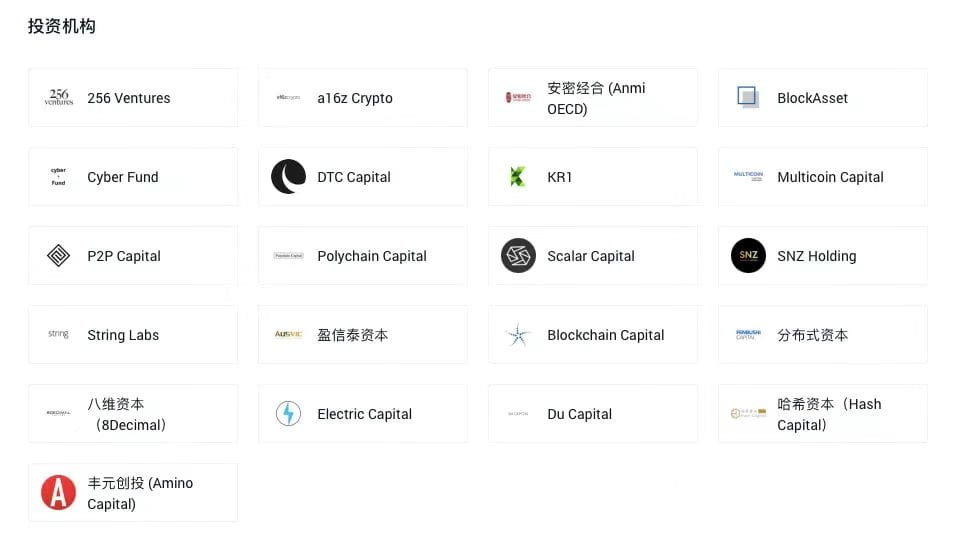
2018/08/28: Venture capital round, a total of US$102 million was raised in this round of financing, led by Andreessen Horowitz (A16Z) and Polychain Capital, SV Angel, Aspect Ventures, Village Global, Multicoin Capital, Scalar Capital, Amino Capital and KR1 and DFINITY community members participated in the investment, accounting for 4.75% of the initial token allocation of the mainnet launch, and the fundraising cost was US$4.5765 per token.
Airdrop information:
DFINITY conducted a token airdrop worth $35 million to early DFINITY community members in June 2018. In the United States, Dfinity tokens were given away for free before the network launched and could still be classified as an unregulated public securities transaction. Therefore, this airdrop distribution is limited to non-U.S. personnel.
Project valuation:
On October 1, 2020, Dfinity disclosed its governance system and token economic model, resulting in a project valuation of US$9.5 billion, making it one of the top five cryptocurrencies. Based on a $102 million round led by A16Z and Polychain in August 2018, the investment was valued at $2 billion at the time.
4. Online plan
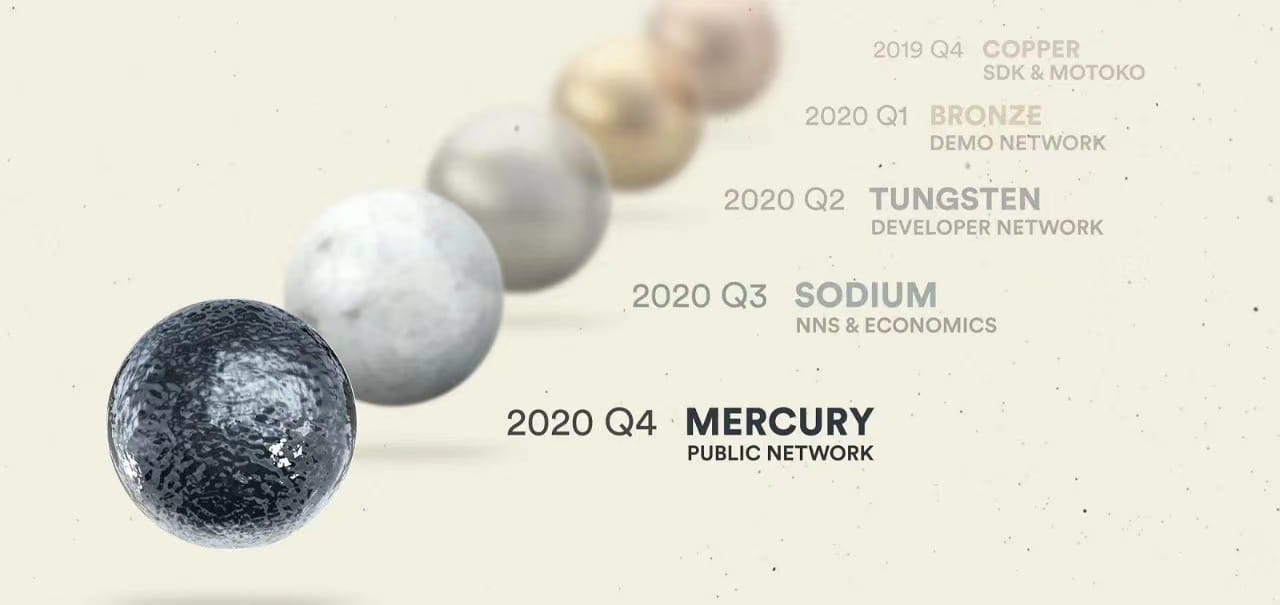
Dfinity has five major milestones:
The test network "Copper" launched in November 2019
Testnet "Bronze" launched in January 2020
The test network "Tungsten" launched in July 2020
The test network "Na" launched in October 2020
The public network "Mercury" launched in December 2020
The public network Mercury milestone was launched on December 18, 2020, and the Alpha phase of the Internet computer main network was officially released. The token ICP will be released after the genesis version is launched, which is expected to be in the first quarter of 2021.

5. Project Progress
The milestone evolution of Dfinity Internet Computer from copper to mercury:
COPPER copper
Copper launches the first public version of the DFINITY Canister SDK (V0.3.0) as well as Motoko, a new programming language optimized for creating tamper-proof software and open Internet services for Internet computers using WebAssembly (Wasm) .
BRONZE Bronze
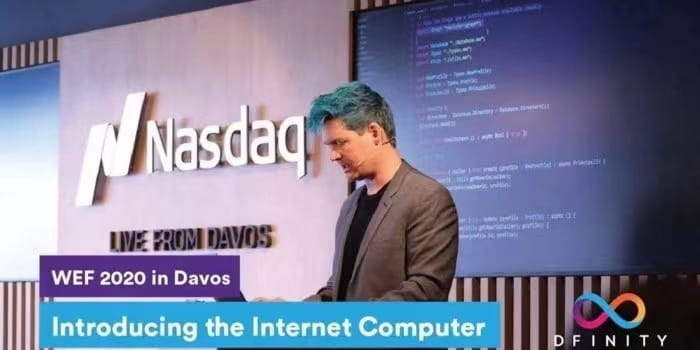
Bronze made its debut at the World Economic Forum in Davos, showing off an example of a new class of open internet services that could be powered by internet computers. In the demo, a workplace social network for professionals called LinkedUp, an open version of LinkedIn. Platform, runs on Internet computers.
TUNGSTEN tungsten
The Tungsten kickoff event provided a demonstration of the Internet Computer Development Platform, with presentations including a technical overview of Internet Computers, demonstrations of the Motoko and Rust languages, and a discussion of how distributed computing architecture represents the next major stage in computer technology, enabling Services and applications can create innovation engines that are immune to platform risks.
SODIUM Sodium
Sodium has launched the Network Neural System (NNS), an open algorithmic management system for controlling computers on the Internet. NNS participates in supervising the network and is responsible for introducing and rewarding data centers. Sodium’s launch event details the token economics behind how NNS manages the Internet’s computers, and explains how ICP tokens will be used for fee “cycles” and network governance.
You can do two things with ICP:
Lock them within NNS to create "neurons" that can vote on proposals and receive voting rewards;
Convert them into Cycles, which can be used for computation by software containers running on computers on the Internet.
MERCURY Mercury
Mercury has launched its mainnet on December 18th. This network is fully functional and decentralized. It is completely run by the network nervous system managed by it and will not undergo any form of transformation during the transition to the genesis version. Reset.
However, Williams said that the current version of Mercury is still an alpha beta version. As a result, the network has released only a fraction of the 469 million managed tokens.
These are held by Dfinity, early investors and several other parties, who will vote on when the remaining tokens will be released once the network meets the requirements for the genesis version.
These requirements include the release of extensive source code and documentation as well as ongoing security and stress testing as the network expands, hopefully towards genesis in the next two to three months, when the network transitions to Beta.
The mainnet is currently running on nodes in seven independent data centers in the United States, Germany and Switzerland. Since its launch on December 18, the subnet that controls the network’s nervous system has produced approximately 400,000 blocks and is on its way through Genesis The transition will add 896 nodes.

6. Project Innovation
DFINITY aims to expand the capabilities of the Internet through advanced new blockchain networks by creating a decentralized "Internet Computer" and provide a public computing platform on which fast and scalable information systems such as enterprise systems and Internet services) as well as financial services (such as DeFi) can be built directly without intermediaries or traditional IT.
It is a completely redesigned IT stack where software takes a new simpler form. The platform is made up of security protocols rather than proprietary infrastructure and is tamper-proof, and the software is highly secure and tamper-proof without relying on firewalls and VPNs.
Runs quickly, scales to billions of users around the world, and supports a new type of autonomous software that promises to reverse the monopoly of big tech companies on the Internet and create the next generation of Internet applications.
The computer model of the Internet greatly simplifies developers' efforts to create a scalable mainstream Internet.
Application example 1: CANCAN
Dfinity released an open source version of short video social software "CanCan" similar to TikTok in July 2020. Since this product is based on Dfinity's latest programming language Motoko, it is worth noting that compared with Facebook's 62 million lines of code , CanCan was built using less than 1,000 lines of code.
CanCan's code is open source, which means the foundation does not own the product.
Application example 2: Reversi
Developed by Dfinity Senior Engineer Paul Liu, this game is a strategy board game for two players.
He published an article to learn more about the application development experience from a developer's perspective. Paul Liu focuses on the high-level concept: a virtual environment where Internet applications can seamlessly connect to each other.
He believes that as cloud computing develops, infrastructure will become a commodity. In other words, it no longer matters who provides the infrastructure, what matters is: you write an application and it runs on the Internet.
7. Team introduction
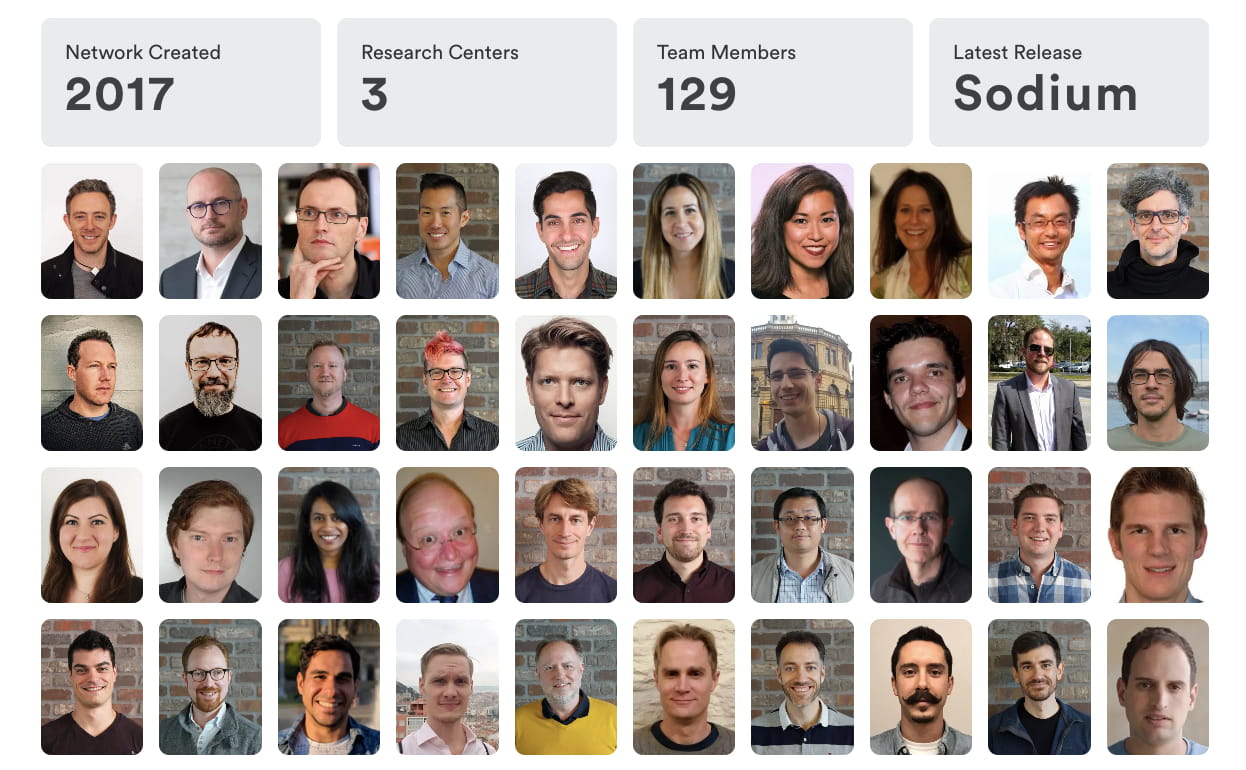
Dominic Williams is the founder, president, and chief scientist of the DFINITY Foundation and the Internet Computer Project. He founded Dfinity in 2015. He has a background as a technology entrepreneur, distributed systems engineer, and theorist. outstanding contribution.
The DFINITY team includes the world's leading cryptographers, mathematicians and senior engineers, such as the inventor of Stanford BLS technology, the inventor of bitcoin asicboost and p2contract, multi-party computation and cryptography from Yale University and the European EPFL Distributed Computing Center Researchers, etc., the team currently consists of 129 members.
Source: 6block
Typesetting: Catherine
IC content you care about
Technology Progress | Project Information | Global Events
 Collect and follow IC Binance Channel
Answer questions at any time